


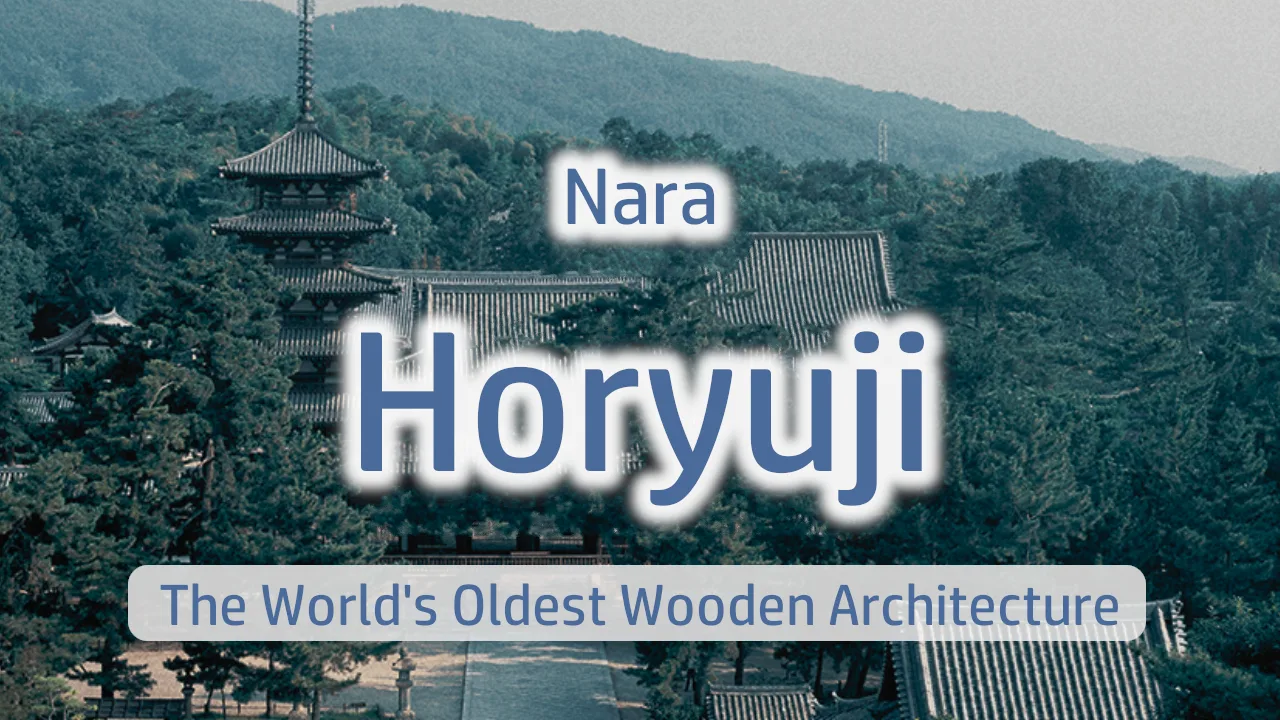
Standing for over 1,300 years in Ikaruga, Nara Prefecture, Horyuji Temple represents far more than ancient architecture—it embodies the spiritual heart of Japan’s Buddhist awakening. As the world’s oldest surviving wooden structures and Japan’s first UNESCO World Heritage Site, these sacred halls whisper stories of Prince Shotoku’s vision, a devastating fire’s mystery, and the craftsmen who defied time itself.
Whether you’re planning your first visit to Nara or seeking deeper connections with Japan’s cultural heritage, this comprehensive guide unlocks everything you need to experience Horyuji Temple authentically—from navigating its vast 187,000 square meter grounds to understanding the profound legacy that shaped a nation.
What Travelers Need to Know Before Visiting
The Distance Factor Makes Planning Essential
Located approximately 12 kilometers from central Nara, Horyuji Temple sits in the quiet town of Ikaruga—a deliberate journey that many travelers underestimate. Unlike the deer-filled parks of downtown Nara, reaching Horyuji requires either a 20-minute train ride plus additional walking, or an hour-long bus journey that tests patience during peak seasons.
The temple complex spans an enormous area requiring 2-3 hours minimum for basic exploration, yet many visitors arrive unprepared for the physical demands. Gravel pathways, summer heat without shade, and winter winds across open courtyards challenge those expecting an easy stroll. The reward justifies the effort, but strategic planning transforms a potentially exhausting excursion into an enriching pilgrimage.
Higher Admission Costs Reflect Preservation Needs
Following a March 2025 revision, admission fees significantly increased to support cultural preservation. Adult tickets now cost 2,000 yen, middle school students 1,700 yen, and elementary students 1,000 yen—covering access to all precincts including the Western Temple, Treasure House, and Eastern Temple. While higher than typical temple fees, these costs directly fund the continuous maintenance that preserves 1,300-year-old wooden structures against natural deterioration, earthquakes, and the passage of time.
Visitors should also budget extra time for the Treasure House, where Japan’s oldest Buddhist art demands careful viewing rather than rushed photography (which is prohibited indoors). The comprehensive ticket represents exceptional value for those who allocate sufficient time, but disappoints rushed travelers attempting to “check off” Horyuji between other attractions.
A Legacy That Shaped Japanese Civilization
Prince Shotoku: The Visionary Behind the Temple
The story of Horyuji Temple begins with one of Japan’s most revered historical figures—Prince Shotoku (574-622 CE). Born as Prince Umayado, he earned his posthumous name meaning “Sacred Virtue” through accomplishments that fundamentally transformed Japanese society during the Asuka Period.
As regent to Empress Suiko, Prince Shotoku championed Buddhism’s integration into Japanese culture when the religion was still foreign and controversial. He authored Japan’s first constitution—the Seventeen-Article Constitution of 604 CE—which prioritized harmony (“wa wo motte tōtoshi to nasu” – “regard harmony as precious”) and Buddhist principles even above imperial commands. This revolutionary document established moral guidelines for government officials, blending Confucian ethics, Buddhist philosophy, and indigenous beliefs into a uniquely Japanese framework that influenced governance for centuries.
Shotoku’s intellectual prowess was legendary. Tradition credits him with simultaneously understanding ten people’s requests and responding appropriately—earning the nickname “Toyotomimi” (abundant clever ears). His scholarly commentaries on the Lotus Sutra, Vimalakirti Sutra, and Queen Srimala Sutra demonstrated profound Buddhist understanding that established foundations for Japanese Buddhist thought.
Beyond philosophy, Prince Shotoku implemented practical reforms including the Twelve Level Cap and Rank System (603 CE), which awarded positions based on merit rather than hereditary privilege—a radical departure from clan-based power structures. He dispatched diplomatic missions to Sui Dynasty China, asserting Japan’s independence with the famous letter: “From the Emperor of the Rising Sun to the Emperor of the Setting Sun.”
The Temple’s Foundation: A Father’s Unfulfilled Vow
Horyuji’s origins trace to Emperor Yomei, Prince Shotoku’s father, who fell gravely ill in 586 CE. Facing mortality, Emperor Yomei vowed to construct a temple and commission a healing Buddha statue as prayers for recovery. Tragically, he died in 587 CE before fulfilling this sacred promise.
Prince Shotoku, honoring his father’s dying wish alongside Empress Suiko, selected Ikaruga—where Shotoku had established his palace—as the temple site. By 607 CE, they completed what was originally called Wakakusa-dera or Ikaruga-dera, dedicating it to Yakushi Nyorai, the Buddha of healing. The main hall’s Yakushi Buddha statue bears inscriptions documenting this founding story, providing rare contemporary evidence from Japan’s ancient period.
The Great Fire Mystery That Haunts Historians
A Catastrophe Recorded in Ancient Chronicles
According to the Nihon Shoki (Chronicles of Japan), disaster struck on the night of April 30, 670 CE—just 48 years after Prince Shotoku’s death. The chronicle records: “In the night, fire broke out at Horyuji Temple. Not a single building remained.” This devastating blaze occurred during turbulent political times, following the annihilation of Prince Shotoku’s family line by Soga no Iruka in 643 CE.
Yet for over a millennium, Horyuji’s monks maintained that their temple had never burned—that the current structures dated continuously from 607 CE. This traditional belief persisted unchallenged until modern archaeological methods provided surprising evidence.
Archaeological Discovery Settles the Debate
In 1939, excavations approximately 120 meters southeast of the current Western Temple uncovered remains of an earlier temple complex—dubbed “Wakakusa Garan” by archaeologists. The site revealed burned roof tiles, charred timber, and building foundations matching descriptions from ancient texts. This physical evidence confirmed that the original 607 CE temple had indeed been destroyed, validating the Nihon Shoki’s account.
Dendrochronological analysis (tree-ring dating) of the current five-story pagoda’s central pillar revealed the cypress was felled between 660-670 CE—supporting reconstruction immediately following the fire. Additional evidence from the Horyuji Shizaicho (temple property records) indicates that by 693 CE, religious ceremonies were being conducted in the reconstructed Main Hall, suggesting completion within two decades of the disaster.
Reconstruction Driven by Devotion
The swift rebuilding despite political turmoil demonstrates the profound reverence for Prince Shotoku that emerged immediately after his death. With his family line exterminated and no powerful patrons remaining, Horyuji’s reconstruction relied entirely on collective devotion from monks, craftsmen, and followers who revered Shotoku’s teachings.
This reconstruction transformed Horyuji’s purpose—from a temple honoring Emperor Yomei’s memory into a sacred site commemorating Prince Shotoku himself. The Main Hall’s Shaka Triad (Shaka Sanzon-zo) statue was crafted to match Prince Shotoku’s height, making the temple a pilgrimage destination for those venerating the prince as Buddhism’s champion in Japan.
The Architectural Marvel: 1,300 Years Without Collapse
World-Record Wooden Structures
The current Horyuji Temple complex, rebuilt between the late 7th and early 8th centuries, houses the world’s oldest surviving wooden buildings. The Main Hall (Kondo), Central Gate (Chumon), and Five-Story Pagoda (Goju-no-to) have stood for over 13 centuries—an achievement unparalleled in architectural history.
These structures survived countless earthquakes in seismically active Japan, typhoons, wars, and the relentless decay that wood naturally faces. Their longevity results from a convergence of exceptional materials, brilliant engineering, continuous maintenance, and cultural reverence.
The Secret of Hinoki Cypress
The primary construction material—Japanese hinoki cypress (Chamaecyparis obtusa)—from trees over 1,000 years old at harvest. Hinoki possesses remarkable characteristics: it actually increases in strength for approximately 200 years after being cut, maintains structural integrity for over 1,000 years, and naturally resists insects, rot, and fungi due to its essential oils.
Ancient builders selected these massive timbers with extraordinary care, understanding that wood quality would determine whether their work survived decades or millennia. The aromatic scent of hinoki still permeates Horyuji’s halls—a sensory connection spanning 1,300 years.
Engineering Techniques That Defied Earthquakes
Traditional Japanese carpentry employed sophisticated joinery (tsugite and shiguchi) allowing wooden members to flex during seismic activity rather than rigid connection that would crack. The five-story pagoda’s flexible central pillar—essentially a massive tree trunk suspended from above rather than fixed at the base—acts as a giant shock absorber during earthquakes, dissipating energy that would otherwise damage the structure.
The distinctive entasis columns (pillars with a gentle convex curve) distributed weight evenly while creating visual elegance. Heavy tile roofs, while increasing load, also lowered the building’s center of gravity—providing stability during earthquakes that toppled less-sophisticated structures.
Continuous Maintenance Across Generations
Horyuji’s western area historically housed lineages of master carpenters (miyadaiku) who dedicated their lives to monitoring, repairing, and preserving these irreplaceable structures. Major renovations occurred in the 13th century, early 17th century, late 17th century, and comprehensive dismantling-and-reconstruction projects during the Meiji and Showa periods.
This maintenance philosophy—replacing deteriorated components while preserving overall form and structure—enabled buildings to transcend normal lifespans. Each generation of craftsmen approached their work not as mere carpentry but as sacred duty to ancestors and future generations, embodying the cultural reverence that sustained Horyuji across centuries when many other ancient temples succumbed to fire or neglect.
Exploring the Temple Precincts
Western Precinct (Saiin Garan): The Sacred Core
Southern Great Gate (Nandaimon)
Your journey begins at this imposing entrance, reconstructed in 1438 after fire destroyed the original. The three-bay gate with eight supporting pillars frames a dramatic first view of the temple complex—the Five-Story Pagoda (Goju-no-to) and Main Hall (Kondo) visible through its opening create one of Japanese architecture’s most photographed compositions.
Central Gate (Chumon)
The Western Precinct’s actual entrance features an unusual design—an even number of pillars creating a central pillar directly in the viewing axis. Most temple gates use odd-numbered pillar arrangements avoiding this “obstruction,” but Horyuji’s designers deliberately emphasized the sacred boundary between secular and holy ground.
Flanking the gate stand Japan’s oldest nio guardian deity statues—muscular clay figures from 711 CE whose fierce expressions still intimidate evil spirits. The gate’s entasis columns reveal continental influence from Greek architecture transmitted through China and Korea, demonstrating the cultural exchange along ancient Silk Road networks.
Five-Story Pagoda (Goju-no-to)
Rising 32.5 meters, this iconic structure ranks among humanity’s oldest wooden buildings. Its distinctive silhouette—with dramatically decreasing story sizes creating an exaggerated tapering—represents archaic pagoda design predating more proportional later styles.
The pagoda’s first floor contains clay tableaux depicting Buddhist narratives: the death and cremation of Buddha (north), paradise scenes (west), distribution of Buddha’s relics (south), and Vimalakirti Sutra scenes (east). These early examples of Japanese Buddhist sculpture convey religious teachings through visual storytelling accessible to illiterate pilgrims.
Buddhist philosophy conceptualizes the pagoda itself as representing five elements—earth, water, fire, wind, and void—ascending toward enlightenment. Originally, pagodas enshrined relics of Shakyamuni Buddha, making them the most sacred structures within temple complexes.
Main Hall (Kondo)
The world’s oldest wooden building houses Horyuji’s most precious treasures. This two-story structure showcases Asuka Period architecture at its finest—the lower roof extends four directions while the upper roof covers two, creating sophisticated spatial dynamics.
Three interior chambers contain national treasure Buddha statues:
Central Chamber: The Shaka Triad (Shaka Sanzon-zo), created in 623 CE by master sculptor Tori Busshi, represents the pinnacle of early Japanese Buddhist art. The elongated faces, archaic smiles, and abbreviated arms characterize the distinctive Tori style that defined Asuka Period sculpture. This statue was specifically commissioned to match Prince Shotoku’s height—making it not merely religious art but a portrait of Japan’s most revered spiritual leader.
Eastern Chamber: Yakushi Nyorai (Medicine Buddha) sits in honor of Emperor Yomei, fulfilling the temple’s founding purpose as a prayer for healing.
Western Chamber: Amida Nyorai (Amitabha Buddha) commemorates Prince Shotoku’s mother, Empress Anahobe no Hashihito.
Ornate canopies decorated with phoenixes and celestial beings hang above each Buddha, creating an atmosphere of otherworldly sanctity. Tragically, priceless Asuka Period wall paintings depicting paradise scenes were damaged in a 1949 fire during renovation work—a disaster that shocked the nation and led to establishing Cultural Properties Protection Day (January 26) and stricter preservation protocols.
Great Lecture Hall (Daikodo)
Positioned at the northern end of the compound, this hall served as the educational center where monks studied Buddhist scriptures and philosophy. The current building dates from 990 CE reconstruction after lightning destroyed the original.
Inside, a Yakushi Triad (Medicine Buddha with attendants) and Four Heavenly Kings statues preside. Three times annually—March 22-24—Horyuji conducts its most significant ceremony, the Oeshiki, commemorating Prince Shotoku’s death. During these services, traditional court music (gagaku) accompanies Buddhist chanting (shomyo), recreating sacred soundscapes from Japan’s ancient past.
Covered Corridors (Kairo)
Elegant roofed walkways connect the Central Gate (Chumon) to the Great Lecture Hall, enclosing the sacred precinct. The corridors’ eastern and western sections incorporate the Bell Tower and Sutra Repository respectively, demonstrating efficient architectural integration.
Walking these corridors, visitors experience the spatial rhythms of Asuka design—the intervals between pillars, the play of light through lattice windows, and views framing the Five-Story Pagoda (Goju-no-to) and Main Hall (Kondo) create a meditative journey preparing pilgrims for encountering the sacred.
Gallery of Temple Treasures (Daihozoin)
Completed in 1998, this modern museum building preserves and displays Horyuji’s extraordinary art collection in climate-controlled galleries. The facility comprises three sections: the Kudara Kannon Hall, East Treasure Hall, and West Treasure Hall.
Kudara Kannon Statue
The museum’s crown jewel—a mysterious over-2-meter-tall Kannon Bodhisattva statue—stands in a dedicated gallery designed for optimal viewing. The statue’s unusual proportions (elongated body, small head) and elegant drapery create an otherworldly presence unlike any other Asuka Period sculpture.
Despite its name meaning “Baekje Kannon” (suggesting Korean origin), scholars believe the statue was created in Japan, though its unique style remains enigmatic. The sculpture’s serene expression and graceful posture epitomize the spiritual ideals of mercy and compassion central to Mahayana Buddhism.
Yumetagai Kannon (Dream-Changing Kannon)
This small gilt bronze statue earned its name from the belief that worshipping it transforms nightmares into auspicious dreams. Its tranquil expression and refined craftsmanship exemplify the sophisticated bronze-casting techniques mastered by Asuka Period artisans.
Tamamushi Shrine
Named for the iridescent tamamushi beetle wings that once adorned its surface, this miniature shrine stands as Japan’s oldest surviving portable shrine. Lacquer paintings depicting Jataka tales (Buddha’s previous life stories) cover the structure, offering rare examples of Asuka Period narrative art.
The shrine’s panels illustrate self-sacrifice for Buddhist ideals—including a famous scene of a bodhisattva offering his body to feed starving tiger cubs—conveying moral teachings through compelling visual storytelling.
Eastern Precinct (Toin Garan): Prince Shotoku’s Memorial
A tranquil walk from the Western Precinct leads to the Eastern Precinct, built on the former site of Prince Shotoku’s Ikaruga Palace. Archaeological excavations confirmed the palace location, directly connecting this sacred ground to Shotoku’s life.
Hall of Dreams (Yumedono)
This octagonal structure, completed in 739 CE, represents one of Japan’s most distinctive architectural forms. Eight-sided buildings hold special significance in Buddhism, symbolizing the Noble Eightfold Path to enlightenment. The Yumedono’s perfect geometry and elegant proportions create visual harmony from every viewing angle.
The hall enshrines Guze Kannon (Kannon of Universal Salvation), a life-size statue believed to be a portrait of Prince Shotoku. For centuries, this sacred image remained sealed in wrappings, forbidden even to monks—tradition held that viewing it invited divine punishment. In 1884, American scholar Ernest Fenollosa convinced temple authorities to unwrap the statue for the first time in centuries, revealing a masterpiece of early Japanese sculpture.
Today, the Guze Kannon is displayed during special viewing periods (spring: early April to early May; autumn: late October to late November), allowing pilgrims to honor Prince Shotoku’s spiritual presence.
Eastern Great Gate (Todaimon)
This elegant eight-pillared gate, dating from the Nara Period, separates the Western and Eastern Precincts. Walking through it transports visitors from the communal worship spaces of the Western Precinct to the more intimate, contemplative Eastern Precinct dedicated to individual spiritual connection with Prince Shotoku.
Western Round Hall (Saiendo)
Situated on a hill northwest of the main complex, this octagonal hall was established in 718 CE by the monk Gyoki. The current structure dates from 1250 CE reconstruction and houses a Nara Period Yakushi Buddha statue—connecting to Emperor Yomei’s original vow that inspired Horyuji’s founding.
The hall’s elevated position offers panoramic views of the temple grounds, demonstrating how Buddhist architecture harmonizes with natural topography to create pilgrimage experiences engaging both physical movement and spiritual contemplation.
Planning Your Visit
Access and Transportation
By Train from Nara: Take the JR Yamatoji Line from JR Nara Station to Horyuji Station (12 minutes, 240 yen). From Horyuji Station, either walk 20 minutes (1.3 km) through the town’s historic streets or take Bus #72 to “Horyujisando” stop (5 minutes, 220 yen one-way, departures every 20 minutes).
By Direct Bus from Nara: Bus #98 departs from JR or Kintetsu Nara Station to “Horyuji-mae” (approximately 60 minutes, 880 yen one-way, hourly departures). Return via Bus #97.
By Car: From Nishi-Meihan Expressway Horyuji IC, drive approximately 15 minutes via Route 25. Note: Horyuji has no dedicated visitor parking—use nearby commercial parking facilities.
Admission and Hours
| Category | Fee |
|---|---|
| Adults (High School and above) | 2,000 yen |
| Middle School Students | 1,700 yen |
| Elementary School Students | 1,000 yen |
Admission includes access to all areas: Western Precinct (Saiin Garan), Gallery of Temple Treasures (Daihozoin), and Eastern Precinct (Toin Garan).
Hours:
- February 22 to November 3: 8:00 AM – 5:00 PM (last entry 4:30 PM)
- November 4 to February 21: 8:00 AM – 4:30 PM (last entry 4:00 PM)
- Open daily year-round (no closing days)
Recommended Visit Duration
- Quick Overview: 90 minutes minimum (Western Precinct and Five-Story Pagoda)
- Thorough Exploration: 2.5-3 hours (all precincts including Gallery of Temple Treasures)
- Comprehensive Experience: 3-4 hours (with time for contemplation and photography)
Arrive early morning (opening time) for optimal lighting, fewer crowds, and peaceful atmosphere conducive to spiritual reflection. Late afternoon visits risk feeling rushed, especially during winter’s earlier closing time.
Essential Visitor Information
| Item | Details |
|---|---|
| Official Name | Shotoku Sect Head Temple Horyuji |
| Address | 1-1 Horyuji Sannai, Ikaruga, Ikoma District, Nara 636-0115 |
| Phone | 0745-75-2555 |
| Website | https://www.horyuji.or.jp/ |
Practical Tips
What to Bring:
- Comfortable walking shoes (gravel paths throughout)
- Sun protection (hat, sunscreen) in summer—limited shade
- Layers for winter—exposed corridors are windy
- Camera (exterior photography permitted; interiors generally prohibited)
- Water bottle (vending machines available but limited)
Photography Guidelines:
- Main Hall (Kondo) interior: prohibited
- Gallery of Temple Treasures (Daihozoin): prohibited
- Five-Story Pagoda (Goju-no-to), gates, Covered Corridors (Kairo), exterior architecture: permitted
- Be respectful during active worship or ceremonies
Accessibility: Wheelchair-accessible routes available for major areas, though some historic structures have steps preventing full access. Inquire at entrance for detailed accessibility information and assistance.
Nearby Complementary Sites
Hokiji Temple (20-minute walk or short bus ride): Another World Heritage site featuring Japan’s oldest three-story pagoda (708 CE), surrounded by scenic cosmos flower fields in autumn.
Chuguji Temple (adjacent to Eastern Temple): A convent temple housing the Miroku Bosatsu statue—praised as one of Japan’s most beautiful Buddha sculptures—with a serene contemplative smile rivaling the world’s finest religious art.
Horin-ji Temple (cycling distance): Features a three-story pagoda (collectively these three pagodas are called “Ikaruga Three Pagodas”) set in rural landscapes preserving the pastoral character of ancient Ikaruga.
Fujinoki Tumulus (10-minute walk): A 6th-century circular burial mound whose 1985 excavation revealed spectacular gold and bronze grave goods—possibly belonging to Emperor Kinmei’s lineage and contemporary with Prince Shotoku.
Making Your Journey Unforgettable
Visiting Horyuji Temple transcends ordinary sightseeing—it’s pilgrimage to the birthplace of Japanese civilization as we know it. Standing before 1,300-year-old wooden pillars, you literally touch the same surfaces Prince Shotoku’s contemporaries knew, breathe air perfumed by hinoki cypress cut when Europe’s medieval cathedrals hadn’t yet been conceived.
Yet navigating this profound historical site’s logistics—timing, transportation, maximizing limited exploration time, understanding architectural significance versus mere photo opportunities—challenges even experienced travelers. The difference between a disappointing “checked it off the list” visit and a transformative cultural experience often comes down to having knowledgeable guidance that brings context alive.
Travel with Complete Peace of Mind
Imagine exploring Horyuji without worrying about train connections, ticket purchases, timing, or unexpected complications. Picture arriving exactly when planned, having assistance with any language needs at ticket counters or facilities, and knowing every logistical detail is professionally managed so you can focus entirely on the experience.
At E-Stay, we provide professional tour conductor services that handle all the practical aspects of your Japan journey. Our licensed tour conductors specialize in itinerary management—ensuring smooth transportation, coordinating schedules, managing reservations, and solving any issues that arise. When you need language assistance for purchases, arrangements for shipping souvenirs home, or help navigating complex situations, your tour conductor provides seamless support.
Whether you’re planning a comprehensive Nara exploration or a multi-day journey through Japan’s historic sites, our tour conductors manage every logistical detail professionally. From coordinating optimal visit timing to avoid crowds, arranging transportation between sites, handling ticket purchases, to ensuring your schedule flows smoothly without stress—we take care of the complexities while you immerse yourself in Japan’s cultural treasures.
Discover how professional itinerary management transforms your Japan journey from stressful navigation to relaxed exploration. Visit our dedicated tour conductor services to learn more about traveling through Japan with complete logistical support—letting you focus on experiencing places like Horyuji Temple to their fullest.
SEO Keywords
Horyuji Temple, oldest wooden building, world heritage site Japan, Prince Shotoku, Nara temples, ancient Japanese architecture, Buddhist temples Japan, Asuka period, Ikaruga Nara, Horyuji pagoda, Japanese cultural heritage, Nara day trips, UNESCO world heritage, wooden architecture, Japanese Buddhism history
SEO Strategy Notes
- Primary Keywords: “Horyuji Temple”, “oldest wooden building world”, “Prince Shotoku”
- Secondary Keywords: “Nara temples”, “world heritage site Japan”, “ancient Japanese architecture”, “Buddhist temples Japan”, “Asuka period”, “Japanese cultural heritage”, “Horyuji pagoda”, “Ikaruga”, “UNESCO world heritage Nara”
- Target Search Intent:
- Informational: Travelers researching Nara temple visits, learning about world’s oldest wooden buildings
- Planning: Visitors seeking practical information (hours, access, admission, what to see)
- Cultural Interest: Readers wanting deeper understanding of Prince Shotoku, Japanese Buddhist history, architectural significance
- Travel Decision-Making: Potential visitors deciding if Horyuji warrants time investment versus staying in central Nara
Content Strategy: Article follows persuasive essay structure starting with challenges (distance, cost, planning complexity) to establish credibility, then builds case for visit through historical significance, architectural marvels, and cultural depth. Ends with natural CTA for tour conductor services as solution to logistical challenges mentioned in opening, creating cohesive narrative arc that educates while guiding toward conversion.