


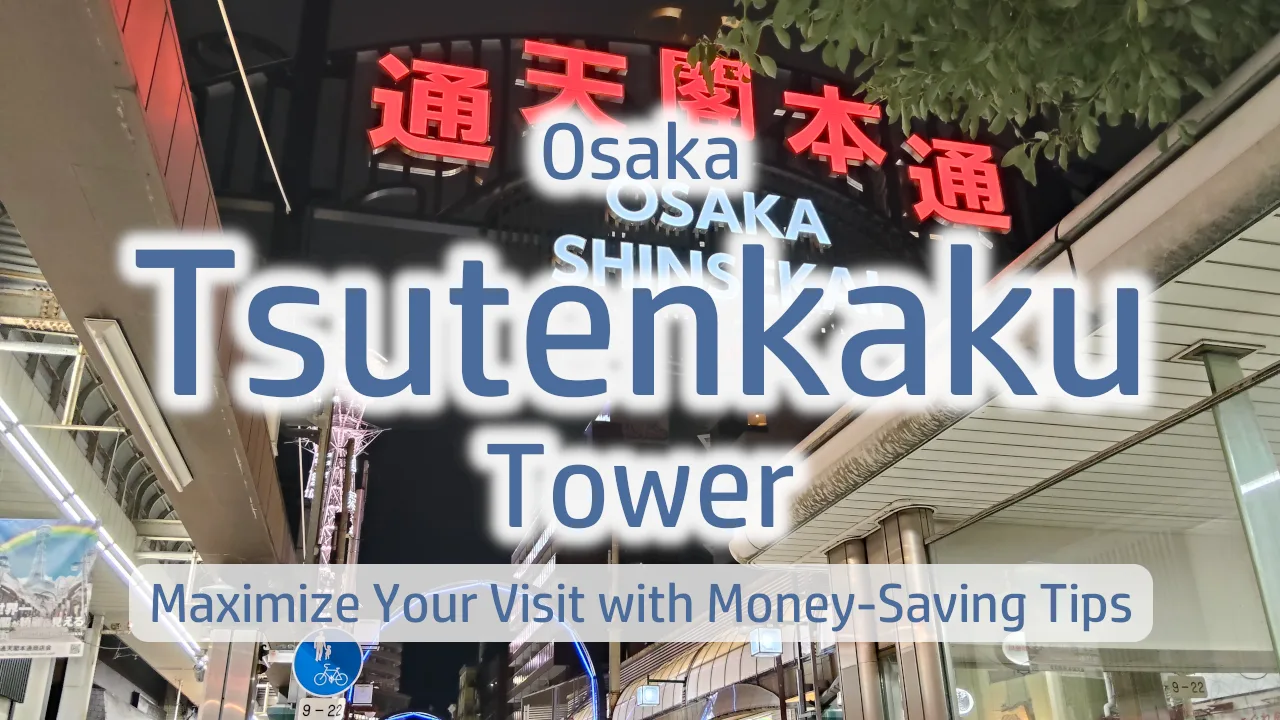
Standing proudly in Osaka’s nostalgic Shinsekai district, Tsutenkaku Tower has captivated visitors for over a century as one of Japan’s most beloved landmarks. While this iconic 103-meter steel tower offers spectacular city views and unforgettable encounters with Billiken, the god of happiness, many travelers overlook simple strategies that could dramatically reduce their sightseeing costs.
This comprehensive guide reveals how savvy travelers can experience Tsutenkaku Tower alongside numerous other Osaka attractions while saving substantial amounts through strategic use of sightseeing passes—transforming an already memorable visit into an exceptionally affordable adventure through Japan’s vibrant western capital.
The Challenge: Maximizing Value While Exploring Osaka
Visiting Tsutenkaku Tower presents a common dilemma for travelers. The observation deck admission alone requires a significant investment, and most visitors want to explore multiple attractions during their Osaka stay. Purchasing individual tickets for each landmark quickly becomes expensive, potentially consuming a large portion of your travel budget.
The challenge intensifies during peak seasons when long ticket queues waste precious vacation time. First-time visitors often struggle to determine which attractions deserve their limited budget and schedule, sometimes missing incredible experiences simply because they weren’t aware of cost-effective alternatives.
Understanding Tsutenkaku Tower Admission
Before exploring money-saving strategies, understanding the standard pricing structure helps you appreciate potential savings.
As of April 2025, Tsutenkaku Tower’s admission fees are structured as follows:
General Observatory (5th Floor)
- Adults (15 years and older): ¥1,200
- Children (5-14 years): ¥600
Special Outdoor Observatory (Additional Fee)
- Adults: ¥300
- Children (5-14 years): ¥200
Visiting just the general observatory costs ¥1,200 per adult. Adding the outdoor observation deck brings the total to ¥1,500. For families or groups, these costs multiply quickly. A family of four could easily spend ¥5,000 or more just for Tsutenkaku Tower admission.
Smart Ticket Purchasing: Skip the Lines
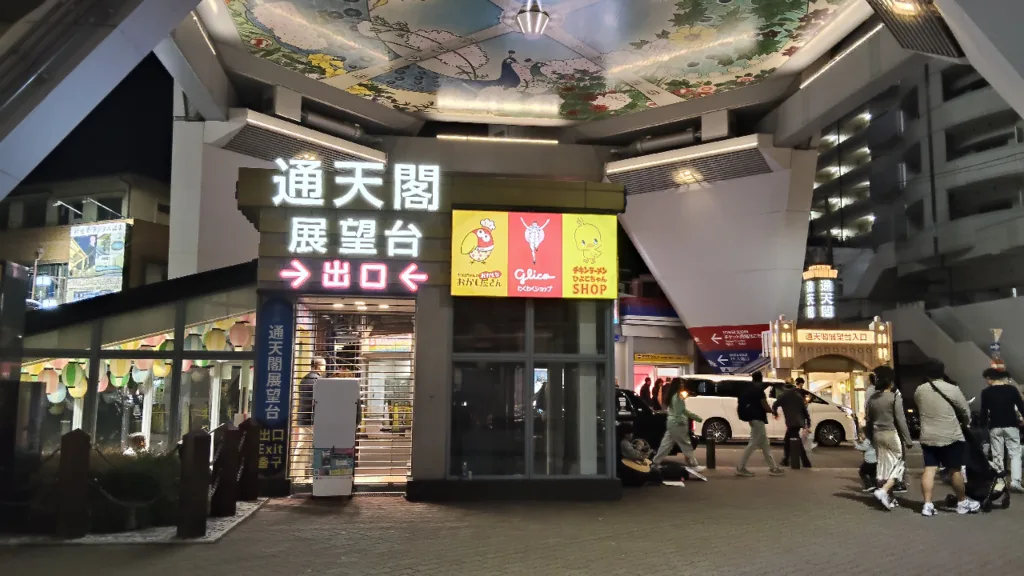
If you plan to visit Tsutenkaku Tower independently without using a sightseeing pass, advance online booking offers distinct advantages over same-day ticket purchases.
Benefits of Online Booking
Pre-booking your Tsutenkaku Tower tickets through platforms like KKday eliminates waiting in ticket purchase lines, particularly valuable during weekends and holidays when crowds surge. You simply present your QR code at the entrance and proceed directly to the elevators, saving 15-30 minutes of queue time that could be better spent exploring.
The digital ticketing system provides flexibility if your plans change, and confirmation arrives instantly via email, eliminating concerns about ticket availability during your visit.
The Game-Changing Solution: Osaka Sightseeing Passes
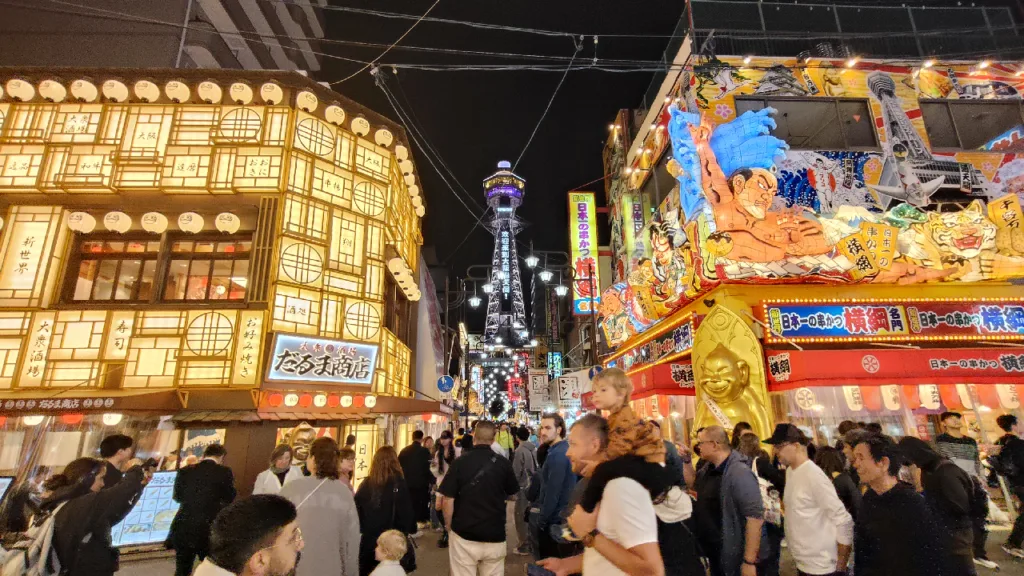
Here’s where strategic planning transforms your Osaka experience from expensive to economical. Multiple sightseeing passes include Tsutenkaku Tower admission along with numerous other attractions, creating extraordinary value for visitors planning to explore beyond a single landmark.
Osaka e-Pass: Flexible Digital Access
The Osaka e-Pass represents a revolutionary approach to Osaka sightseeing, providing access to over 25 attractions through a single digital QR code. Unlike transportation-inclusive passes, the e-Pass focuses exclusively on attraction admission, allowing travelers to customize their transportation based on personal preferences.
Pricing
- 1-Day Pass: ¥2,400
- 2-Day Pass: ¥3,000
Key Features
- Purely digital—no physical ticket exchange required
- Valid for non-consecutive days within the validity period
- Access to 25+ popular Osaka attractions
- Additional discounts at participating shops and restaurants
Included Attractions The Osaka e-Pass covers an impressive array of destinations:
- Tsutenkaku Tower (general observatory)
- Tsutenkaku Tower Slider (weekdays only)
- Umeda Sky Building Floating Garden Observatory (until 15:00)
- HEP FIVE Ferris Wheel
- Tombori River Cruise
- Osaka Castle Gozabune (boat cruise)
- Tennoji Zoo
- Santa Maria Cruise Ship (day or twilight cruise)
- Shitennoji Temple
- LEGOLAND Discovery Center Osaka
Calculating Real Savings
Let’s examine concrete examples demonstrating the exceptional value these passes provide.
Example 1: Moderate Sightseeing (1 Day)
Visiting these four attractions in one day:
- Tsutenkaku Tower: ¥1,200
- Umeda Sky Building: ¥1,500
- HEP FIVE Ferris Wheel: ¥600
- Shitennoji Temple: ¥300
Total individual admission: ¥3,600
Osaka e-Pass 1-Day: ¥2,400
Your savings: ¥1,200
Example 2: Comprehensive Exploration (2 Days)
Adding these attractions over two days:
- Previous four attractions: ¥3,600
- Tombori River Cruise: ¥1,200
- Tennoji Zoo: ¥500
- Santa Maria Cruise: ¥1,600
- LEGOLAND Discovery Center: ¥3,300
Total individual admission: ¥10,200
Osaka e-Pass 2-Day: ¥3,000
Your savings: ¥7,200
These calculations demonstrate how quickly the pass pays for itself. Visiting just three or four participating attractions already exceeds the pass cost, and every additional site represents pure savings.
Osaka Amazing Pass: The Comprehensive Alternative
For travelers who want both attraction access and unlimited transportation, the Osaka Amazing Pass offers a different value proposition.
Pricing
- 1-Day Pass: ¥3,500
- 2-Day Pass: ¥5,000
This pass includes unlimited rides on Osaka Metro, city buses, and selected private railway lines, plus admission to 40+ attractions including Tsutenkaku Tower, Tower Slider (all days), and Dive & Walk.
The Amazing Pass makes sense if you plan extensive transportation usage throughout the day. However, if you’re concentrating your sightseeing in specific areas or prefer walking between nearby attractions, the Osaka e-Pass often provides better value.
Exploring Tsutenkaku Tower: What Awaits Inside
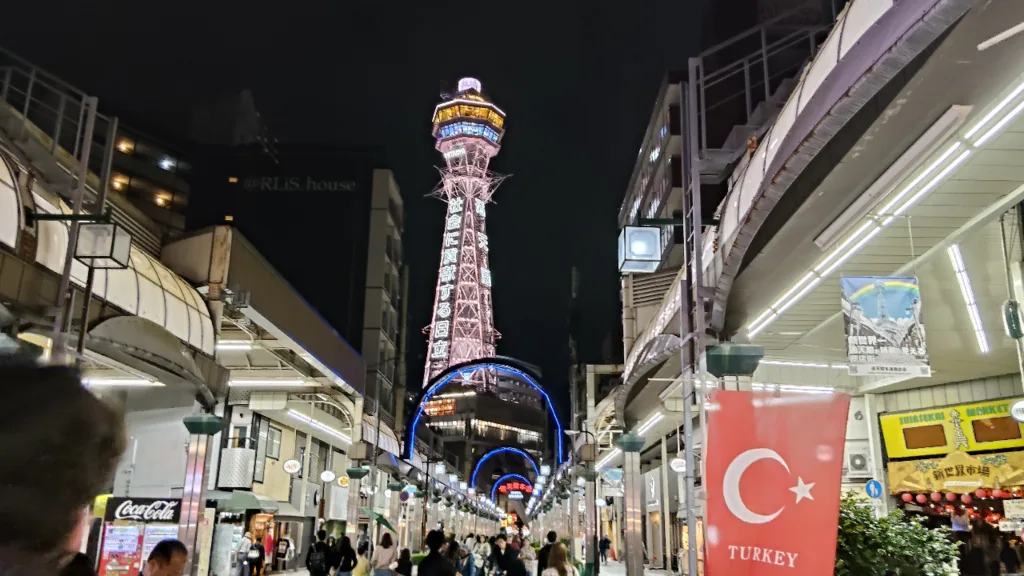
Understanding what makes Tsutenkaku Tower special helps you appreciate why it belongs on every Osaka itinerary, regardless of which pass you choose.
A Symbol Born from Resilience
Tsutenkaku literally translates to “tower reaching heaven,” a name bestowed by Meiji-era Confucian scholar Fujisawa Nangaku. The original tower, completed in 1912 alongside the Luna Park amusement park, combined architectural inspiration from Paris’s Arc de Triomphe and Eiffel Tower, standing 75 meters tall as Asia’s tallest structure at the time.
That first tower featured Japan’s first passenger ropeway, connecting Tsutenkaku with Luna Park’s White Tower. The entertainment complex thrived as Osaka’s premier amusement destination, featuring hot springs, pools, and Western-style attractions that dazzled Meiji and Taisho-era visitors.
Tragedy struck in 1943 when fire damaged the tower during wartime. Rather than repair it, authorities dismantled the structure for wartime steel production. For over a decade, Shinsekai existed without its defining landmark.
The current tower, completed in 1956, stands as a testament to community determination. Local residents pooled resources to establish Tsutenkaku Tourism Company, bringing their beloved symbol back to life through grassroots effort. Architect Tachu Naito, who also designed Tokyo Tower and Sapporo TV Tower, created the 108-meter structure (including lightning rod) that defines Osaka’s skyline today.

This history explains why Tsutenkaku means far more to Osaka than typical tourist attractions—it represents civic pride, postwar reconstruction, and community resilience.
Fifth Floor: The Golden Observatory
Ascending to the Golden Observatory at 87.5 meters reveals Tsutenkaku’s most spectacular space. Renovated in 2012 to commemorate the tower’s centennial, this floor recreates the opulence of Toyotomi Hideyoshi’s golden tea room through floor-to-ceiling gold decoration.
Windows provide sweeping views across Osaka’s urban landscape. On clear days, visibility extends to the Rokko Mountain range and Ikoma Mountains, showcasing the Kansai region’s natural backdrop beyond the cityscape.
Meeting Billiken: Osaka’s Charming Deity
The Golden Observatory’s star attraction remains the golden Billiken statue. This cheerful deity, characterized by his perpetual smile and legs extended forward, has become synonymous with Tsutenkaku and Osaka culture.
Billiken’s story spans continents and centuries. American illustrator Florence Pritz created the character in 1908 based on a figure from her dreams. The concept arrived in Japan within a year, and when Luna Park opened in 1912, Billiken found his first Japanese home in “Billiken Hall.”
The current statue, installed in 2012 as the third generation, stands 60 centimeters tall, hand-carved from camphor wood. Following 2020 restoration, craftsmen applied gold powder across the entire figure, enhancing its divine presence.
Tradition holds that rubbing Billiken’s feet brings good fortune. Whether you seek business prosperity, academic success, harmonious relationships, or general happiness, Billiken welcomes all petitions. Thousands of visitors annually place coins in his donation box while stroking his feet, hoping their wishes materialize.
The observatory also houses miniature wooden statues of the Seven Lucky Gods. Combined with Billiken, these create the “Eight Lucky Gods,” establishing the floor as Kansai’s premier power spot for fortune seekers. Stamp stations beneath each statue allow visitors to collect commemorative impressions.
Fourth Floor: The Light Observatory
Descending to the Light Observatory at 84 meters reveals Tsutenkaku’s playful side. During daytime, this observation deck provides another perspective on Osaka’s sprawling development, identifying landmarks like Kyocera Dome, Tennoji Zoo, and Abeno Harukas.
Evening transforms this space dramatically. Colorful spotlights and rotating mirror balls activate, converting the observatory into a disco-like environment. This intentionally flamboyant design reflects the observation that “Osaka people love shiny things,” embracing local aesthetic preferences with unabashed enthusiasm.
Music tempo varies throughout the day—subdued in morning, gradually increasing through afternoon, reaching peak energy after sunset. This dynamic lighting and sound design creates memorable experiences that distinguish Tsutenkaku from conventional observation towers.
Special Outdoor Observatory: Tenbo Paradise
The tower’s highest accessible point, Tenbo Paradise, occupies the rooftop at 94.5 meters. This outdoor platform delivers visceral experiences impossible from indoor observation decks—seasonal winds, unobstructed 360-degree views, and the psychological impact of open-air elevation.
The platform includes “TIP THE TSUTENKAKU,” a cantilevered section extending outward from the tower. The 5.4-meter-long, 1.5-meter-wide projection features transparent flooring at 92.5 meters elevation, creating the sensation of floating above Shinsekai. This thrilling experience attracts visitors seeking Instagram-worthy moments and genuine adrenaline rushes.
Accessing Tenbo Paradise requires additional admission (¥300 adults, ¥200 children), but the unique perspective and thrill factor justify the expense for many visitors.
Third Floor: Historical Journey
The third floor museum preserves Tsutenkaku’s heritage through meticulously crafted dioramas depicting 1912-era Shinsekai and Luna Park. These detailed miniatures, complemented by period photographs and video presentations, transport visitors to early 20th-century Osaka when modernization and entertainment converged at this site.
Visitors interested in Osaka’s evolution find invaluable context here, understanding how Tsutenkaku emerged from specific historical circumstances rather than arbitrary tourism development.
The Tsutenkaku Café operates on this floor, offering beverages and light refreshments where visitors can rest between observatory visits.
Tower Slider: Adrenaline in Ten Seconds
Opened in May 2022, the Tower Slider instantly became Tsutenkaku’s most exhilarating attraction. This 60-meter spiral slide wraps around the elevator tower exterior, connecting the mid-level observatory (22 meters) to the basement floor, descending 26.5 meters through approximately 10 seconds of high-speed sliding.
Transparent polycarbonate panels form the slide’s ceiling, allowing riders to gaze upward at Tsutenkaku while hurtling downward at 30 kilometers per hour along the 30-degree slope. Free downloadable video of your slide provides shareable memories.
Standard admission costs ¥1,000 for adults (15-65 years) and ¥500 for children (7-14 years), separate from observatory tickets. However, both the Osaka e-Pass and Osaka Amazing Pass include Tower Slider access, eliminating this additional expense.
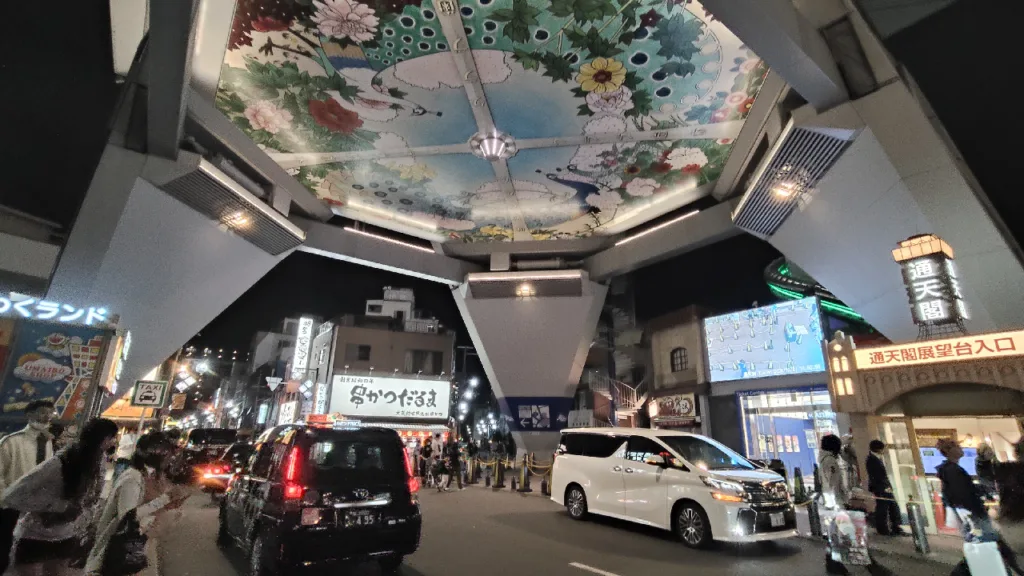
Shopping and Souvenirs
Before departing, explore Tsutenkaku’s shopping areas. The second-floor Official Shop carries Tsutenkaku and Billiken-themed merchandise—plush toys, curry mixes, rice crackers, keychains, socks, and handkerchiefs serve as perfect gifts or personal mementos.
The basement-level “Tsutenkaku Wakuwaku Land” houses antenna shops from Morinaga Confectionery, Ezaki Glico, and Nissin Foods—three major Japanese food manufacturers. These shops stock exclusive products unavailable elsewhere, making them essential stops for food enthusiasts and souvenir hunters. Best of all, basement access is free without observatory admission.
Nighttime Illumination
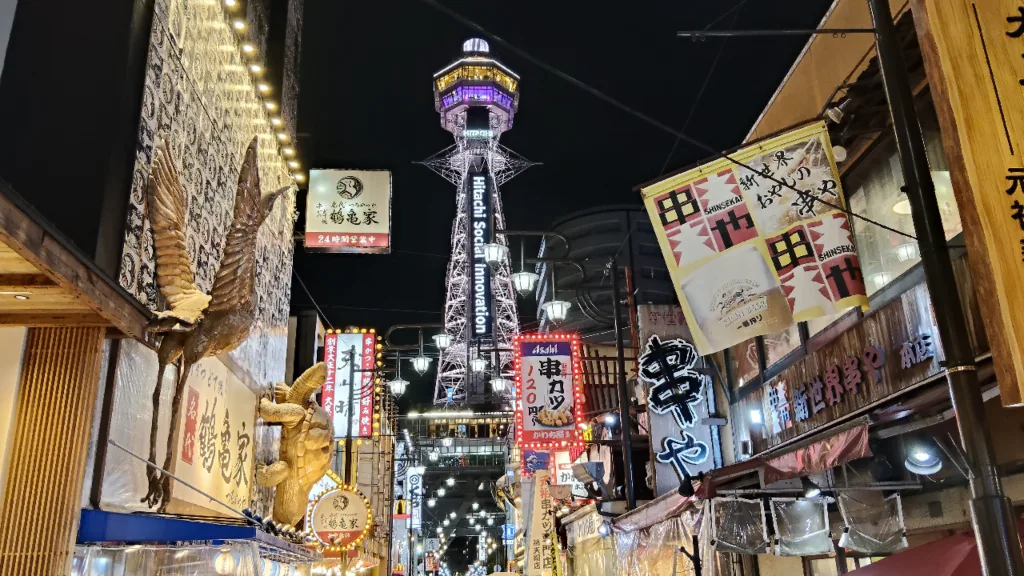
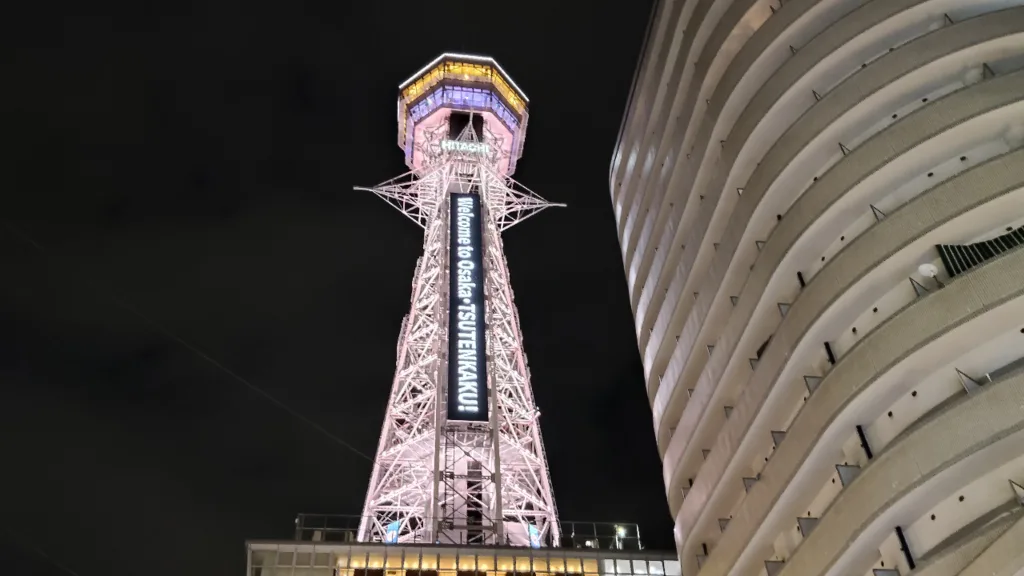
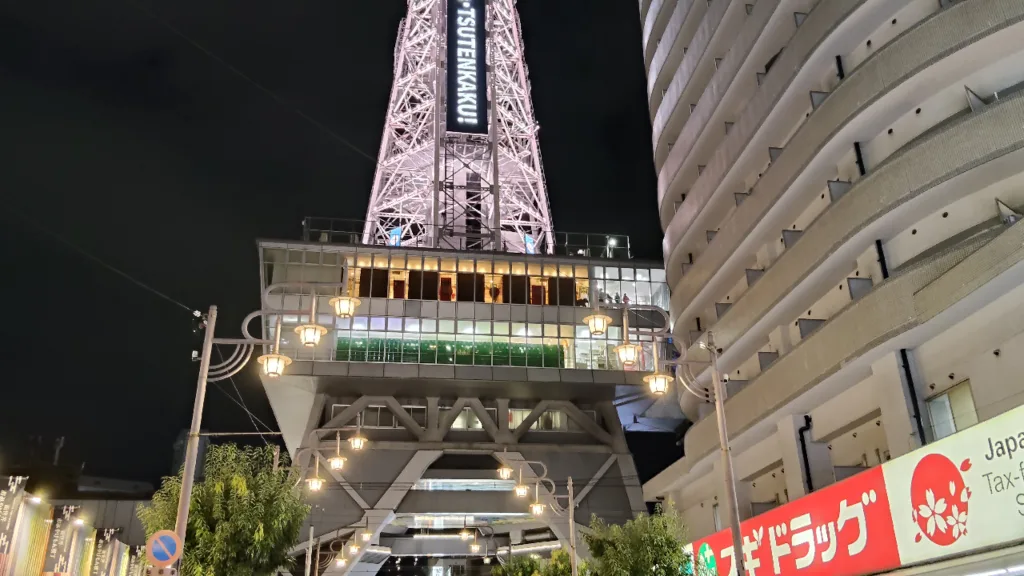
Tsutenkaku’s appeal extends beyond interior attractions. Evening illumination transforms the tower into a beacon visible throughout southern Osaka. Since 2011, LED systems replaced original neon lighting, enabling sophisticated color-changing programs aligned with seasons—pink for spring cherry blossoms, cool blue for summer relief, red for autumn leaves, and white reflecting winter snow.
The digital clock occupying the tower’s upper section alternates between analog and digital displays while occasionally showing temperature and humidity readings, creating ever-changing visual interest.
For optimal viewing, position yourself along Tsutenkaku Hondori Shopping Street. This direct sight line from Ebisucho Station’s Exit 3 provides photographers and casual observers the most impressive perspective of the illuminated tower framed by Shinsekai’s colorful signage.
Getting to Tsutenkaku Tower
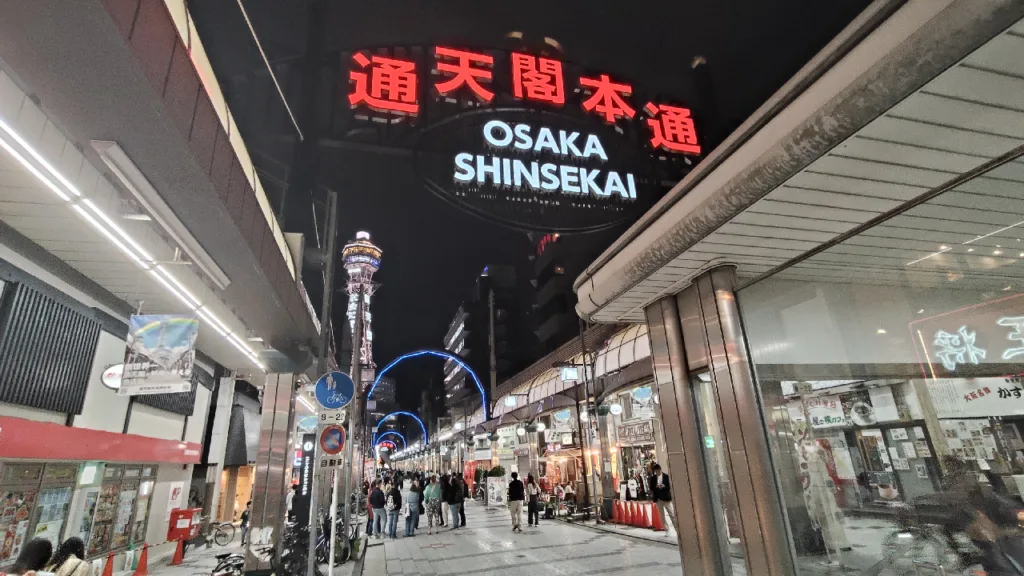
Convenient access from multiple stations makes reaching Tsutenkaku straightforward.
| Access Method | Walking Time |
|---|---|
| Osaka Metro Sakaisuji Line – Ebisucho Station (Exit 3) | 3 minutes |
| Hankai Tramway – Ebisucho Station | 3 minutes |
| Osaka Metro Midosuji Line – Dobutsuen-mae Station (Exit 1) | 6 minutes |
| JR Loop Line – Shin-Imamiya Station (East Exit) | 6 minutes |
| Nankai Main Line – Shin-Imamiya Station (West Exit) | 10 minutes |
Operating Hours
- General Observatory: 10:00-20:00 (Last admission 19:30)
- Special Outdoor Observatory: 10:00-19:50 (Last admission 19:30)
- Wakuwaku Land (Basement): 10:00-19:30
Regular Holidays: Open year-round
Note that operating hours occasionally change due to weather conditions or special circumstances. Checking the official website before your visit ensures accuracy.
Exploring Shinsekai: Beyond the Tower
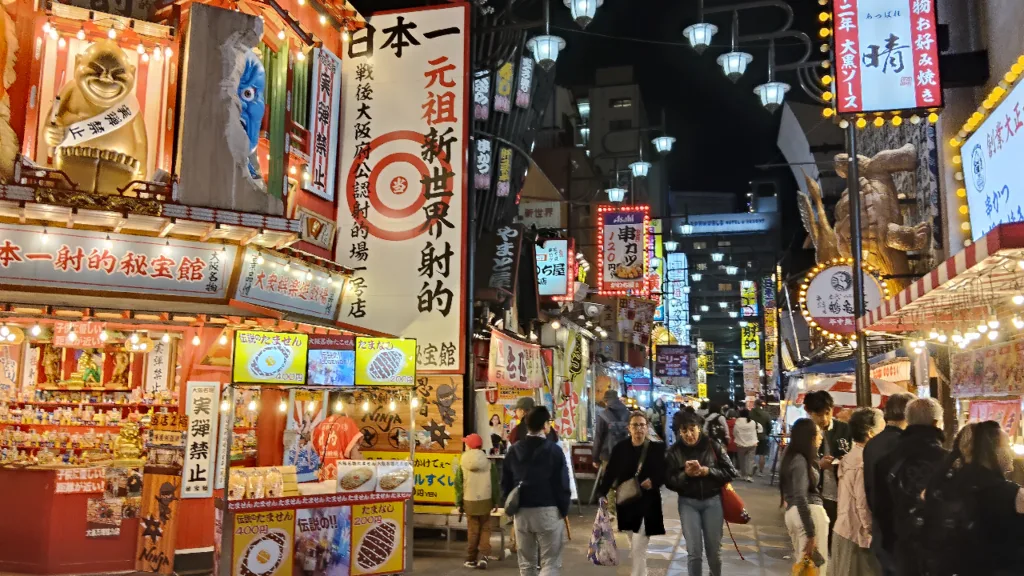
Maximizing your Tsutenkaku experience means exploring the surrounding Shinsekai district, Osaka’s most atmospheric downtown neighborhood.
Kushikatsu Paradise
Shinsekai’s culinary identity centers on kushikatsu—battered and deep-fried skewered foods. Street after street features kushikatsu establishments, each frying diverse ingredients from chicken and beef to pumpkin, asparagus, and even dessert varieties like banana and ice cream.
One sacred rule governs kushikatsu consumption: no double-dipping in shared sauce. This communal dining custom adds to Shinsekai’s unique cultural character.
Janjan Yokocho Alley
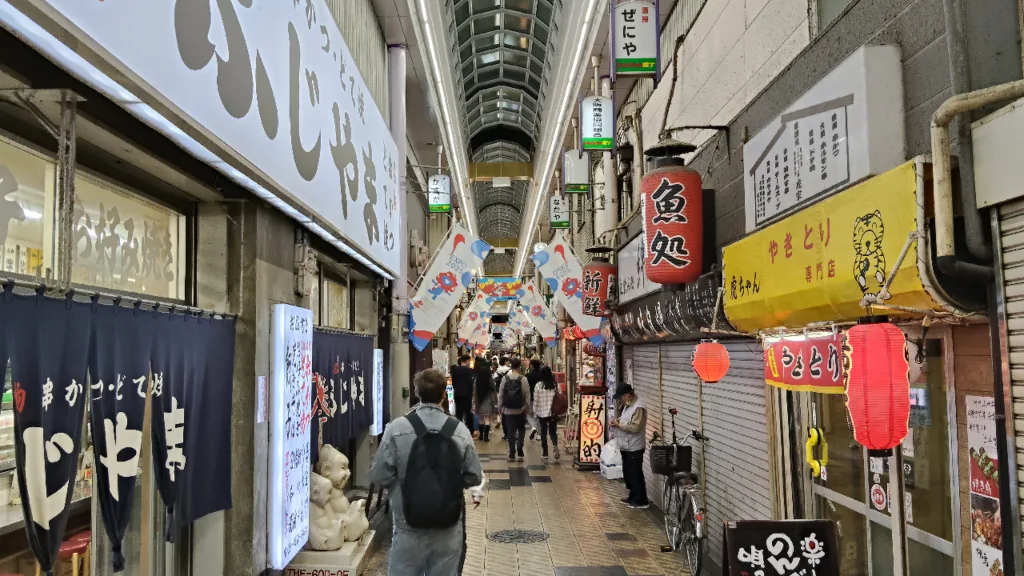
This narrow shopping arcade epitomizes Showa-era Japan’s working-class atmosphere. Cramped lanes packed with small restaurants, standing bars, and game centers create an authentic local experience increasingly rare in modern Japan. Okonomiyaki, takoyaki, and kushikatsu stalls invite street food adventures, while elderly proprietors maintain businesses operating for decades.
Tennoji Zoo
Located approximately 10 minutes walking from Tsutenkaku, Tennoji Zoo has operated since 1915 as Japan’s third-oldest zoo. Housing roughly 200 species and 900 individual animals across naturalistic habitats, the zoo provides family-friendly entertainment.
From Tsutenkaku’s observation deck, you can actually spot giraffes walking through their enclosure, offering amusing previews of zoo attractions.
Contrasting with Abeno Harukas
Approximately 1.5 kilometers from Tsutenkaku stands Abeno Harukas, Japan’s tallest building at 300 meters. Visiting both towers during one trip creates fascinating contrast—Tsutenkaku’s 100-meter elevation represents nostalgic Osaka, while Harukas embodies contemporary urban development.
This architectural time travel—experiencing old and new Osaka landmarks within walking distance—provides deeper understanding of the city’s evolution from postwar reconstruction to 21st-century prosperity.
Conclusion: Making Memories Without Breaking the Bank
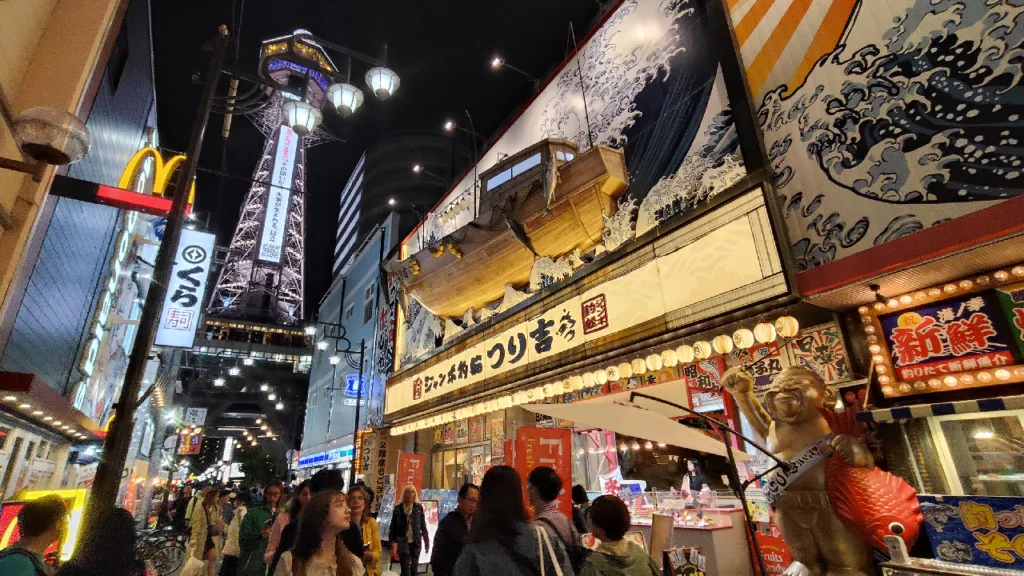
Tsutenkaku Tower encapsulates everything that makes Osaka special—resilient history, infectious energy, unabashed flamboyance, and genuine warmth toward visitors. Standing atop the Golden Observatory, rubbing Billiken’s feet while overlooking the city that rebuilt this landmark through community determination, creates connections to Osaka’s soul that transcend typical tourism.
Smart planning transforms this already memorable experience into an economical adventure. The Osaka e-Pass and Osaka Amazing Pass eliminate the frustration of calculating individual admission costs, freeing you to explore spontaneously without budget anxiety. When Tsutenkaku’s admission plus just two or three other attractions already exceed pass costs, every additional site represents pure value—financially and experientially.
For travelers ready to embrace Osaka authentically and affordably, these sightseeing passes remove barriers between you and the city’s most beloved landmarks. Tsutenkaku Tower awaits your visit, promising golden observatories, disco lighting, thrilling slides, and encounters with Japan’s happiest deity—all while your smart planning ensures maximum experiences at minimum expense.
Travel Support for Your Osaka Adventure
Planning transportation, navigating language barriers, and managing logistics in an unfamiliar destination can feel overwhelming, especially when you want to maximize limited vacation time. This is where professional travel support transforms good trips into extraordinary experiences.
If you’re traveling to Japan and want to explore Osaka and beyond with complete peace of mind, consider utilizing a dedicated tour conductor service. Unlike guided tours that follow rigid schedules, a personal tour conductor focuses on itinerary management—handling reservations, coordinating transportation connections, providing interpretation assistance, and managing unexpected situations that arise during travel.
Professional tour conductors don’t perform guiding activities but excel at ensuring smooth travel flow, allowing you to concentrate on experiencing destinations rather than worrying about logistics. They coordinate with travel agencies for any itinerary adjustments needed, offer on-site support in emergencies, and bridge communication gaps when language becomes a barrier.
For English-speaking travelers seeking this level of support during their Japan journey, at e-stay, we provide dedicated tour conductor services.
Whether you choose independent exploration with money-saving passes or prefer professional support handling complex logistics, Tsutenkaku Tower and the vibrant Shinsekai district promise unforgettable Osaka memories. Your adventure awaits in this city where history, humor, and hospitality converge beneath a century-old tower reaching toward heaven.