


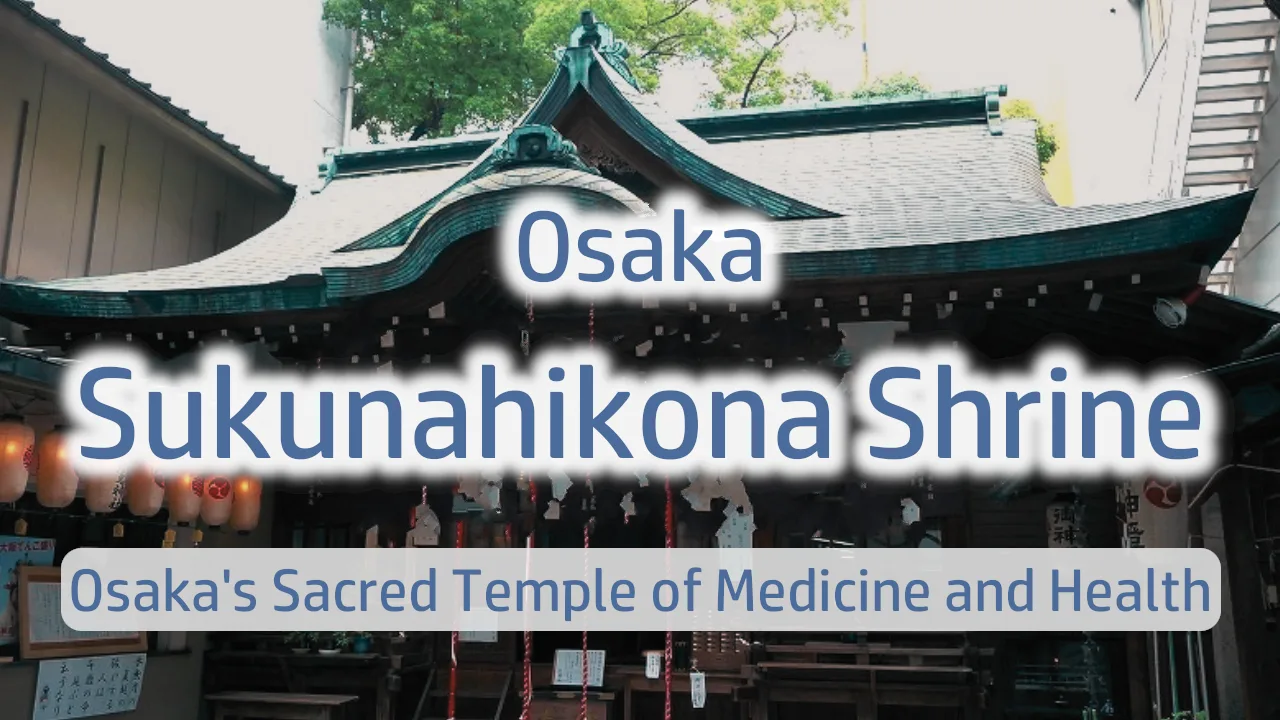
Nestled in the heart of Osaka’s business district, Sukunahikona Shrine rises quietly between towering office buildings in Doshomachi, a neighborhood steeped in pharmaceutical history. Known affectionately as “Shinno-san” by locals, this sacred space serves as Japan’s primary guardian shrine for medicine and healthcare, drawing visitors seeking healing, wellness, and the blessings of ancient medical deities.
The shrine’s atmosphere offers a striking contrast to its urban surroundings. While the streets outside bustle with pharmaceutical company employees and business professionals, the shrine grounds maintain a serene tranquility that has persisted for over two centuries. Both medical practitioners and everyday people visit to pray for health, recovery from illness, and protection from disease.
Hidden Between Skyscrapers: Finding Osaka’s Most Overlooked Shrine
Despite its significance, many travelers overlook Sukunahikona Shrine. The entrance sits squeezed between modern buildings, easy to miss unless you know where to look. This inconspicuous location can frustrate first-time visitors who expect the grand approach typical of famous temples and shrines.
The shrine’s small size means it can become uncomfortably crowded during peak visiting hours and special events. Unlike sprawling temple complexes with multiple halls and gardens to explore, Sukunahikona consists of a compact prayer hall and courtyard. Visitors seeking extensive grounds or lengthy exploration might find the experience brief. During the annual Shinno Festival in November, the confined space becomes particularly packed, with limited room to move or take photographs.
Additionally, the neighborhood itself is primarily a business district. Outside of shrine visiting hours, Doshomachi offers limited tourist attractions or dining options compared to Osaka’s more vibrant entertainment districts. The area’s pharmaceutical industry focus creates a professional atmosphere that may feel less welcoming to leisure travelers.
Two Ancient Deities United in Healing
The shrine’s spiritual power derives from housing two revered medical deities from different cultural traditions. Sukunahikona-no-Mikoto, the Japanese god of medicine, shares sacred space with Shinno Entei (Emperor Shennong), the legendary Chinese deity of herbs and healing.
According to Japanese mythology, Sukunahikona-no-Mikoto arrived from across the sea in a tiny boat, bringing knowledge of medicine, hot springs, sake brewing, and agricultural techniques to the Japanese people. This diminutive deity worked alongside Ōkuninushi to shape the land and establish protections against disease and wild animals. Traditional accounts describe Sukunahikona as possessing profound wisdom despite his small stature, making him revered as the ancestor of Japanese medicine.
Shinno Entei, meanwhile, holds legendary status in Chinese medical history. Ancient texts credit him with personally tasting hundreds of herbs to determine their medicinal properties, even at great risk to himself. His dedication to discovering treatments and cures established the foundation of traditional Chinese medicine. The “Shennong Ben Cao Jing,” one of China’s oldest pharmaceutical texts, bears his name and catalogs the healing properties of numerous plants and minerals.
The decision to enshrine both deities together reflects Doshomachi’s historical role as the meeting point of Japanese and Chinese medical traditions. This unique dual dedication sets Sukunahikona apart from other health-focused shrines throughout Japan.
From Merchant Guild to Cultural Treasure
The shrine’s establishment in 1780 grew directly from Doshomachi’s pharmaceutical heritage. During the Edo period, the Tokugawa Shogunate granted Doshomachi’s medicine merchants exclusive authority to inspect and price all drugs traded in Japan. These merchants, organized into a guild of 124 officially recognized dealers, formed the backbone of the nation’s medical supply system.
Understanding their tremendous responsibility for public health and drug safety, the guild members sought divine protection for their work. They initially worshipped Shinno at their guild hall before inviting the spirit of Sukunahikona-no-Mikoto from Gojo Tenjin Shrine in Kyoto to join the Chinese deity. This merger created Japan’s only major shrine dedicated equally to both Japanese and Chinese medical traditions.
The shrine survived multiple catastrophes over the following centuries. When the Ōsaka Rebellion of 1837 destroyed the guild hall, members rebuilt the shrine in 1840. The current main hall and worship hall date from 1910 and represent registered tangible cultural properties of national importance. Most remarkably, the shrine escaped destruction during the devastating air raids of World War II that leveled much of Osaka. Local legend attributes this miracle to the protective power of the medicine gods.
Today, major pharmaceutical companies including Takeda, Shionogi, and Mitsubishi Tanabe maintain offices in the surrounding streets, continuing Doshomachi’s 350-year tradition as Japan’s pharmaceutical center.
The Sacred Tiger: Symbol of Protection and Healing
The papier-mâché tiger has become Sukunahikona Shrine’s most recognizable symbol, but this beloved charm emerged from a desperate fight against epidemic disease. In 1822, cholera swept through Osaka with terrifying speed. The disease, feared for how quickly it killed victims, earned the nickname “korori” for the sound of people falling dead.
As the death toll mounted, Doshomachi’s pharmacists created “Kotosakki Uōen,” a medicine containing powdered tiger skull and other traditional ingredients. They consecrated this remedy at Sukunahikona Shrine before distributing it free of charge along with papier-mâché tiger amulets. Historical accounts claim the medicine and amulets helped stem the epidemic’s spread.
The tiger’s selection as a protective symbol carried multiple meanings. Chinese tradition venerates tigers as creatures of immense vitality and protective power, capable of traveling a thousand miles in a day and returning that same distance. The tiger’s fierce strength made it an appropriate guardian against invisible disease spirits. Additionally, cholera was written with characters meaning “tiger-wolf disease,” suggesting the tiger possessed special power over this particular illness.
Today’s shrine visitors can obtain various tiger charms and amulets. The most popular remains the traditional papier-mâché tiger ornament, hand-crafted in multiple sizes. These tigers feature distinctive painted faces and colorful bodies, each one slightly unique due to the handmade process. The smallest “Fukutora” (Lucky Tiger) measures approximately 4.5cm × 7cm × 2.5cm, perfect for home altars or office desks.
Beyond the classic tiger figurines, the shrine offers tiger-themed pendants, bells, and protective amulets for specific purposes. Health amulets feature tiger imagery combined with prayers for disease recovery and bodily wellness. The shrine also provides specialized pet amulets decorated with tigers and paw prints, acknowledging modern families’ desire to protect their animal companions.
Blessings for Every Health Concern
Sukunahikona Shrine attracts visitors seeking various forms of health-related divine assistance. The primary blessing remains disease recovery—people facing serious diagnoses, undergoing difficult treatments, or managing chronic conditions come to pray for healing and strength. Family members of sick loved ones often visit to request the deities’ intervention on behalf of those too ill to travel.
General health and wellness petitions form another major category of prayers. Many visitors don’t wait for illness to strike but instead seek preventive blessings to maintain good health throughout their lives. This proactive approach to spiritual health protection aligns with both traditional Japanese values and modern preventive medicine philosophy.
The pharmaceutical and medical industries maintain particularly strong ties to the shrine. Company employees visit to pray for safe drug development, successful clinical trials, and the discovery of new treatments. Medical students and pharmacy students come before important exams, seeking academic success and the wisdom to become skilled practitioners. Doctors, nurses, pharmacists, and other healthcare professionals occasionally conduct group visits, asking for guidance in their healing work and protection from workplace hazards.
Recent years have seen growing interest in pet health blessings. The shrine welcomes pets for special prayer ceremonies and offers pet-specific amulets. Each January, the shrine hosts a Pet’s First Shrine Visit celebration where animal companions receive formal blessings for health and longevity. This accommodation reflects changing Japanese attitudes toward pets as full family members deserving spiritual care equal to human relatives.
Seasonal Beauty in Sacred Ink: The Goshuin Collection
Sukunahikona Shrine has gained significant recognition among goshuin (shrine stamp) collectors for its exceptionally artistic and diverse offerings. The standard goshuin features elegant calligraphy reading “Shinno-san” and “Sukunahikona Shrine” alongside the date, stamped with two traditional red seals. This regular version alone demonstrates considerable artistic merit, with each one hand-brushed by shrine staff.
The shrine truly distinguishes itself through an extensive rotation of limited edition goshuin celebrating seasons, festivals, holidays, and special conditions. Summer visitors might receive the “Summer Pilgrimage” version, while those who visit during specific festivals obtain unique commemorative designs. The shrine creates special editions for traditional celebrations including Setsubun (bean-throwing festival), Hina Matsuri (Girls’ Day), Tanabata (Star Festival), and the summer purification ceremony.
Some goshuin remain available only under particular circumstances. The “Rainy Day Goshuin” can only be obtained when visiting during rainfall, adding an element of chance to the collecting experience. The shrine also periodically releases limited designs hand-carved by the head priest and his wife, distinguished by particularly detailed artistic elements and typically available in very small numbers.
During the Shinno Festival in November, special edition goshuin featuring tiger designs and festival imagery become available. These festival editions often sell out quickly due to high demand from both local collectors and visiting enthusiasts.
All goshuin at Sukunahikona are provided on pre-written paper rather than directly inscribed in visitors’ books. The shrine distributes them from 9:30 AM to 4:00 PM, though popular limited editions may be exhausted earlier in the day. Following the shrine on social media provides advance notice of upcoming special editions, release dates, and any quantity limits.
The shrine also offers original goshuin books featuring seasonal designs, tiger motifs, and artwork celebrating the shrine’s heritage. These books themselves become collectible items, with new designs releasing periodically throughout the year.
The Grand Festival Marking Osaka’s Year’s End
The Shinno Festival held annually on November 22nd and 23rd represents Sukunahikona Shrine’s most significant event and one of Osaka’s traditional year-end celebrations. Local tradition claims “Osaka’s festivals begin with Ebisu-san (Tōka Ebisu in January) and end with Shinno-san,” earning this event the nickname “Tome-no-Matsuri” (The Stopping Festival). The city designated the festival as an Intangible Folk Cultural Property in 2007, recognizing its historical and cultural importance.
During festival days, city authorities close the streets surrounding the shrine from Sakai-suji to Midō-suji, transforming the business district into a festive marketplace. Dozens of food stalls and game vendors line the blocked streets, selling traditional festival treats like takoyaki, okonomiyaki, and roasted chestnuts alongside carnival games and toy vendors.
The festival’s central tradition involves distributing “Kamitora” (Sacred Tiger) charms—five-leaf bamboo branches decorated with papier-mâché tigers and protective prayer strips. Beginning at 10:00 AM, shrine maidens known as “Health Maidens” distribute these charms to visitors, creating colorful processions as people carry their blessed bamboo home. The tiger charms symbolize prayers for family safety and freedom from illness in the coming year.
Pharmaceutical companies throughout Doshomachi decorate their buildings with festival lanterns and create elaborate displays. Some mount tall bamboo poles hung with tiger decorations, product packages, and colorful streamers, visible from blocks away. These corporate displays honor the shrine while celebrating the companies’ connection to the neighborhood’s medical heritage.
Modern additions to the festival include appearances by pharmaceutical company mascots and cartoon characters, children’s activity areas, and sometimes stage performances. Despite these contemporary elements, the core religious ceremonies and traditional tiger charm distribution maintain their historical form.
The festival draws massive crowds, with the shrine grounds and surrounding streets becoming densely packed. Visitors seeking a calmer experience should arrive early on the 22nd or late afternoon on the 23rd, though securing a sacred tiger charm may prove difficult during less crowded times.
Medicine’s Living History: The Doshomachi Museum
The shrine complex houses the Doshomachi Medicine Museum on the third and fourth floors of the administrative building. This specialized museum preserves over 30,000 artifacts documenting Doshomachi’s role in Japanese pharmaceutical history, with rotating displays showcasing approximately 100 items at any given time.
The museum’s crown jewel is the “Doshomachi Documents,” a comprehensive archive of business records, correspondence, and official papers from the Edo period medicine guild through the early Showa era. These documents, designated as Osaka City Tangible Cultural Properties, provide unparalleled insight into Japan’s historical drug trade, quality control methods, and merchant organizations.
Exhibition cases display antique medicine-making equipment, traditional medicinal ingredient samples, elaborate medicine packaging from different eras, and advertising materials spanning the Meiji, Taisho, and early Showa periods. Particularly fascinating are the vintage pharmaceutical posters from the 1960s and 1970s, showing how medicine marketing evolved with Japanese popular culture.
The “Doshomachi Theater” presents a video documentary explaining the neighborhood’s transformation from Edo-period merchant quarter to modern pharmaceutical hub. This accessible multimedia presentation helps visitors understand the broader context of the shrine’s establishment and continued significance.
Literary enthusiasts appreciate the museum’s collection of materials related to Jun’ichirō Tanizaki, one of Japan’s most celebrated modern authors. Tanizaki’s novel “A Portrait of Shunkin” (Shunkin-shō) takes place in Doshomachi, and a literary monument honoring the work stands at the shrine’s entrance path. The museum displays facsimiles of manuscript pages and explanatory materials about the novel’s setting.
The museum welcomes visitors who have paid respects at the shrine. Weekday admission requires no advance reservation, and entry remains free of charge. However, Saturday visits must be reserved at least three days in advance via email. The museum operates from 10:00 AM to 4:00 PM (last entry 3:30 PM), closing on Sundays, national holidays, and during New Year and Summer Obon periods. Specific closure dates appear on the shrine’s official website.
Discovering around Doshomachi’s Hidden Treasures
Visitors to Sukunahikona Shrine can extend their cultural exploration by visiting several remarkable sites within walking distance. These attractions showcase the neighborhood’s unique blend of Edo-period heritage and modern pharmaceutical industry.
Tekijuku: Birthplace of Modern Japanese Education
Eight minutes on foot from Sukunahikona, Tekijuku stands as one of Japan’s most influential private schools from the late Edo period. Dutch Studies scholar Ogata Kōan established this academy where students including Fukuzawa Yukichi (founder of Keio University), Ōmura Masujirō (modernizer of Japan’s military), and Hashimoto Sanai (influential political reformer) received their education.
The preserved building, designated as a National Important Cultural Property, maintains the layout of dormitory rooms where students lived and studied, the great hall where lectures occurred, and Kōan’s private study. The modest wooden structure provides tangible connection to the intellectual ferment that helped transform Japan from isolated feudal state to modern nation.
Operating Hours: 10:00 AM – 4:00 PM
Closed: Mondays (following day if Monday is a holiday), day after holidays (unless Saturday/Sunday), year-end/New Year period
Kitahama Retro Building: Victorian-Era Afternoon Tea
This charming brick structure from 1912 survived both the Great Kanto Earthquake and World War II bombing, making it one of Osaka’s oldest Western-style buildings. Now housing an English tea room, the Kitahama Retro Building serves authentic British afternoon tea in Victorian-decorated rooms furnished with imported antiques, crystal chandeliers, and period artwork.
The second-floor tea salon overlooks Nakanoshima Park’s rose garden, particularly spectacular during spring and autumn blooming seasons. The ground floor operates as a tea and baked goods shop where visitors can purchase quality British teas, imported biscuits, and traditional English preserves.
Operating Hours: Weekdays 11:00 AM – 7:00 PM, Weekends/Holidays 10:30 AM – 7:00 PM
Access: Immediately adjacent to Kitahama Station Exit 26
Nakanoshima Rose Garden: Urban Oasis of Blooms
Ten minutes from Sukunahikona, Nakanoshima Park extends along the narrow island between Dojima River and Tosabori River. The park’s rose garden contains approximately 3,700 rose bushes representing 310 varieties, creating one of Osaka’s most romantic settings.
Peak blooming occurs twice annually—mid to late May for spring flowers, and early to late October for autumn blooms. The garden maintains free admission and 24-hour access, making it popular for morning walks, lunch breaks, and evening strolls. Historic buildings including Osaka City Central Public Hall and Osaka Prefectural Nakanoshima Library provide elegant backdrops for photographs.
Admission: Free
Hours: Open 24 hours
Peak Seasons: Mid-May to late May, early October to late October
Ikoma Building: Art Deco Survivor
Three minutes from Sukunahikona stands the Ikoma Building, an Art Deco masterpiece completed in 1930 as headquarters for Ikoma Clock Store. This registered tangible cultural property showcases the sophisticated architectural style popular during Japan’s Taisho and early Showa periods.
The building’s fireproof construction allowed it to survive the devastating 1945 air raids that destroyed most of Osaka’s downtown area. Its distinctive clock tower, decorative sculptures, stained glass elements, and geometric ornamentation exemplify Art Deco principles applied to commercial architecture. Though still functioning as rental office space, the exterior remains accessible for photography and architectural appreciation.
Viewing: Exterior only
Access: 2-minute walk from Kitahama Station
These surrounding attractions create opportunities for a half-day or full-day exploration of Doshomachi and neighboring Nakanoshima, combining spiritual experiences, historical education, architectural appreciation, and natural beauty within a compact walking area.
Making Travel in Japan Effortless with Professional Support
Exploring sacred sites like Sukunahikona Shrine enriches any Japan journey, but navigating unfamiliar cities, managing complex train routes, and overcoming language barriers can create stress that diminishes travel enjoyment. Coordinating multiple destinations, keeping track of timing, and handling unexpected situations becomes exponentially more challenging in an unfamiliar culture.
This is where professional tour conductor services transform your Japanese adventure. A dedicated tour conductor manages all logistical elements of your journey—from station transfers and ticket purchases to restaurant reservations and emergency assistance. Unlike standard tours that follow rigid group schedules, a personal conductor adapts to your preferences and interests, creating a customized experience while eliminating travel anxiety.
When visiting places like Sukunahikona Shrine, your conductor provides cultural context that brings the experience alive. They explain the significance of rituals, help you navigate proper shrine etiquette, and can facilitate communication with shrine staff for special requests. This support proves especially valuable at smaller sites where English resources may be limited.
Beyond shrine visits, tour conductors assist with countless travel details: helping you understand complex train systems, recommending authentic local restaurants matched to your tastes, adjusting itineraries when weather or crowds impact plans, and handling any unforeseen challenges. They focus on itinerary management and practical support, providing interpretation and emergency assistance while connecting you with licensed guides when deeper historical commentary is desired.
For travelers who want to experience Japan’s spiritual heritage authentically while maintaining flexibility and peace of mind, professional tour conductor services offer the perfect balance between independent exploration and expert support.
Essential Visitor Information
Transportation Access
By Subway:
- Osaka Metro Sakaisuji Line: Kitahama Station, Exit 6 (5-minute walk)
- Osaka Metro Midosuji Line: Yodoyabashi Station, Exit 11 (10-minute walk)
By Railway:
- Keihan Main Line: Kitahama Station (8-minute walk)
By Car:
- Hanshin Expressway Loop Line: Exit at Hommachi or Kitahama interchange
- No dedicated parking available; use nearby commercial parking facilities
| Detail | Information |
|---|---|
| Shrine Name | Sukunahikona Shrine (Sukunahikona Jinja) |
| Common Name | Shinno-san |
| Address | 2-1-8 Doshomachi, Chuo-ku, Osaka 541-0045 |
| Grounds Hours | 7:00 AM – 5:00 PM |
| Amulet Distribution | 9:00 AM – 5:00 PM |
| Goshuin Availability | 9:30 AM – 4:00 PM |
| Prayer Ceremonies | By reservation (9:30 AM – 4:00 PM) |
| Admission | Free |
| Regular Holidays | None |
| Official Website | http://www.sinnosan.jp/ |