

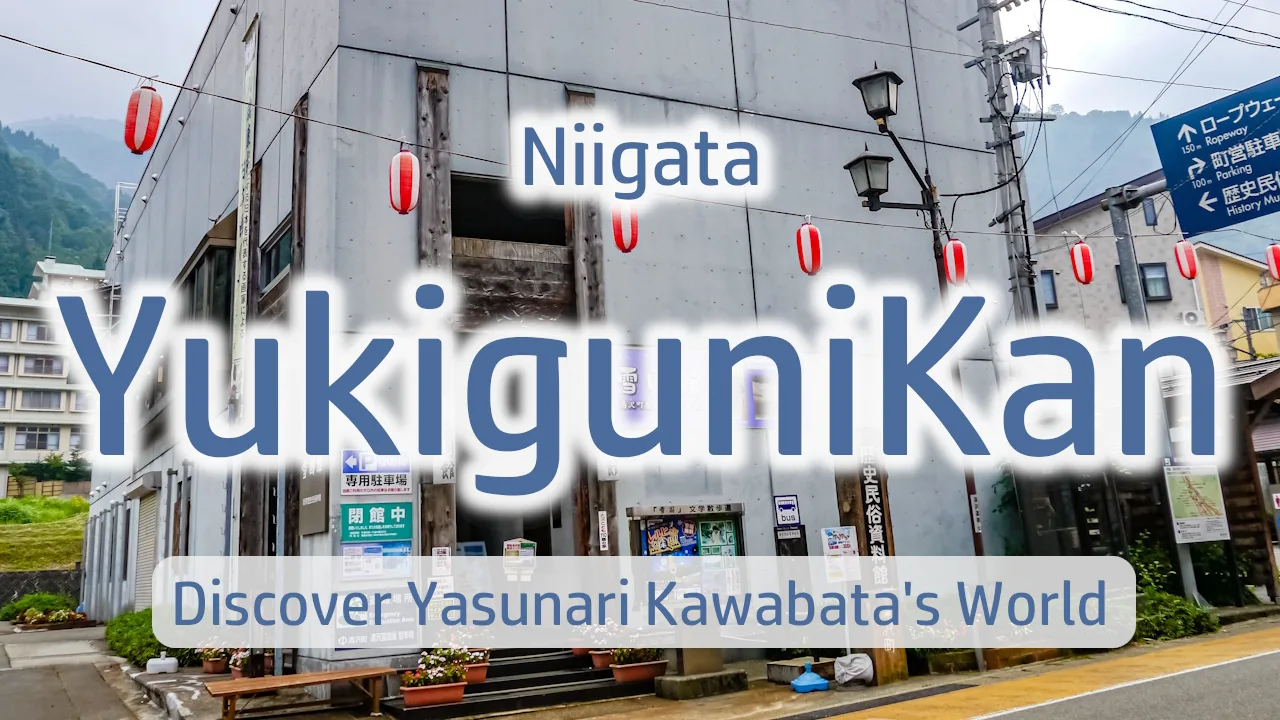
Welcome to travel insights from a professional tour conductor. Today, we’re exploring the Yuzawa Museum of History and Folklore, known as “Yukiguni-kan,” located in Yuzawa Town, Niigata Prefecture. This museum offers a unique opportunity to immerse yourself in the world of Nobel Prize-winning author Yasunari Kawabata’s masterpiece “Snow Country,” while discovering the rich history and culture of this renowned snow country region.
A Modest Facility That’s Easy to Overlook
Located just a 7-minute walk from the west exit of JR Echigo-Yuzawa Station, Yukiguni-kan sits along Onsen Street, lined with souvenir shops and traditional inns. Despite its convenient location, the museum maintains a relatively modest presence among the modern developments that followed the shinkansen’s arrival. Without prominent signage or an eye-catching building, first-time visitors may easily walk past it.
The museum is housed in a compact three-story building. While each floor offers different themed exhibitions, the overall scale is intimate rather than expansive. Those expecting a large-scale museum experience may find it smaller than anticipated. Additionally, since many exhibits focus on literature and local history, visitors without specific interest in Kawabata’s “Snow Country” or Yuzawa’s heritage might find the content somewhat specialized.
However, the museum’s location next to the free foot bath “Kannakkuri” (closed in winter) offers a pleasant opportunity to experience the hot spring town atmosphere alongside your museum visit, serving as an ideal rest stop during literary walks.
Immersing Yourself in Kawabata’s Literary Masterpiece
The museum’s greatest appeal lies in its deep connection to Yasunari Kawabata’s renowned novel “Snow Country.” Opened in 1977, this facility preserves and displays valuable materials related to Kawabata and his celebrated work.
First Floor: Japanese Paintings Gallery
The first-floor gallery, “Snow Country – The World of Japanese Paintings,” stands as one of the museum’s most compelling exhibition spaces. It showcases 14 Japanese paintings depicting various scenes from “Snow Country,” including “Yukiguni no Tsuki” (Snow Country Moon) by Tatsuo Takayama and “Kanjincho” by Chusaku Oyama, both recipients of the Order of Culture.
These artworks possess a unique power that resonates more deeply than reading the novel or watching film adaptations. The artists’ delicate brushwork visually recreates the narrative, creating profound moments when viewers’ imagined worlds intersect with these painted interpretations—an experience literary enthusiasts will find particularly rewarding.
Kawabata’s Personal Effects and Calligraphy
The museum displays Kawabata’s handwritten calligraphy featuring the novel’s famous opening line: “The train came out of the long tunnel into the snow country.” This piece allows visitors to view the iconic passage, familiar to many from textbooks, in the author’s own hand—a truly precious artifact.
Additionally, personal items cherished by Kawabata during his lifetime are on display, offering glimpses into the author’s daily life and creative process. First editions of “Snow Country” and explanatory panels help visitors understand the work’s development and historical context.
Recreated Room of Komako’s Model
The first floor features a relocated room from “Toyodaya,” the teahouse where Matsue, believed to be the model for the novel’s heroine Komako, once lived. This reconstruction helps visitors more vividly imagine the novel’s atmosphere.
The space creates an uncanny sensation where Komako gazing out the window seems almost real. As the room where Matsue actually lived overlaps with the novel’s scenes, the boundaries between fiction and reality become beautifully blurred.
Discovering Snow Country Life and History
Beyond its Kawabata focus, Yukiguni-kan offers comprehensive exhibitions on Yuzawa’s traditional lifestyle and history.
Second Floor: Snow Country Living Quarters
The second floor features a relocated traditional home’s living room, recreating daily life from the Meiji, Taisho, and early Showa periods. Sitting around the sunken hearth surrounded by nostalgic furniture and tools creates a time-traveling experience.
Traditional snow country wisdom permeates the displayed implements, including large sleds called “yamazori” used for transporting goods—testament to life’s ingenuity in this heavy snowfall region. These practical household items reveal how Yuzawa’s residents lived alongside harsh winters.
Third Floor: Yuzawa History and Folklore
The third floor displays materials related to Yuzawa’s history and folk culture. Particularly noteworthy is the “Ishishiro Ancient Coins” collection, ranking second nationally with approximately 270,000 excavated coins. These coins were discovered in wooden boxes during road construction in 1971 and 1974 at sites believed to be the former Senpuku Temple grounds.
The Ishishiro coin discovery connects deeply to the succession dispute between Kagekatsu and Kagetora, adopted sons of warlord Uesugi Kenshin, and to Naoe Kanetsugu’s reconstruction of Senpuku Temple to honor his father. These coins offer glimpses into Yuzawa’s historical narrative.
The floor also features Mikuni Highway-related materials and skiing exhibits, enabling multifaceted understanding of Yuzawa. Visitors can learn about the town’s prosperity as a post station on the Edo-period Mikuni Highway and its evolution into today’s ski resort destination.
2024 Renovation Transforms Exhibition Spaces
Yukiguni-kan underwent extensive renovations from June to December 2023, reopening in late January 2024. This renovation reorganized exhibition layouts to create more accessible and comprehensible display spaces.
A key renovation feature was enhanced accessibility. Updates included elevator improvements and multipurpose restroom installation, transforming the museum into a welcoming facility for diverse visitors. Rest areas were also added, creating an environment conducive to leisurely exhibition viewing.
Furthermore, projection mapping technology was introduced, complementing traditional static displays with dynamic, visually engaging presentations. This innovation more effectively promotes the town’s attractions, particularly appealing to younger visitors.
Kawabata’s Deep Connection with Echigo-Yuzawa
Yasunari Kawabata first visited Yuzawa on June 13, 1934. Crossing the Shimizu Tunnel from Omuro Onsen inn in Gunma Prefecture, Kawabata arrived at Echigo-Yuzawa and immediately fell in love with the area’s excellent hot springs and cuisine, returning approximately two months later.
During each Yuzawa visit, Kawabata stayed at Takahan Inn (now “Yukiguni no Yado Takahan”). He wrote “Snow Country” in “Kasumi no Ma,” a second-floor room. This room in the newly constructed building offered views of Yuzawa’s townscape and surrounding mountains.
From 1934 to approximately 1937, Kawabata repeatedly visited this inn, continuing his writing. “Snow Country” was first published in 1935, with subsequent work during Yuzawa visits leading to “Zoku Yukiguni” (Continued Snow Country) in 1947. The currently published “Snow Country” is the complete 1948 edition.
Interestingly, Kawabata never visited Yuzawa during heavy snowfall periods, resulting in relatively few depictions of life buried under snow. However, the phrase “The earth lay white under the night sky” following the opening passage conveys snow country’s characteristic quiet darkness and heaviness. Readers vividly imagine deep mountain-enclosed isolation, a cold village where resilient people endure as snow steadily accumulates.
Matsue: The Woman Behind Komako
The novel’s heroine Komako was based on a real woman—Matsue, a geisha in Yuzawa. Various accounts suggest Kawabata met Matsue during his second Yuzawa visit.
Matsue reportedly felt troubled when Kawabata used her as a model without permission. Kawabata delivered his original manuscript to Matsue in apology. When Matsue left the geisha profession and Yuzawa, she burned that manuscript and her diaries before joining her husband in Niigata.
The museum displays a photograph of Matsue skiing. At Takahan Inn, Matsue’s beloved inkstone box from her geisha days and a ring she wore after marriage—donated by her husband—are preserved. These items speak to the strange fate connecting the fictional heroine with the real woman’s life.
Facility Information
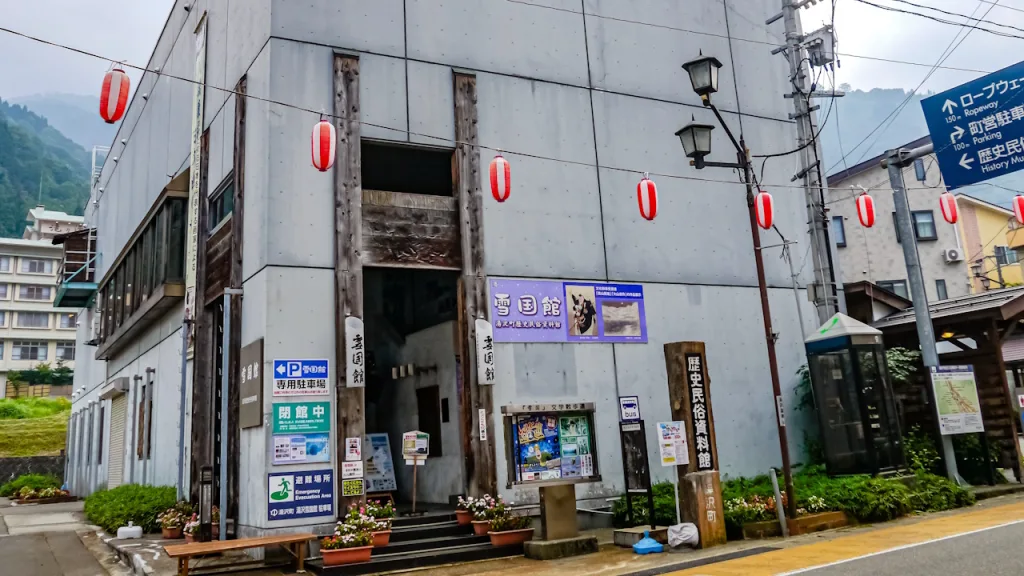
| Item | Details |
|---|---|
| Name | Yuzawa Museum of History and Folklore “Yukiguni-kan” |
| Address | 354-1 Yuzawa, Yuzawa Town, Minamiuonuma District, Niigata Prefecture |
| Hours | 9:00 AM – 5:00 PM (Last entry 4:30 PM) |
| Closed | Wednesdays (following day if Wednesday is a holiday)<br>※Open daily during August 1-31 |
| Access | 7-minute walk from JR Joetsu Line Echigo-Yuzawa Station West Exit<br>5-minute drive from Yuzawa IC on Kan-Etsu Expressway |
| Parking | 10 regular cars, 2 large vehicles (free) |
Nearby Attractions
When visiting Yukiguni-kan, consider exploring these nearby attractions.
Ponshukan at Echigo-Yuzawa Station
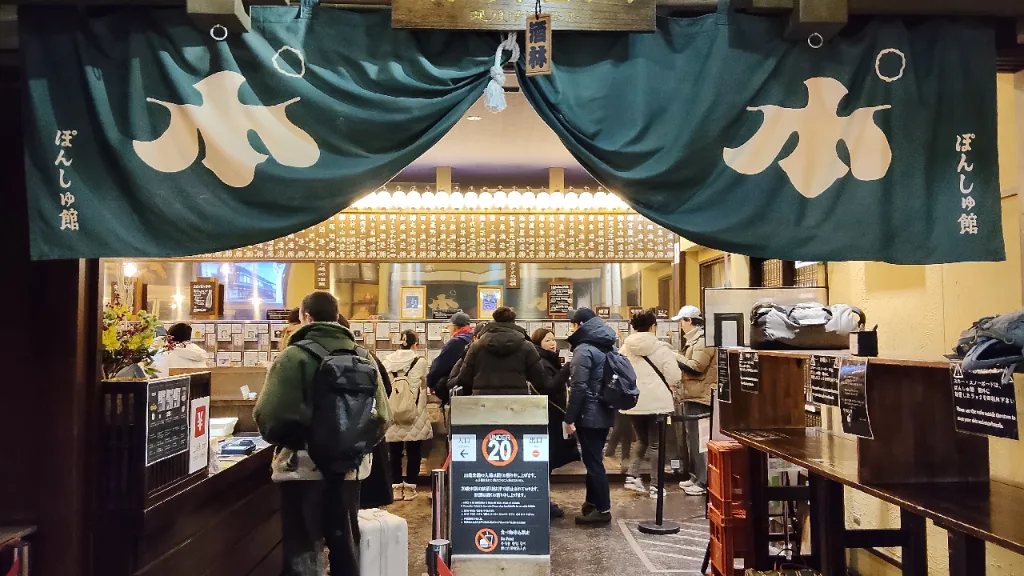
Located inside Echigo-Yuzawa Station, Ponshukan offers casual tastings of representative brands from all Niigata breweries. For 500 yen, receive five tokens to select from nearly 100 local sake varieties using the tasting machines. Beyond sake, the shop stocks Niigata specialties and sake-based confections.

Foot Bath “Kannakkuri”
This free foot bath adjacent to Yukiguni-kan makes an ideal stop during town walks. Featuring motorized seats that move up and down, it allows tired feet to warm while experiencing hot spring benefits. Note that it closes during winter.
Yukiguni no Yado Takahan
This inn preserves “Kasumi no Ma,” where Kawabata wrote “Snow Country.” Currently operating, it offers free viewing for guests and paid viewing for outside visitors. The writing room and literature exhibition space allow deeper engagement with the novel’s world.
Suwa Shrine
This shrine appears in scenes where Shimamura and Komako converse in “Snow Country.” It features a 400-year-old large cedar tree designated as a Yuzawa Town natural monument. Said to be where Kawabata conceived his work, it’s recommended for literary walking tours.
Yuzawa Kogen Ropeway
This world-class 166-passenger ropeway spans 1,300 meters, connecting to Panorama Park in just 7 minutes. The mountaintop Panorama Station features a cloud-top café overlooking Yuzawa’s majestic mountain ranges and kochia plantings. Access is a 10-minute walk from Echigo-Yuzawa Station.
Lake Daigenta
Known for autumn foliage, this lake offers beautiful scenery with Mount Daigenta as backdrop. Walking paths encircle the lake, perfect for nature appreciation. The Daigenta Lake Canyon Campground serves as a popular outdoor activity base.
Experience Japan with a Dedicated Tour Conductor
Planning a trip to Echigo-Yuzawa or other destinations in Japan? Consider enhancing your journey with our dedicated tour conductor service. A professional tour conductor will accompany you throughout your trip, providing personalized support including itinerary assistance, language interpretation, emergency coordination, and cultural insights.
Unlike standard group tours, this service offers flexibility to explore at your own pace while having expert local knowledge and support readily available. Whether you’re visiting literary sites like Yukiguni-kan, exploring ski resorts, or discovering hidden gems throughout Japan, a dedicated tour conductor ensures a smooth, enriching travel experience.
Learn more about our dedicated tour conductor service and discover how we can help create your perfect Japanese journey.
Conclusion
The Yuzawa Museum of History and Folklore “Yukiguni-kan” offers a precious opportunity to experience the world of Nobel Prize-winning author Yasunari Kawabata’s masterpiece “Snow Country.” With 14 Japanese paintings by Order of Culture recipients, Kawabata’s handwritten calligraphy and personal effects, and the recreated room of Komako’s model Matsue, the museum provides essential viewing for literature enthusiasts.
Exhibitions on snow country life and history prove equally compelling. Areas recreating Meiji, Taisho, and early Showa daily life, plus the Ishishiro Ancient Coins ranking second nationally in quantity, enable multifaceted understanding of Yuzawa’s history and culture.
The 2024 renovation introduced accessibility improvements, projection mapping, and more attractive exhibition spaces. Located just 7 minutes from Echigo-Yuzawa Station, it combines perfectly with hot spring town walks and surrounding sightseeing.
When traveling to Echigo-Yuzawa in Niigata Prefecture, visit Yukiguni-kan to experience the “Snow Country” world Kawabata loved and the unique culture nurtured in this heavy snowfall region. You’ll discover the profound appeal woven from literature, history, hot springs, and nature.