



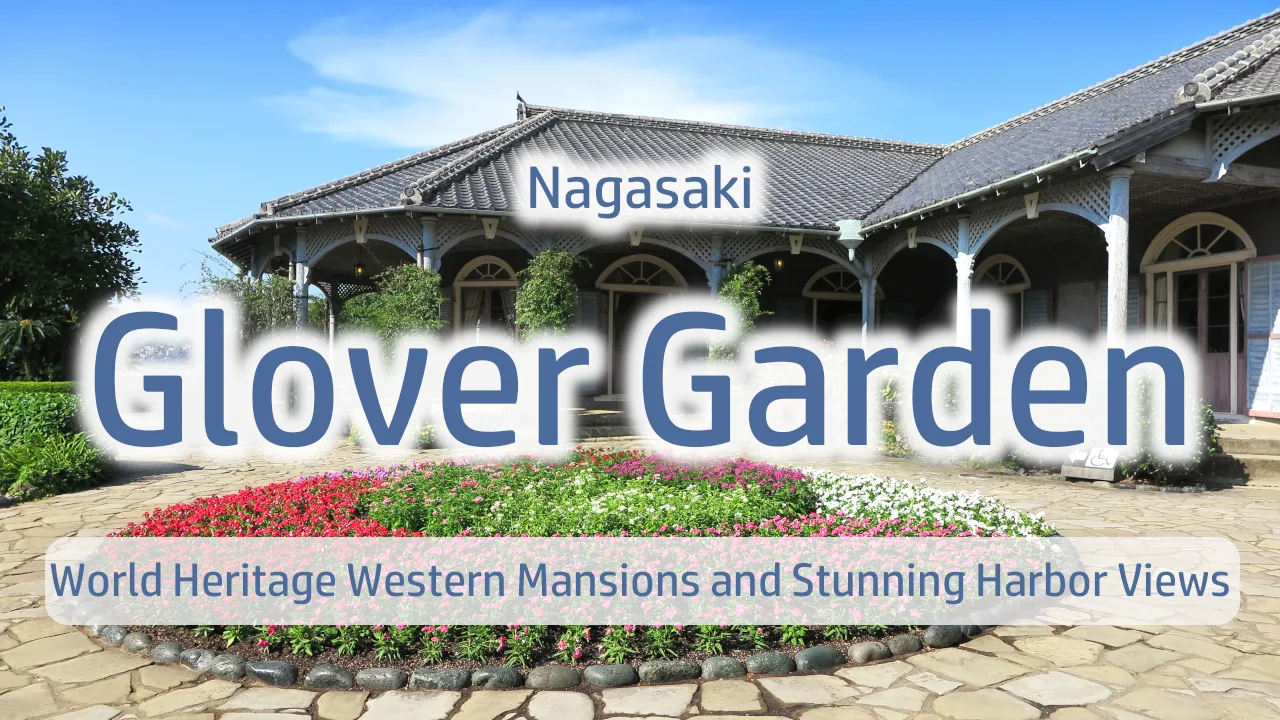
Glover Garden is one of Nagasaki’s premier tourist attractions, perched on the hills of Minami-Yamate overlooking Nagasaki Harbor. This open-air museum showcases a collection of historic Western-style buildings from the Meiji era, including the Former Glover House, which is designated as a UNESCO World Heritage Site. The combination of stunning harbor panoramas, exotic architecture, and beautifully landscaped gardens makes Glover Garden an essential destination for anyone visiting Nagasaki.
The garden features three nationally designated Important Cultural Properties—the Former Glover House, Former Ringer House, and Former Alt House—along with six other historical Western-style buildings that were relocated from various locations throughout Nagasaki City. Stone-paved paths and staircases from the settlement era enhance the historical atmosphere, while seasonal flowers bloom throughout the garden year-round.
| Item | Details |
|---|---|
| Facility Name | Glover Garden |
| Address | 8-1 Minami-Yamate-machi, Nagasaki City, Nagasaki Prefecture |
| Opening Hours | 8:00-18:00 (Last admission 17:40) *Extended to 21:30 during summer (mid-July to early October) *Hours may vary by season |
| Closed | Open year-round |
| Access | Tram: 7 minutes walk from Oura Cathedral tram stop Bus: 7 minutes walk from Glover Garden bus stop Glover Sky Road: From Ishibashi tram stop via diagonal elevator and vertical elevator to Gate 2 No Car Parking Facilities |
Points to Consider Before Your Visit
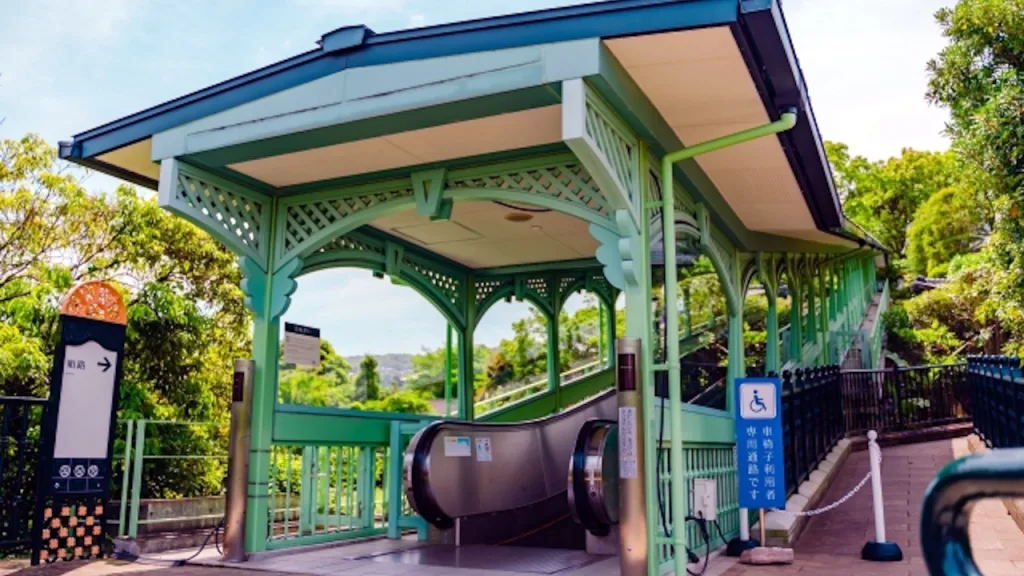
Glover Garden is located on hilly terrain characteristic of Nagasaki’s landscape, with significant elevation changes throughout the site. While moving walkways and escalators are installed within the garden, comfortable walking shoes are recommended for exploring the grounds.
The Former Glover House, a UNESCO World Heritage Site, completed its major restoration work in December 2021, and the exhibition content has been significantly renewed. During summer and special periods, evening illuminations are held with extended opening hours. Checking the latest opening information before your visit ensures a smooth experience.
Historical Background of Glover Garden
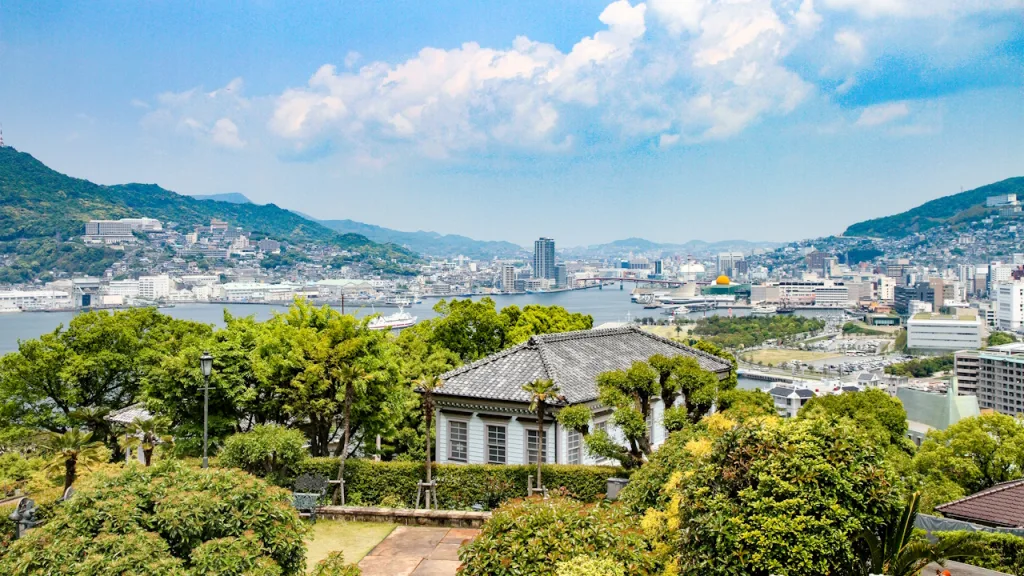
The Opening of Nagasaki and the Birth of the Foreign Settlement
In 1858, the Tokugawa Shogunate signed treaties of amity and commerce with five nations—the United States, the Netherlands, Russia, Great Britain, and France—marking Japan’s entry into a new era. The Dutch trading post on Dejima, which had operated for 218 years since 1641, closed its doors, and Nagasaki became a treaty port. A “foreign settlement” was established where foreigners could reside and conduct business.
On the hills of Minami-Yamate overlooking Nagasaki Harbor, Western-style buildings with Japanese-style roof tiles stood in rows, and the daily lives of foreigners from various countries unfolded there. Adventurous merchants drawn by dreams established new bases in this beautiful port city.
The Establishment of Glover Garden
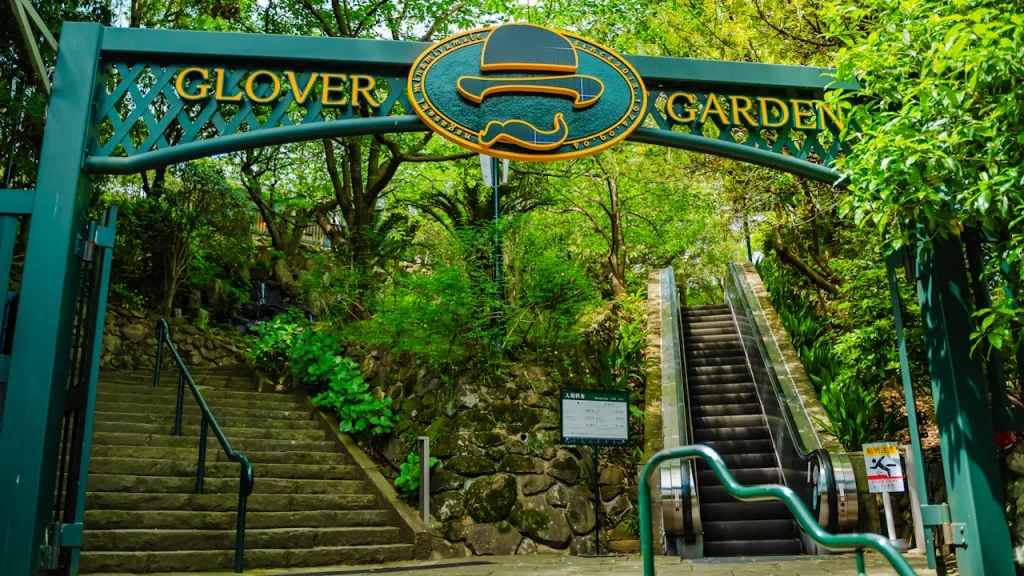
In 1957, Mitsubishi Heavy Industries Nagasaki Shipyard donated the Former Glover House to Nagasaki City as part of its 100th anniversary commemoration project. Public viewing began the following year in 1958, with an admission fee of just 10 yen for adults and an unmanned box at the entrance for collecting fees—a pastoral beginning.
In 1961, the Former Glover House was designated as a National Important Cultural Property, and on September 4, 1974, “Glover Garden” officially opened. While the name “Nagasaki Meiji Village” was initially considered, “Glover Garden” was chosen through public selection. Historic Western-style buildings scattered throughout Nagasaki City were relocated and restored within the garden, creating its present form.
The Charm of the World Heritage Former Glover House
Japan’s Oldest Existing Western-Style Wooden Building
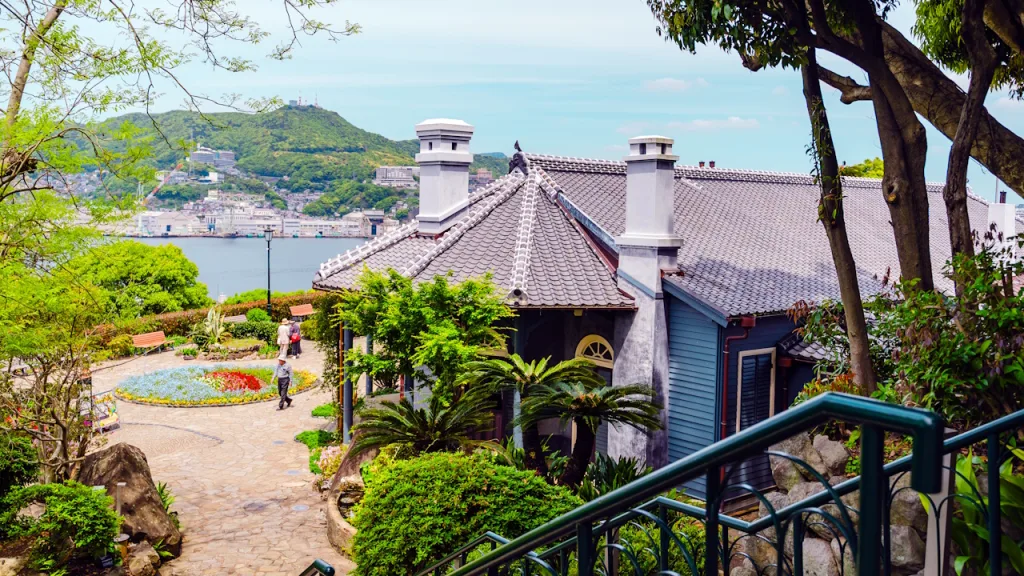
The Former Glover House, built in 1863, is Japan’s oldest existing Western-style wooden structure. In 2015, it was registered as a UNESCO World Heritage Site as a component of “Sites of Japan’s Meiji Industrial Revolution: Iron and Steel, Shipbuilding and Coal Mining.”
The building features a semicircular floor plan designed with consideration for lighting and ventilation, incorporating Japanese roof tiles and earthen walls in a harmonious blend of Western and Japanese architectural styles. The spacious veranda with wooden latticed ceilings is characterized by independent wooden columns standing on stone-paved floors and arched transoms with hanging beams between the columns, creating an open atmosphere. When viewed from above, the distinctive shape resembles a four-leaf clover, a result of repeated renovations and expansions that achieved its current form during the mid-Meiji period.
Thomas Blake Glover’s Achievements
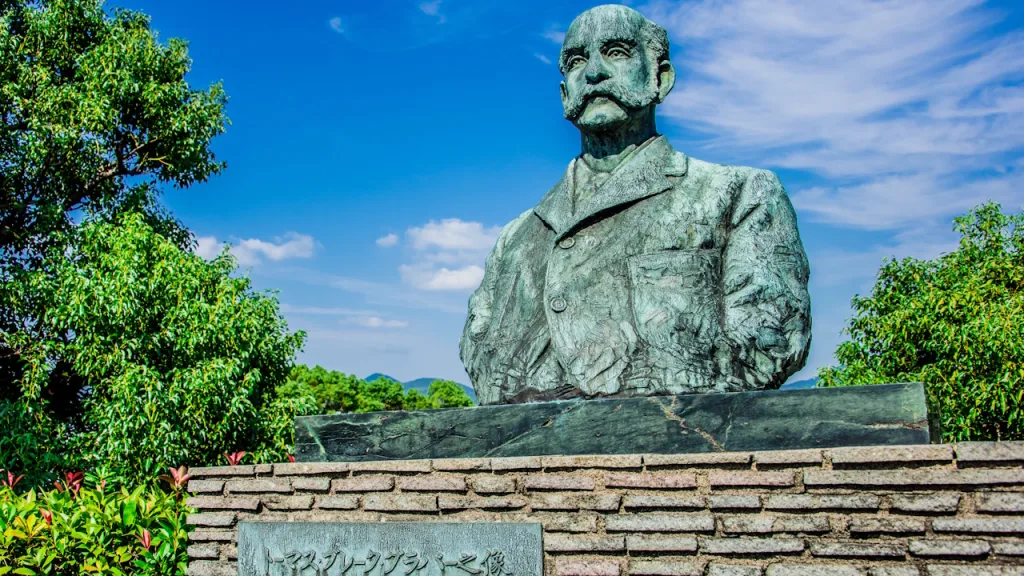
Thomas Blake Glover, the house’s owner, was born in Scotland in 1838 and arrived in Nagasaki in 1859 at age 21. He built his residence in Minami-Yamate, designated as the foreign settlement area, and named it “IPPONMATSU” (One Pine Tree) after the large pine tree standing beside it.
In 1862, he established “Glover & Co.” and while conducting trading business, he pioneered modern shipbuilding, coal mining, and tea manufacturing ventures, contributing greatly to Japan’s industrial development. He is also known as the “Blue-Eyed Patriot” for his cooperation with the Satsuma, Choshu, Tosa, and Hizen domains and his contribution to the Meiji Restoration.
Even after Glover & Co. went bankrupt in 1870, he remained in Japan, working as an advisor to Mitsubishi and contributing to the modernization of Takashima Coal Mine and the construction of Kosuge Slip Dock. He is also known as the founder of Japan Brewery Company, the predecessor of Kirin Beer, and the komainu (guardian dog statue) that became the motif for the Kirin beer label was placed in the greenhouse of the Glover House from its construction.
He was awarded the Order of the Rising Sun, Second Class, for his achievements and passed away in Nagasaki in 1911 at age 73.
The Legacy of Tomisaburo Kuraba
Tomisaburo Kuraba was the son born to Glover and a Japanese woman named Kaga Maki. After attending school in Nagasaki and Tokyo, Tomisaburo studied in America and joined Home, Ringer & Co. In 1907, when the company established “Kisen Gyogyo” (Steam Fishing Company) as a subsidiary, Tomisaburo served as executive director and purchased Japan’s first steam trawler from Britain, bringing catches dramatically different from traditional Japanese fishing methods.
He also worked to deepen exchanges between Japanese and foreigners by establishing the British-style gentlemen’s club “Nagasaki Naigai Club” and developing a public golf course in Unzen where both foreigners and Japanese could play together. The “Illustrated Encyclopedia of Fish from Western and Southern Japan” (commonly known as the Glover Atlas), completed by hiring local artists to paint fish purchased at the market, is counted as one of Japan’s four major fish atlases.
When World War II began, he sold the Former Glover House to Mitsubishi Heavy Industries Nagasaki Shipyard and moved to another residence in Minami-Yamate. During wartime, people with British and American connections increasingly faced difficulties, and just days after the war’s end on August 26, 1945, Tomisaburo took his own life at his Minami-Yamate home. He faced internal conflict, unable to side with either Britain or Japan.
Renewed Exhibition Content
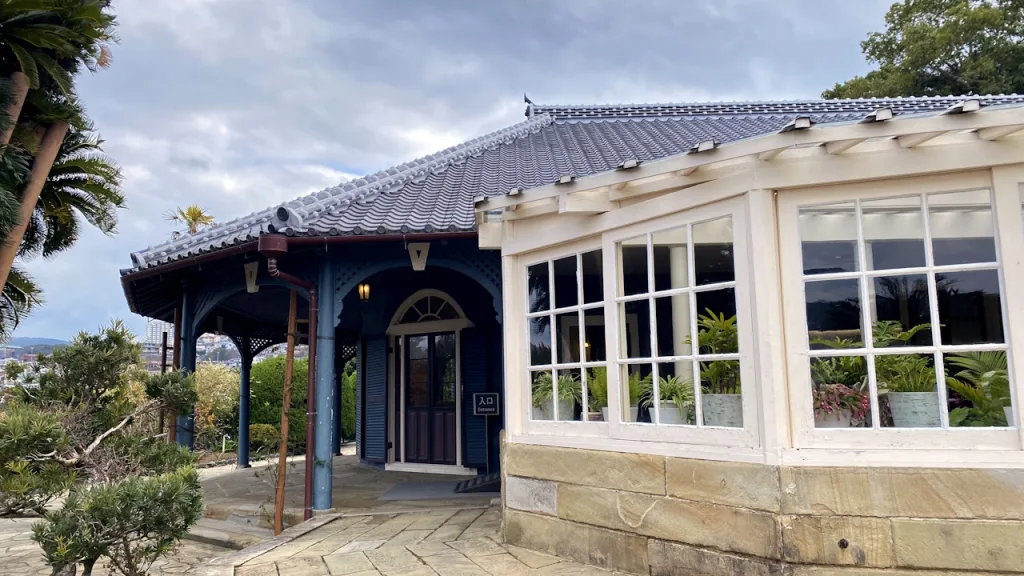
With the completion of restoration and seismic retrofitting work in December 2021, the exhibition content at the Former Glover House has changed significantly. The roles that Glover and Tomisaburo played in Japan’s modernization are introduced in detail, and the interior from the late 19th century when Glover lived there has been recreated.
The background of settlement construction and the process of Important Cultural Property designation are also disclosed with materials, and visitors can enjoy lesser-known episodes through videos using AR technology.
National Important Cultural Properties
Former Ringer House
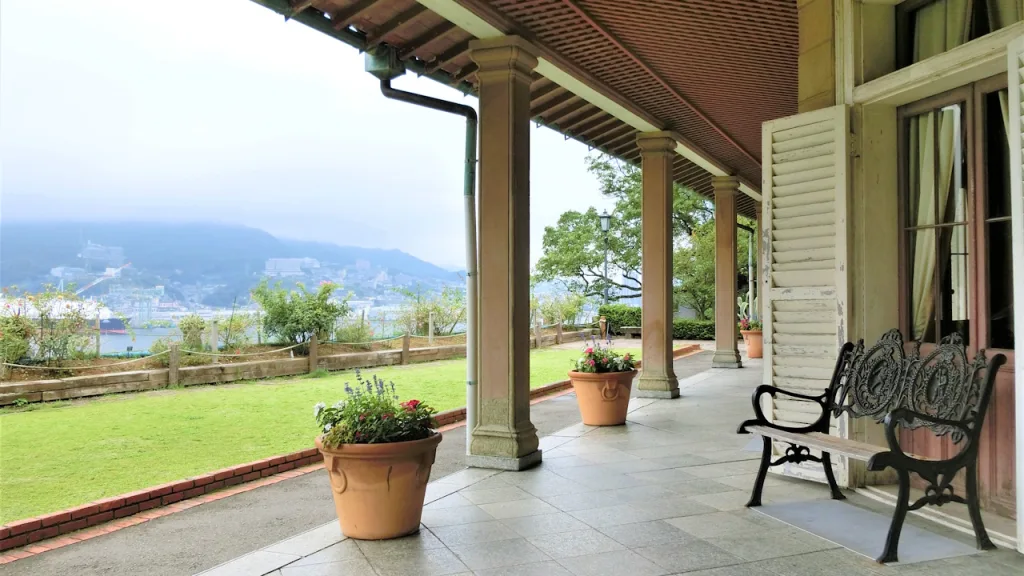
The Former Ringer House, the former residence of Frederick Ringer, was built between 1868 and 1869. Ringer, who worked for Glover & Co., established “Home, Ringer & Co.” with British colleague Edward Home and succeeded in tea production and export.
The building features a unique wooden-framed stone structure with wooden framing and stone exterior walls using Amakusa sandstone. The bungalow-style building is surrounded by verandas on three sides, with granite from Vladivostok, Russia, laid on the veranda floors, creating a rare harmony of wood and stone.
Ringer contributed to publishing English-language newspapers in Nagasaki, hotel management, and the installation of water and sewage systems throughout Nagasaki City. In 1897, he built the Nagasaki Hotel with an investor group, which was touted as “the most luxurious hotel in the Far East” at the time.
Inside the residence, a set of cutlery used at the Nagasaki Hotel is displayed. These items were discovered during renovations at the Nara Hotel in 2013 and donated to Nagasaki City in 2015, now publicly exhibited at the Former Ringer House after a long passage of time.
Ringer passed away in 1907 while temporarily returning home to Norwich, England. His second son, Sidney Ringer, lived in the house from 1913 to 1965, after which it was sold to Nagasaki City, and Sidney spent his remaining years in England.
Former Alt House
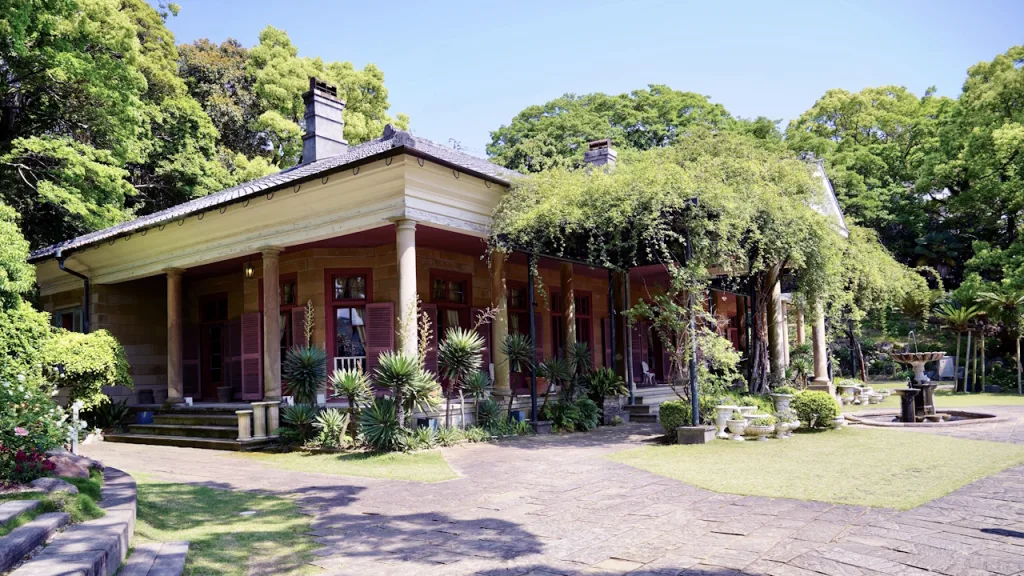
The Former Alt House is the former residence of British merchant William John Alt. Construction began in 1865. Alt arrived in Nagasaki in 1859, established “Alt & Co.” at Oura Kaigan-dori, and prospered as a trader, making his fortune in the tea manufacturing business.
The building is large-scale, with wooden construction and exterior walls made of Amakusa sandstone. The fountain in front is from the time of construction, featuring a carriage porch and Tuscan-style colonnade veranda. The interior consists of a drawing room, sitting room, four bedrooms, and four bathrooms, with an attached building at the rear constructed of brick.
In spring, climbing roses bloom profusely beside the porch, beautifully adorning the building. The climbing roses at the Former Alt House are said to be the oldest in Japan.
Alt spent time in this house until the first year of Meiji, then stayed in Osaka and Yokohama before returning to Britain. His wife Elizabeth recorded in her memoirs that “Nagasaki is truly a beautiful place, and I know of nowhere more beautiful.”
After Alt left, the building served as a school building for the Methodist Kwassui Girls’ School and as the American Consulate, and from 1903, it became property of the Ringer family.
Relocated Historical Buildings
Former Mitsubishi No. 2 Dock House
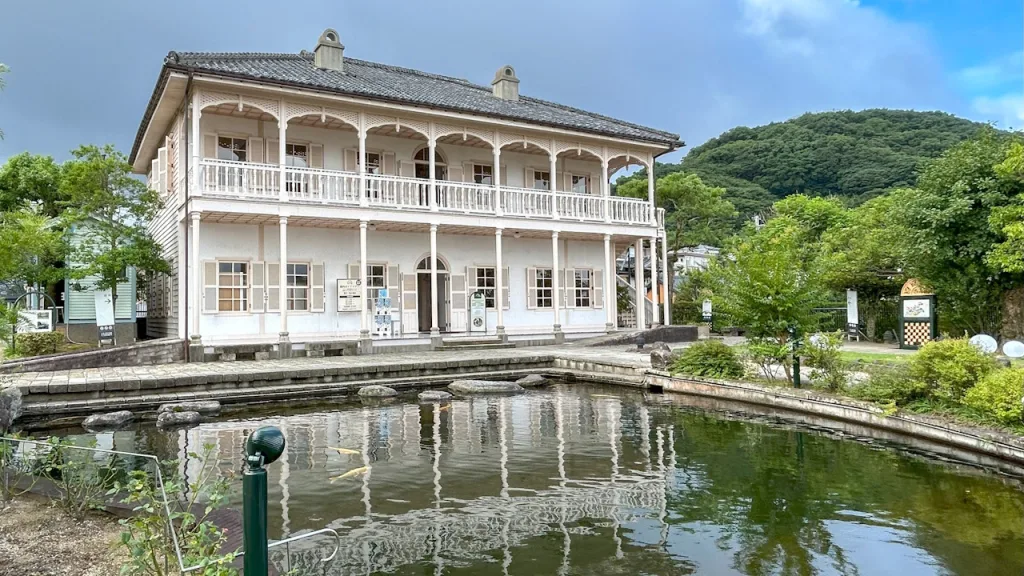
Built in 1896 as a rest and accommodation facility for sailors near Mitsubishi Heavy Industries Nagasaki Shipyard’s No. 2 Dock. Located at the highest point in the garden, the second-floor veranda offers panoramic views of Nagasaki Harbor.
This typical Western-style building creates a fantastical beauty during evening illumination periods when the building reflects in the garden pond like a mirror. Inside, ship models and photographs are displayed.
Former Walker House
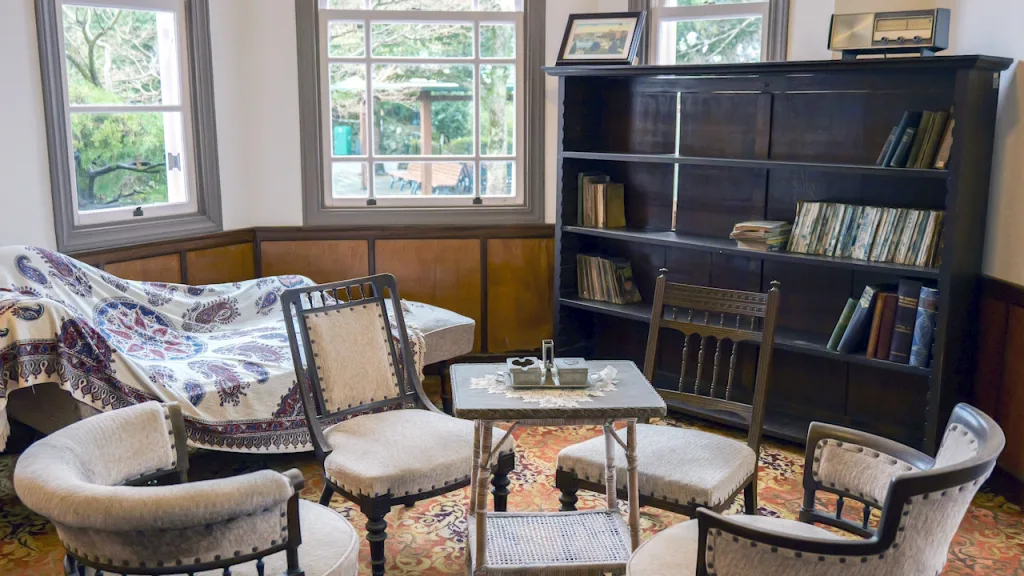
Purchased in 1915 by Robert Walker II, second son of Robert Neil Walker, who extensively developed shipping operations. The building was originally located along Inori-zaka near Oura Cathedral, but only a portion preserving the Western design was relocated to Glover Garden.
The Japanese-Western eclectic design with Japanese roof tiles and the building surrounded by verandas is highly regarded. Sunlight entering through protruding windows is pleasant, and on sunny days, visitors can experience the quality of light from inside.
Former Jiyutei
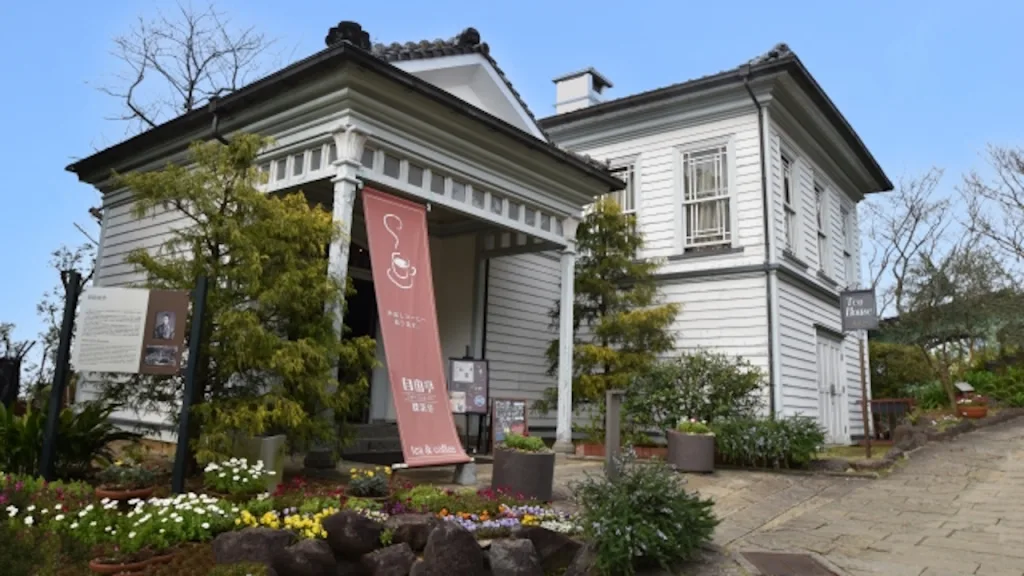
This building is located at the site of “Jiyutei,” the first Western restaurant operated by Japanese chefs. In front of the two-story building stand the “Monument of Western Cuisine Origin” and a statue of Kusano Takekichi.
Currently operating as a tearoom, visitors can enjoy Dutch coffee and castella cake in a stylish space with excellent views of Nagasaki Harbor.
Former Steele Memorial School
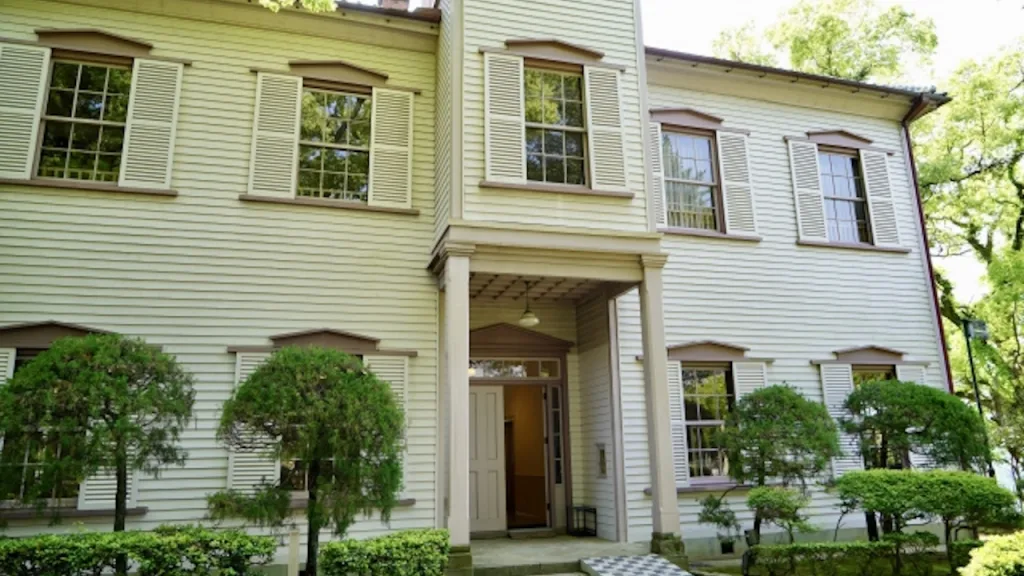
This was the school building of Steele Memorial Academy built in Higashiyamate. After serving as the main building of Higashiyamate Academy and changing ownership several times, it was used as a dormitory for Kaisei Gakuen before being relocated to Glover Garden.
The second-floor print exhibition room displays works by Tagawa Ken.
Former Nagasaki District Court Chief Judge’s Residence
This building was relocated and restored from Uemachi in Nagasaki City center. It retains characteristics of Western-style architecture from the mid-Meiji period.
Former Nagasaki Higher Commercial School Main Gate Guard House
This building from the founding of Nagasaki Higher Commercial School (now Faculty of Economics, Nagasaki University). The interesting structure features Western exterior but tatami mat flooring inside, representing a Japanese-Western eclectic style.
Nagasaki Traditional Performing Arts Museum
This museum displays materials related to Nagasaki Kunchi festival, allowing visitors to experience Nagasaki’s traditional culture.
Hidden Charms Within the Garden
Heart Stones – A Power Spot for Romance
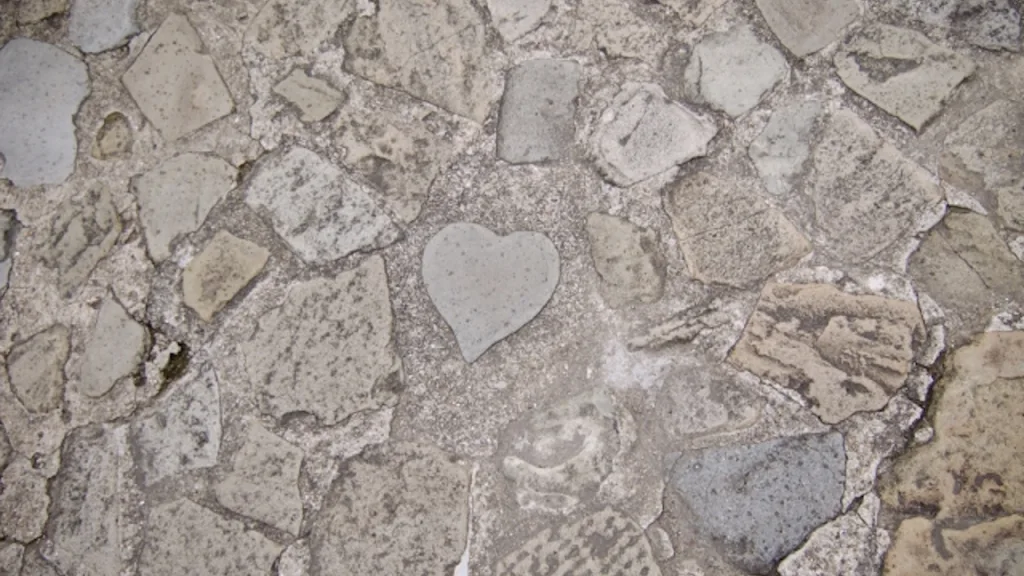
Two heart-shaped stones are embedded in the stone pavement throughout Glover Garden. Legends surrounding these stones include “couples placing hands together on this stone will find happiness” and “making a wish while touching this stone will bring romance,” making them popular power spots for love.
Finding the stones is considered part of gaining their blessings, so no signboards indicate their locations. One is located in front of the Former Glover House. Explore the garden slowly to find both heart stones.
Seasonal Flowers
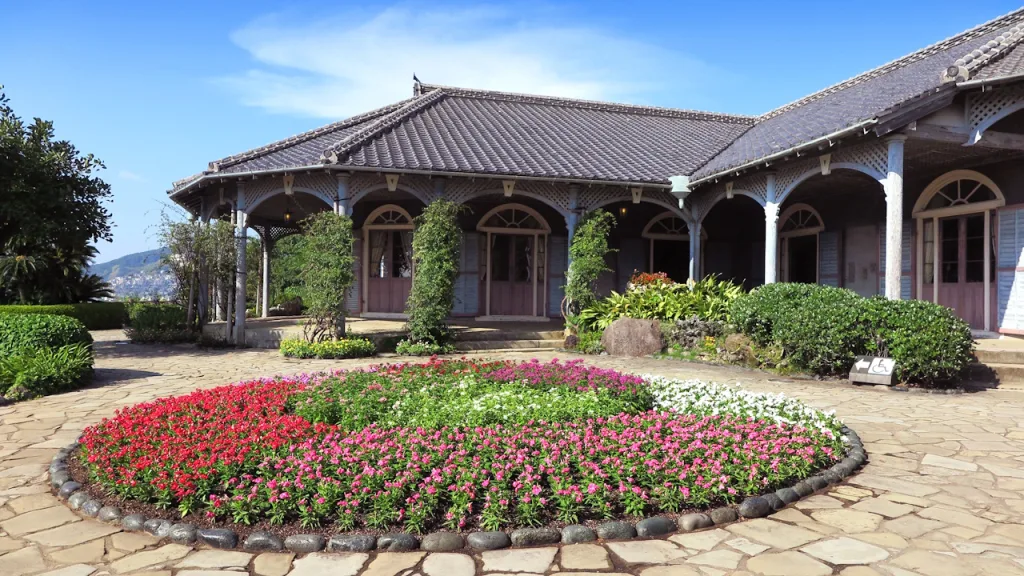
Flowers are planted throughout the garden, allowing visitors to enjoy seasonal blooms year-round.
From early March to April, Amana, a lily family plant that blooms pale blue flowers, can be seen. Also called Hananira, these flowers were said to be distributed only within the settlement area during the settlement period.
From early April to early May, white climbing roses form arches on the porch columns of the Former Glover House and Former Alt House.
And Cymbidium tracyanum, a Southeast Asian orchid that Glover first brought to Japan, blooms from March to April in the greenhouse of the Former Glover House. These are descendants of orchids Glover brought, continuing to bloom today.
Freemason Gate Posts
Freemasonry is a fraternal organization formed by stonemasons who built numerous cathedrals in medieval Britain. Beside the Former Ringer House stand gate posts engraved with Freemason symbols.
These originally stood at the gate of an enthusiastic British Freemason chairman in Nagasaki and were relocated to Glover Garden by Nagasaki City for tourism purposes after the war. The carving combines a square and compass, symbols of equality and justice.
Evening Illumination and Night Views
From mid-July to early October, evening opening hours are extended, and the Western-style buildings are illuminated. Visitors can enjoy a romantic atmosphere different from daytime, with fantastical scenes of buildings reflecting in the pond at Former Mitsubishi No. 2 Dock House.
From the hilltop, visitors can view Nagasaki Harbor and Mount Inasa’s night scenery, enjoying Nagasaki’s nightscape, recognized as one of the world’s new three major night views.
Garden Guided Tours
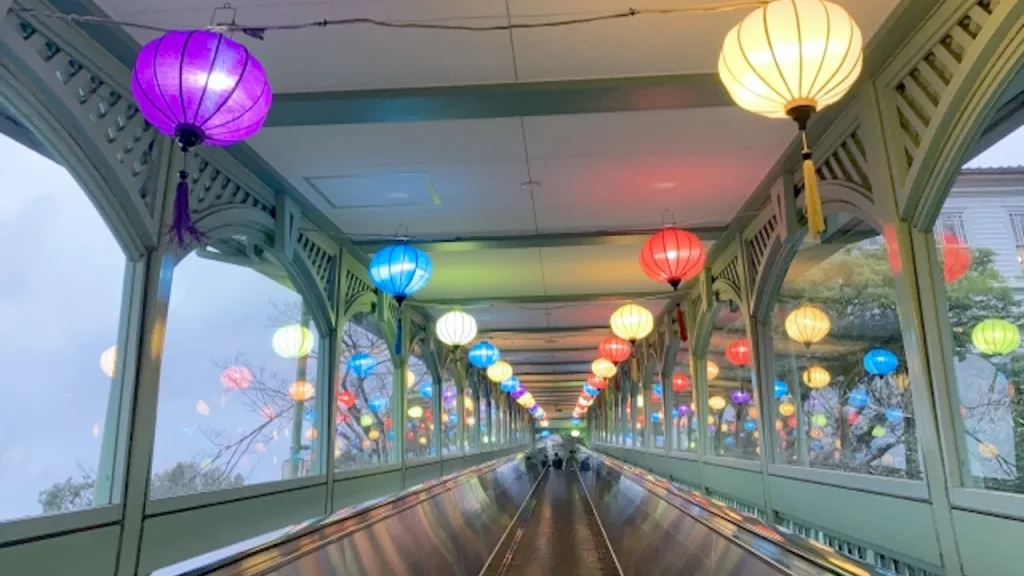
Glover Garden offers free guided tours daily at 11:00, 13:00, and 15:00. Tours last approximately 60 minutes, with registration at the first floor of the Former Mitsubishi No. 2 Dock House. No reservations are required—simply fill in necessary information on the Glover Garden tour participant registration sheet.
Historical tour guides provide detailed introductions to Glover Garden’s history, building features, and lesser-known episodes, enabling deeper understanding.
| Category | Individual (1-14 people) | Group (15+ people) |
|---|---|---|
| Adult | 620 yen | 520 yen |
| High School Student | 310 yen | 250 yen |
| Elementary & Junior High Student | 180 yen | 140 yen |
| Under Elementary School Age | Free | N/A |
Nearby Tourist Attractions
Oura Cathedral
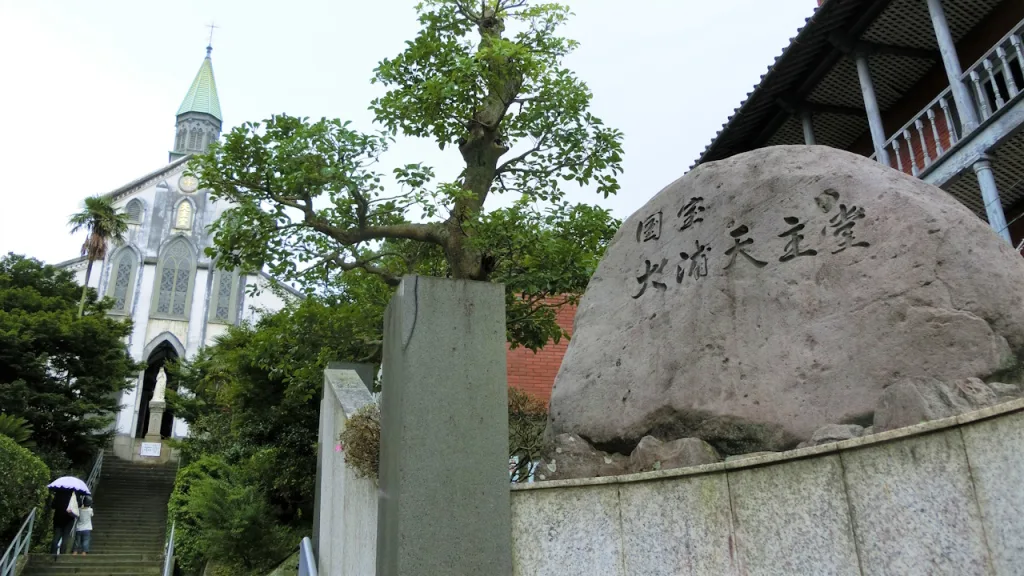
A National Treasure located approximately 2 minutes on foot from Glover Garden. Constructed in 1864, it is Japan’s oldest existing Christian building and was registered as a UNESCO World Heritage Site in 2018 as a component of “Hidden Christian Sites in the Nagasaki Region.”
The beautiful Gothic-style cathedral features stunning stained glass that creates beautiful patterns of light. It is also known as the site of the “Discovery of Christians” where hidden Christians who maintained their faith under the ban were revealed after the end of the Edo period’s isolationist policy.
Dutch Slope (Oranda-zaka)
A stone-paved slope in the foreign settlement area. The famous slope leads to Kwassui Women’s University and has become a representative tourist spot in Nagasaki. Western-style residences line the entire area, creating an exotic atmosphere that feels like being abroad.
Every angle is photogenic, making it recommended as a photo spot. Located approximately 5 minutes on foot from Glover Garden.
Higashiyamate Kaiju 13-Ban-Kan
A light blue Western-style building beside the Dutch Slope monument, free admission for casual visits. Upon passing through the arched entrance, visitors are greeted by “Heart Leaf,” a shrub pruned into a heart shape on the left side of the garden.
The second floor of the retro building features a space that evokes the lifestyle of former residents, and the spacious balcony offers views including Dutch Slope. The first-floor cafe serves Dutch coffee and castella sandwiches. Located approximately 8 minutes on foot from Glover Garden.
Former Hong Kong and Shanghai Bank Nagasaki Branch Memorial Hall
A Nationally Designated Important Cultural Property constructed in 1904. The building features a modern Meiji-era impression with an exotic atmosphere.
The first floor introduces the history of the Hong Kong and Shanghai Bank, while the Nagasaki Modern Exchange History and Sun Yat-sen & Umeya Shokichi Museum on the second and third floors allow visitors to learn about the friendship and achievements of Sun Yat-sen and Nagasaki-born businessman Umeya Shokichi. Located approximately 8 minutes on foot from Glover Garden.
Nabegamuriyama Park
A park on Mount Nabegamuriyama, shaped like an upside-down pot. The corridor-style observation deck renovated in 2016 offers panoramic views of Nagasaki Harbor and the city.
Visitors can view cruise ships entering Nagasaki Harbor and Mount Inasa across the sea. The night view is breathtakingly beautiful, making it a popular tourist spot for couples. Located approximately 10 minutes by car from Glover Garden.
Recommended Accommodation Nearby
ANA Crowne Plaza NAGASAKI GLOVERHILL by IHG
ANA Crowne Plaza Nagasaki Glover Hill is a large city resort hotel in the exotic Minami-Yamate district. With Glover Garden and Oura Cathedral within walking distance, it serves as an ideal base for sightseeing.
Characterized by a refined atmosphere and quality service, guests can enjoy Japanese, Western, and Chinese cuisine using fresh Nagasaki ingredients. Rooms offer views of Nagasaki Port, promising a higher-grade hotel stay.
Hotel Monterey Nagasaki
Hotel Monterey Nagasaki is an exotic hotel imagining Portugal’s Age of Discovery, which has deep ties with Nagasaki. Unified with romantic designs against the backdrop of the shining sun and medieval walled city culture.
Located close to Oura Cathedral and Glover Garden, with Chinatown also within walking distance. With good access to the Gunkanjima cruise ship boarding area about 3 minutes away, it is conveniently located for both sightseeing and business. All rooms are equipped with Wi-Fi facilities and humidified air purifiers.
Hotel Indigo Nagasaki Glover Street by IHG
Hotel Indigo Nagasaki Glover Street is a new hotel that opened in 2024 in Nagasaki’s Minami-Yamate. Positioned overlooking Nagasaki Port and the city in Minami-Yamate, it has been reborn in a new style while inheriting the elegance of the past.
As a hotel where guests can experience tasting the passage of time, touching vibrant culture, and “walking” through time and space, it offers stories of the “authentic Nagasaki” that even Nagasaki residents rarely have the opportunity to experience.
Plan Your Nagasaki Trip with Tour Conductor
History enthusiasts, couples, families, and photography lovers alike can enjoy this diverse tourist destination. Why not experience Nagasaki’s history and culture while spending special moments in an exotic atmosphere?
For those interested in exploring Nagasaki more deeply, consider using a dedicated tour conductor service. Our professional tour conductors can help you navigate the city’s rich historical sites, arrange transportation, assist with language barriers, and handle any unexpected situations during your visit, ensuring a smooth and enriching travel experience tailored to your interests.
Conclusion
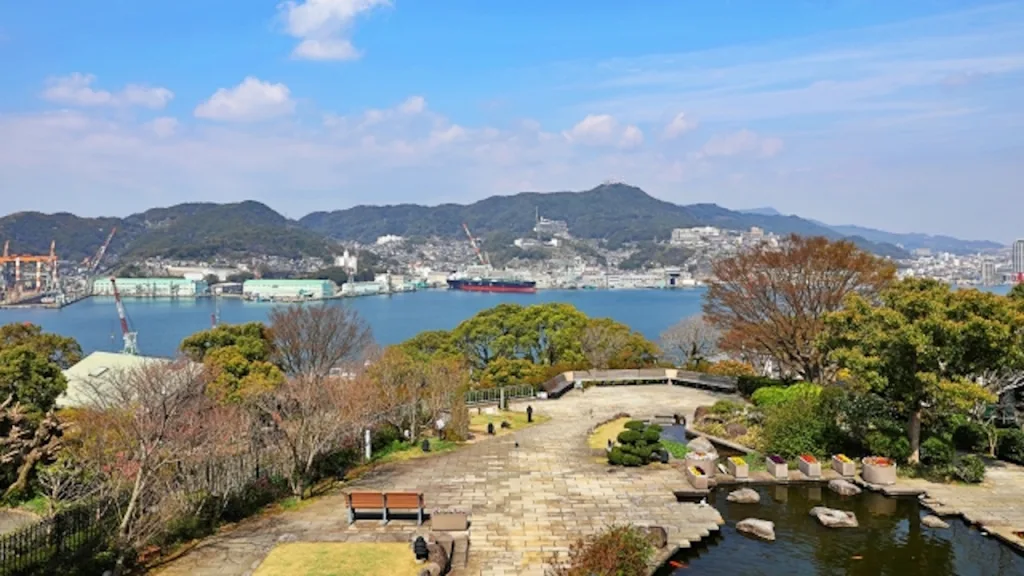
Glover Garden preserves the legacy of foreign merchants who supported Japan’s modernization from the late Edo period through the Meiji era. With the UNESCO World Heritage Former Glover House and other historical buildings, stunning harbor views, seasonal flowers, and romantic power spots, the garden offers abundant attractions.
Experience the beauty and history of Glover Garden, and immerse yourself in the fascinating story of how Nagasaki played a crucial role in Japan’s modernization.