
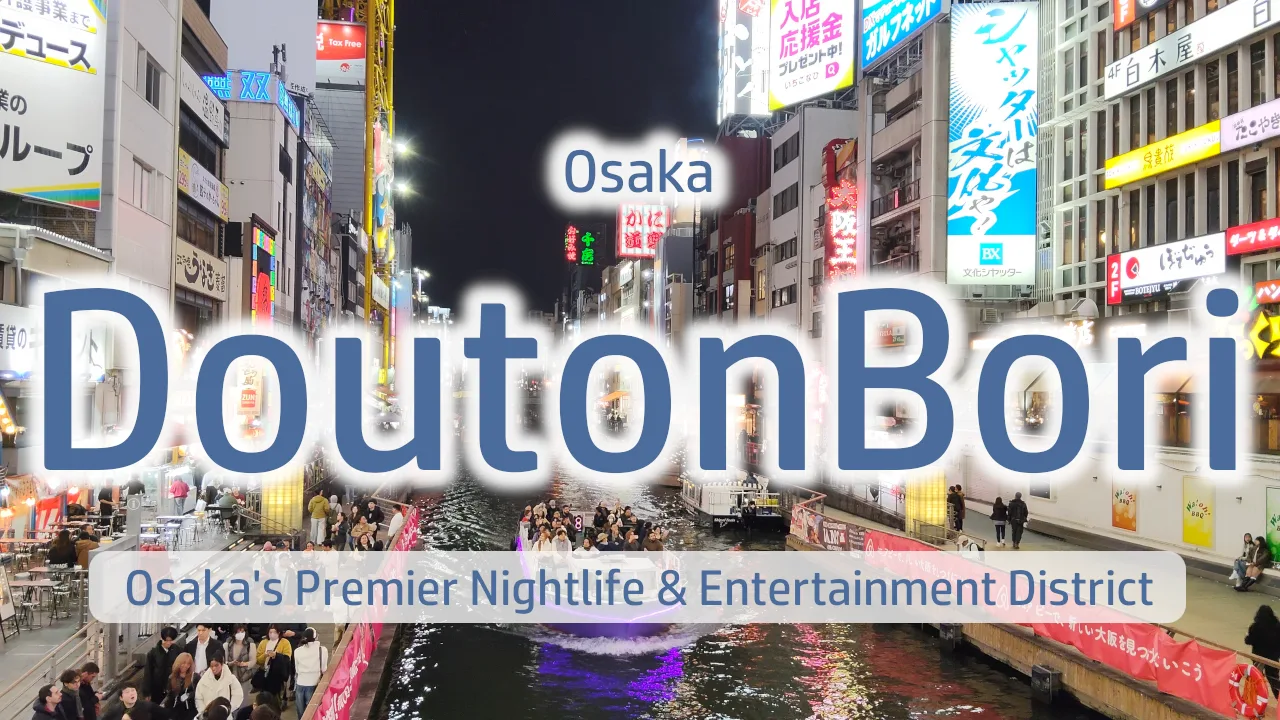
Dotonbori stands as Osaka’s most electrifying entertainment district, pulsating with neon-lit energy that has captivated visitors for over 400 years. This iconic neighborhood along the Dotonbori Canal represents everything that makes Osaka legendary: dazzling nightlife, extraordinary street food culture, and an atmosphere that seamlessly blends historical theater traditions with contemporary urban excitement.
Must Visit Site in Osaka 2026
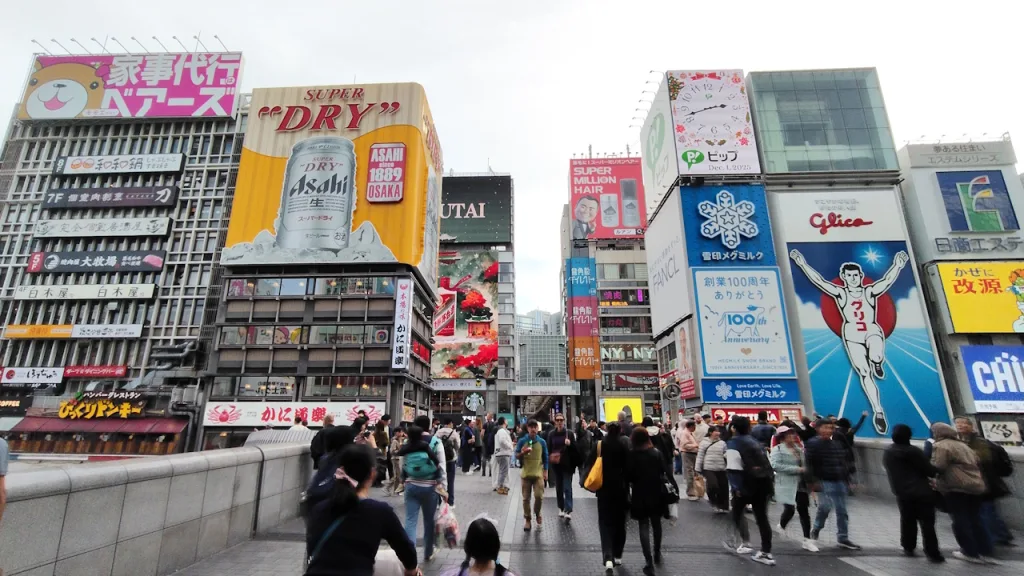
When you arrive at Ebisu Bridge and witness the famous Glico Running Man sign illuminated against countless towering billboards, you’ll immediately understand why Dotonbori nightlife ranks among Japan’s most photographed and celebrated experiences. The giant mechanical crab of Kani Doraku waves its legs overhead, the cheerful Kuidaore Taro doll beckons from its perch, and an endless array of three-dimensional displays creates a visual spectacle unmatched anywhere in the world.
As Osaka’s premier entertainment district, Dotonbori has earned its reputation as the epicenter of “kuidaore” (literally “eat until you collapse”) culture. The district offers an unparalleled culinary journey through takoyaki (grilled octopus balls) stands, okonomiyaki (savory pancakes) restaurants, kushikatsu establishments, and countless other dining options. The aroma of grilled octopus and savory pancakes mingles with the calls of enthusiastic vendors, creating a sensory experience that perfectly defines Osaka’s dining scene.
With exceptional accessibility from Namba Station—served by the Midosuji, Yotsubashi, and Sennichimae subway lines—Dotonbori sits just minutes away on foot, making it the perfect starting point for any Osaka adventure. From Kansai International Airport, the district is approximately 40 minutes by train, while Shin-Osaka Station is merely 15 minutes distant, positioning this entertainment district as an ideal base for exploring the Kansai region.
Planning Your Dotonbori Visit: What to Expect
While Dotonbori’s vibrant energy and world-famous nightlife make it Japan’s most visited entertainment district, understanding the challenges that accompany its immense popularity will help you maximize your experience.
The best time to visit Dotonbori depends largely on your tolerance for crowds. Weekends and national holidays transform the area around Ebisu Bridge into a sea of humanity, with such dense foot traffic that movement becomes difficult. Photographing the Glico sign photo spot often requires considerable patience as visitors queue for their iconic shot. For those preferring a more relaxed atmosphere, weekday mornings or mid-afternoons offer the ideal window—the neon lights may not glow as brightly, but you’ll find breathing room to truly absorb the district’s character.
Spring (March to May) and autumn (October to November) represent the best time to visit Dotonbori from a weather perspective. These seasons deliver comfortable temperatures perfect for exploring outdoor street food markets and enjoying leisurely Dotonbori river cruises along the canal. Spring brings cherry blossom season’s enchanting backdrop, while autumn provides refreshing coolness and lovely foliage that enhances the district’s aesthetic appeal.
Payment considerations remain important despite Japan’s modernization. While major restaurants and shops accept credit cards and electronic payments, numerous food stalls and smaller vendors operate exclusively on cash. Carrying sufficient Japanese yen becomes essential, particularly when indulging in Dotonbori street food culture—one of the district’s defining attractions.
The Osaka entertainment district maintains its lively atmosphere well past midnight, but visitors should exercise standard urban caution in less-trafficked side streets and alleys. Keep valuables secure and maintain awareness of your surroundings, particularly when exploring Hozenji Yokocho’s atmospheric lanes or venturing into quieter areas beyond the main thoroughfare.
Proper waste disposal deserves attention given the abundance of street food options. While garbage bins appear throughout the area, they frequently overflow during peak periods. When purchasing food from shops or restaurants, inquire whether they can dispose of packaging—most establishments appreciate this consideration and gladly assist.
Four Centuries of Entertainment: Dotonbori’s Theatrical Legacy
Dotonbori’s transformation into Japan’s premier entertainment district began in 1612, when merchant Yasui Doton embarked on an ambitious canal excavation project connecting the Higashi Yokobori and Nishi Yokobori rivers. Doton envisioned this waterway catalyzing Osaka’s commercial development, creating unprecedented opportunities for trade and transportation in the rapidly expanding city.
Tragedy struck during the 1615 Siege of Osaka when Doton perished before witnessing his vision’s completion. His cousin Yasui Dokaku and merchant Hirano Fujiji honored his legacy by finishing the canal that same year. Lord Matsudaira Tadaaki of Osaka Castle commemorated Doton’s dedication by naming the waterway “Dotonbori”—literally “Doton Canal.” A memorial stone at Nipponbashi’s northern end continues paying tribute to both Doton and Dokaku’s contributions to Osaka’s development.
The district’s evolution into an entertainment hub commenced in 1619 when Yasui Kyubei became chief magistrate of Osaka’s southern ward. Around 1626, he orchestrated several theater houses’ relocation to Dotonbori. Under Tokugawa shogunate urban planning policies, the canal’s southern bank received official recognition as a theater district, with kabuki, bunraku puppet theater, and variety show venues rapidly establishing themselves along the waterfront.
By the late 17th century, prominent theaters including Nakaza, Kadoza, and Naniwa-za opened their doors, sparking a kabuki renaissance. Puppet theater companies Takemoto-za and Toyotake-za also established operations, becoming venues where celebrated playwright Chikamatsu Monzaemon premiered most masterworks, including the legendary “The Love Suicides at Sonezaki.” Chikamatsu, often called the Shakespeare of the East, created the majority of his theatrical legacy within Dotonbori’s vibrant cultural scene.
During the Edo period, Dotonbori’s five major theaters—Benten-za, Asahi-za, Kado-za, Naka-za, and Takemoto-za—towered as symbols of theatrical prominence. When compared to New York’s Broadway (established 1842) and London’s West End (established 1663), Dotonbori’s emergence from 1626 onwards positions it among the world’s oldest and most historically significant performing arts centers.
Theatrical audiences created demand for hospitality services, leading to “shibai-chaya” (theater teahouses) proliferation along the canal’s northern bank. These establishments handled ticket arrangements and provided meals and rest for theatergoers. Many patrons arrived by boat the evening before performances, dining and resting at teahouses until showtime the following morning.
Theater concentration naturally attracted restaurants and food vendors, establishing foundations for Osaka’s renowned culinary culture. As the city earned its “tenka no daidokoro” (the nation’s kitchen) nickname, Dotonbori became particularly celebrated for its “kuidaore” (literally “eat until you collapse”) dining culture—a tradition continuing to define the entertainment district today.
The Taisho era brought further urbanization, with cafés and Western-style restaurants joining the landscape. The 1923 opening of Osaka Shochikuza, the Kansai region’s first Western-style theater, cemented Dotonbori’s status as a premier cultural destination and solidified its reputation as Osaka’s leading entertainment district.
The Showa period ushered in spectacular neon advertising and three-dimensional billboards that became Dotonbori’s trademark. In 1935, the original Glico sign debuted—a 33-meter neon tower featuring a six-color changing runner display. Though temporarily removed during World War II for metal requisition, it returned in 1955 and evolved through six generations to become Osaka’s most recognizable landmark and the definitive Glico sign photo spot. The runner’s pose models Filipino athlete Canolon, who competed in the 1921 Far Eastern Championship Games.
While most Edo-era theaters transformed into movie houses or variety halls, Osaka Shochikuza continues presenting kabuki and traditional performing arts, serving as the sole surviving link to Dotonbori’s theatrical heritage and preserving the district’s centuries-old cultural legacy as a premier entertainment destination.
Glico Sign Photo Spot & Ebisu Bridge: Icons of Dotonbori Nightlife
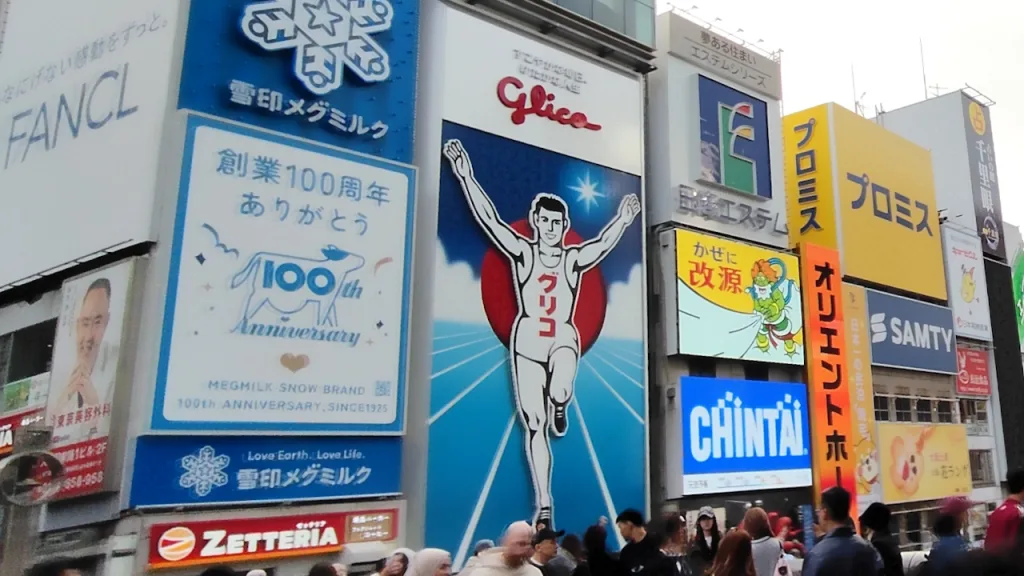
The Glico Running Man sign represents Dotonbori’s most iconic image and the ultimate Glico sign photo spot, visible from Ebisu Bridge as a runner frozen mid-stride in victorious pose. This symbol of Osaka has achieved worldwide recognition, becoming the entertainment district’s defining visual landmark and one of Japan’s most photographed locations.
The sixth-generation Glico sign, renovated in autumn 2014, employs LED technology displaying various presentations throughout the day. While impressive during daylight hours against blue skies, the sign truly commands attention after dark when its illumination creates spectacular nighttime displays that exemplify Dotonbori nightlife’s electric energy.
Ebisu Bridge serves as the entertainment district’s busiest gathering point, constantly thronged with visitors. From this vantage point at the heart of Dotonbori nightlife, you simultaneously view the Glico sign and surrounding massive billboard constellation. The traditional photo opportunity involves mimicking the Glico runner’s triumphant pose—arms raised high in victory—creating the perfect Instagram moment at this famous Glico sign photo spot.
For the best Glico sign photo spot experience, visit during two optimal windows: early morning (6-8 AM) when crowds remain minimal, or late evening after 11 PM when foot traffic decreases. The opposite side of Ebisu Bridge often provides better angles with fewer people blocking your shot. Professional photographers recommend positioning yourself slightly off-center for more dynamic compositions that capture both the Glico sign and Dotonbori Canal’s neon reflections.
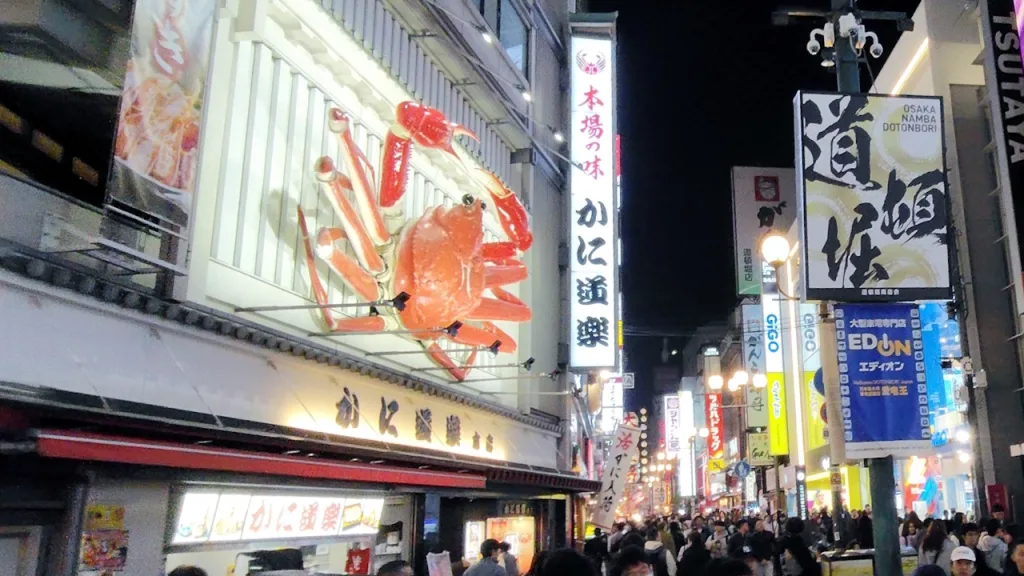
Adjacent to the bridge stands another Osaka entertainment district institution: the animated Kani Doraku crab sign. Installed when the restaurant opened in 1962, this enormous red-and-white crab—designed evoking Japan’s national flag—became an equally famous landmark. Its mechanically moving legs create unforgettable impressions. After successfully defending uniqueness in court against imitators, the sign now stands as one of Dotonbori’s most photographed attractions and an essential stop on any Dotonbori street food tour.
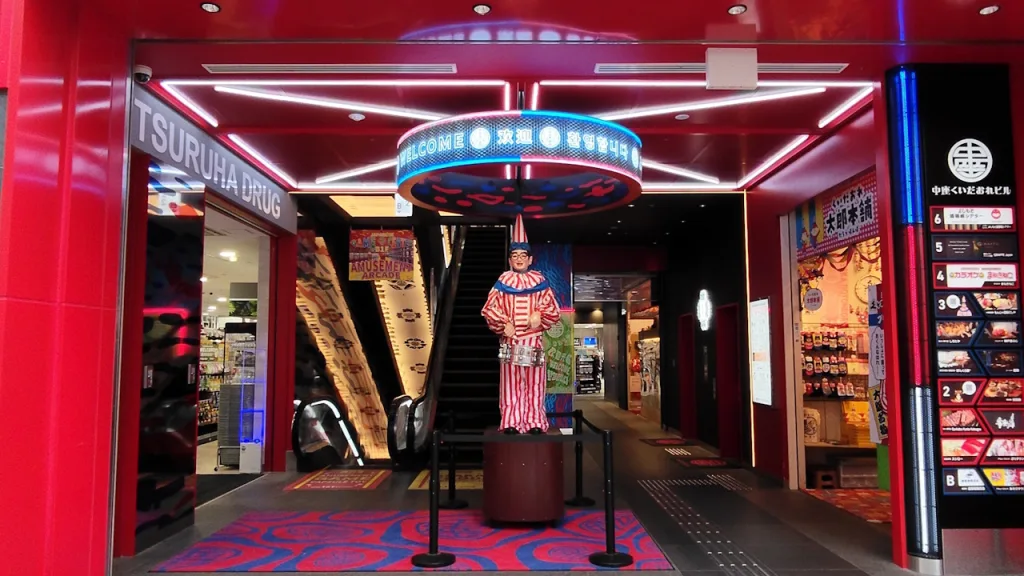
Near Ebisu Bridge, the Kuidaore Building houses the famous Kuidaore Taro figure, a beloved symbol representing Osaka’s “eat until you collapse” philosophy. Once a restaurant, the six-story building now contains souvenir shops and a parlor. The ground floor offers merchandise featuring Kuidaore Taro alongside other Dotonbori-exclusive products, making it an excellent stop for unique gifts commemorating your entertainment district adventure.
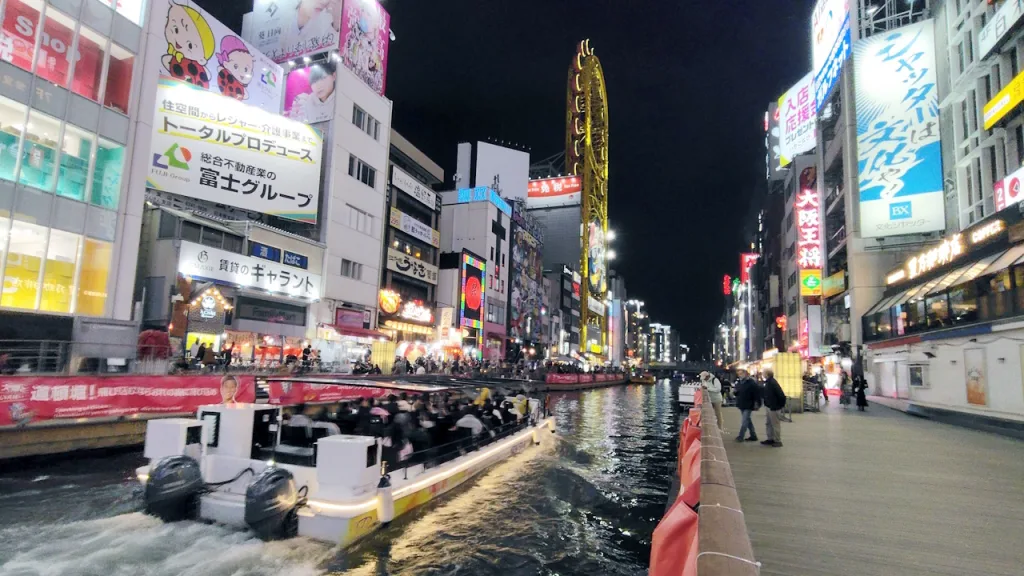
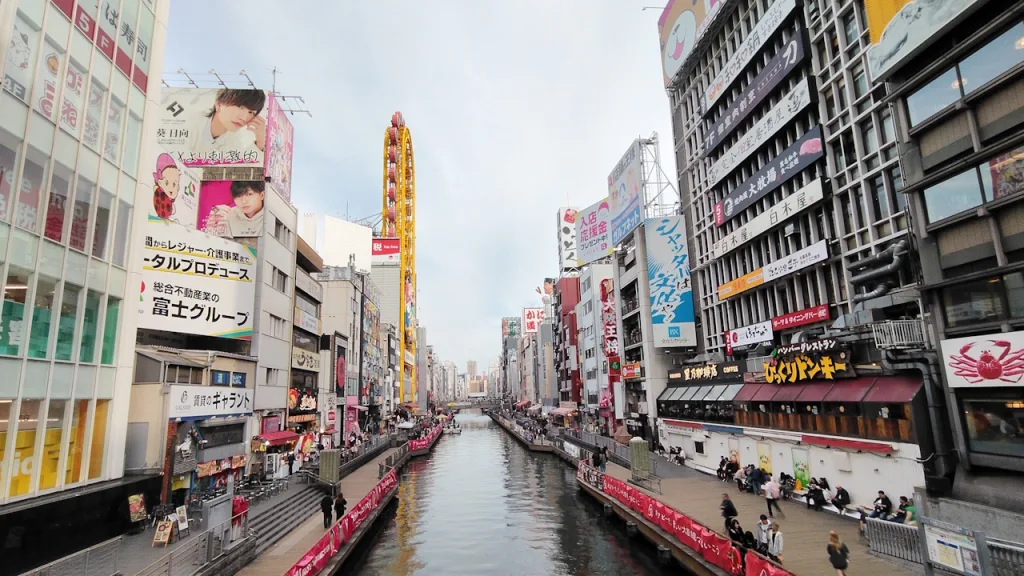
Looking opposite from the bridge reveals the landscaped Tombori Riverwalk promenade and Ebisu Tower—Don Quijote’s distinctive Ferris wheel. This 77.4-meter-tall attraction, the world’s first oval-shaped Ferris wheel, offers 15-minute rides with panoramic views of Osaka’s cityscape. The nighttime perspective proves particularly breathtaking, with vistas extending to Abeno Harukas and Tsutenkaku Tower, providing unique aerial views of the Osaka entertainment district’s neon brilliance.
Dotonbori Konamon Museum: Hands-On Street Food Culture
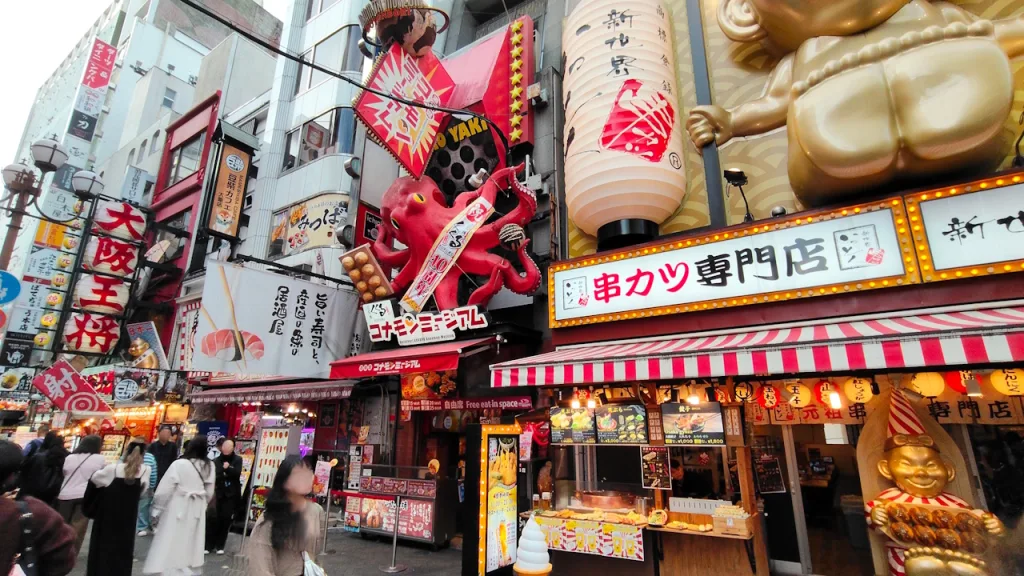
The Dotonbori Konamon Museum celebrates “konamon” (flour-based foods), a cornerstone of Osaka’s culinary identity and essential component of any Dotonbori street food tour. Located along the canal and marked by a massive octopus sign, this establishment operated by renowned takoyaki (grilled octopus balls) restaurant Kukuru offers both education and hands-on experiences centered on Osaka’s beloved street foods.
The museum explores takoyaki history and konamon culture while providing interactive programs letting visitors engage directly with these traditions. The basement bistro serves authentic takoyaki featuring Kukuru’s signature texture—crispy exterior encasing creamy, molten interior. Beyond classic sauce variety, options include green onion ponzu, soy sauce, and salt, allowing exploration of diverse flavor profiles that define Dotonbori street food culture.
Food sample creation workshops rank among the most popular activities. Participants craft realistic takoyaki replicas under professional guidance, creating unique souvenirs. The ability to customize samples with preferred toppings adds personal touches to these memorable keepsakes, perfect for commemorating your Osaka entertainment district experience.
The “Takoyaki Dojo” program offers instruction from master craftspeople in takoyaki preparation art. Using professional equipment, participants create their own original takoyaki (grilled octopus balls), gaining deeper appreciation for Osaka’s food culture while enjoying fresh-made creations. This immersive experience often becomes one of the most treasured memories from exploring Dotonbori nightlife and street food scenes.
Exhibition spaces throughout the museum detail takoyaki and okonomiyaki (savory pancakes) history, explaining why konamon culture flourished specifically in Osaka. Displays illuminate connections between Edo-period merchant culture and development of these convenient, affordable foods, providing fascinating context for understanding Osaka’s culinary evolution and the foundations of modern Dotonbori street food culture.
Dotonbori River Cruise 2026: Nighttime Canal Perspectives
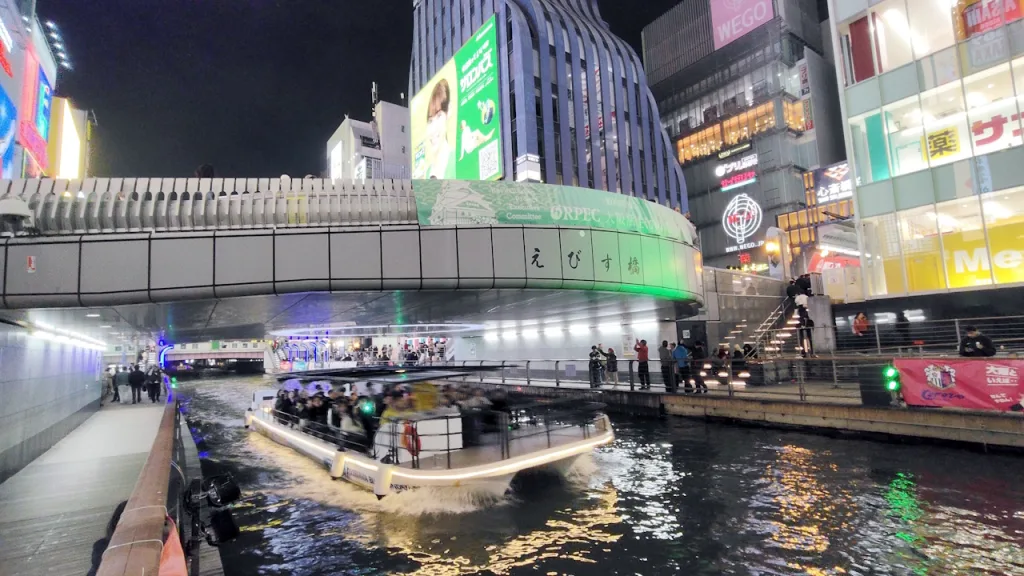
Experiencing the Osaka entertainment district from water offers entirely different dimensions to your visit. Several cruise companies operate Dotonbori river cruise tours along the canal, each offering distinct routes and features showcasing the district from unique angles that have made these cruises increasingly popular in 2026.
The most popular option remains the 20-minute Dotonbori Canal circuit. This Dotonbori river cruise travels from Nipponbashi past the Glico sign to Minatomachi and back, providing perspectives impossible to achieve from street level. Viewing the Glico sign and Kani Doraku crab from below, and passing beneath bridges, creates fresh appreciation for the entertainment district’s architectural spectacle and the engineering behind its famous neon displays.
Cruise vessels feature comfortable lounge-style seating in café-like atmospheres. Since bringing food and beverages aboard is permitted, many visitors purchase local specialties beforehand and enjoy them while cruising—a quintessentially Osaka experience that combines Dotonbori street food culture with leisurely sightseeing.
Evening Dotonbori river cruises offer particularly magical experiences showcasing the best of Dotonbori nightlife. Neon-illuminated streetscapes reflect off water surfaces, transforming the Osaka entertainment district into entirely different worlds compared to daylight hours. Romantic ambiance makes these cruises especially popular with couples seeking unique date experiences in 2026.
Extended cruise options of 50 or 90 minutes venture beyond Dotonbori Canal through the water gate to areas near Kyocera Dome, Osaka Central Public Hall, and even Osaka Castle. These longer journeys reveal Osaka’s historical identity as a “water city,” showcasing extensive canal networks that once served as the city’s commercial lifeline.
A unique 2026 offering is the “Takoyaki Cruise,” combining sightseeing with hands-on cooking. Participants prepare takoyaki (grilled octopus balls) aboard vessels while cruising through the entertainment district—an experience garnering significant media attention as truly one-of-a-kind Osaka adventures. Learning from professionals while cooking and eating your own takoyaki as you glide through the heart of Dotonbori nightlife creates unforgettable memories.
Boat landings at Nipponbashi, Tazaemon Bridge, and Minatomachi all offer convenient access. The Minatomachi pier sits particularly close to Namba Station, making it easy to incorporate Dotonbori river cruise experiences into any sightseeing itinerary focused on the Osaka entertainment district.
Hozenji Yokocho Hidden Gem: Discovering Old Osaka
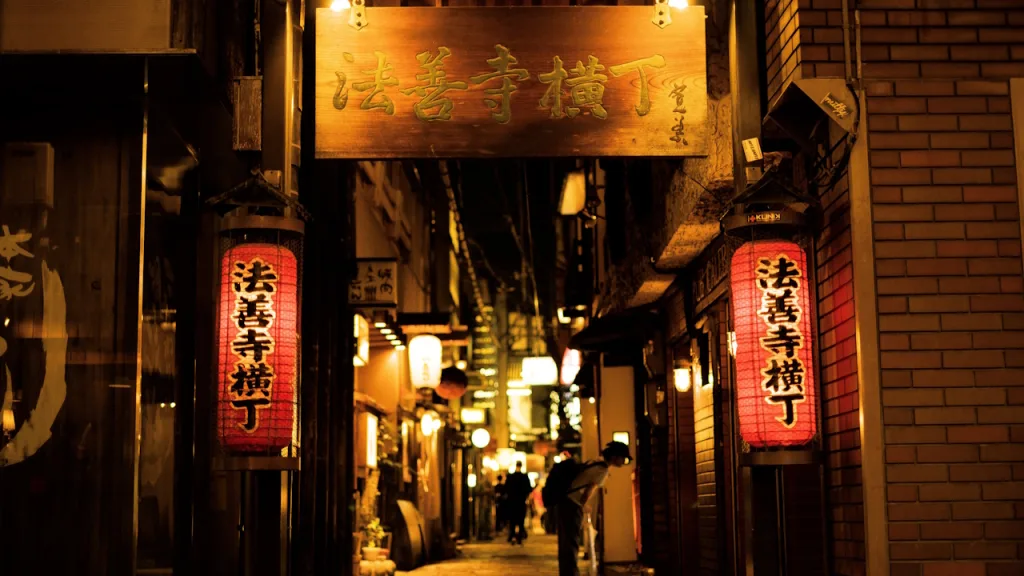
Just minutes’ walk south of Dotonbori nightlife’s bustling main street lies Hozenji Yokocho, a narrow lane seeming frozen in time and ranking among Osaka’s most atmospheric hidden gems. This 80-meter-long, 3-meter-wide stone-paved alley lined with approximately 60 establishments offers striking contrast to neon-lit energy dominating the main entertainment district thoroughfare.
The entrance signboard was calligraphed by comedian Fujiyama Kanbi. Close inspection reveals the character for “zen” (善) missing one stroke—when a student pointed out this error, Fujiyama reportedly responded that “entertainers are better off missing one or two strokes,” leaving the sign as written. This anecdote perfectly captures Osaka’s characteristic entertainment spirit that defines the broader Dotonbori entertainment district.
At the alley’s heart sits Hozenji Temple, home to “Mizukake Fudo” (Water-splashing Fudo)—a moss-covered statue of Fudo Myoo. The deity’s entire surface turned green from centuries of visitors splashing water while making prayers. This Fudo Myoo is revered for healing illnesses and granting wishes, attracting countless worshippers throughout the year, including many visitors seeking respite from busy Dotonbori nightlife exploration.
Hozenji Yokocho gained literary fame as the setting for Oda Sakunosuke’s novel “Meoto Zenzai” (Husband and Wife Sweet Bean Soup). The sweet shop featured in the story continues operating today, allowing visitors to savor red bean soup while contemplating the novel’s world and feeling transported to different eras, far removed from the contemporary Osaka entertainment district’s electric energy.
The alley contains various establishments including traditional restaurants, izakaya pubs, and bars serving as perfect destinations for experiencing authentic Dotonbori nightlife away from tourist crowds. Stone pavement illuminated by lantern light creates especially enchanting atmospheres after dark, offering completely different experiences from daytime Dotonbori. For those seeking to encounter Osaka’s deeper character and traditional ambiance while exploring the entertainment district, Hozenji Yokocho hidden gem status makes it an essential destination.
In 2026, Hozenji Yokocho continues attracting discerning travelers seeking authentic Osaka experiences beyond the main entertainment district’s tourist infrastructure. Early evening visits (5-7 PM) provide ideal timing, when lanterns begin glowing but crowds remain manageable, allowing peaceful appreciation of this atmospheric hidden gem’s timeless charm.
Dotonbori Street Food Tour: Essential Culinary Experiences
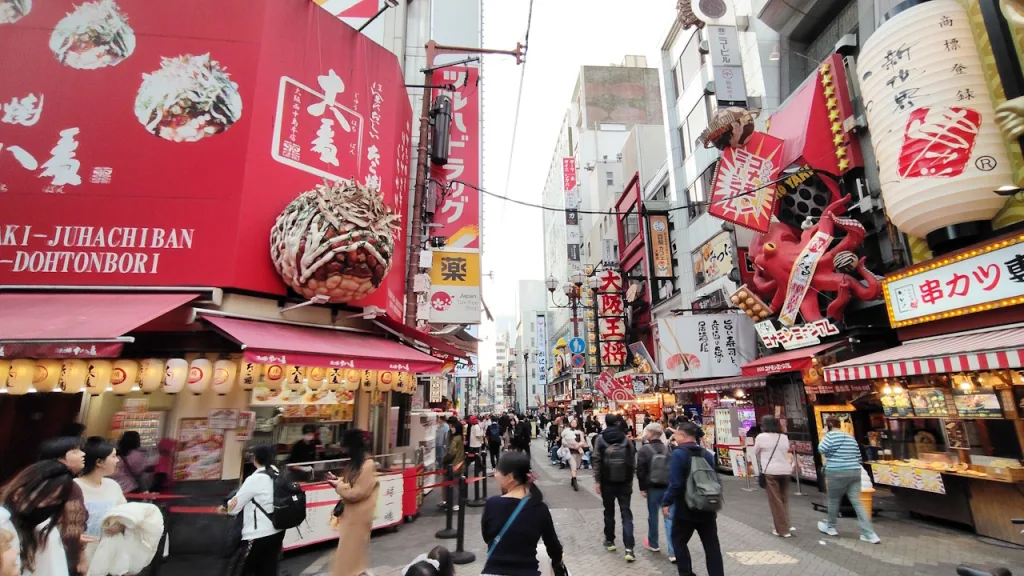
The Osaka entertainment district concentrates extraordinary dining establishment density within the city’s “kuidaore” (literally “eat until you collapse”) culture. Any comprehensive Dotonbori street food tour must include takoyaki (grilled octopus balls), okonomiyaki (savory pancakes), and kushikatsu—Osaka’s signature dishes—alongside ramen, Chinese cuisine, and sweets representing every culinary genre in this gastronomic wonderland.
Takoyaki: The Quintessential Dotonbori Street Food
Among numerous excellent takoyaki establishments essential to any Dotonbori street food tour, Takoyaki Doraku Wanaka stands out. Their signature crispy-outside, creamy-inside texture combined with variations including green onion ponzu, soy sauce, and salt flavors has made them legendary. Located near the Glico sign photo spot, customers enjoy fresh-made takoyaki from benches outside while absorbing the entertainment district atmosphere—a perfect pairing of food and ambiance.
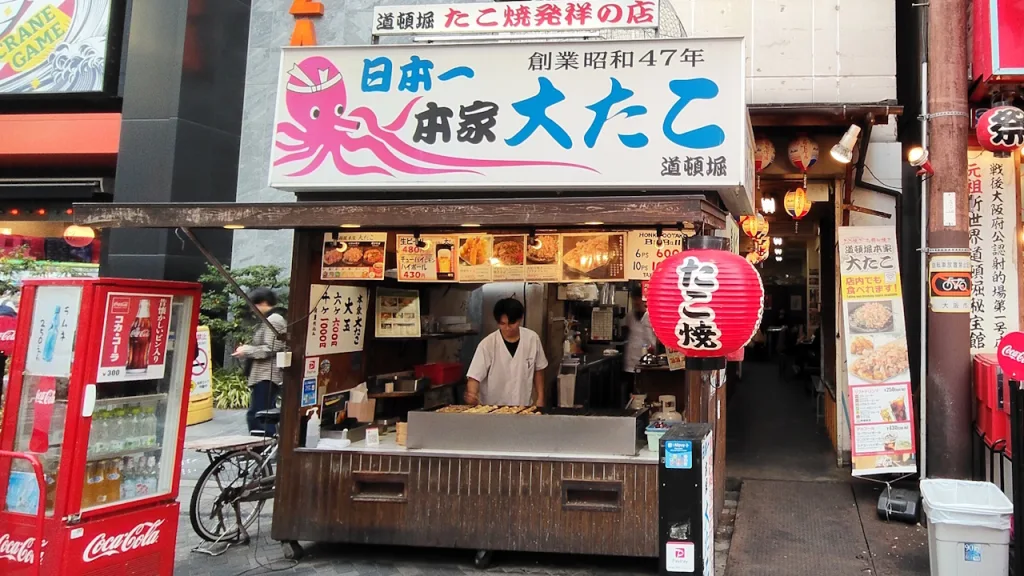
Honke Ootako represents another quintessential institution featured on every authentic Dotonbori street food tour. Established in 1972, this venerable shop is renowned for exceptionally large, tender chunks of fresh octopus. After protracted legal battles over municipal land use reaching the Supreme Court and resulting in relocation, the shop reopened across the street thanks to local support and continues delighting devoted customers. The combination of substantial octopus pieces and secret dashi creates traditional flavors embodying Dotonbori’s culinary heritage.
Okonomiyaki and Kushikatsu Classics
For okonomiyaki experiences on your Dotonbori street food tour, Mizuno commands respect as a legendary establishment. Founded in 1945, this restaurant specializes in “yamaimo-yaki” featuring generous mountain yam amounts for incomparably fluffy texture. Watching skilled chefs prepare meals on teppan griddles before your eyes constitutes part of the experience. Long queues testify to the restaurant’s enduring popularity within the Osaka entertainment district.
Kushikatsu Daruma exemplifies deep-fried skewer traditions essential to comprehensive Dotonbori street food tours. This venerable establishment, founded in 1929, serves piping-hot kushikatsu meant for dipping in special sauce. The famous “ni-do-zuke akan” (no double-dipping) rule represents quintessential Osaka culture. With diverse options including beef, seafood, and vegetables, crispy coating and juicy interior create addictive flavor combinations.
Late-Night Dotonbori Nightlife Dining
For Chinese cuisine during late-night Dotonbori nightlife exploration, 551 Horai’s main shop draws crowds. While pork buns have become classic Osaka souvenirs, dining in allows enjoying freshly prepared dishes. Generous yakisoba and gyoza also earn high praise from locals and tourists alike.
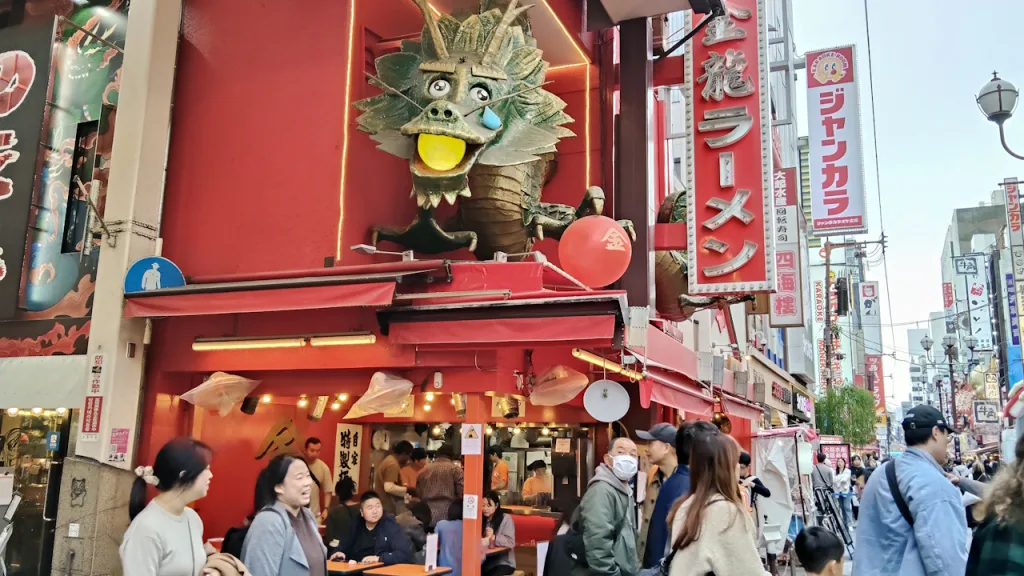
Ramen enthusiasts exploring Dotonbori nightlife should seek Kinryu Ramen, identifiable by its massive golden dragon exterior. Rich pork bone broth defines signature ramen, which customers customize with complimentary kimchi and nira (garlic chives) toppings. The 24-hour operation makes it perfect for late-night dining or post-drinking meals—a staple of the Osaka entertainment district’s round-the-clock energy.
Street food constitutes another crucial element of any Dotonbori street food tour. Steaming hot takoyaki (grilled octopus balls), melted-cheese crepes, and vibrantly colorful Instagram-worthy soft-serve ice cream represent just fractions of portable options. Strolling along Tombori Riverwalk while sampling various treats embodies the complete Dotonbori entertainment district experience, combining culinary adventure with scenic canal views.
Osaka Entertainment District After Dark: Maximizing Dotonbori Nightlife
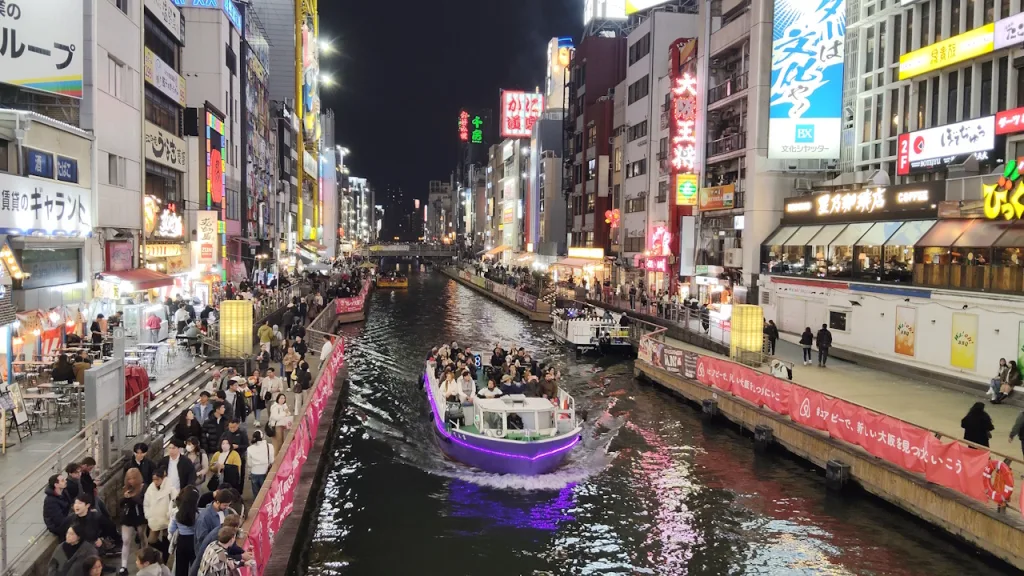
The best time to visit Dotonbori for experiencing its legendary atmosphere arrives after sunset, when the Osaka entertainment district truly awakens. Dotonbori nightlife transforms the area into a neon wonderland where electric energy reaches peak intensity, creating the scenes that have made this district world-famous.
Evening represents the optimal window for Dotonbori nightlife exploration, typically from 7 PM onwards when neon signs illuminate and crowds build momentum. The Glico sign photo spot becomes particularly photogenic during blue hour (just after sunset), when natural twilight complements artificial illumination, creating perfect lighting conditions for photography enthusiasts.
For authentic Dotonbori nightlife experiences beyond tourist-focused establishments, venture into side streets branching from the main canal. Soemoncho district, located adjacent to the primary entertainment district, concentrates bars and clubs creating especially lively atmospheres. This area bustles with diverse establishments including bars, clubs, restaurants, and karaoke venues, remaining busy until late night.
Ukiyo Koji, a narrow 50-meter alley near Hozenji Yokocho, offers tranquil Dotonbori nightlife alternatives. This dimly-lit passage marked by red lanterns features maps illustrating old Dotonbori and exhibits about Osaka’s entertainment history, providing cultural context that enriches understanding of the modern entertainment district.
Safety considerations remain important when exploring Dotonbori nightlife, particularly for international visitors. While the main entertainment district maintains excellent safety standards, exercise caution with establishments displaying unclear pricing or targeting tourists exclusively. Reputable venues always display menus with clear prices, and staff can communicate in multiple languages without pressure tactics.
The best time to visit Dotonbori for experiencing peak nightlife energy typically falls between 9 PM and midnight on Fridays and Saturdays, when the Osaka entertainment district reaches maximum vibrancy. However, this timing also brings largest crowds. For more relaxed Dotonbori nightlife appreciation, weekday evenings (Tuesday-Thursday) from 8-10 PM offer ideal balance between atmospheric energy and manageable crowds.
Namba Station to Dotonbori: Seamless Access
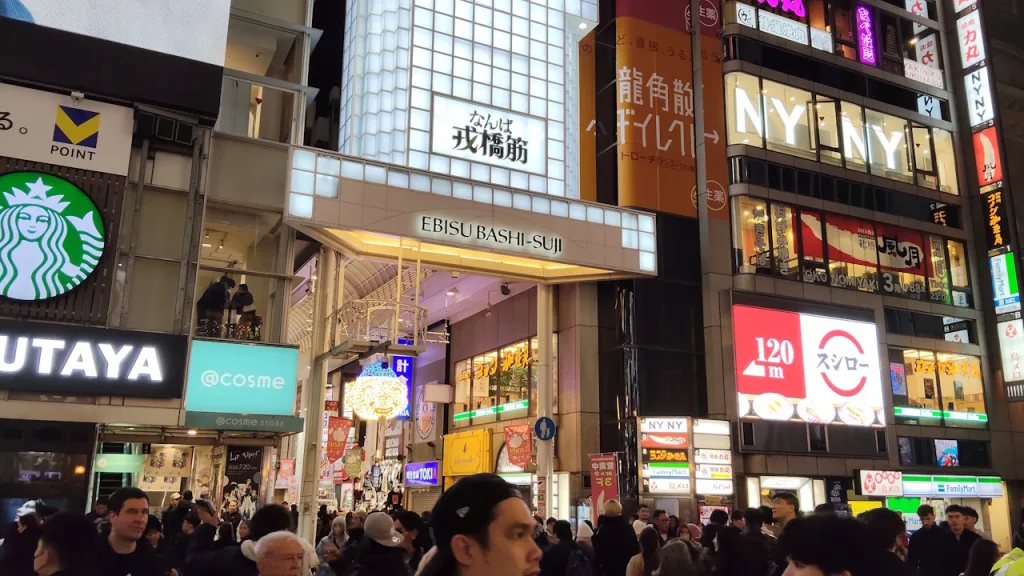
Navigation from Namba Station to Dotonbori couldn’t be simpler, making this Osaka entertainment district exceptionally accessible for all travelers. Multiple subway lines converge at Namba Station, providing convenient access from anywhere in Osaka and beyond.
The Osaka Metro Midosuji Line, Yotsubashi Line, and Sennichimae Line all serve Namba Station, with different exits providing varying walking distances to Dotonbori’s main attractions. Exit 14 from Namba Station offers the most direct route to the Glico sign photo spot and Ebisu Bridge, requiring approximately 3-5 minutes of walking through covered passages.
From Kansai International Airport, the Nankai Airport Line connects directly to Namba Station in approximately 40 minutes via Limited Express trains. This route provides the most efficient airport access to the Osaka entertainment district, with trains departing every 30 minutes throughout the day.
Visitors arriving at Shin-Osaka Station can reach Namba Station via the Midosuji Line in approximately 15 minutes, with trains running every few minutes during peak hours. This connection makes Dotonbori nightlife easily accessible even for travelers staying in northern Osaka or arriving via Shinkansen bullet trains.
The JR Namba Station, connected to the larger Namba Station complex, serves the Kansai Main Line and provides additional access options. However, the Osaka Metro lines typically offer more convenient access for reaching the heart of the entertainment district and popular Dotonbori street food tour starting points.
For 2026 visitors, IC cards like ICOCA provide seamless tap-and-go travel throughout Osaka’s public transportation network. These rechargeable cards eliminate the need for purchasing individual tickets and work across all subway lines serving Namba Station, streamlining your journey to the Osaka entertainment district.
Beyond Dotonbori: Complementary Entertainment District Experiences
Shinsaibashi: Osaka’s Shopping Paradise
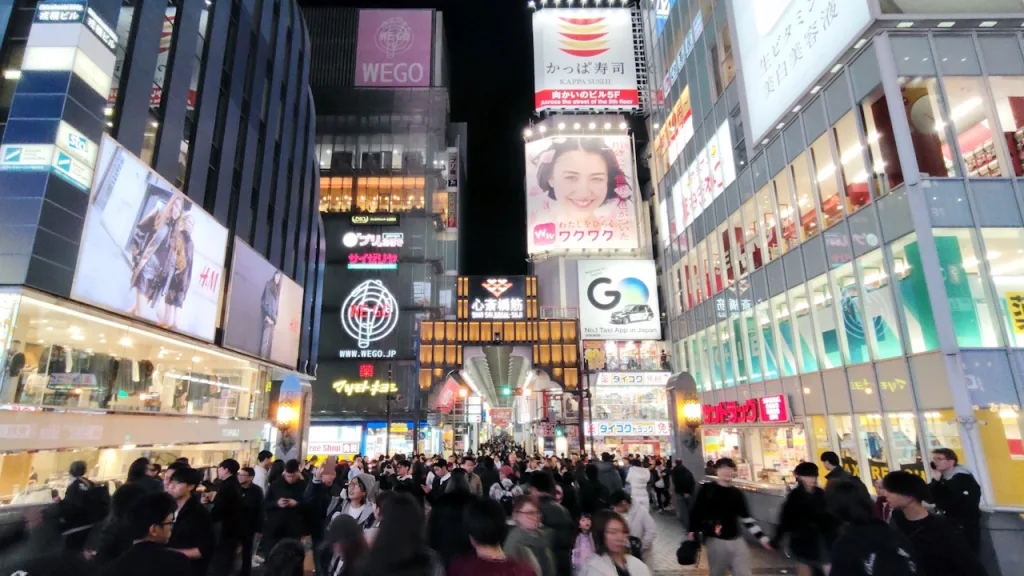
Extending directly north from Dotonbori sits Shinsaibashi-suji Shopping Arcade, an approximately 580-meter covered street hosting around 180 establishments selling fashion, accessories, cosmetics, and souvenirs. The arcade’s direct connection to the Osaka entertainment district makes it an ideal complement to Dotonbori nightlife exploration.
Shinsaibashi’s history reaches back to 1622. With over 400 years of evolution, this shopping street has consistently functioned as Osaka’s trendsetting commercial center. The covered arcade allows comfortable shopping regardless of weather—a significant advantage when planning comprehensive entertainment district itineraries.
Amerikamura: Youth Culture Hub
Located approximately five minutes’ walk west of the main Dotonbori entertainment district, Amerikamura (America Village, abbreviated “Ame-mura”) serves as Osaka’s youth culture epicenter. This area functions as a subculture hub for fashion, music, and art, offering distinct contrast to Dotonbori nightlife’s mainstream appeal.
Amerikamura’s symbol is the Statue of Liberty replica standing in Sankaku Park (Triangle Park). Though small, this park serves as a youth gathering spot, often hosting street performer shows on weekends. The area provides creative, energetic atmospheres distinctly different from Dotonbori’s hustle, representing another facet of Osaka’s diverse entertainment character.
Kuromon Ichiba Market: Culinary Deep Dive
Kuromon Ichiba Market, known as “Osaka’s Kitchen,” sits approximately 10 minutes’ walk from the main Osaka entertainment district. This food market offers fresh seafood, vegetables, fruits, and comprehensive food products alongside abundant street food options, functioning as an excellent complement to any Dotonbori street food tour.
The market’s energy and professional-grade ingredients frequented by chefs provide opportunities to deeply understand Osaka as a culinary city. Early morning visits (7-9 AM) reveal the market at its most authentic, when professional buyers conduct business before tourist crowds arrive, offering insider perspectives on Osaka’s renowned food culture.
Regional Attractions Accessible from the Entertainment District
Osaka Castle: Historical Grandeur
Osaka Castle represents an essential complement to Dotonbori nightlife experiences, offering historical context to the modern entertainment district. About 15 minutes from Namba Station by train, this castle built by Toyotomi Hideyoshi allows encounters with Japan’s feudal heritage.
The view from the tower keep provides magnificent panoramas, and surrounding Osaka Castle Park displays beautiful seasonal changes throughout the year. Spring cherry blossoms and autumn foliage create particularly spectacular backdrops, making the castle grounds ideal for daytime exploration before evening Dotonbori entertainment district adventures.
Shinsekai and Tsutenkaku: Retro Entertainment
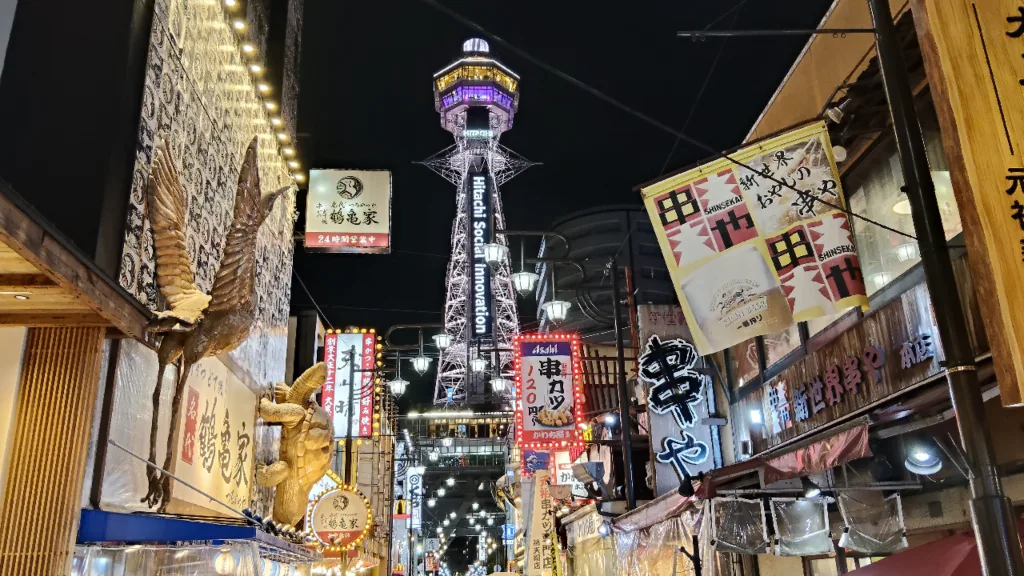
Shinsekai district and Tsutenkaku Tower offer retro Showa-era atmospheres distinctly different from contemporary Dotonbori nightlife. Located about 10 minutes by subway from the main entertainment district, Osaka’s symbolic tower provides excellent views while surrounding Shinsekai neighborhood concentrates kushikatsu specialty restaurants perfect for continued culinary exploration.
The area’s nostalgic ambiance, preserved from early 20th-century Osaka, creates atmospheric contrast to Dotonbori’s modern neon brilliance, providing broader understanding of Osaka’s multifaceted entertainment heritage across different eras.
Abeno Harukas: Contemporary Heights
Abeno Harukas, Japan’s tallest skyscraper, stands roughly 10 minutes from the entertainment district by train. The “Harukas 300” observation deck offers 360-degree Osaka panoramas, with clear-day visibility extending to Kyoto and Kobe. Evening visits provide spectacular perspectives of the illuminated Osaka entertainment district from above, offering unique aerial views of Dotonbori nightlife’s neon brilliance spread across the urban landscape.
Recommended Hotels around Douton-bori
Douton-bori is centrally located in Osaka, will be ideal location for your accommodation. Here are some hotels we recommend for your visit to Osaka which is walking distant from Douton-bori.
W Osaka
A bold, design‑driven five‑star hotel in the heart of Shinsaibashi and the Dotonbori area.
Its striking black façade and vibrant, art‑inspired interiors create a truly urban luxury experience. Spacious rooms, four distinctive restaurants, a full spa, and an indoor pool make it ideal for travelers seeking a stylish, modern stay. Perfect for guests who want to immerse themselves in the energetic, music‑infused world of the W brand while staying steps from Osaka’s liveliest district.
The St. Regis Osaka
Located along the prestigious Midosuji Boulevard and within walking distance of Dotonbori, this five‑star hotel is renowned for its signature butler service. Elegant interiors, refined guest rooms, and exceptional dining create a serene escape from the city’s bustle. The personalized St. Regis Butler elevates every stay with thoughtful, world‑class hospitality. An excellent choice for travelers who want to pair Dotonbori sightseeing with a truly luxurious, bespoke hotel experience.
Swissôtel Nankai Osaka
Directly connected to Namba Station and just a short walk from Dotonbori, this five‑star hotel offers unbeatable convenience. With six restaurants, two bars, a spa, fitness facilities, and sweeping city views from its guest rooms, it blends comfort and accessibility for both leisure and business travelers. Ideal for visitors who want to explore Osaka with zero transportation stress while enjoying a full‑service luxury stay.
Making Your Dotonbori Experience Even More Memorable
To truly maximize your Osaka entertainment district experience and explore with confidence, consider utilizing dedicated tour conductor services. Professional tour conductors provide comprehensive trip management, coordinating transportation, accommodation, and daily schedules to ensure smooth, stress-free travel through Dotonbori and beyond.
For international visitors navigating Japan for the first time, language barriers and unfamiliar customs can present challenges when exploring Dotonbori nightlife and attempting authentic Dotonbori street food tours. Dedicated tour conductors offer interpretation assistance, emergency response, and logistical support, allowing you to focus entirely on enjoying your journey through the Osaka entertainment district. While tour conductors specialize in itinerary management rather than serving as tour guides, their presence ensures your exploration proceeds without complications.
Whether planning in-depth Dotonbori street food tours, comprehensive Dotonbori nightlife experiences, or venturing throughout the Kansai region, tour conductors handle all logistical details so you can concentrate on creating unforgettable memories at every Glico sign photo spot and hidden gem along the way.
Explore Osaka’s Entertainment District with Dedicated Tour Conductor Services
Travel Japan with complete peace of mind through professional tour conductor services. From itinerary management to emergency support, experience hassle-free travel through Dotonbori nightlife, street food tours, and beyond—letting you focus on what matters most: enjoying your journey through Osaka’s premier entertainment district.
👉 Learn More About Tour Conductor Services
Experience the Soul of Osaka’s Premier Entertainment District
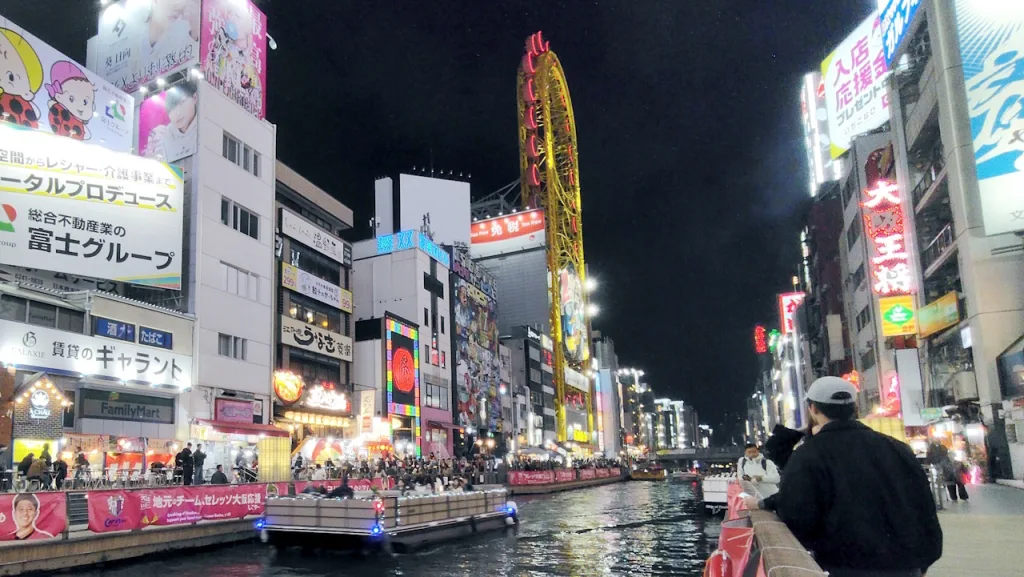
Dotonbori, with its 400-year history as Osaka’s entertainment district, concentrates everything that makes this city remarkable—culture, cuisine, and nightlife—into one extraordinary neighborhood. From iconic Glico sign photo spots and Kani Doraku’s mechanical crab to atmospheric Hozenji Yokocho hidden gems and traditional performing arts at Osaka Shochikuza, diverse attractions create unforgettable tapestries of experiences.
The theatrical heritage dating from the Edo period continues living through Osaka Shochikuza, while the “kuidaore” (literally “eat until you collapse”) tradition thrives in countless renowned establishments throughout this entertainment district. Daytime energy, spectacular Dotonbori nightlife brilliance, seasonal transformations along the canal, and most importantly, encounters with Osaka’s vibrant people leave lasting impressions on every visitor.
Sampling classic dishes like takoyaki (grilled octopus balls) and okonomiyaki (savory pancakes) on comprehensive Dotonbori street food tours, experiencing unique perspectives from Dotonbori river cruises, and participating in food sample workshops or takoyaki-making experiences—the diversity of activities available defines this entertainment district’s appeal. The best time to visit Dotonbori depends on your preferences, but any season offers rewarding experiences when you know where to look.
With professional tour conductor services managing your itinerary, you can explore even more of Osaka’s attractions and cuisine without logistical concerns. Having experts handle travel arrangements allows you to invest your energy fully in experiencing and enjoying everything this incredible entertainment district offers—from securing perfect Glico sign photo spot shots to discovering hidden gems like Hozenji Yokocho that make Dotonbori nightlife so memorable.
If you’re planning an Osaka visit in 2026, Dotonbori demands inclusion in your itinerary. Where history intersects with modernity and tradition fuses with innovation, this entertainment district reveals Osaka’s authentic character. Here, along neon-lit canals and through stone-paved alleys, you’ll create memories that last a lifetime—whether capturing that perfect Glico sign photo spot image, savoring steaming takoyaki on an immersive Dotonbori street food tour, or cruising the waterways during peak Dotonbori nightlife hours when the Osaka entertainment district truly comes alive.