



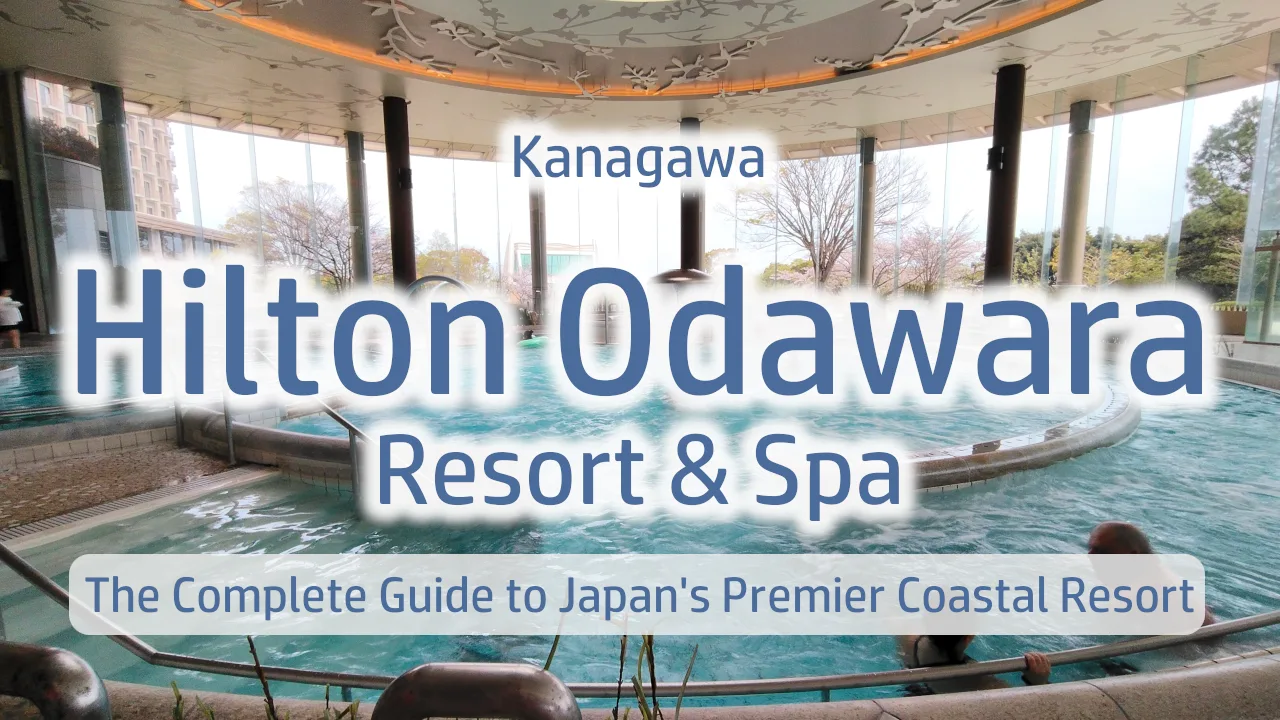
Your tour conductor brings you this travel guide to Hilton Odawara Resort & Spa — a full-scale resort in Kanagawa Prefecture where the peaks of Hakone form a dramatic backdrop and Sagami Bay stretches out below. Just one hour from central Tokyo, this is one of Japan’s largest resort hotels, combining a natural hot spring bath house, ten varieties of indoor and outdoor pools, a full-service spa, and multiple dining venues under one roof. Whether you’re planning an overnight stay or a day trip, this resort consistently delivers an experience well above its price point.
| Hotel | Hilton Odawara Resort & Spa |
|---|---|
| Address | 583-1 Nebukawa, Odawara, Kanagawa 250-0024 |
| Check-in | 3:00 PM – 12:00 AM |
| Check-out | 12:00 PM |
| Access | Free shuttle from JR Nebukawa Station (approx. 5 min, daily) / Free shuttle from Odawara Station (weekdays only, excluding holidays) |
| Parking | Free (326 spaces) |
Plan Ahead — the Resort Rewards the Prepared
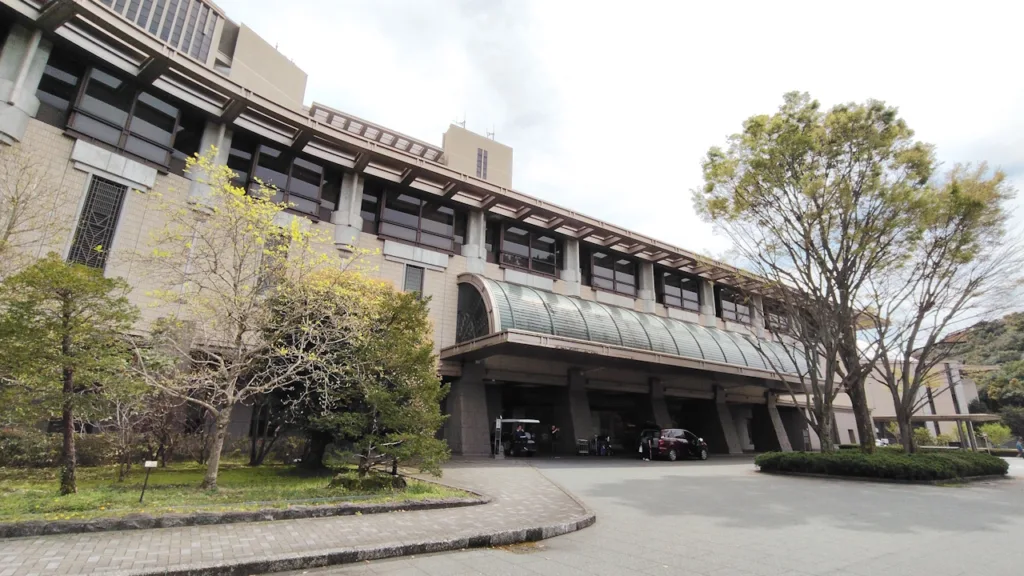
The scale of Hilton Odawara Resort & Spa is easy to underestimate. Sitting at 183 meters above sea level on a hillside above Nebukawa Station, the hotel is accessible almost exclusively by free shuttle — the climb from the station on foot is steep enough to deter all but the most determined. Once inside, the range of facilities is vast, and arriving without a plan often means leaving wishing you had done more. The Bade Zone pool complex opens at 9:00 AM for day visitors, but an “After 4” rate applies from 4:00 PM onward, making a late afternoon arrival a practical option for those focused on the pools. Pack your swimwear, bring a towel bag, and check shuttle timetables before you leave.
From Mandarin Orchards to a ¥44.5 Billion Resort: The Hotel’s Unlikely Origins
The hillside where the hotel now stands tells one of modern Japan’s more unusual economic stories. In the late 1980s, US-Japan trade negotiations forced the liberalization of orange imports, effectively dismantling the domestic mandarin industry. The Nebukawa district of Odawara — then covered in mandarin groves — needed a new direction. In 1988, local authorities began lobbying the Employment Promotion Corporation to develop a worker welfare facility on the land.
Construction began in 1993, and in October 1997 the project was completed at a cost of approximately ¥44.5 billion, funded through employer-side employment insurance contributions. The facility opened in March 1998 under the name “Spa Uza Odawara,” designed as a large-scale national resort for working people. But the scale of the infrastructure proved difficult to sustain, and amid Japan’s public agency reform movement, the City of Odawara purchased the property in 2004 for ¥850 million — roughly two percent of what it cost to build. Hilton took over operations that same year on February 1st, renaming it Hilton Odawara Resort & Spa.
In 2012, Hilton Worldwide agreed to purchase the land and buildings outright, completing the acquisition by 2015. In 2019, Mori Trust acquired the property for ¥6.5 billion. The gap between the ¥44.5 billion construction cost and the ¥850 million sale price became something of a symbol of Japan’s post-bubble public investment era, widely covered in the media at the time. What remains, however, is a resort infrastructure that would be impossible to replicate from scratch — a self-contained complex where hot springs, pools, sports facilities, and accommodation all occupy the same hilltop campus.
Every Room Faces the Ocean
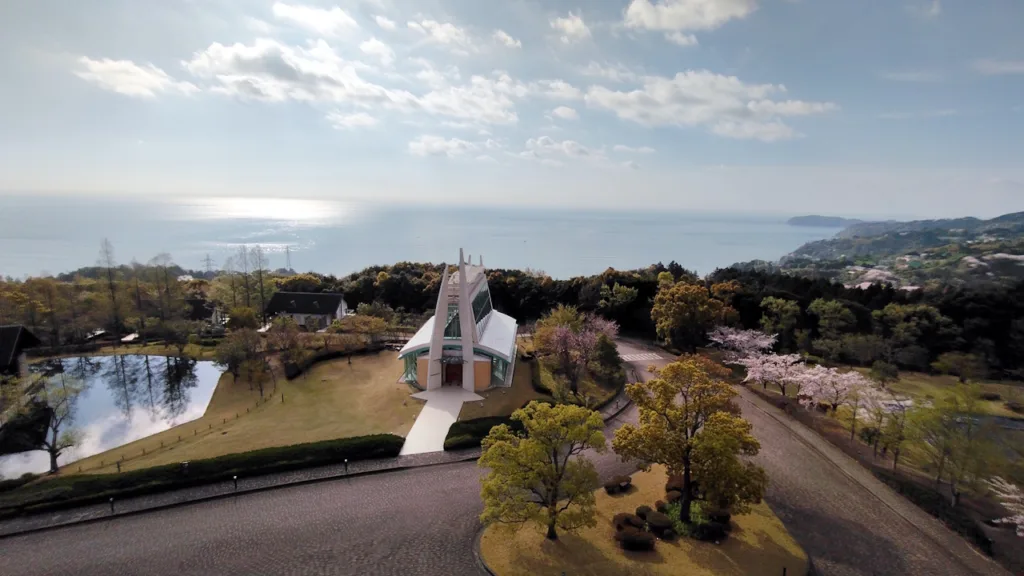
All 163 guest rooms at Hilton Odawara face Sagami Bay. From any balcony, the view takes in the hotel’s lush garden grounds in the foreground and the Pacific horizon beyond — the Hakone mountains lie inland in the opposite direction and are not visible from the ocean-facing rooms.
Hilton Rooms
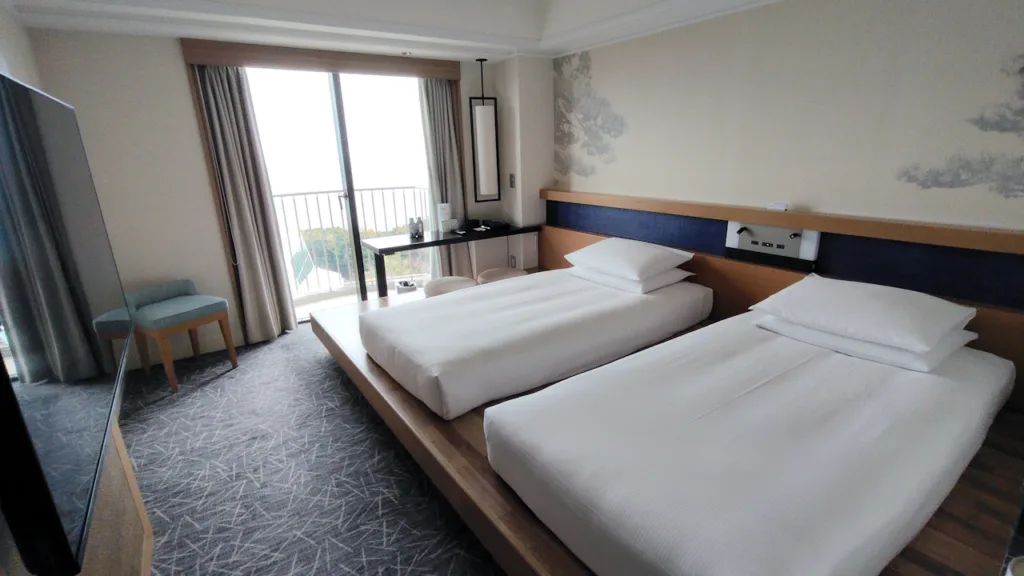
Located on floors three through six, these 27 sqm twin rooms draw their design language from Odawara’s history as the ninth post town on the Tokaido highway. Yosegi marquetry patterns, paper lantern motifs, and black pine references run throughout, blending local cultural symbolism with contemporary comfort. The balcony frames a view of the resort’s garden greenery and the sea beyond.
Japanese-Western Rooms and Suites
A combination of a Western-style room and a tatami-floored Japanese room, these layouts accommodate up to six guests and suit families or groups travelling together. The fusion of contemporary comfort with traditional Japanese spatial design makes these some of the most characterful rooms in the hotel.
Suites
At 54 and 68 sqm respectively, the suites offer generous balconies and elevated interiors. These are well suited to milestone trips or occasions that call for something beyond the standard.
The Bade Zone: Ten Pools, Indoor and Out
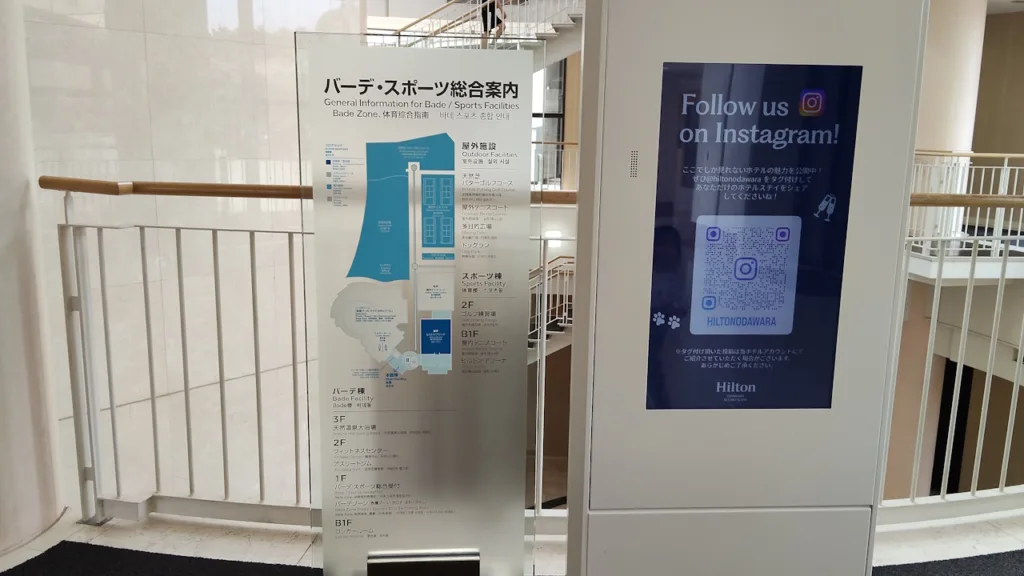
The Bade Zone is the heart of the resort — an all-weather heated pool complex that operates year-round regardless of season or weather. Plum blossom motifs, symbolic of Odawara, appear throughout the space, giving the facility a distinctly local character. During cherry blossom season, the blooms are visible from the pool area, making it possible to enjoy the flowers and the water at the same time.
Leisure Pool
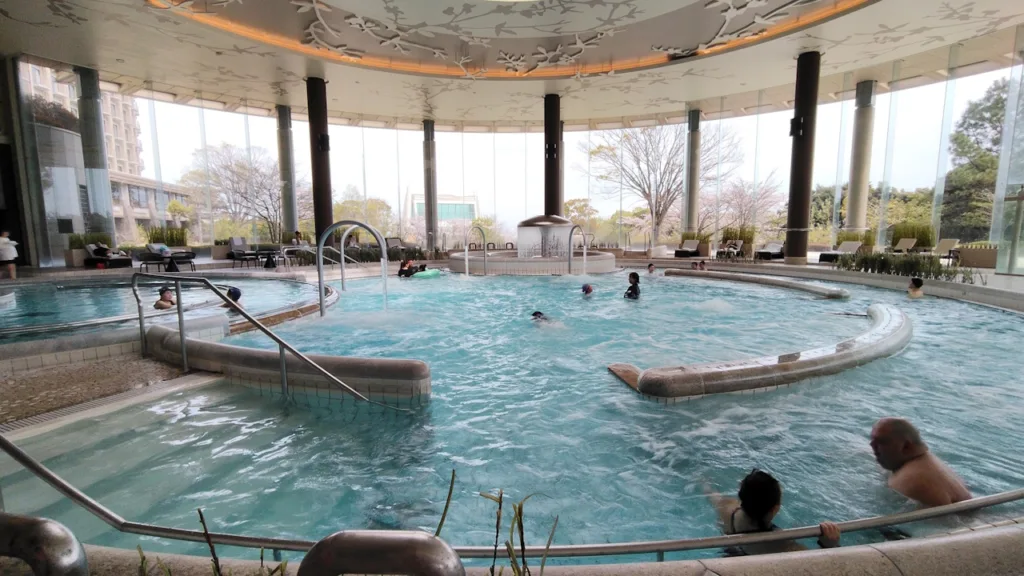
A variety of pool types makes this area the center of activity for families. Children from one year old are welcome, and the year-round heated water means even visits in winter are comfortable. Two features stand out for younger guests. The large central pool puts on a fountain show every thirty minutes — jets fire with enough force to draw shrieks from children gathered around the edge, and the interval creates a rhythm that keeps kids coming back. Separately, the mushroom-shaped fountain pool runs continuously, with water cascading from the cap of the mushroom structure at all times; running through the curtain of falling water is a perennial favourite. Elsewhere in the leisure pool, bubble jets rise from the pool floor in certain spots, and overhead water falls from above in others — the variety of water effects gives the whole area a playful, exploratory quality that keeps children moving between zones. The pool does include sections with jet currents strong enough to push you along, though the current stops where the jets end, so this is not a conventional lazy river in the full-circuit sense. Floats are permitted in designated areas, and arm floaties are available to borrow free of charge.
Outdoor Pool
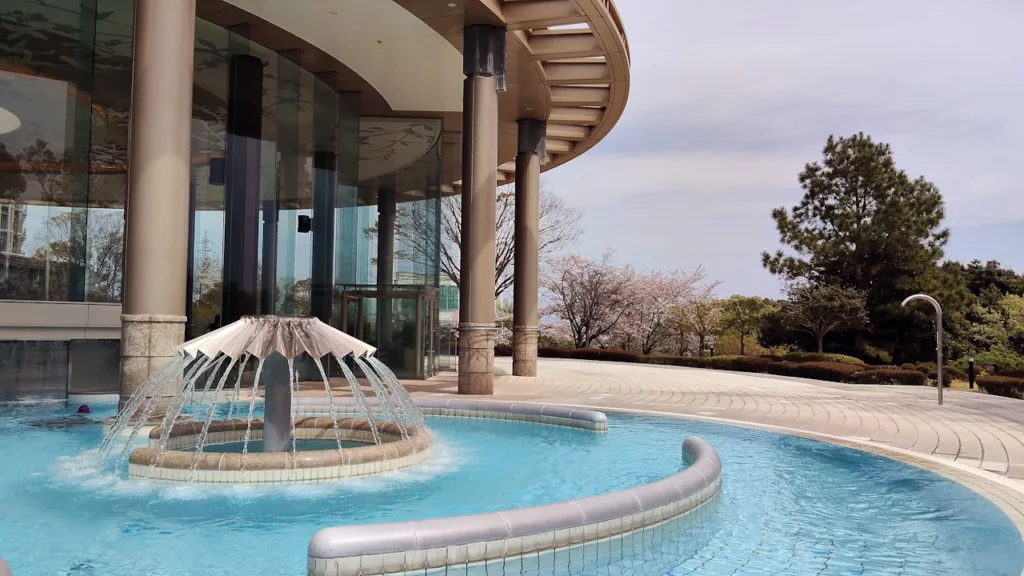
The outdoor pools are heated, which means they remain popular in winter — and in cold weather, many guests find the outdoor water actually feels warmer than inside, making winter visits unexpectedly enjoyable. The jet currents here are stronger than in the indoor section, giving a more pronounced sense of movement through the water. On clear days, swimming outdoors with the open sky and surrounding greenery in full view adds a dimension that the indoor pools cannot replicate.
Sauna and Jacuzzi
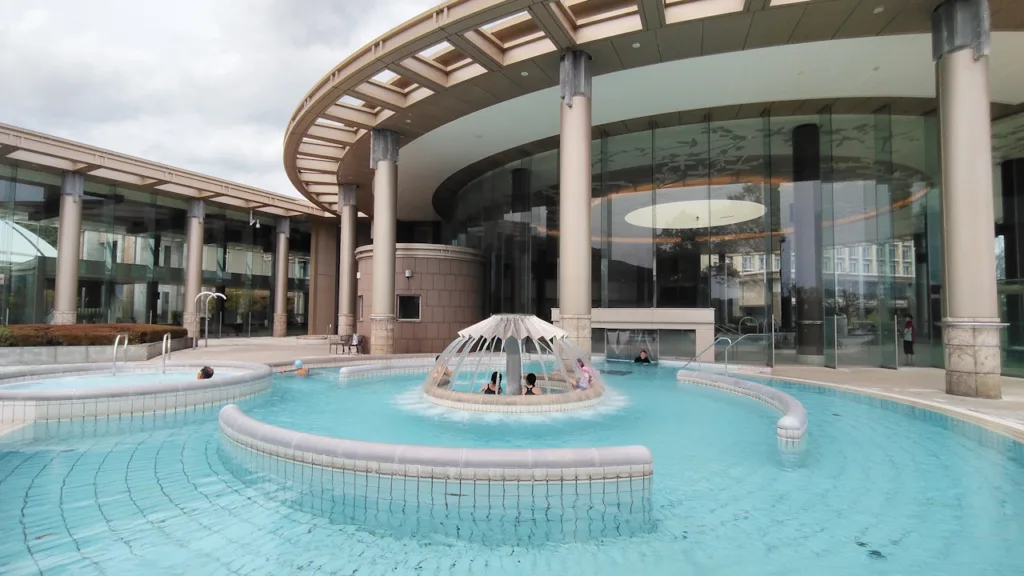
Both dry and steam saunas are located near the door leading out to the outdoor pool, making it easy to move between the heat and the water. On the indoor pool side, a cold plunge pool descends in a spiral staircase formation — a popular option for those who alternate between the sauna and cold water. A jacuzzi is also available for those who prefer a more relaxed pace.
25-Meter Swimming Pool
A full-length lap pool for those who want proper exercise. Reclining loungers line the poolside, making it easy to alternate between swimming and simply looking out at the bay.
Natural Hot Spring Bath House: Water from 1,500 Meters Underground
The hotel draws its own spring water from 1,500 meters below the surface. Classified as a sodium chloride spring — the same saline-rich type found throughout Japan’s coastal regions — the water retains heat exceptionally well, warming the body deeply and resisting the post-bath chill that lighter spring types can leave behind. The salt content also contributes notable moisturizing effects.
The bath house includes an outdoor rotenburo, an indoor bath, a cold-water plunge pool, and separate saunas for men and women. The interior design reflects careful attention to Japanese aesthetics: an entrance hall with a dark stone sculpture recalling a traditional garden, kumiko lattice pattern artwork in the powder room, and a rest area where guests can decompress while watching the bay through floor-to-ceiling windows.
Hotel guests use the bath house free of charge, accessible from 6:00 AM to midnight (last entry 11:30 PM), including before check-in and after checkout on the same day. Day visitors are welcome from 9:00 AM to 9:00 PM (last entry 8:30 PM).
Ishino Nagomi Hot Stone Sauna and Spa Seina
For guests seeking deeper relaxation beyond the pools and bath house, two additional facilities are available by reservation.
Ishino Nagomi is a hot stone bed sauna where guests lie on heated stone slabs to build a slow, deep sweat. Sessions run 60 or 90 minutes and are booked in advance. The format encourages complete stillness and is often cited by guests for post-session lightness and skin effects.
Spa Seina is the hotel’s in-house treatment spa, using skincare from the Paris-based natural cosmetics brand Omnisens. The menu covers facial and full-body treatments for both men and women, with maternity care and a dedicated wedding package also available.
Brasserie Flora
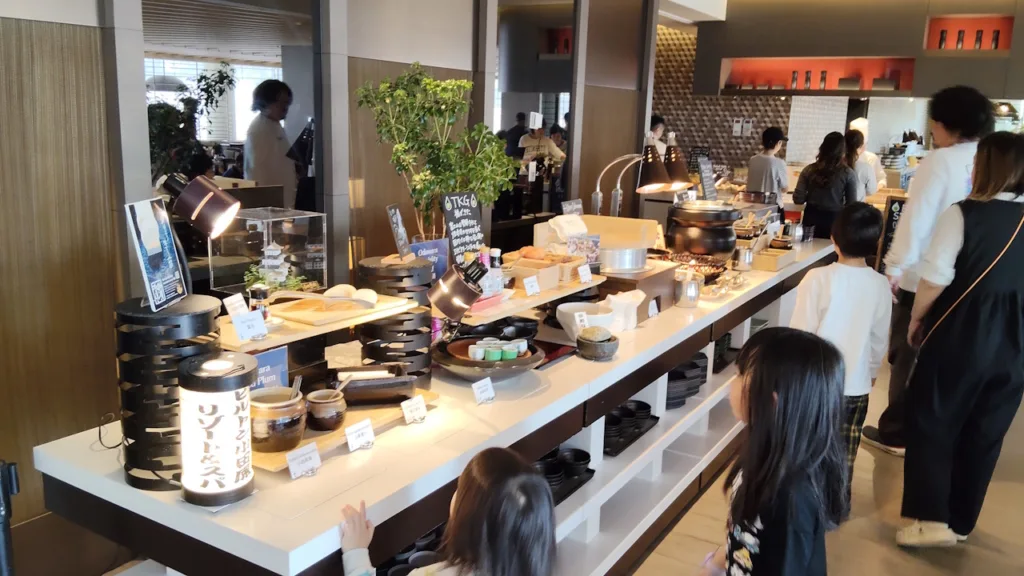
Brasserie Flora, the main restaurant on the ground floor, runs as a buffet for breakfast and dinner. The breakfast spread leans into local produce — shirasu (whitebait), aji (horse mackerel), and tuna are all available as toppings for build-your-own seafood rice bowls, with fresh salmon proving particularly popular among younger guests. Smoked salmon appears separately in the Western section, so salmon in two forms is available at the same meal. A rice-porridge course using hotel-made dashi provides a gentler alternative for those who prefer it.
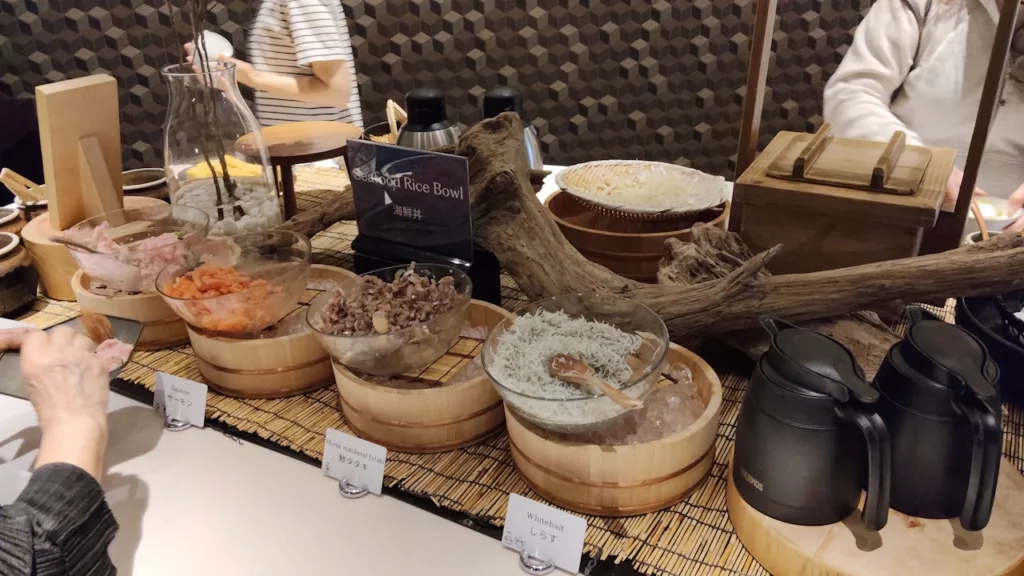
Freshly baked croissants come out of the oven roughly once an hour — guests who time their visit to the pastry station are rewarded with exceptional texture. Tables with young children are set with tak (Takenaka) kids’ cutlery — a Hilton standard across the group — designed for small hands and easy to use from the earliest stages. Dinner follows a “Touch of Nature” concept, with the head chef presenting seasonal dishes prepared at a live kitchen station.
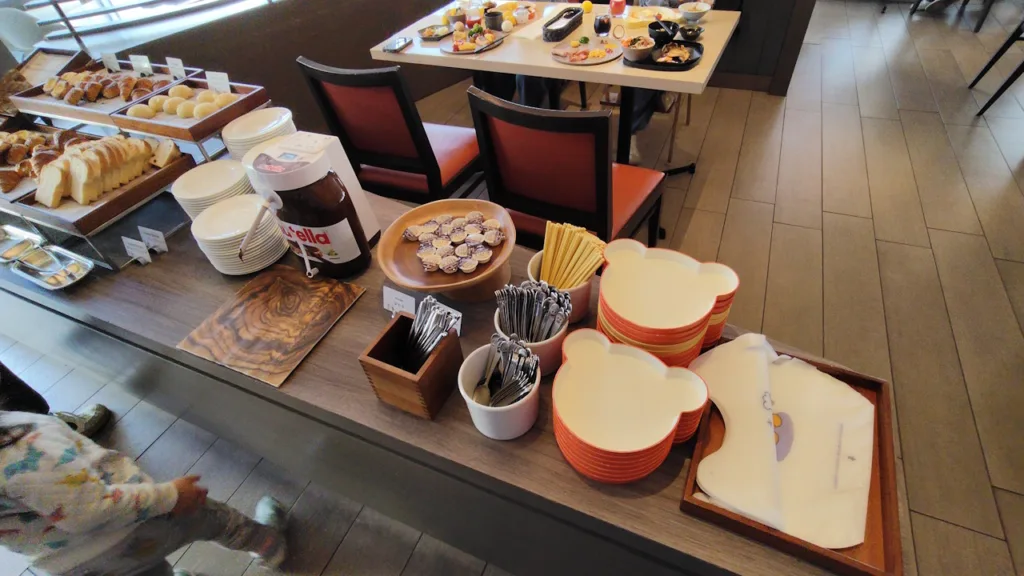
There are no restaurants within walking distance of the hotel. Guests arriving by public transport should book dinner in advance to avoid being left without options in the evening.
The Lobby Lounge and Garden Terrace BBQ
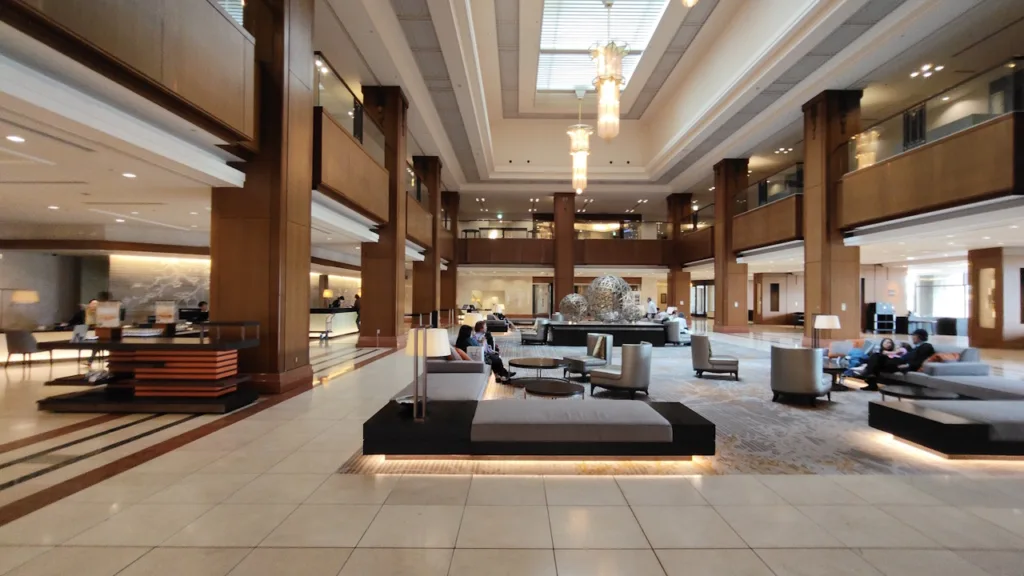
The Lobby Lounge serves light meals and sweets throughout the day. The afternoon tea menu changes with the seasons — a thoughtfully composed offering that requires advance booking, typically several days ahead. The Garden Terrace BBQ opens seasonally from March through November (weather permitting), offering premium cuts and fresh seafood in an outdoor terrace setting.
Ocean Lounge: The Hotel’s Club Lounge
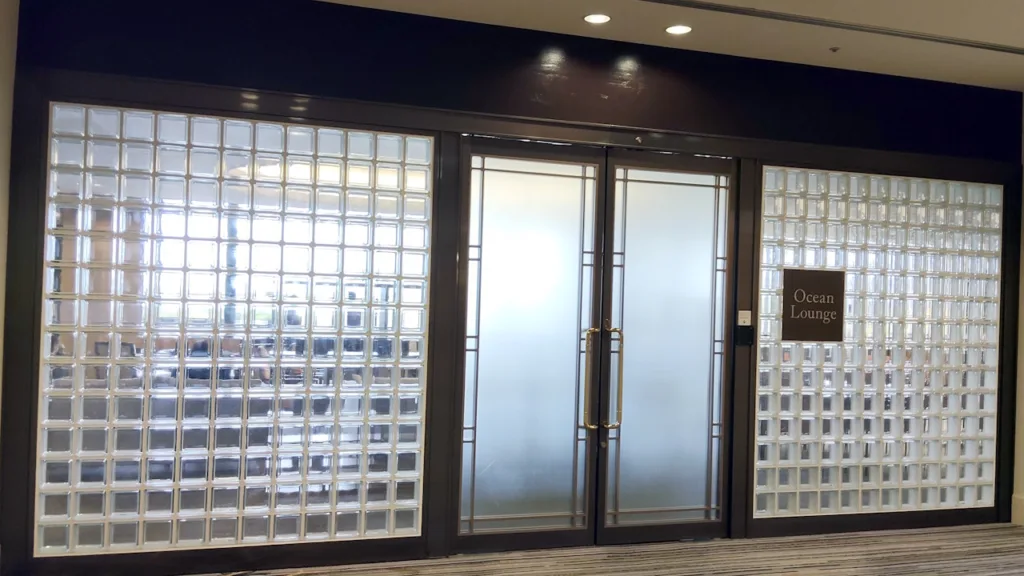
On the second floor of the main building, behind a card-reader-secured door, is the Ocean Lounge — Hilton Odawara’s take on an executive lounge. The space looks out over the bay and the hotel’s chapel through large windows, furnished with sofas, counter seats, a bookshelf, and a magazine rack. It operates quietly, often with very few guests, which is a significant part of its appeal.
Services by Time Slot
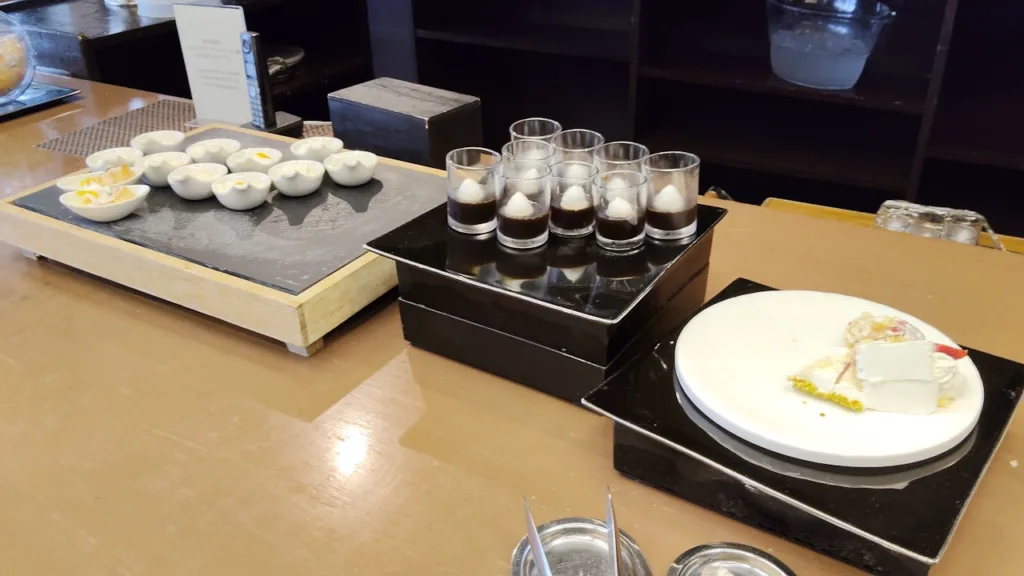
The lounge operates from 7:00 AM to 9:00 PM daily, with different food and drink offerings across four periods.
| Period | Service |
|---|---|
| Tea Time (7:00 AM – 9:00 PM) | Soft drinks |
| Afternoon Tea (3:00 – 4:30 PM) | Sweets and drinks |
| Evening Service (5:00 – 7:00 PM) | Alcoholic drinks and light snacks |
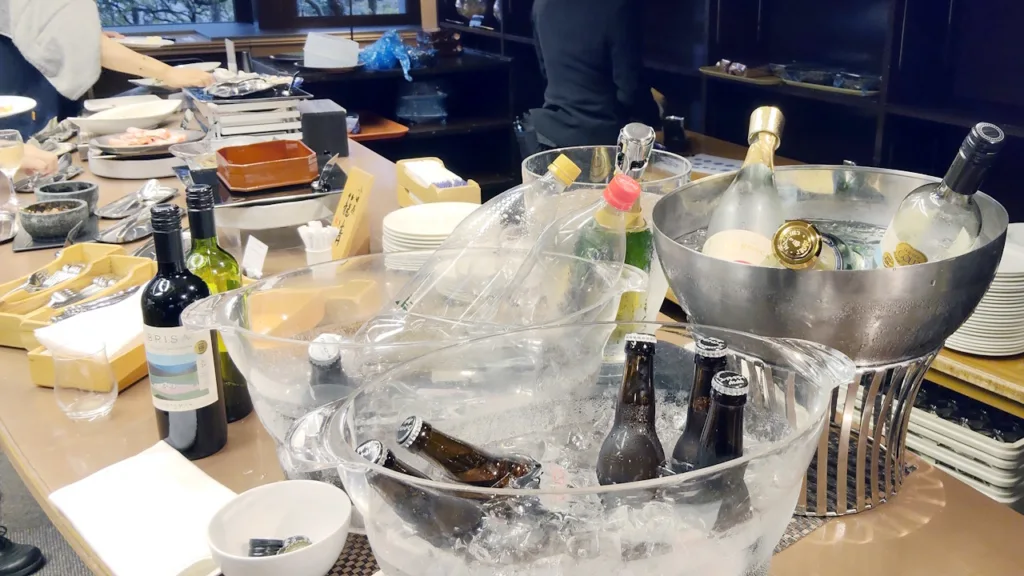
During the evening service, beer, sparkling wine, and red and white wine are available alongside a small selection of snacks — local Odawara kamaboko (fish cake) is a regular feature. The afternoon service occasionally includes a proper shortcake, which is a highlight worth noting given the otherwise modest spread. The overall quantity and variety of both food and drinks is on the limited side, and guests expecting a full executive lounge experience may find it underwhelming. That said, the setting and the lack of crowds make it genuinely pleasant as a quiet retreat.
Access Conditions
Hilton Honors Diamond members access the lounge free of charge. Non-Diamond hotel guests may also use the lounge on a paid basis — exact conditions and fees should be confirmed at the front desk. Additional charges can apply in cases where a Diamond member wishes to bring extra guests into the lounge, such as children on extra beds.
Sports Facilities
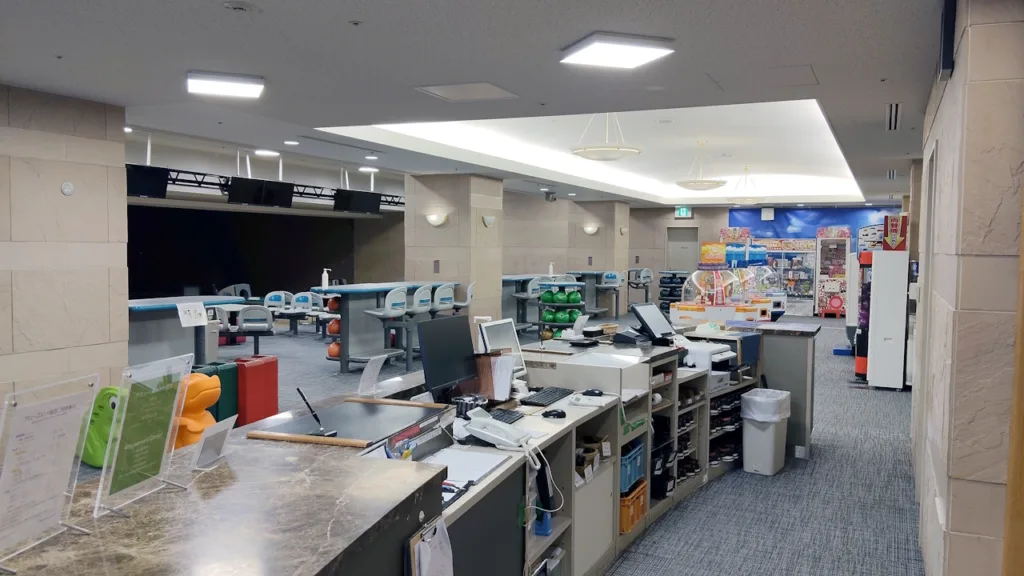
The sports infrastructure inherited from the Spa Uza era remains largely intact: tennis courts, an 18-hole outdoor putting green, a bowling alley, table tennis, and a fitness center. The combination of physical activity, hot springs, and a good dinner is one the resort makes very easy to achieve without leaving the property.
Family Facilities and Services
Hilton Odawara Resort & Spa is set up to support families travelling with infants and young children in some detail.
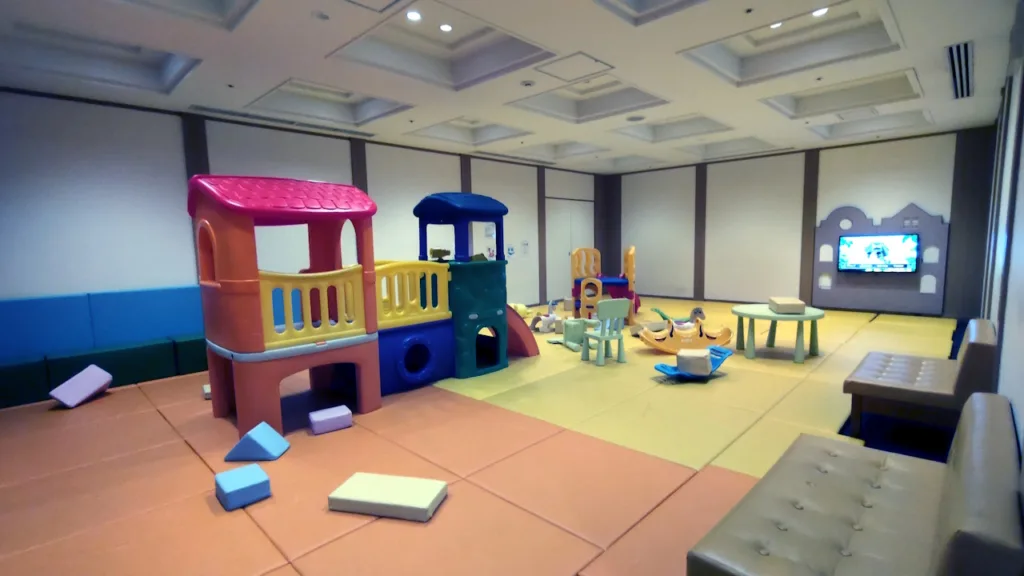
The kids room on basement level one contains a slide, ball pool, cushion block play areas, and a monitor showing animated content. It runs from 7:00 AM to 10:00 PM and is free for hotel guests on the day of stay, including after checkout — useful for keeping younger children entertained while waiting for the shuttle. A nursing room sits adjacent to the kids room. Nappy changing facilities are available at two locations on the first floor of the main building, including a multi-purpose toilet large enough for a pushchair.
A range of items is available to borrow at no charge, subject to availability — request at the time of booking or on arrival. For the guest room: baby cot (up to 11 months), bed guard, child toilet seat adapter, baby bath, and yukata in children’s sizes (110 cm and 130 cm). For the bath house: baby bath and bath chair. For the restaurant: children’s tableware, bibs, and high chairs. Bolster pillows are available on request from the front desk.
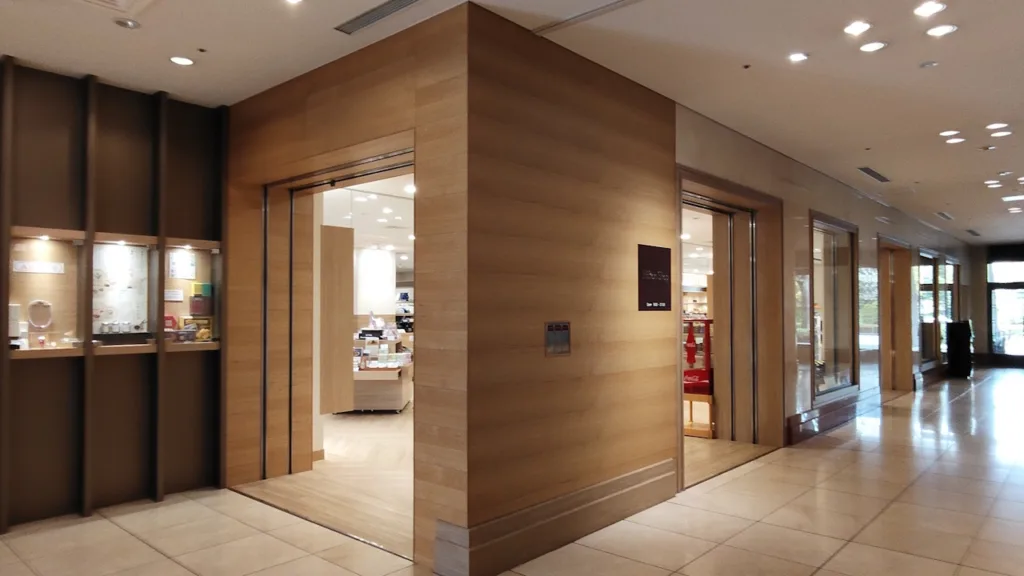
Baby supplies including nappies, wipes, picture books, and toys are sold at the Hilton Shop. Baby food can be brought in and reheated at the restaurant or in the room.
For families with young children, the Japanese-Western rooms are particularly recommended — the combination of a Western-style room and a tatami room provides space for children to move around, and the low floor format of the tatami section removes the risk of bed falls for toddlers.
A Hotel Designed with Odawara in Mind
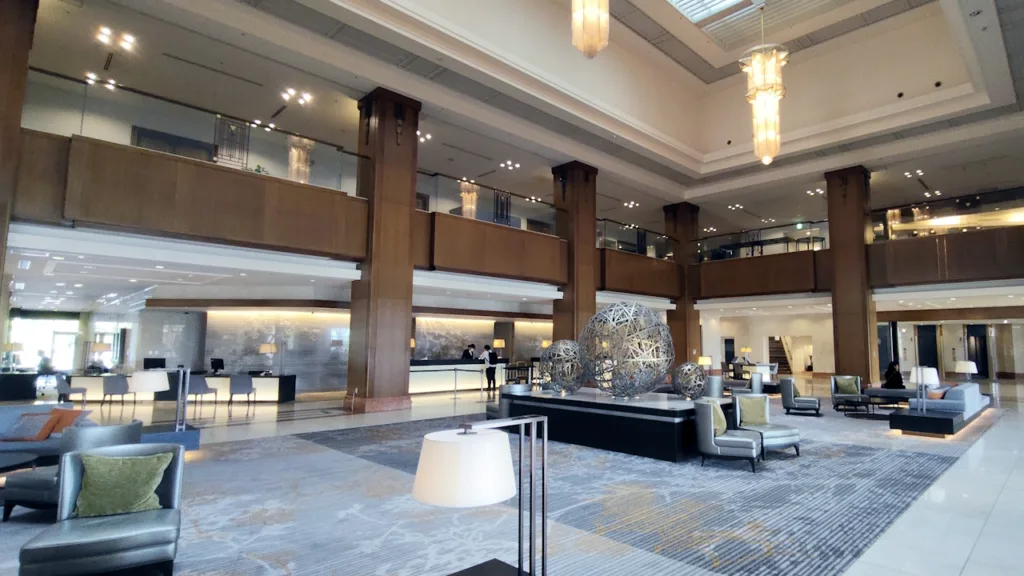
The interior of Hilton Odawara Resort & Spa is full of local references. The Bade Zone incorporates plum blossom motifs throughout — the plum is closely associated with Odawara as both a local product and a historical symbol. The bath house entrance uses dark natural stone to suggest a Japanese garden. Kumiko woodwork patterns appear as wall art in the approach to the baths, and cherry blossom motifs line the rest area walls.
These choices reflect a deliberate effort to anchor an international hotel brand to a specific place. Odawara spent much of the Edo period as one of the largest post towns on the Tokaido highway — the last stop before the steep Hakone mountain crossing. Travelers would rest there, gather themselves, and prepare for what lay ahead. Something of that function persists. Guests arrive, use the springs and pools to recover from daily life, and leave somewhat restored.
Nearby Attractions
Mandarin Picking Farms in Nebukawa
The hillside where the hotel stands was once covered in mandarin orchards, and several farms in the area continue to offer fruit picking in autumn and winter (late October through December). The season is seasonal — you cannot pick year-round — but for guests visiting in the right window, it adds a uniquely local activity to the stay.
Orangerie Garden (https://www.orange-garden.net/) is the closest farm to the hotel, with ocean views across Sagami Bay and an all-you-can-eat format during the mandarin picking season. Free shuttle pick-up from JR Nebukawa Station is available during the season. From March to April, Shonan Gold — a Kanagawa-original citrus variety — is also available for picking. Reservations are made directly with the farm.
Yago Mikan-en, about ten minutes on foot from Nebukawa Station, is a long-established farm dating to the Meiji era. The gentle slope of the orchard makes it accessible for young children and those with limited mobility. Early-variety mandarins are available for all-you-can-eat picking from October through late December. Reservations are also made directly.
Fisherman’s Wharf TOTOCO Odawara
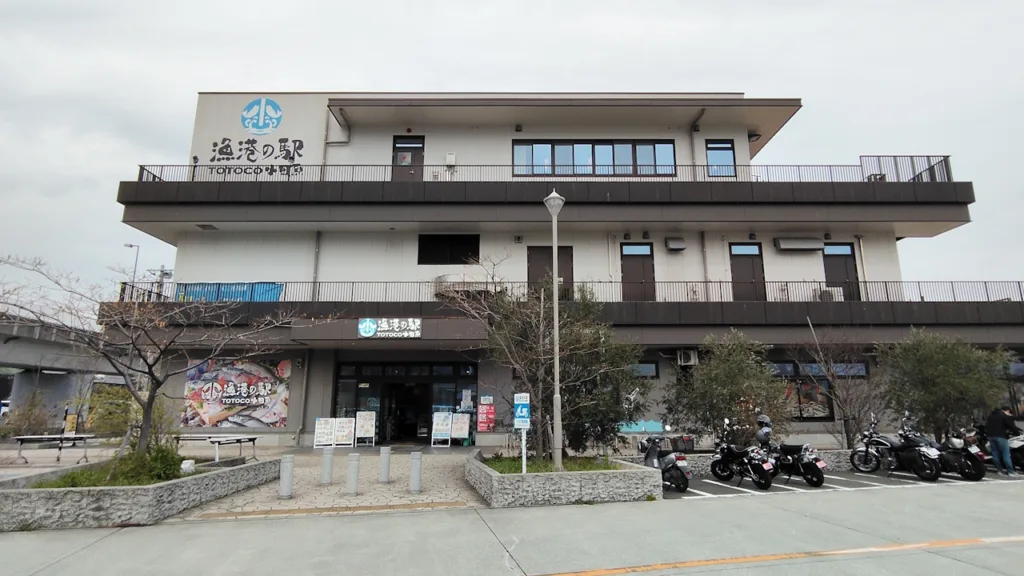
About ten minutes by car from the hotel, TOTOCO Odawara is Japan’s first “fishing port station” — a three-floor market and dining complex built alongside Odawara’s fishing harbor. Since opening in 2019, it has welcomed over 5.5 million visitors. The first floor carries roughly 1,600 types of seafood products, local produce, dried fish, kamaboko, and souvenirs. The second floor houses casual dining with bay views from the terrace. The third floor restaurant, Osashimi Tengoku, runs a 59-minute sashimi and seafood buffet using fish delivered directly from the harbor. The facility is open year-round, making it a practical stop after checkout.
Odawara Fishing Port Osakana Street
Separate from TOTOCO, the stretch of seafood restaurants and dried fish shops lining Odawara’s fishing port area is known locally as Osakana Street. Dried aji (horse mackerel) and kinmedai (splendid alfonsino) are among the most sought-after products. Most establishments here operate at lunchtime only, making a post-checkout visit the most realistic option for hotel guests.
Odawara Castle
The castle sits about ten minutes from the hotel by car and served as the base of the Hojo clan, one of the dominant powers in the Kanto region during the late feudal period. The current tenshu keep is a 1960 reconstruction, with a museum inside covering the castle’s history. Seasonal highlights include cherry blossoms in spring, wisteria in early summer, and a plum festival in late winter. The surrounding castle town is pleasant for a short walk.
Hakone and Lake Ashi
Twenty to twenty-five minutes by car opens up the full range of Hakone — Lake Ashi, the Hakone Shrine, Owakudani volcanic valley, and the Hakone Open-Air Museum among them. Many guests at Hilton Odawara build a Hakone day trip into their itinerary, either as the reason for staying in the area or as an extension of the resort stay itself.
Getting There and Planning Your Visit
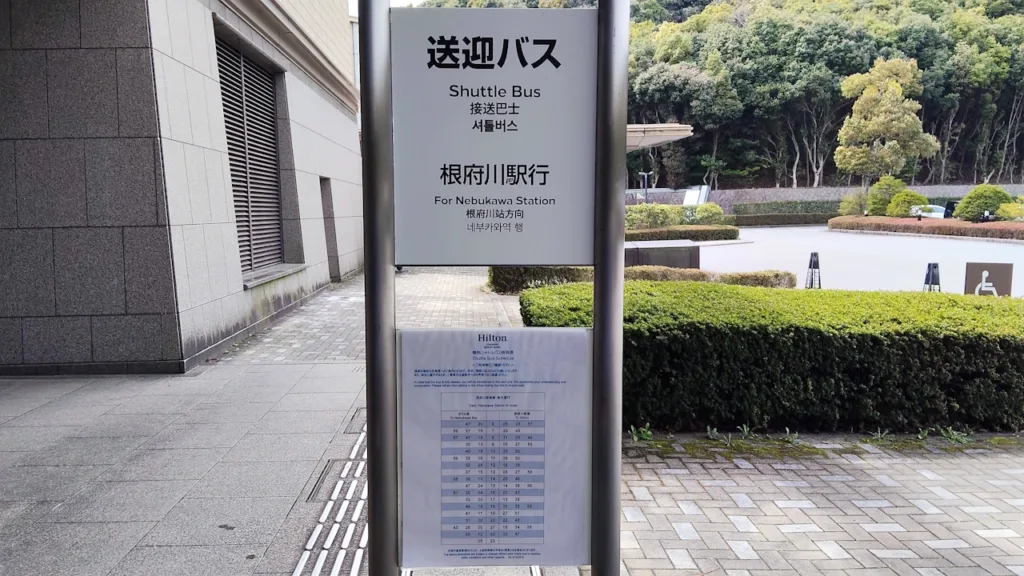
From Tokyo Station, the Shinkansen reaches Odawara in approximately 35 minutes. Transfer there to the JR Tokaido Line toward Nebukawa Station, then take the free daily shuttle to the hotel (about five minutes). From Odawara Station itself, a free shuttle runs on weekdays only, excluding national holidays.
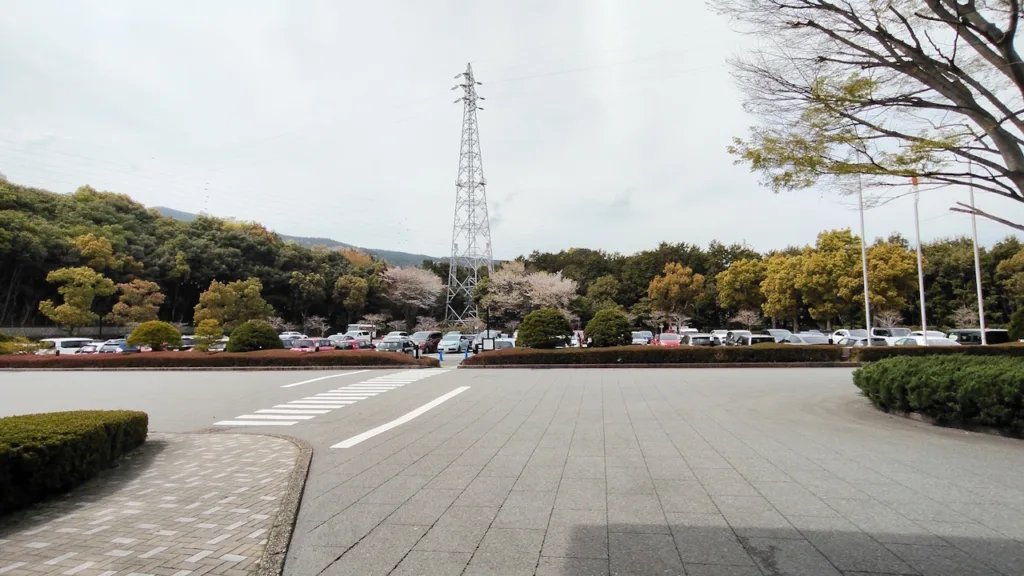
By car, the hotel is accessible via National Route 135 from the Seisho Bypass Ishibashi IC, or via Routes 255 and 135 from the Tomei Expressway Oimatsu IC. Free parking for 326 vehicles is available on site.
If you’re planning a trip to Japan and want an itinerary that goes beyond the standard Tokyo-Kyoto route, a private tour conductor can help you build a journey that includes destinations like Odawara and Hakone with personal on-the-ground support throughout. For details on that service, visit https://tours.e-stay.jp/.
One hour from Tokyo, the Hilton Odawara Resort & Spa delivers something rare: a genuinely self-contained resort where the ocean view, the hot springs, the pools, and the surrounding landscape all come together in a single stay. It rewards guests who arrive ready to use it.