


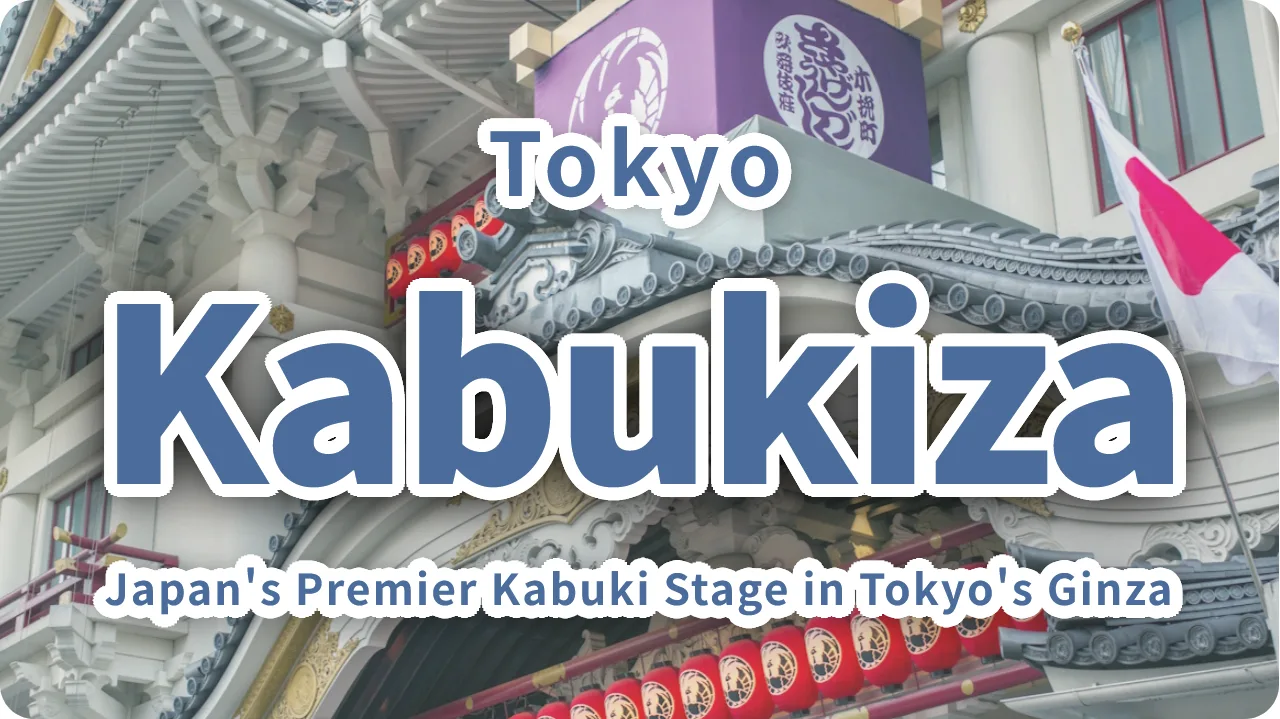
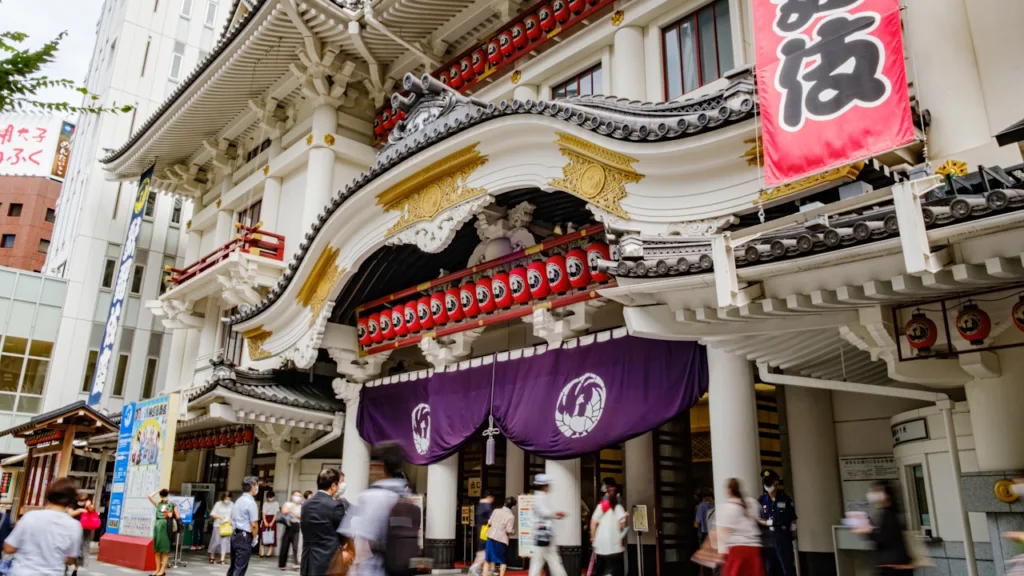
Travel insights from a tour conductor — today’s destination: Kabukiza Theatre, the beating heart of kabuki in Tokyo’s glamorous Ginza district. With its sweeping curved roof and ornate facade rising above one of the world’s most expensive shopping streets, Kabukiza is instantly recognizable and perpetually busy. This is the world’s only theatre dedicated exclusively to kabuki, staging performances nearly every day of the year. Whether you’re a first-time visitor to Japan or a seasoned traveller returning for another look, Kabukiza offers a window into a performing art tradition that has endured — and evolved — for more than 400 years.
| Item | Details |
|---|---|
| Venue | Kabukiza Theatre (5th Generation) |
| Address | 4-12-15 Ginza, Chuo-ku, Tokyo 104-0061 |
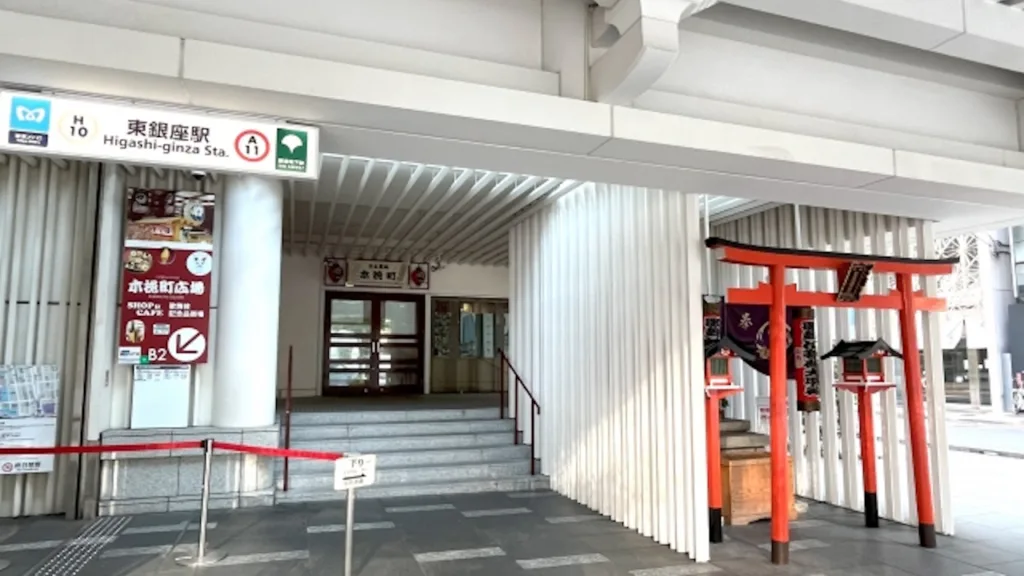
| Nearest Station | Higashi-ginza Station (Tokyo Metro Hibiya Line / Toei Asakusa Line) — direct underground connection via Exit 3 |
| Also Accessible | Ginza Station (Tokyo Metro Ginza / Marunouchi / Hibiya Lines) — approx. 5-min walk from Exit A7 |
| Matinee (Part 1) | Approx. 11:00 AM |
| Evening (Part 2) | Approx. 4:30 PM |
| Schedule | Monthly programs, typically running 3 to 4 weeks |
Kabuki Can Feel Intimidating — Here’s Why That’s Understandable
Let’s be honest: kabuki has a reputation for being expensive and hard to follow. A first-class seat runs around ¥18,000, and the box (sajiki) seats near the stage cost about ¥20,000 — real money for a performance in a language most visitors don’t speak, lasting several hours in each sitting. Add to that the stylised staging, the highly codified movements, and dialogue that can baffle even native Japanese speakers, and it’s no surprise that many travellers look at Kabukiza from the outside and never walk in.
That hesitation is understandable. But it’s largely based on incomplete information. There’s a practical, affordable entry point into kabuki at Kabukiza that most people don’t know about — and once you know it exists, the calculus changes entirely.
Four Centuries of Kabuki: From Riverbed Dance to UNESCO Heritage
The story of kabuki begins in 1603, the same year Tokugawa Ieyasu established his shogunate in Edo. A woman known as Izumo no Okuni — said to be a shrine maiden from Izumo Grand Shrine — staged a radical new style of dance on the dry riverbed of the Kamo River in Kyoto. She dressed as a man, wore a crucifix around her neck, and performed with exaggerated, rule-breaking flair that audiences had never seen before.
The word kabuki derives from the verb kabuku, meaning to tilt or to deviate from the norm. The performers were social outsiders in a way that made them thrilling to watch. Okuni’s shows attracted huge crowds, and the format quickly spread. Troupes of women and later adolescent boys adopted the style, and a form called onnagata — female roles played by males — was eventually born out of necessity when the Tokugawa shogunate banned women from the stage in 1629, citing concerns over public morality.
The all-male performance tradition that emerged, known as yarō kabuki or “men’s kabuki,” paradoxically drove the art to greater technical heights. Without the shortcut of natural femininity, male actors had to develop rigorous techniques for portraying women convincingly — techniques still practiced and handed down through family lineages today.
By the Genroku era (1688 to 1704), kabuki had hit its golden age. The Ichikawa Danjuro dynasty of Edo established the bold, muscular aragoto style of acting, while Osaka’s Sakata Tojuro refined the delicate, romantic wagoto approach. Three government-licensed theatres in Edo — the Nakamura-za, Ichimura-za, and Morita-za — competed fiercely for audiences, staging ever-more-elaborate productions with sophisticated stage machinery, trap doors, and revolving stages.
The later Edo period brought new literary heights. Tsuruya Nanboku IV premiered “Tokaido Yotsuya Kaidan” in 1825, a ghost story so influential its imagery still saturates Japanese horror. Kawatake Mokuami created the celebrated “Benten Musume,” whose famous speech remains familiar to Japanese audiences today. These weren’t stiff classical exercises — they were popular entertainment, written for a city that loved spectacle.
When Japan modernized after the Meiji Restoration of 1868, kabuki faced an existential challenge. Western theatre arrived with concepts of realism and psychological drama that made kabuki look archaic to reformers. Yet the art absorbed the pressure and survived, partly by polishing its classical repertoire into something more formally prestigious. In 2009, UNESCO inscribed kabuki on its Intangible Cultural Heritage list. Today, Kabukiza hosts performances nearly every month of the year, with a full calendar of programs that rotate leading actors across the classic canon.
Five Generations: The History of Kabukiza Theatre
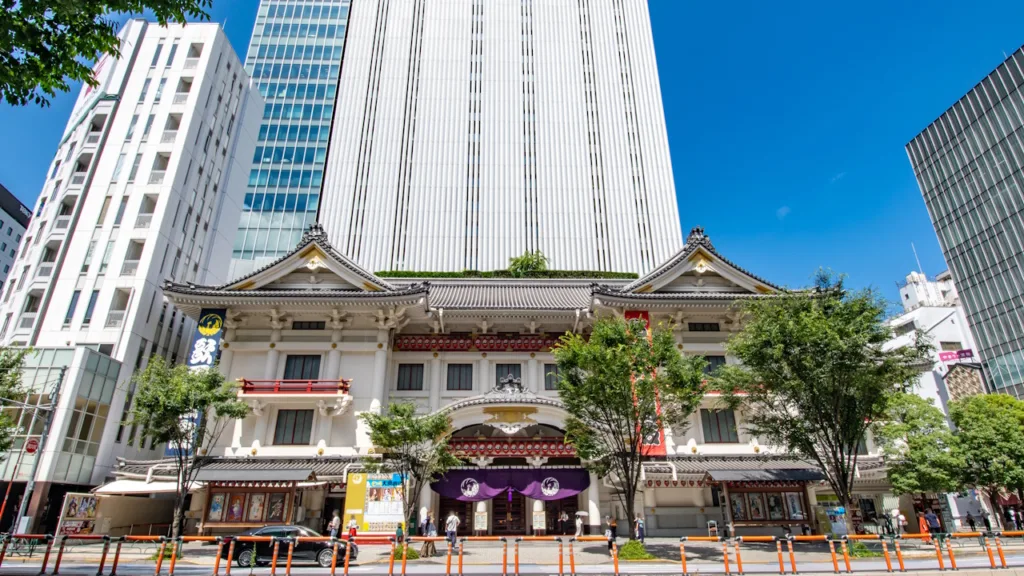
The first Kabukiza opened in 1889 in Kobikicho, what is now Ginza 4-chome, as a stylish hybrid of Western exterior and traditional Japanese interior. A major renovation in 1911 replaced that with a purely Japanese palatial look, creating the Second Kabukiza.
The Third Kabukiza, rebuilt in 1925, blended Nara period and Momoyama period architectural elements into the heavy, authoritative silhouette that became iconic. It was largely destroyed in the 1945 air raids that swept through central Tokyo. The Fourth Kabukiza rose from the rubble in 1951, reconstructed by architect Yoshida Isoya using surviving foundations and walls wherever possible, faithfully restoring the prewar aesthetic while incorporating modern facilities. It was registered as a Registered Tangible Cultural Property in 2002.
The current Fifth Kabukiza, designed jointly by Mitsubishi Jisho Sekkei and architect Kengo Kuma, opened in April 2013 after approximately three years of construction. The design preserved the Fourth Kabukiza’s distinctive curved rooflines, decorative metal fittings on the gable, and the proscenium arch — some original architectural elements were salvaged and reused directly. Behind the theatre, the 29-storey Kabukiza Tower was integrated into the structure, housing offices and a cultural gallery, while the theatre itself seats 1,808 (excluding single-act seats). A key structural innovation was the “mega-truss” frame that creates a fully column-free auditorium, ensuring unobstructed sightlines from every seat. By April 2026, the Fifth Kabukiza has been welcoming audiences for thirteen years.
Inside Kabukiza: What to Expect at Each Level
Basement Level 2 — Kobikicho Square
Enter from Higashi-ginza Station and you step straight into Kobikicho Square, a market-style arcade packed with Kabukiza-exclusive food products, crafts, ceramics, lacquerware, and actor-themed merchandise. No ticket required — this is a public space. The basement ticket booth is here too, where same-day single-act tickets can be purchased.
Floors 1 to 3 — The Auditorium
The main seating spans three floors. First-class seats on the ground floor give the clearest view of the hanamichi — the raised walkway that extends from the stage through the auditorium, where actors make dramatic entrances and exits. Box seats on the ground level offer the closest proximity to performers; historically they included tea service, though that custom has since changed. The second floor houses the Hanakago restaurant, where pre-reserved bento boxes can be collected to eat at your seat during intermissions of 30 minutes or longer.
Floor 4 — Single-Act Seats and Gallery Corridor
The single-act (hitomakumi) seats occupy a dedicated section on the fourth floor with its own separate entrance on the left side of the main building. A corridor display on the same floor features architectural models of all five generations of Kabukiza.
Kabukiza Tower, Floor 5 — Gallery and Rooftop Garden
The Kabukiza Gallery on the fifth floor of Kabukiza Tower hosts rotating themed exhibitions that change with each monthly program, with hands-on elements that let visitors explore costumes, props, and stage sets. Above the theatre roof, a small garden has been planted around a weeping cherry tree, accompanied by a stone lantern and a water basin connected to playwright Kawatake Mokuami. Admission to the gallery and garden is separate from performance tickets.
The Single-Act Ticket: Kabuki Without the Full Commitment
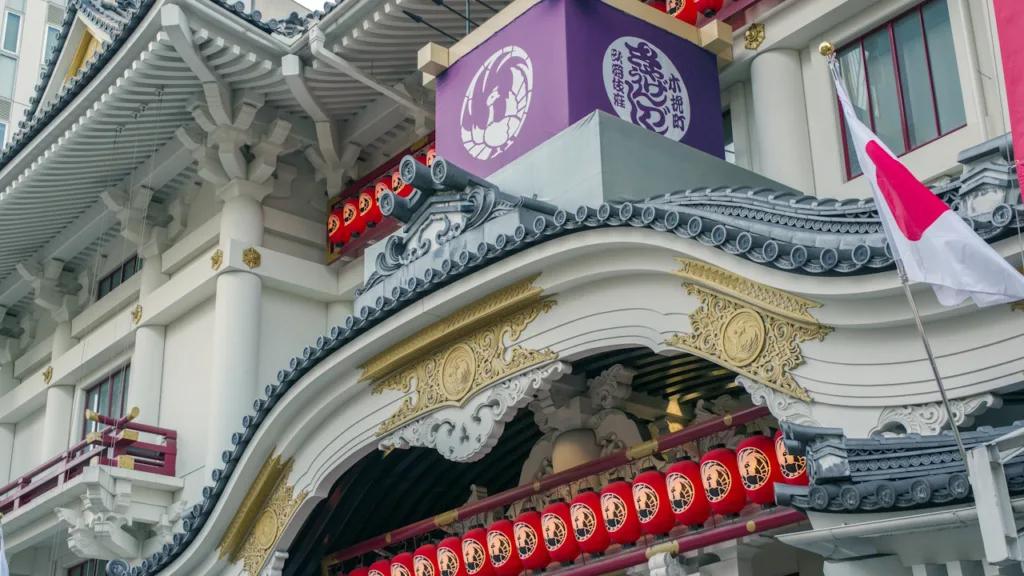
Here’s the practical information that changes everything for hesitant visitors. Kabukiza offers single-act (hitomakumi) tickets that let you buy admission to just one act of a performance — not the full program. Prices run roughly from ¥500 to ¥2,100 per act depending on length, putting the cost on par with a café stop in Ginza rather than a luxury cultural splurge.
These tickets became available for advance online purchase following a system update. Approximately 70 reserved seats are sold online from noon the day before the performance, and around 20 unreserved seats remain available for walk-in purchase at the basement booth on the day. Entry is through the dedicated fourth-floor single-act entrance — entirely separate from the main ticketing queue.
For those aged 25 and under, Kabukiza also runs a same-day half-price ticket scheme on selected seats. It’s worth checking availability on the Kabuki Web English ticketing site before your visit.
Ways to Enjoy Kabukiza — More Than Just the Performance
Kabukiza offers several distinct layers of experience, and knowing about them in advance helps you get far more out of a visit than simply sitting through a show.
English Audio Guides and Subtitle Tablets
Kabukiza is genuinely set up for non-Japanese audiences in ways that most traditional theatres in Japan are not. Earphone guides with English audio commentary are available to rent at the theatre entrance. The guide runs in real time alongside the performance, providing context for each scene — explaining who the characters are, what the conflict is, and what the stylised gestures or vocal patterns are meant to convey. For a first-time viewer, this transforms kabuki from a beautiful but opaque spectacle into something dramatically coherent.
English subtitle tablets are also available to rent separately from a service counter inside the theatre. The tablets display translated dialogue synced to the performance, making it possible to follow the actual words being spoken on stage. Programs sold at Kabukiza include detailed English-language synopses with scene-by-scene descriptions, and reading the outline before the curtain rises is a well-established way to orient yourself before the action begins. Used together, the audio guide, subtitle tablet, and program create a genuinely accessible kabuki experience — even for visitors with no prior knowledge of the art form.
Intermission Dining: The Bento Culture
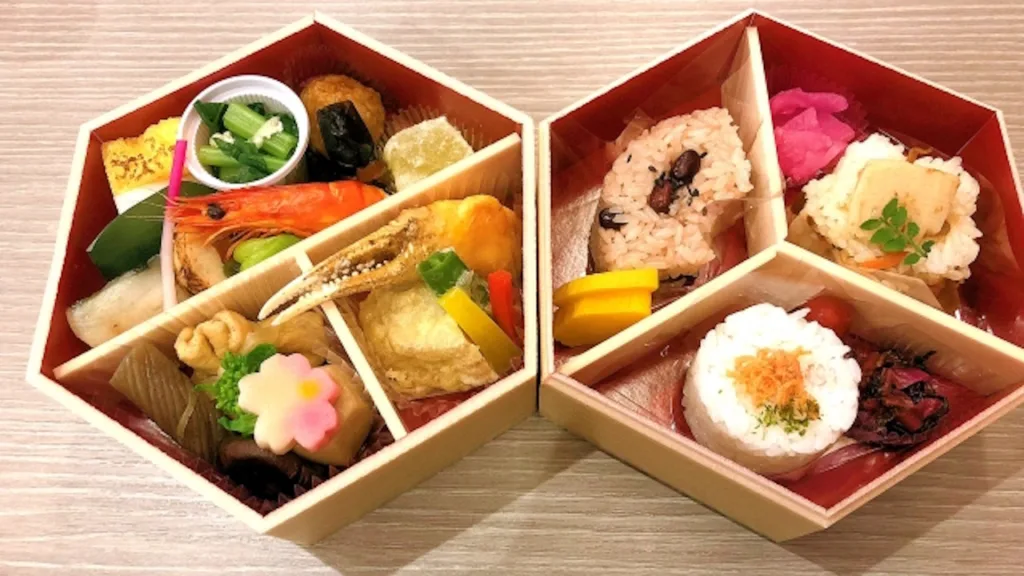
Kabuki performances are structured around clearly defined acts with intermissions (known as makuai) of 20 to 30 minutes or more between them. These breaks are not incidental — they’re culturally embedded in the kabuki experience, and the theatre actively supports them with food options that are part of the occasion.
The second-floor restaurant Hanakago accepts advance reservations for set meals taken in the restaurant during longer intermissions. More distinctively, Kabukiza also offers pre-ordered bento boxes that are delivered directly to your seat — a tradition specific to the kabuki theatre experience. Orders must be placed in advance for intermissions of 30 minutes or longer, and the boxes are designed around seasonal ingredients and presentation that complements the theatrical mood. For visitors who want to eat at their seat rather than queue for the restaurant, this is the way to do it. The basement Kobikicho Square also stocks a range of ready-made food items and sweets that can be taken up to the seat or eaten in the lower lobby area.
Visiting Kabukiza Without a Performance Ticket
Not every visit to Kabukiza needs to include a performance. Two areas of the building are freely accessible to anyone, with no ticket required.
The basement level Kobikicho Square — directly connected to Higashi-ginza Station — is a permanent retail arcade offering Kabukiza-exclusive merchandise: confectionery, sake, lacquerware, ceramics, and goods featuring actor family crests and kabuki imagery. These are items sold nowhere else, and the selection is genuinely distinctive compared to standard Tokyo souvenir shops. The square also functions as the entrance to the box office, and same-day single-act tickets are purchased here.
On the fifth floor of Kabukiza Tower, the Kabukiza Gallery runs rotating themed exhibitions that change monthly to coincide with each program. Past exhibitions have covered kabuki costume construction, wig-making, the history of stage sets, and the conventions of specific role types. The gallery is hands-on in orientation, with replica props and costumes that visitors can examine closely. Entry is ticketed separately from the main theatre. Directly above the theatre roof, a small garden planted with a weeping cherry tree and stone lanterns offers a quiet space to pause — an unexpected pocket of calm above one of Tokyo’s busiest intersections.
What’s Around Kabukiza
Tsukiji Outer Market
A ten-minute walk from Kabukiza, Tsukiji Outer Market has held its ground as a food destination long after the wholesale fish market relocated to Toyosu. Dozens of stalls and small restaurants line the lanes: fresh tuna sashimi, tamagoyaki egg rolls, pickled vegetables, and dried seafood all make for excellent pre-theatre or post-theatre eating. It opens early and stays busy through lunchtime.
Ginza Shopping District
Five minutes on foot from Kabukiza puts you at the Ginza 4-chome intersection, anchored by the Wako clock tower. The main boulevard runs north from here, lined with flagship stores for international luxury brands alongside century-old Japanese department stores. On weekends, the central lanes close to traffic, turning Ginza into a pedestrian zone that’s ideal for an easy stroll.
Hamarikyu Gardens
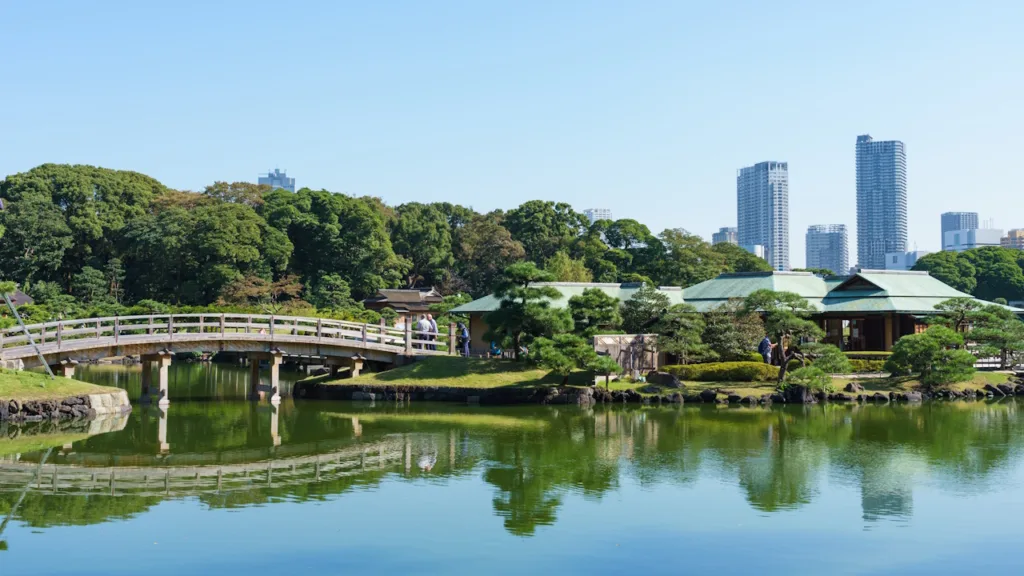
About fifteen minutes on foot from Kabukiza, Hamarikyu is a tidal strolling garden designated a Special Place of Scenic Beauty and Special Historic Site by the Japanese government. Originally the Tokugawa shogunate’s falconry grounds, it features a seawater pond that rises and falls with the tide, a traditional teahouse, and seasonal plantings of plum, cherry, and peony throughout the year.
Tsukiji Honganji Temple
A ten-minute walk from Kabukiza brings you to one of Tokyo’s most architecturally unusual buildings. Tsukiji Honganji is a Jodo Shinshu Buddhist temple constructed in 1934 in a style based on ancient Indian architecture — complete with stone elephants at the base and elaborate carved stonework across the facade. The contrast with its urban surroundings makes it worth a few minutes of anyone’s time.
Where to Stay Near Kabukiza
Solaria Nishitetsu Hotel Ginza
Operated by the Nishitetsu Hotel Group, Solaria Nishitetsu sits right at Ginza 4-chome, one minute’s walk from Higashi-ginza Station Exit A2. The hotel’s 207 rooms feature separate bath and toilet arrangements, a design choice that matters after a long day. The restaurant serves Italian-influenced breakfast and European dinner. It’s the closest full-service hotel to Kabukiza itself, and the Tsukiji Outer Market, Hamarikyu Gardens, and Ginza’s main shopping street are all within easy walking distance.
Quintessa Hotel Tokyo Ginza
One minute from Kabukiza and one minute from Higashi-ginza Station, Quintessa Hotel Tokyo Ginza is a boutique property that leans into Ginza’s aesthetic sensibility. The lobby is designed around a starfield lighting installation, and the 134 guest rooms use Simmons beds and clean-lined contemporary furniture. Direct airport connections without transfers from both Haneda and Narita make it particularly convenient for international arrivals. A café on the ground floor handles breakfast.
Dormy Inn Premium Ginza Hot Springs
Four minutes on foot from Higashi-ginza Station, Dormy Inn Premium Ginza Hot Springs stands out for an amenity that’s genuinely rare in central Tokyo: a natural hot spring bath on the basement floor. The mineral-rich black water (kuro-yu) is transported from Sosa City in Chiba Prefecture and fills gender-separated baths complete with a dry sauna and cold plunge. After several hours of kabuki — or several hours of walking Ginza — the value of a proper soak becomes obvious. The hotel has 154 rooms and a restaurant that serves Japanese and Western buffet breakfast.
Travelling Japan with a Tour Conductor
Watching kabuki at Kabukiza is a rewarding experience on its own terms, but navigating Tokyo — let alone the broader itinerary that might include Kyoto, Osaka, Hiroshima, or Hakone — involves a level of logistical complexity that catches many independent travellers off guard. Timetables, ticket reservations, luggage forwarding between hotels, emergency rebooking when trains are delayed: these are the moments when having a licensed tour conductor alongside makes a concrete difference.
A tour conductor doesn’t function as a tour guide. The role is itinerary management — keeping the group on schedule, handling documentation and coordination with transport and accommodation providers, and serving as the first point of contact when something unexpected happens. For international visitors who don’t read Japanese, this kind of support is particularly practical: the conductor bridges communication gaps with transport staff, hotel receptionists, and service counters when the situation calls for it.
If you’re planning a Japan trip that goes beyond a few days in Tokyo and want the assurance of professional on-the-ground support, the dedicated tour conductor service at tours.e-stay.jp offers arrangements tailored to English-speaking travellers.
Closing Thoughts
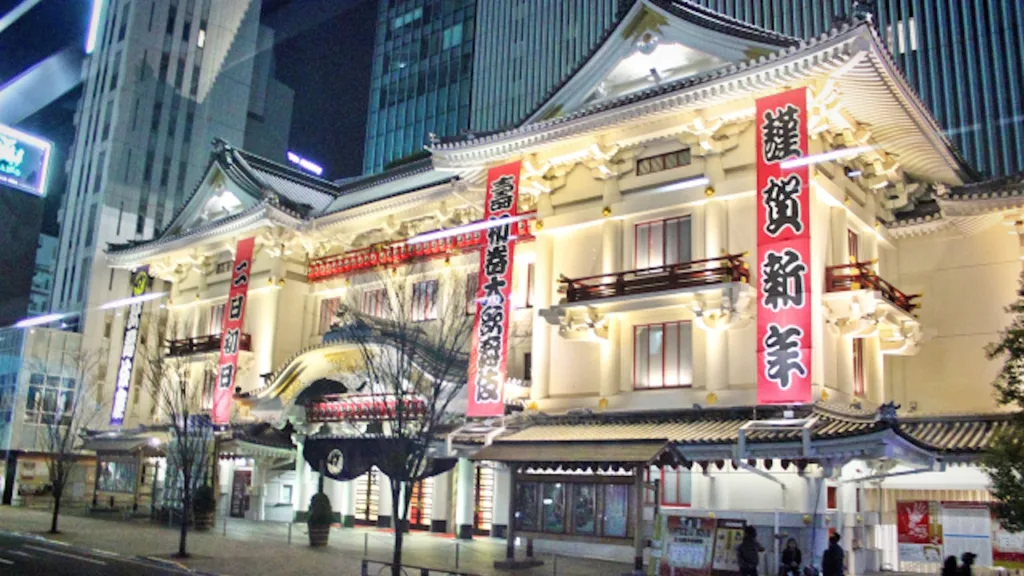
Kabukiza Theatre is one of those rare places where the building, the history, and the living art inside all reinforce each other. The Fifth Kabukiza, designed by Kengo Kuma to honour the unbroken lineage of the four theatres before it, sits in Ginza as both a functional venue and a statement about continuity. Kabuki itself — born as street performance, shaped by censorship, transformed by disaster and war, and finally elevated to global cultural heritage — is exactly the kind of art form that earns that kind of home.
You don’t need to understand every word on stage to appreciate what’s happening. A single act, watched from the fourth floor with an English audio guide in your ear, is enough to feel the weight of 400 years behind every gesture. Start there, and see where it takes you.