



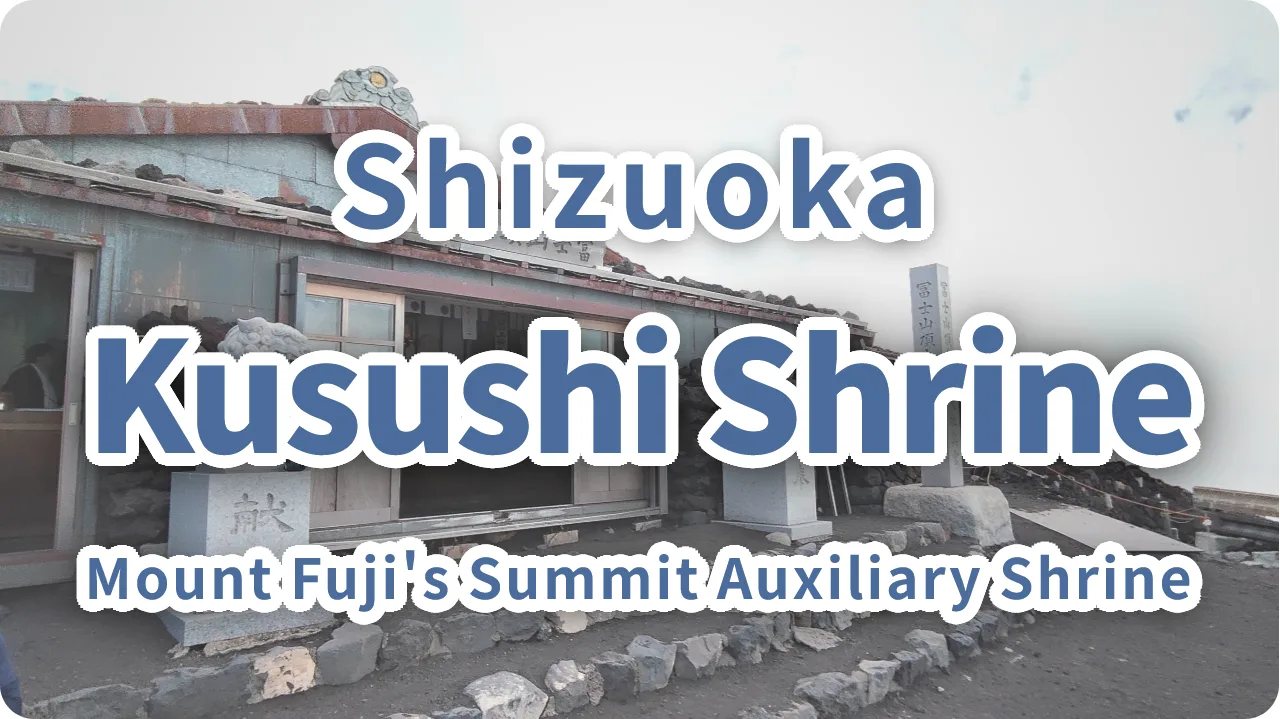
Travel insights from a tour conductor — today’s destination: Kusushi Shrine, a summit sanctuary perched at 3,715 meters on the crater rim of Mount Fuji. Administratively part of Fujinomiya City in Shizuoka Prefecture, the shrine is an auxiliary shrine of Fujisan Hongu Sengen Taisha and is known locally as the “Tōhoku Okunomiya,” or northeastern inner shrine.
A Shrine Where the Yoshida and Subashiri Trails Meet
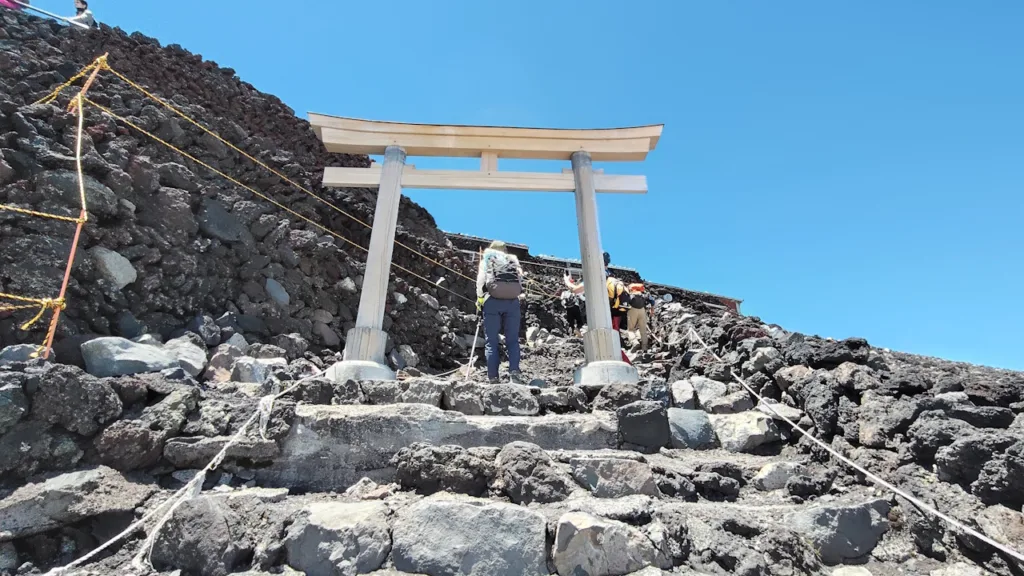
Kusushi Shrine stands at the point where the Yoshida Trail and the Subashiri Trail reach the summit, directly across the crater from Fujisan Hongu Sengen Taisha Okunomiya at the top of the Fujinomiya Trail. During the climbing season, hikers doing the Ohachi-meguri crater walk can visit both shrines in a single loop. Two deities are enshrined here: Ōnamuchi-no-Mikoto and Sukunahikona-no-Mikoto, both associated with nation-building and healing.
| Item | Details |
|---|---|
| Name | Kusushi Shrine, summit auxiliary shrine of Fujisan Hongu Sengen Taisha (Tōhoku Okunomiya) |
| Hours | During the climbing season (early July to around September 10), roughly sunrise to 4:00 PM, staffed by Shinto priests |
| Closed | Unstaffed outside the climbing season (from early September until the following year’s opening) |
| Address | Summit of Mount Fuji, Fujinomiya City, Shizuoka Prefecture (Yoshida/Subashiri side, elevation 3,715m) |
| Access | Climb from Subashiri Fifth Station or Yoshida Fifth Station to the summit |
A Short Season and Route-Specific Entry Procedures
The first thing to know before planning a visit is just how short the climbing season is — roughly early July through September 10. Outside that window, the priests come down the mountain and the shrine sits empty until the following year, so anyone hoping for a goshuin stamp or a kongōzue (pilgrim’s staff) branding needs to time their trip within the open season.
Entry procedures differ depending on which trail you take. On the Yoshida Trail (Yamanashi side) — the fastest route to Kusushi Shrine — climbers need a trail reservation, a toll payment, and a gear check at the fifth station, but there’s no mandatory e-learning course. Enter via Subashiri or the other two Shizuoka-side trails, though, and Shizuoka’s mountain climbing ordinance requires completing a rules-and-etiquette e-learning course before paying the entry fee. It’s worth knowing which set of rules applies before you commit to a route.
Above 3,700 meters, temperatures drop far below what you’d expect at the base, and the weather can turn without much warning. Many climbers hike through the night to catch the sunrise, so warm layers, a headlamp, and a plan for altitude sickness are all worth building into your prep.
During the climbing season, private cars can’t drive directly to either the Fuji Subaru Line Fifth Station (Yoshida Trail) or the Subashiri Fifth Station. You’ll need to park at a satellite lot and transfer to a shuttle bus or shuttle taxi for the final stretch. Buses run roughly once an hour, and seats fill up fast on weekends and during peak events, so build in extra time rather than cutting it close.
From Yakushidō to Tōhoku Okunomiya
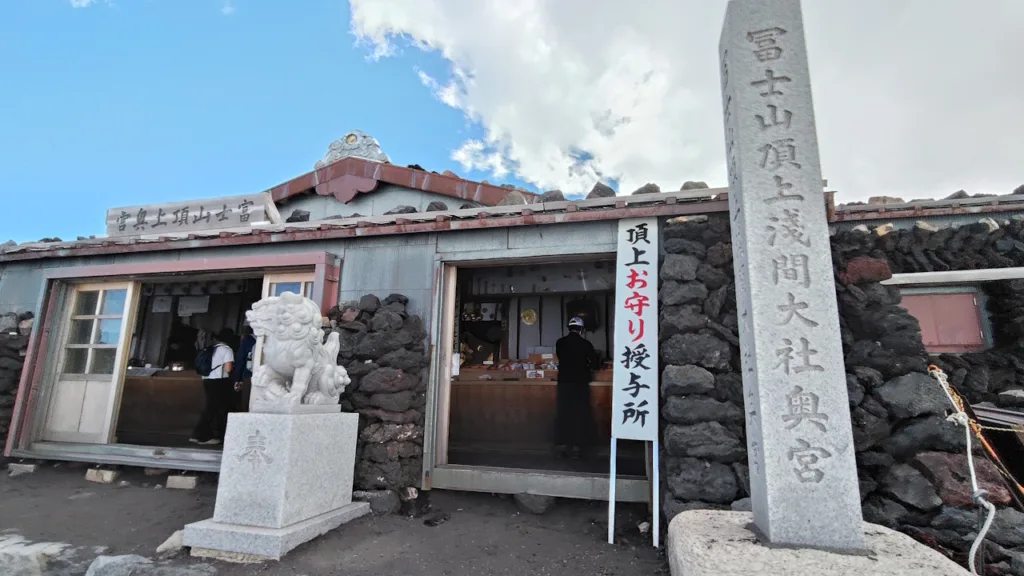
Kusushi Shrine’s story begins with a Yakushidō (Medicine Buddha hall) once maintained by Subashiri Sengen Shrine. The harsh summit climate wears buildings down quickly, and in 1702 Sengen Taisha rebuilt the hall. That rebuilding, though, set off a dispute over religious authority between Ōmiya (Sengen Taisha’s side) and Subashiri — a conflict that escalated all the way to a shogunate ruling in 1779. That ruling placed everything above the eighth station under Sengen Taisha’s sacred domain, settling how the entire summit would be managed going forward.
Everything changed again with the Meiji-era separation of Buddhism and Shinto. Buddhist statues were removed from the mountain, and Buddhist place names gave way to Shinto ones. The Yakushidō at the Ōmiya and Murayama route summit became Sengen Shrine’s Okunomiya, while the Yakushidō at the Yoshida and Subashiri route summit became the same shrine’s Tōhoku Okunomiya — today’s Kusushi Shrine. The medicine deities Ōnamuchi-no-Mikoto and Sukunahikona-no-Mikoto were installed as a nod to the hall’s origins as a shrine to the Medicine Buddha.
That history of dispute resolving into unified sacred ground still shapes how the summit is managed. Everything above the eighth station remains part of Sengen Taisha Okunomiya’s precincts, and Kusushi Shrine operates within that framework, staffed only during the open season. What was once a Buddhist hall gradually took on the form of a Shinto shrine over the centuries — a shift that mirrors the broader evolution of Mount Fuji worship itself.
A World Heritage Site and a Sunrise Worth the Climb
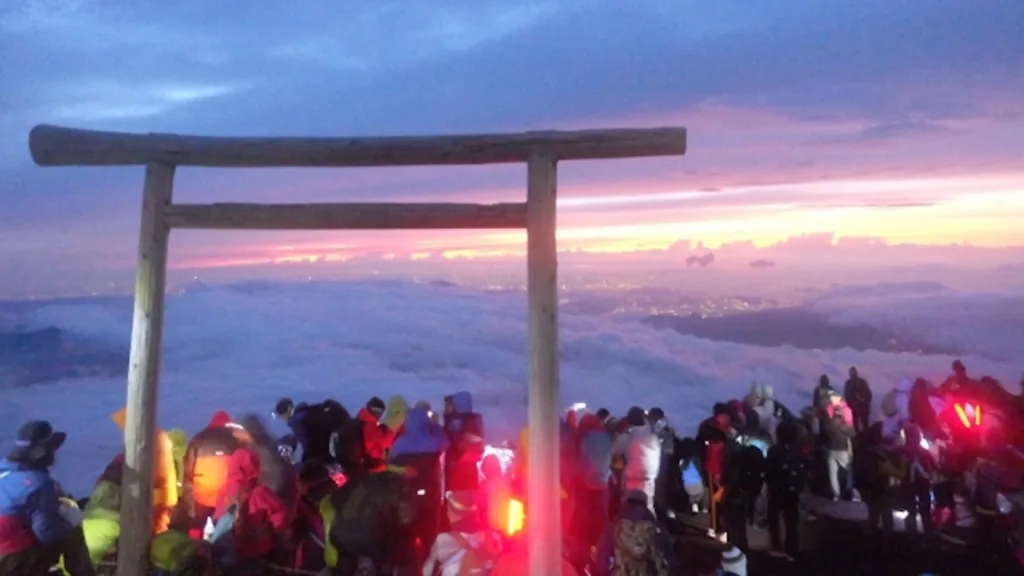
Kusushi Shrine is part of the “sacred sites at the summit” component of the UNESCO World Heritage listing “Fujisan, sacred place and source of artistic inspiration,” alongside Okunomiya, Kengamine, and Kusushidake. Its recognition rests on the summit’s role as a ring of sacred ground encircling the crater.
The shrine is equally known for its sunrise views. Most climbers who take the Yoshida or Subashiri trail hike through the night and arrive right around dawn, which is exactly why the area draws crowds during the summer season. Facing east, the shrine’s position lines up well with the timing of most overnight climbs — you reach the summit just as the sky starts to lighten.
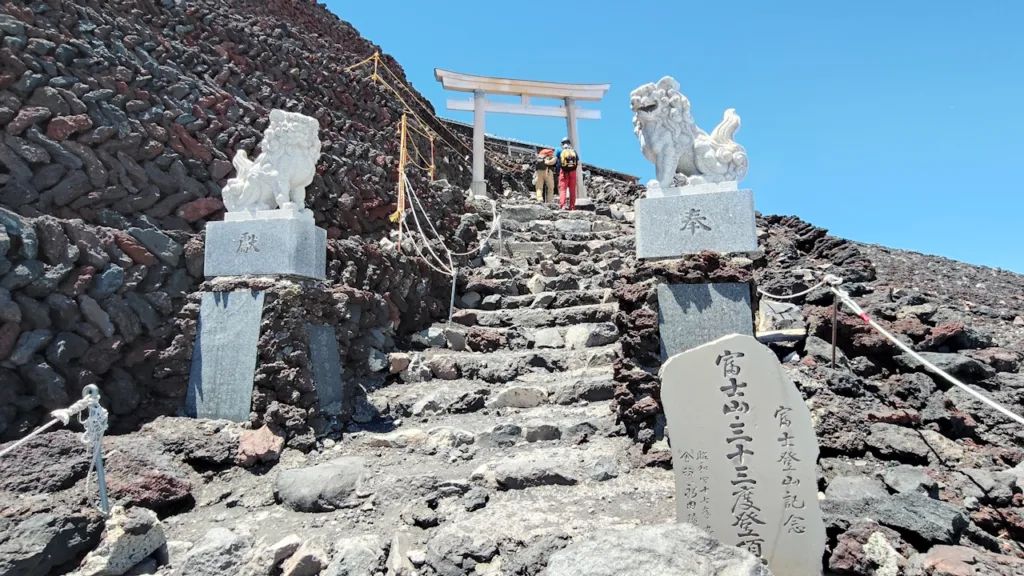
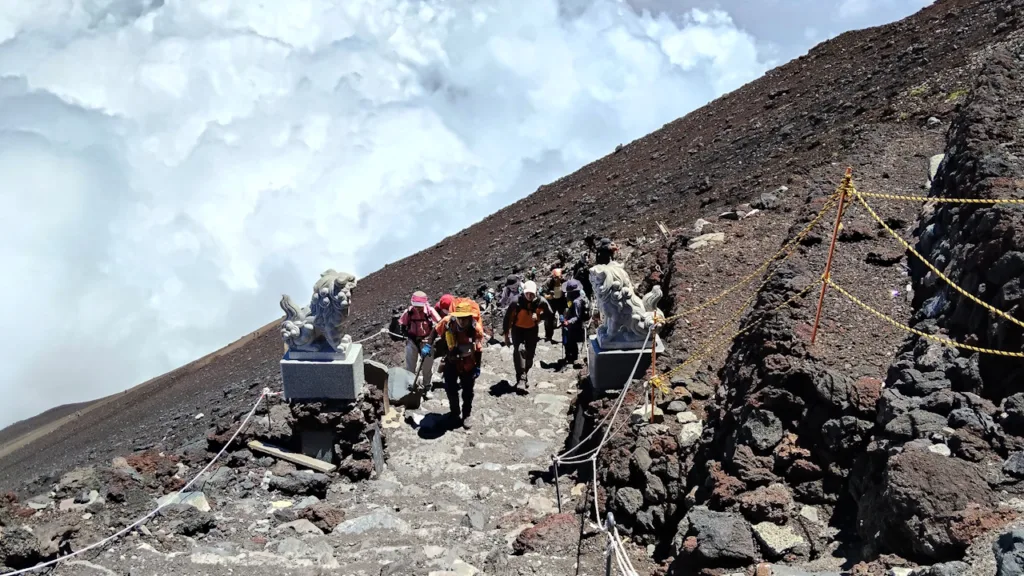
Komainu guardian statues flank the torii gate, and a stone monument inscribed “Fujisan Chōjō Sengen Taisha Okunomiya” stands on the grounds — a quiet marker of the achievement of reaching the top. That inscription also signals that Kusushi Shrine is formally part of Sengen Taisha Okunomiya, tying the two summit shrines together as a single sacred precinct across the crater.
Goshuin, Kongōzue Stamps, and a Living Pilgrimage Tradition
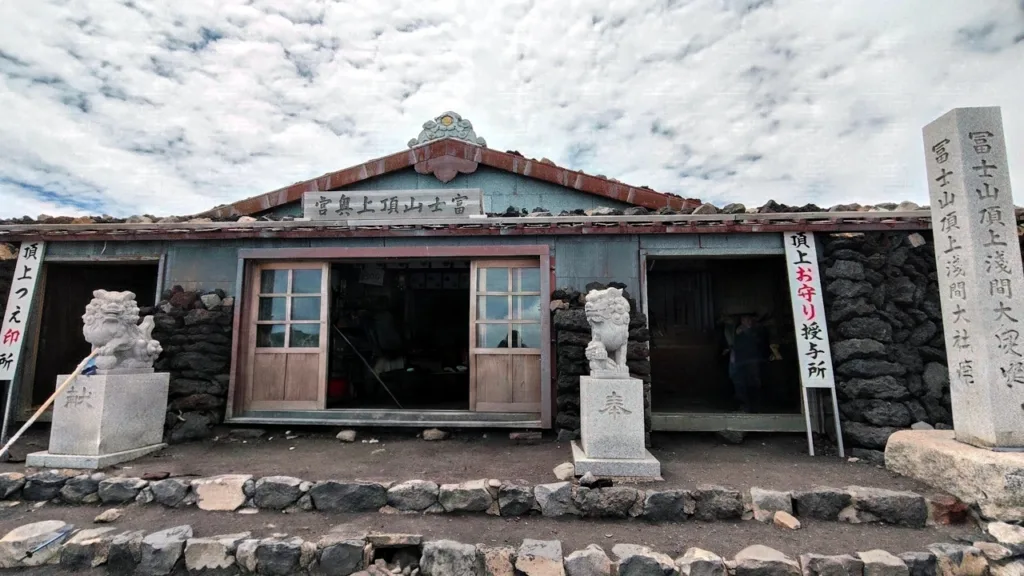
During the open season, Kusushi Shrine offers goshuin stamps as well as branded stamps for kongōzue purchased at the fifth station. Collecting a burned stamp at each mountain hut along the way is a long-standing tradition, and getting the final stamp at the summit shrine is often the highlight of the climb — each staff ends up a visual record of the whole route.
Because Kusushi Shrine sits within reach of several trails, including the Suyama and Kawaguchiko routes, it functions as a shared destination no matter which path climbers choose. The priests on duty during the season also handle omamori charms and prayers for household safety, alongside the goshuin and staff-branding services. Once the season ends, all of that goes on hold until the shrine reopens the following summer.
Nearby Spots
After paying your respects at Kusushi Shrine, several other summit landmarks sit within easy reach along the Ohachi-meguri crater walk — worth building into your schedule depending on time and energy.
Fujisan Hongu Sengen Taisha Okunomiya
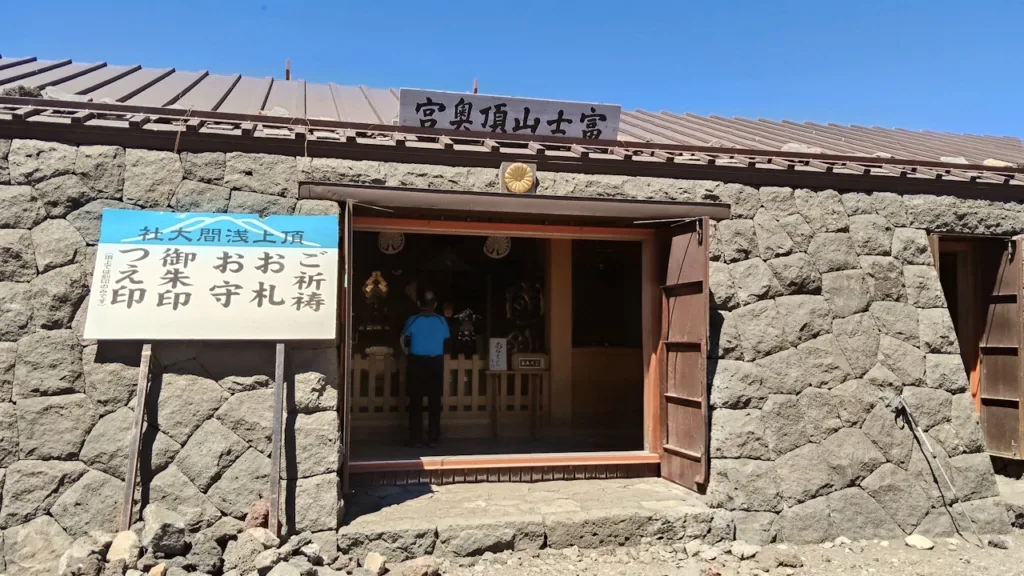
Directly across the crater, at the top of the Fujinomiya Trail, stands Kusushi Shrine’s counterpart: Fujisan Hongu Sengen Taisha Okunomiya. It marks the endpoint of the Fujinomiya route and greets climbers with an imposing shrine building and a set of offerings you won’t find at the base shrine — including summit-only charms tied to the mountain itself.
Kengamine
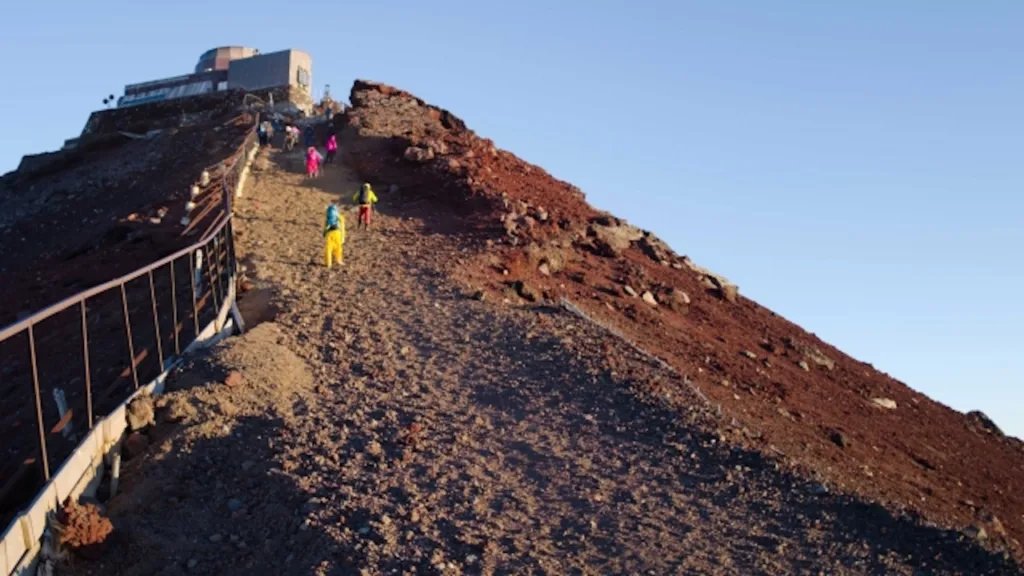
Mount Fuji’s true summit, Kengamine, lies a bit further along the crater walk. A second-class triangulation point marks the spot at 3,776 meters, and it’s the final goal for most climbers doing the full loop. The “Japan’s Highest Peak” marker draws a steady line of climbers posing for photos — a fitting capstone to the climb.
Kusushidake
Close to Kusushi Shrine sits Kusushidake, a peak once known as Yakushidake and widely believed to be the source of the shrine’s name. It’s an easy stop along the Ohachi-meguri route and a good spot to take in how the crater itself came to be shaped.
Ōnaiin
The crater itself — Ōnaiin — is ringed by the cluster of summit shrines, including Kusushi Shrine. Long associated with the imagery of a mandala, it sits at the symbolic center of the summit, and the full scale of it only really sinks in once you’ve walked the loop around it.
Izudake
Izudake is one of the eight peaks, alongside Kusushidake, that ring the crater. Steam was reportedly observed here shortly after the 1923 Great Kanto Earthquake, and it’s a small but memorable stop for anyone curious about Mount Fuji’s identity as an active volcano.
Hotels Near the Trailheads
If you’re approaching Kusushi Shrine via the Subashiri or Yoshida trail, the Gotemba and Oyama area on the Shizuoka side makes a practical base for the night before or after your climb.
Gotemba Kogen Hotel (Tokinosumika)
Set within the sprawling Tokinosumika resort grounds, this hotel has a natural hot-spring bath and open-air baths, with Mount Fuji views from most rooms. A free shuttle from Gotemba Station makes it an easy base for getting to and from the trailhead.
Hotel Just One Fuji Oyama
Just a couple of minutes from the Ashigara Smart IC on the Tomei Expressway, this business hotel offers Mount Fuji views from both its guest rooms and its natural hot-spring bath — a solid pick for resting up before a climb.
Rembrandt Premium Fuji Gotemba
Perched on a hillside at 550 meters, this hotel’s open-air bath looks straight out over Mount Fuji, from its base to its peak. A natural hot spring and sauna make it a good place to unwind after coming down from the summit.
Climb with a Dedicated Tour Conductor
Reaching Kusushi Shrine means navigating two different trail systems, a short climbing window, altitude changes that catch first-timers off guard, and entry rules that vary depending on which side of the mountain you start from. A dedicated tour conductor handles that logistics load so you can focus on the climb itself.
That means building your itinerary around the right trailhead and shuttle schedule, coordinating rebooking if weather or trail closures force a change of plans, and providing interpretation support at mountain huts, shrine offices, and transit points where English isn’t always spoken. None of this involves acting as a sightseeing guide or adjusting your route on the fly — a tour conductor’s role is to keep the plan running smoothly and step in fast if something goes wrong, leaving the on-mountain decisions and pacing to you and your guide.
For climbers juggling trail reservations, toll payments, and a tight weather window, that kind of support can be the difference between a stressful scramble and a climb you actually get to enjoy. Find out more about arranging a tour conductor for your Mount Fuji climb at tours.e-stay.jp.

Conclusion
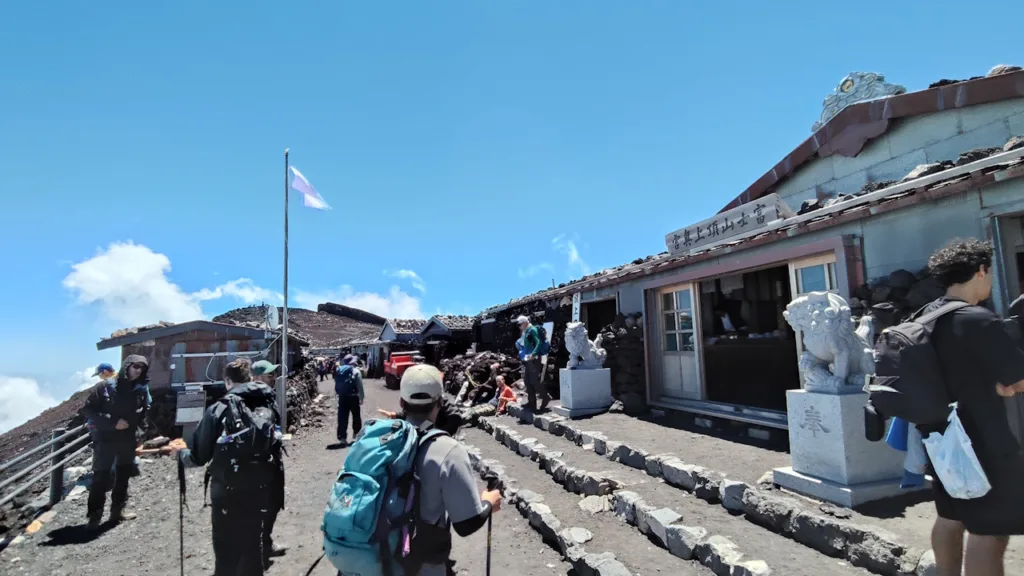
Kusushi Shrine carries a history that runs from a mountaintop Yakushidō through centuries of jurisdictional dispute to its current standing as Sengen Taisha’s Tōhoku Okunomiya — and it’s now recognized as part of a UNESCO World Heritage site to boot. The short season and route-specific entry rules take some planning around, but between the sunrise views and the cluster of sacred sites nearby, a visit here rewards the effort.
Whichever trail you take, working out your trailhead access and your pre- or post-climb accommodation ahead of time makes for a much smoother trip. A base like Gotemba Kogen Hotel, with its Mount Fuji views and natural hot springs, is a solid way to bookend a climb to the summit.