

Travel insights brought to you by a professional Tour Conductor. Today, we take a closer look at Himeji City Aquarium, nestled on the slopes of Tegara-yama Peace Park in Himeji, Hyogo Prefecture. No towering tanks. No dolphin shows. Yet this aquarium has been loved by local residents for more than half a century, and for very good reason. Built around the theme of Harima’s satochi (rural landscapes) and satoumi (coastal communities), the facility offers touch pools where visitors can feel live sharks and rays with their own hands, Japan’s first turtle touch experience, and a track record of breeding awards from the Japanese Association of Zoos and Aquariums that speaks for itself. Known affectionately as “the aquarium on the mountain,” Himesui rewards those who take the time to explore it properly.
| Facility | Himeji City Aquarium (Himesui) |
|---|---|
| Address | 440 Nishinobumatsumachi, Himeji, Hyogo Prefecture (within Tegara-yama Peace Park) |
| Hours | 9:00 AM – 5:00 PM (last admission 4:30 PM) |
| Closed | Tuesdays (following day if a public holiday) · December 29 – January 1 |
| Access (Train) | JR Sanyo Main Line “Tegarayama Heiwa Koen Station” (opened March 2026), short walk / Sanyo Electric Railway “Tegara Station,” approx. 10 min on foot |
| Access (Bus) | From JR Himeji Station South Exit, Shinki Bus to “Nishinobumatsumachi / Himeji City Aquarium Kita,” approx. 5 min walk |
No Giant Tanks, No Live Shows — So Why Is It Worth the Trip?
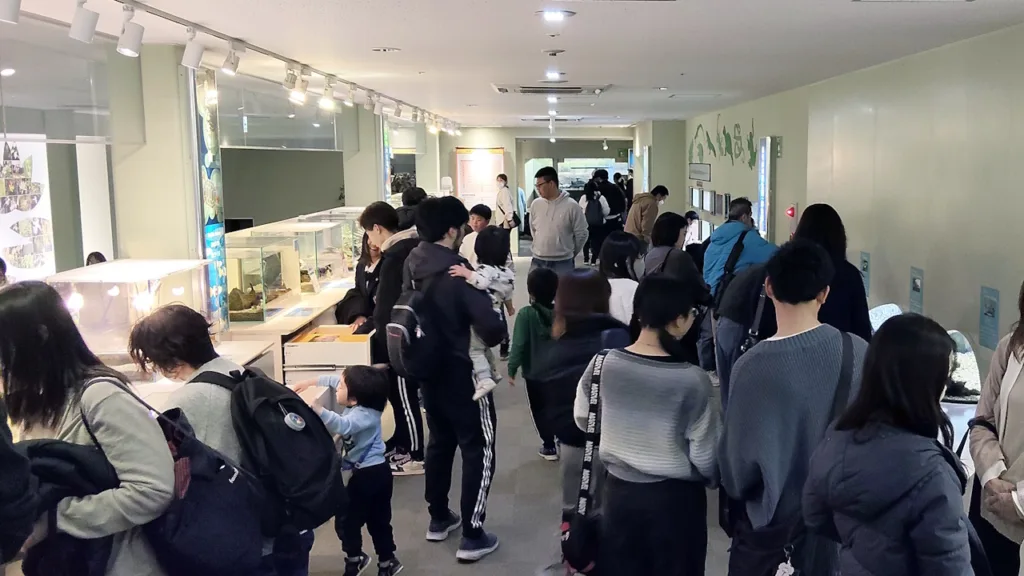
The modern aquarium trend leans heavily toward spectacle: floor-to-ceiling cylindrical tanks, artistic jellyfish displays, and Instagram-ready photo spots with penguins or sturgeons. Himeji City Aquarium takes a deliberate step in the opposite direction. Its stars are eels, loaches, turtles, and frogs — the everyday creatures of Japan’s rice paddies, rivers, and tidal flats. Visitors looking for exotic tropical fish or deep-sea rarities may find the lineup understated.
The hillside location was historically a challenge for public transport access, though the opening of JR Sanyo Main Line’s Tegarayama Heiwa Koen Station in March 2026 has dramatically improved convenience. The on-site parking lot is paid and limited in capacity, and it fills quickly on weekends during Golden Week and summer holidays. There is no on-site restaurant or gift shop, so visitors planning a long stay should bring their own food and drinks.
Knowing these practical details in advance makes all the difference. Come with a clear sense of what you want to experience, and this aquarium will exceed expectations at almost every turn.
A History That Began with the 1966 Himeji Grand Exposition
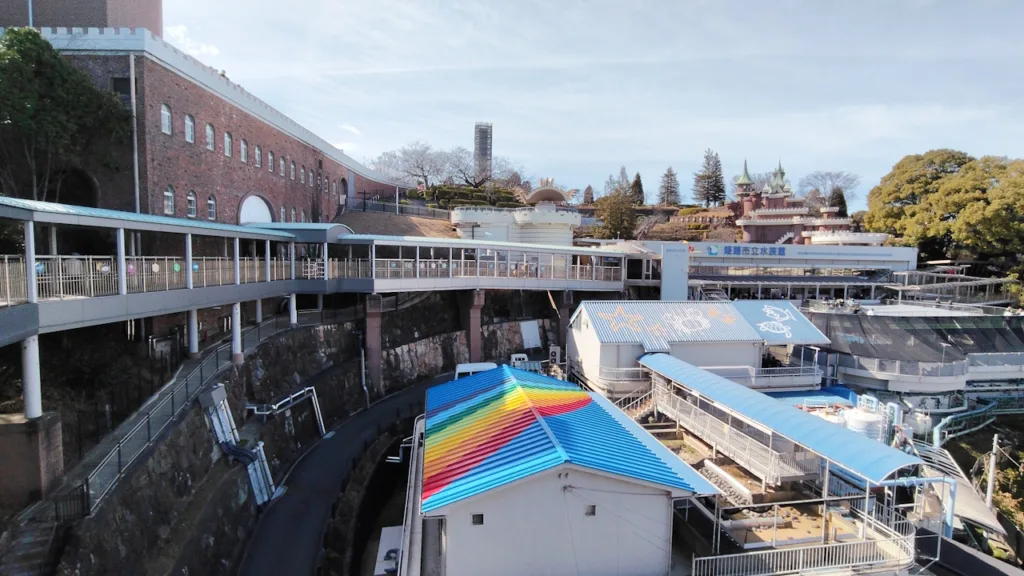
Himeji City Aquarium opened on June 12, 1966 — the same year the Himeji Grand Exposition was held on Tegara-yama. The aquarium was developed alongside the expo grounds, which explains why it occupies such a distinctive perch on the hillside. The surrounding park itself is a legacy of that same event.
From the very beginning, the facility earned national attention with a groundbreaking concept: Japan’s first touch pool. At a time when aquariums were places where you watched fish through glass, Himesui invited visitors to reach in and actually touch the creatures of the intertidal zone. That philosophy of hands-on interaction eventually spread to aquariums across the country, but few people realize the idea was born right here in Himeji.
The facility continued building its scientific reputation over the following decades. In 1987, it received a breeding award from the Japanese Association of Zoos and Aquariums for successfully reproducing the Southern River Terrapin. A second award followed in 1993 for the artificial breeding of the Australian Long-necked Turtle. These achievements, earned by a modestly sized municipal aquarium, speak to an exceptionally high standard of animal husbandry.
In October 2008, the entire facility closed for a seismic retrofit and major expansion, remaining shut for roughly two years and eight months. When it reopened in July 2011, a new wing had been added on the site of the former Tegara-yama monorail station, expanding the total floor area from 4,168 to 8,210 square meters. The three-zone layout now in place — New Wing, Main Building, and Rooftop Biotope — dates from that renovation.
Exploring Harima’s Wildlife Through All Five Senses
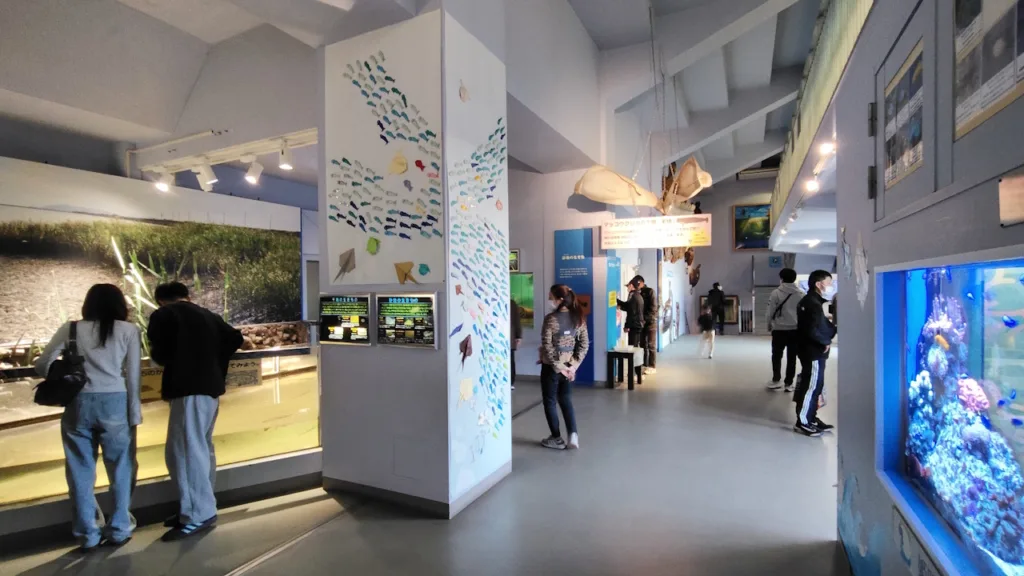
Himesui’s defining concept is a multi-sensory aquarium experience. Alongside seeing, there is touching, listening, and even smelling at various points throughout the facility. The New Wing (floors 1 and 2), the Main Building, and the Rooftop Biotope are all connected by interior corridors, allowing free movement between them. The single entrance is on the first floor of the New Wing.
New Wing, Floor 1: Freshwater Life of the Satochi
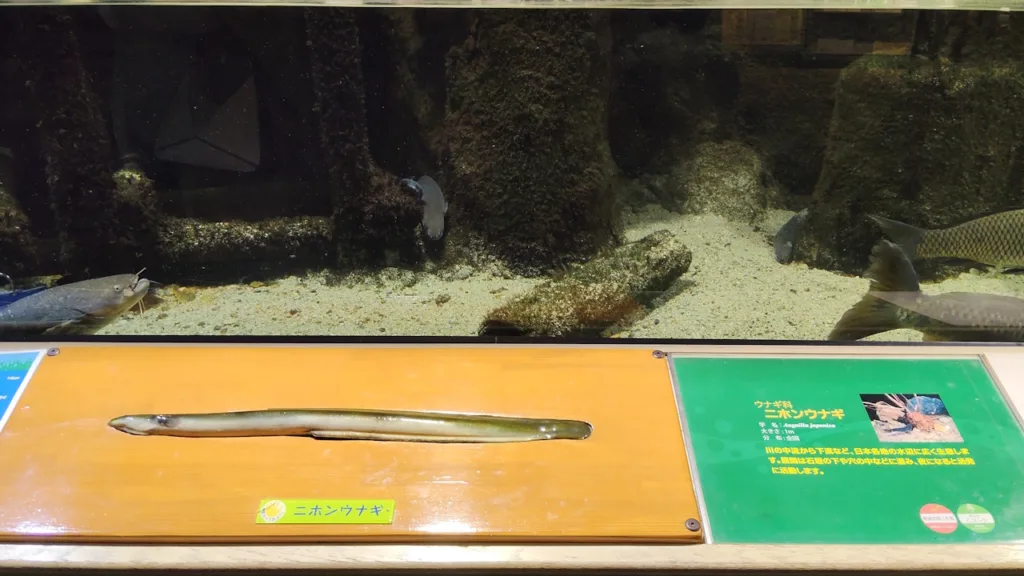
The first floor opens with a freshwater zone showcasing the creatures of Harima’s rice paddies, ponds, and rivers. One of the most striking exhibits is a tank where fish leap upstream in a recreated river setting — a sight that surprises adults and children alike. There is also a tank designed for viewing fish and turtles from directly below, offering an angle on aquatic life that you rarely encounter in daily life.
New Wing, Floor 2: Amphibians, Reptiles, Aquatic Insects, and Monorail History
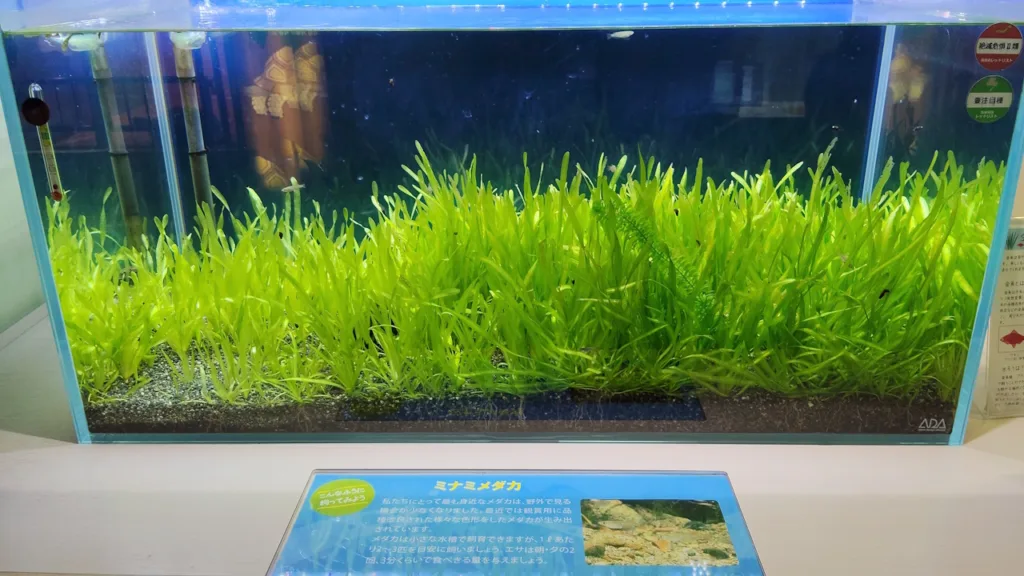
The second floor is devoted to amphibians, reptiles, and aquatic insects native to Harima’s rural landscapes. A popular interactive exhibit features “secret drawers” that, when opened, play the calls of different frog species — families can be heard competing to identify each one. The breeding colony of giant water bugs and diving beetles on display is among the rarest of its kind, a reminder of creatures that were once common in Japanese countryside but have become increasingly difficult to find.
In February 2026, the aquarium announced Japan’s first successful natural breeding of Oshima loach in any zoo or aquarium setting; the offspring are now on display here. A full-body red variant of the Japanese fire-bellied newt, donated by a local resident in November 2025, has also drawn considerable attention. The Setouchi salamander — recently reclassified as a separate species from what was previously known as the kasumi salamander — has been on exhibit since August 2025.
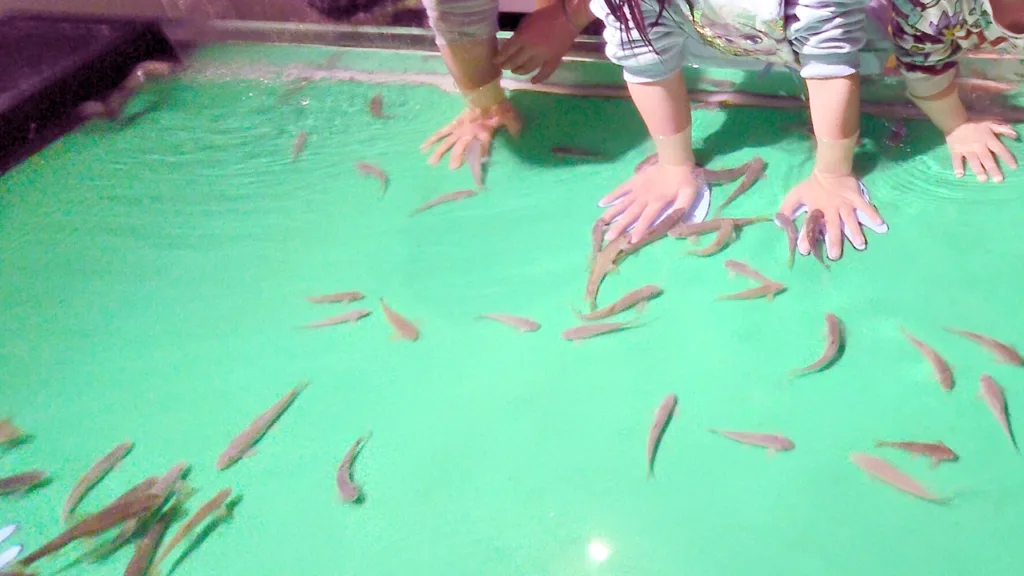
Also on the second floor is a doctor fish (Garra rufa) touch tank. Visitors place their hands in the water and the small fish gather to feed on dead skin cells, producing a distinctly ticklish sensation. Wash your hands thoroughly before participating.
The tortoise corner is home to a sulcata tortoise, one of the aquarium’s most recognizable residents. This large African land tortoise, known for its impressive build and surprisingly sociable temperament, has earned a dedicated following among repeat visitors.
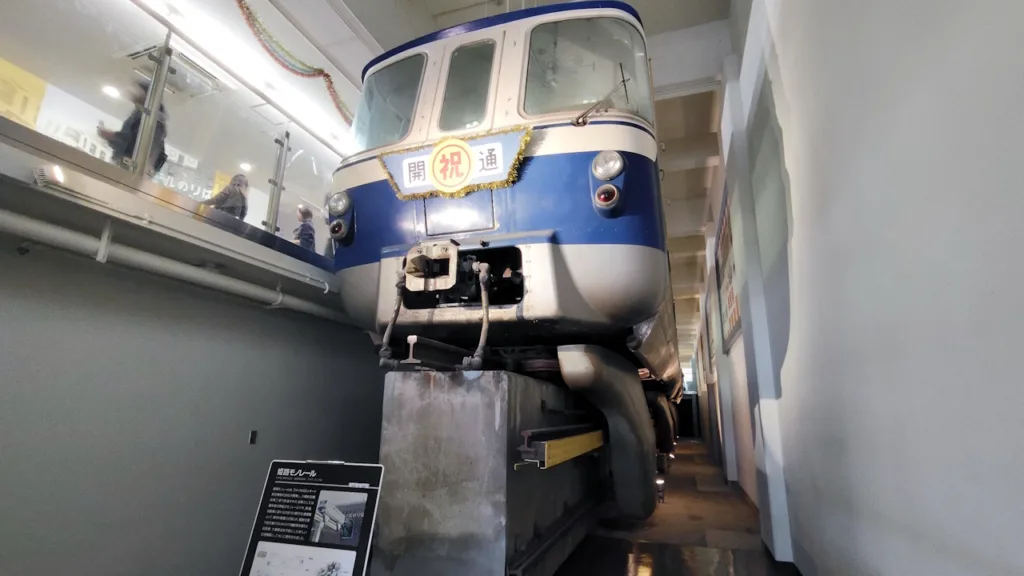
Directly accessible from the second floor is Tegarayama Koryuu Station, which preserves the original platform and rolling stock of the Himeji Municipal Monorail. The line opened for the 1966 expo and was discontinued just eight years later; the cars and station hall remain exactly as they were left, making this one of the most unusual railway preservation sites in western Japan.
Main Building: Marine Life of the Satoumi
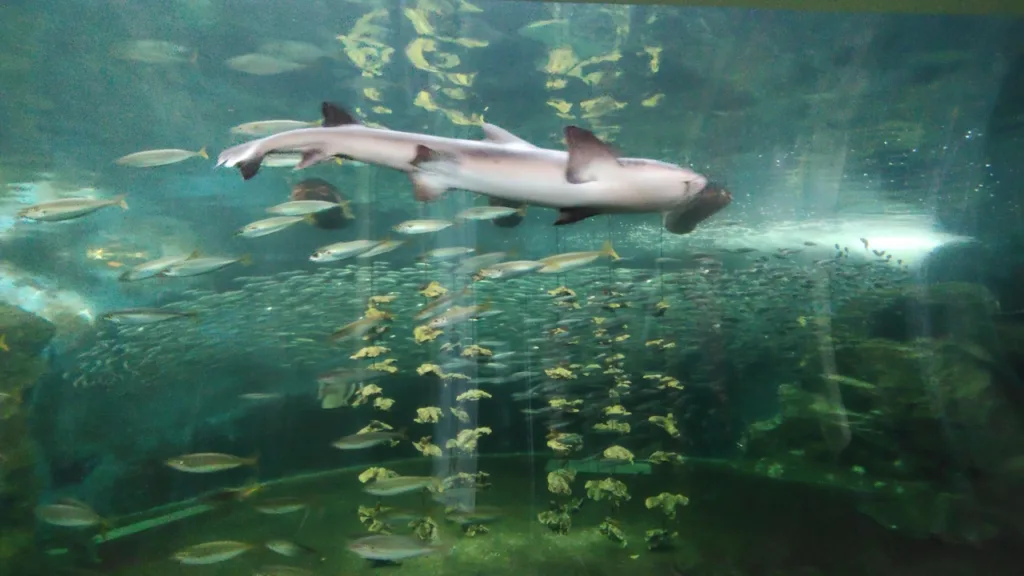
The Main Building connects to the New Wing via an interior corridor at the third-floor level. Its focus is the marine creatures of Harima Nada, the body of water that separates Hyogo from Okayama and Kagawa. The Harima Nada Main Tank offers a display of sardines swimming in formation — the schooling behavior, with hundreds of silver fish pivoting in unison, captures something that no photograph can adequately convey. The garden eel and nutria exhibits are also popular stops.
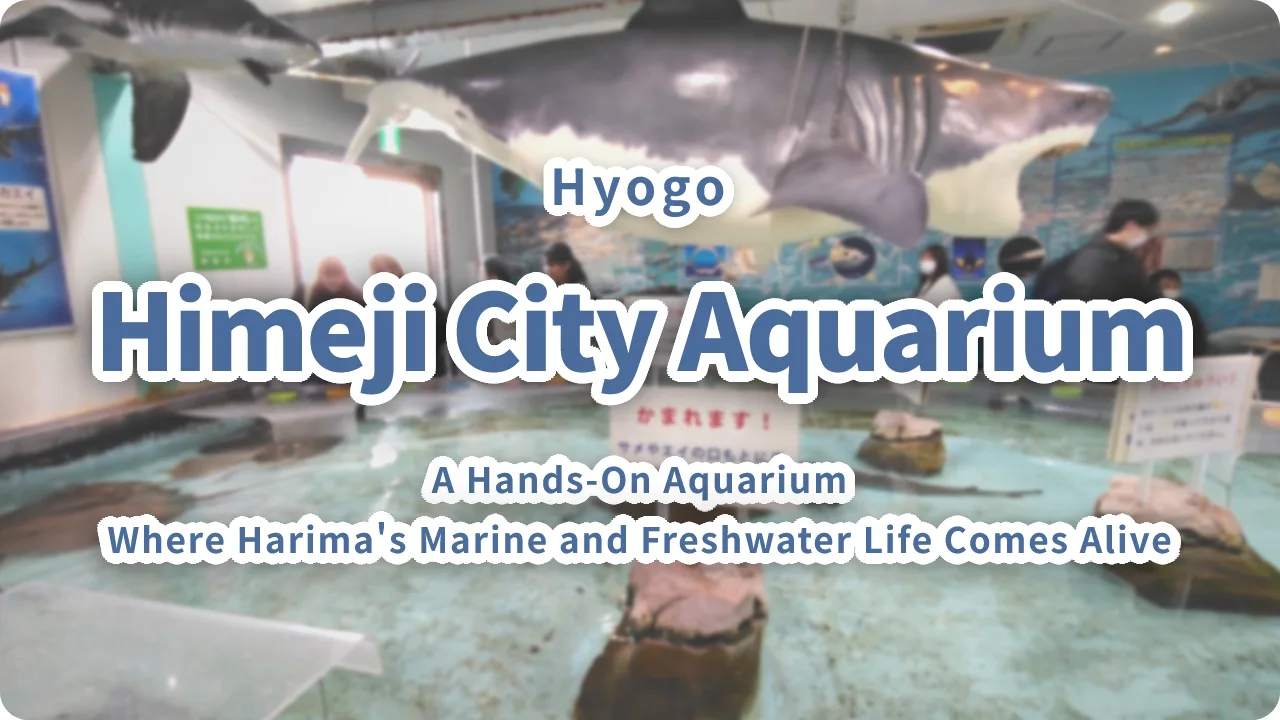
The touch pool is where the aquarium earns the most enthusiastic responses. Visitors can reach directly into a pool containing rays, running their hands along the animals’ smooth dorsal surfaces. Warning signs reading “may bite” and “watch for spines” are posted throughout the area, and attention to these is essential — these are living animals, and handling them requires care and respect. A separate rock pool contains sea urchins, starfish, and small sharks. Young children tend to be particularly absorbed by the touch pools; sleeves and clothing often end up wet in the process. Packing a change of clothes is a practical precaution worth taking.
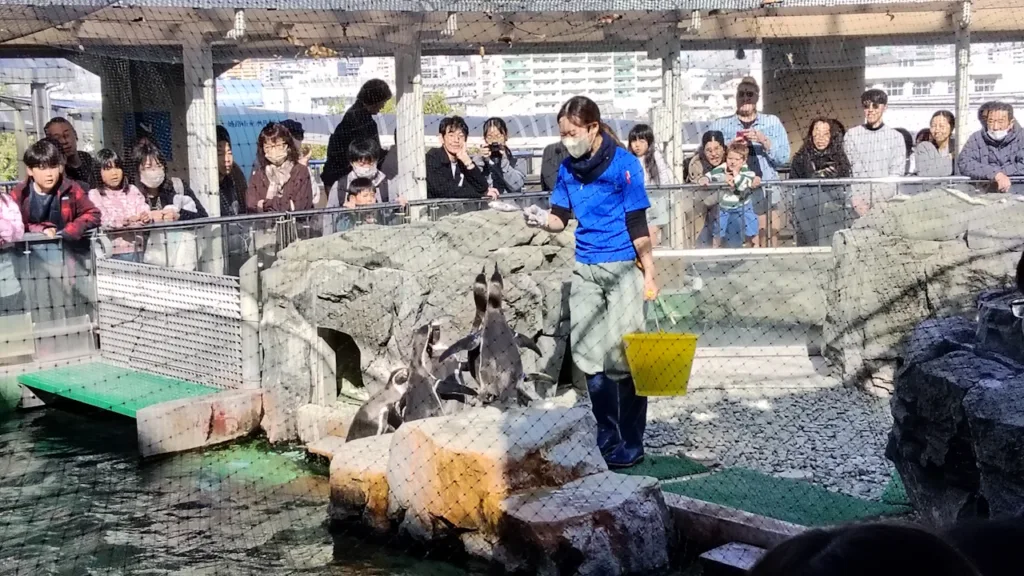
The outdoor pools house loggerhead sea turtles and African penguins, with keeper-narrated feeding sessions held regularly. The turtle pools include a sand pit for egg-laying; depending on the season and time of visit, it is occasionally possible to witness nesting behavior. Loggerhead nesting was confirmed at the facility again in 2025.
Rooftop Biotope
The rooftop of the Main Building features a recreated Harima wetland habitat where visitors can observe aquatic plants and small creatures in a natural setting across the seasons. Tables and benches make it a pleasant spot to rest on a clear day.
A Research Base for Endangered Species
Himesui’s scientific reputation rests partly on its long-term work with endangered species. The Japanese giant salamander — the world’s largest amphibian and a species endemic to Japan — is represented by a life-size model that leaves most visitors genuinely startled by the scale of the animal. The facility’s breeding and care research around this and other threatened species goes well beyond what is visible to casual visitors.
Dedicated sections in the exhibit highlight “aquatic animals that appear in school textbooks” and “creatures at risk of extinction,” presenting conservation issues in an accessible format. Work with Nagoya daruma frogs has produced a self-sustaining captive population, and juvenile frogs bred at the facility went on display in autumn 2025.
Designated by the Hyogo Prefectural Board of Education as a facility equivalent to a registered museum under the Museum Act, and a member of the Japan Museum Association, Himesui operates as a genuine research and educational institution — not simply a venue for public display. That institutional depth adds a layer of credibility and substance to every part of the visitor experience.
Thoughtfully Designed for Families with Young Children
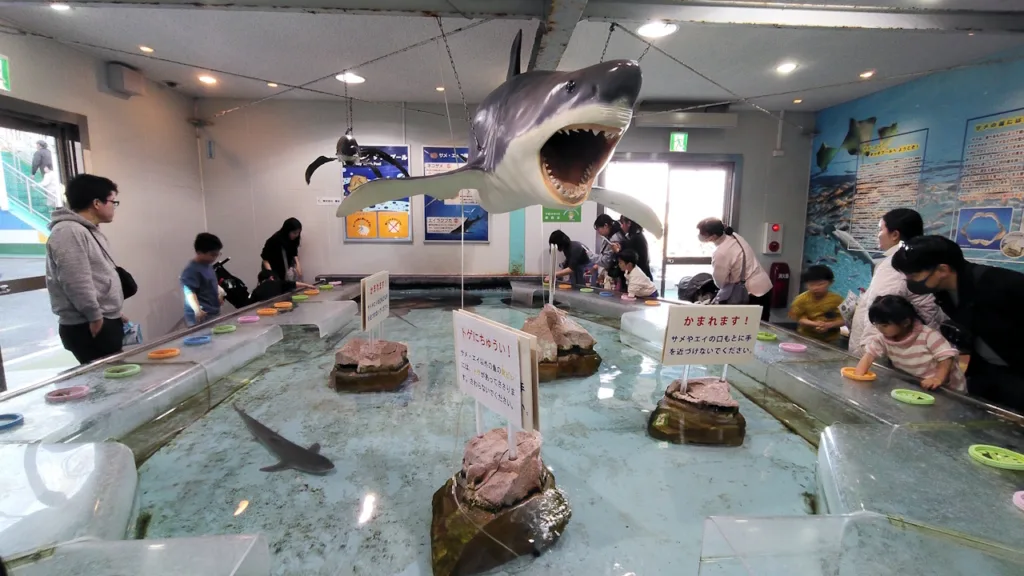
Some of the most inventive exhibits at Himesui are designed specifically for visitors who might be hesitant about direct contact with live animals. Cast models taken directly from real fish allow children to explore the texture of scales and body contours without touching a living creature. A life-size model of a Japanese giant salamander can be lifted, giving a visceral sense of the animal’s weight and mass.
The facility is fully accessible, with ramps and an elevator throughout. Stroller rentals are available at the information desk. Same-day re-entry is permitted, which allows visitors to take a break in the surrounding Tegara-yama Park and return to the aquarium without purchasing another ticket.
Allow roughly two hours to work through the facility at a comfortable pace, including a keeper feeding session and time at the touch pools. The recommended route runs New Wing Floor 1 → New Wing Floor 2 → Main Building → Rooftop → New Wing Floor 1, using the connecting corridors to move between sections.
Nearby Attractions Worth Combining
Tegara-yama Greenhouse Botanical Garden
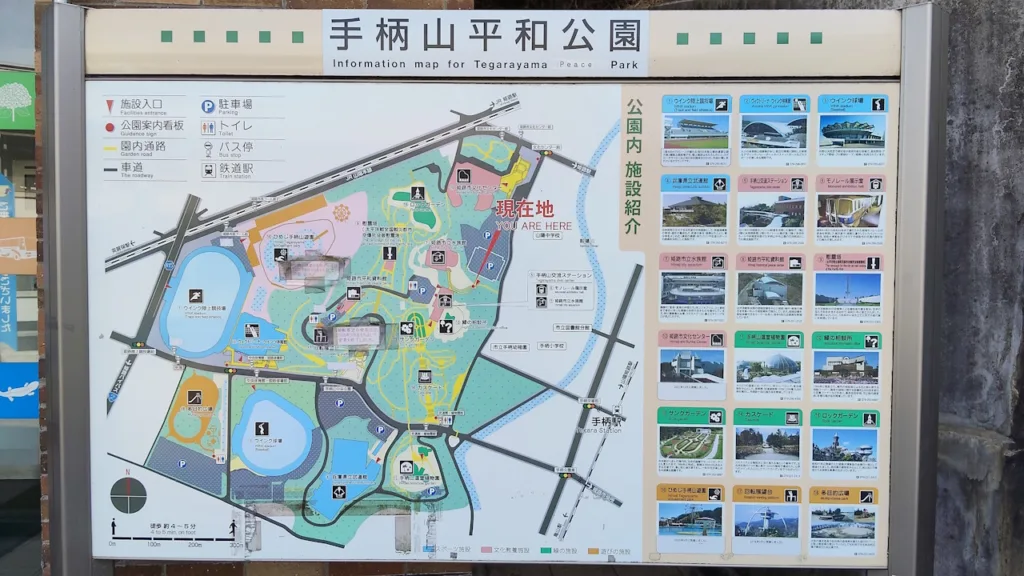
Located within Tegara-yama Peace Park and reachable on foot in a few minutes from the aquarium entrance. Two greenhouses — one large, one small — maintain a year-round collection of tropical and subtropical plants, many of which cannot survive outdoors in Himeji’s climate. The adjacent Flower House stocks seedlings and locally made goods.
Himeji City Peace Museum
Also within Tegara-yama Peace Park, a short walk from the aquarium. The museum documents the two Allied air raids that struck Himeji during the Second World War, exploring questions of war and peace through artifacts, recorded testimonies, and an installation that simulates the vibration of aerial bombardment. It is widely used for school educational visits.
Tegarayama Koryuu Station (Monorail Exhibition Hall)
Directly accessible from the second floor of the New Wing. This free-entry site preserves the original platform, rolling stock, and operational equipment of the Himeji Municipal Monorail, which opened for the 1966 expo and closed in 1974. A period diorama of the expo grounds is also on display. No admission fee is charged.
Recommended Hotels Near the Aquarium
Hotel Nikko Himeji
Directly connected to JR Himeji Station, Hotel Nikko Himeji offers exceptional convenience as a base for exploring the city. The property includes a sauna-equipped thermal bath facility for guests, and Club Floor rooms provide access to a top-floor lounge. The breakfast buffet features a substantial local menu including Himeji oden.
Hotel Monterey Himeji
A short walk from JR Himeji Station, Hotel Monterey Himeji combines Art Deco-inspired interiors with practical amenities including a guest-exclusive thermal bath facility named “Trinité.” Himeji Castle is within a 15-minute walk, making this a well-positioned choice for sightseeing.
Daiwa Roynet Hotel Himeji
Two minutes on foot from JR Himeji Station, this business-focused hotel equips every room with a Simmons mattress and a semi-separate bathroom configuration. Breakfast receives consistently strong reviews, with a menu incorporating local specialties including Himeji oden.
JR Clement Inn Himeji (formerly Via Inn Himeji)
A two-minute walk from JR Himeji Station East Exit, JR Clement Inn Himeji is a stay-focused hotel that reopened after renovation in November 2022. Complimentary services for guests include 24-hour lobby drinks, evening all-you-can-drink alcohol, and a late-night ochazuke (tea-over-rice) service. The breakfast buffet features local specialties including Himeji almond toast.
Visiting Himeji with a Dedicated Tour Conductor
Navigating a destination like Himeji — with its mix of a UNESCO World Heritage castle, neighborhood cultural facilities, hillside parks, and small specialist museums — is genuinely rewarding when you have someone alongside who can handle the logistical side of the day. A dedicated tour conductor does exactly that: managing the itinerary, handling transportation arrangements, supporting communication where language creates friction, and stepping in efficiently when unexpected situations arise.
At Himeji City Aquarium, this kind of support translates into practical benefits. Getting to the aquarium involves a transfer from the city center, and the facility itself spreads across multiple connected buildings at different levels. Keeper feeding sessions run on a fixed schedule; having someone who can confirm timing in advance, coordinate transport between the aquarium and nearby sites like Himeji Castle, and manage any unexpected changes makes for a noticeably smoother day.
For visitors arriving in Japan without Japanese language ability, municipal facilities like this one can occasionally present challenges — information panels, schedules, and staff communications are not always available in English. A tour conductor who bridges that gap as a matter of course removes a source of friction that otherwise requires workarounds or guesswork.
The role of a tour conductor covers itinerary management, emergency coordination, and practical communication support. It does not extend to sightseeing commentary or licensed guide services — but for the organizational side of a Japan trip, the presence of a dedicated professional makes a meaningful difference to how the day unfolds.
For more information on dedicated tour conductor services and travel arrangements in Japan, visit tours.e-stay.jp.
Wrapping Up
Himeji City Aquarium has spent more than half a century developing a distinctive identity rooted in the landscapes and waterways of the Harima region. As the birthplace of Japan’s first public touch pool and as an ongoing center for endangered species research, its history carries a weight that newer and larger facilities cannot easily replicate. The sensation of touching a ray, the intimacy of a keeper feeding session, the breeding records recognized by Japan’s leading zoological association — each of these reflects a consistent, long-held commitment to hands-on natural education.
The opening of Tegarayama Heiwa Koen Station on the JR Sanyo Main Line in March 2026 has removed the most significant practical barrier to visiting. When planning a trip to Himeji, combining the grandeur of the UNESCO-listed castle with an afternoon among the creatures of Harima’s satochi and satoumi makes for a day that offers something genuinely different from a standard Japan itinerary.