


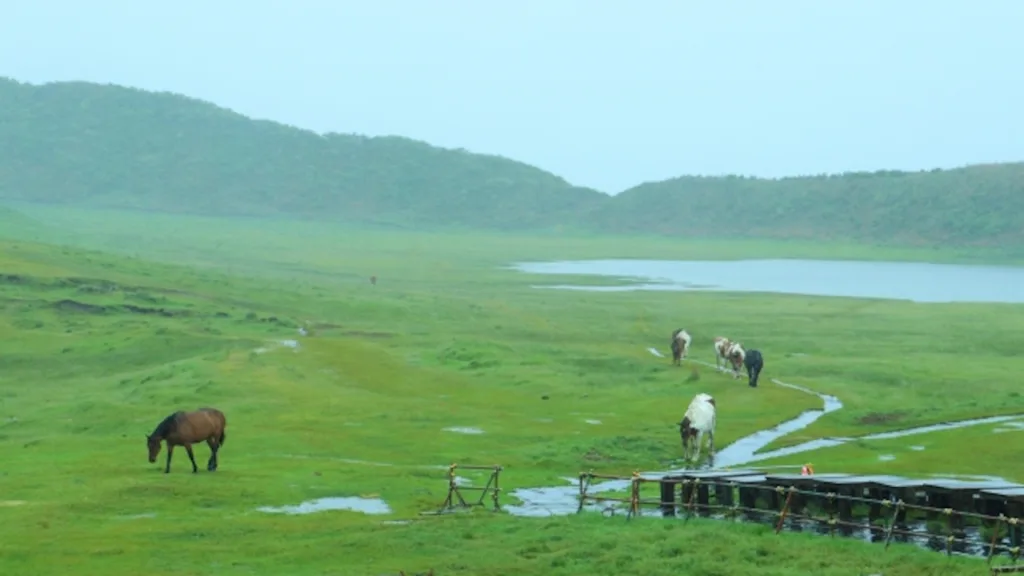
Travel information brought to you by a professional tour conductor. This time, we turn our attention to Kusasenrigahama (草千里ヶ浜), one of the most iconic natural landscapes in all of Japan — a sweeping highland meadow in the Aso region of Kumamoto Prefecture. Horses graze slowly across the grassland while volcanic plumes rise from the crater of Nakadake directly ahead. The scene is striking not because it has been arranged for visitors, but because it exists exactly as it has for thousands of years: raw, elemental, and unlike anywhere else in the country.
Kusasenrigahama sits at the northern foot of Eboshidake (Eboshi Peak), one of the five volcanic summits that make up the heart of the Aso volcanic system. The meadow itself — spreading across approximately 785,000 square meters at an elevation of around 1,100 meters — occupies a double volcanic crater formed roughly 30,000 years ago. Rainwater has pooled in the innermost depression over millennia, forming the calm reflective ponds that give the landscape its distinctive character. On windless mornings, the still water mirrors the sky and surrounding peaks in perfect symmetry. The area is designated a National Scenic Beauty Spot and Natural Monument of Japan.
| Item | Details |
|---|---|
| Name | Kusasenrigahama (草千里ヶ浜) |
| Address | Kusasenrigahama, Aso City, Kumamoto Prefecture |
| Entry | Free, open year-round |
| Parking | Paid (Kusasenri Parking Lot) |
| Access by bus | Approx. 30 min from JR Aso Station — alight at “Kusasenri Aso Volcano Museum Mae” |
| Access by car | Approx. 80 min from Kumamoto City; approx. 50 min from Aso Kumamoto Airport |
Before You Visit: What You Need to Know
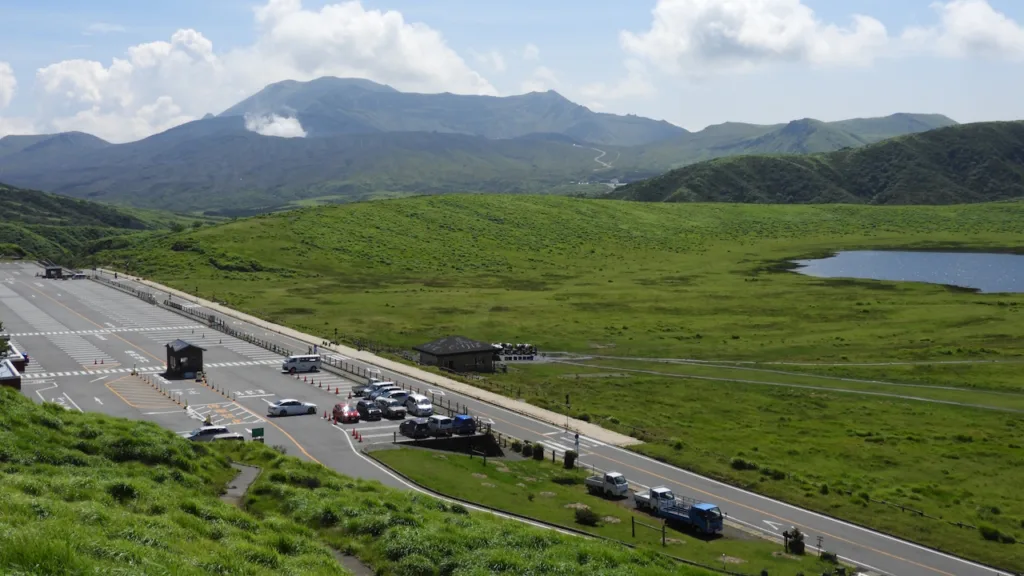
Wandering the meadow is free of charge, but there are a few practical points worth knowing before you arrive. The parking lot operates on an automatic number-plate recognition system — cameras record your plate at entry, and you pay at machines inside the lot before leaving. One useful detail: the same payment serves as a shared ticket valid for one use at the Aso-sanjo (mountaintop) parking lot on the same day, which is handy if you plan to explore higher up the mountain.
Mount Aso is an active volcano, and eruption alert levels can change. Kusasenrigahama itself remains accessible under Alert Levels 1 and 2, but access to the Nakadake crater area — including the toll road leading up to it — is subject to restriction based on current volcanic activity. The road to the crater has been closed since mid-2025 and remains closed as of May 2026, with no vehicle access or crater viewing available.
At 1,100 meters elevation, weather at Kusasenrigahama shifts quickly and without much warning. Fog, sudden rain, and sharp temperature drops can arrive even in summer. Carrying a windproof jacket and rain layer is strongly advisable regardless of the forecast.
The free-ranging horses are a highlight of a visit, but they are large, unpredictable animals. Approaching, touching, or attempting to feed them is prohibited and genuinely dangerous. Sudden movements or loud sounds can startle them. Keep a respectful distance and observe from a safe remove.
30,000 Years in the Making
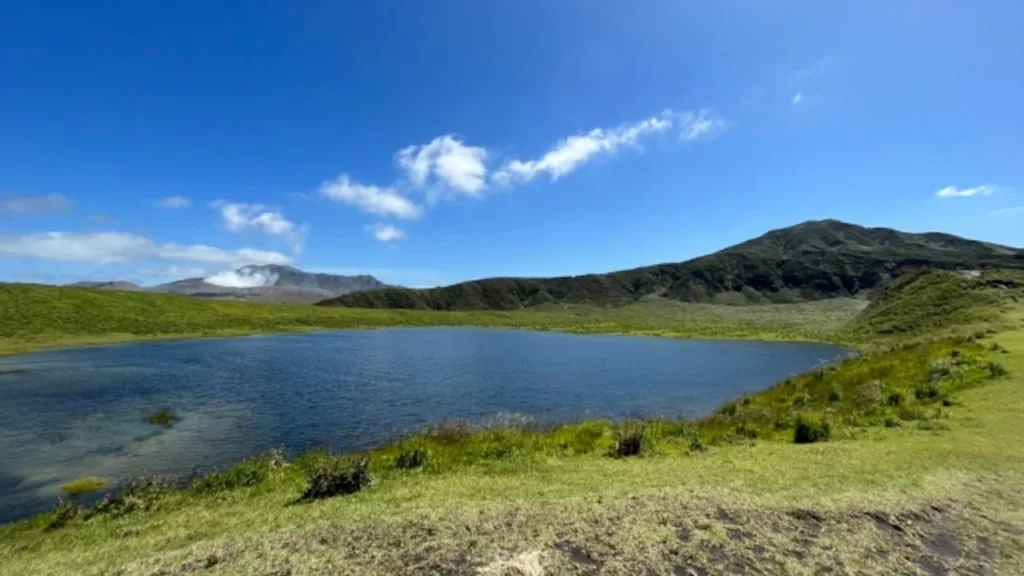
The meadow’s unhurried beauty belies an extraordinary geological backstory. Aso’s volcanic history stretches back roughly 270,000 years, marked by four catastrophic caldera-forming eruptions that occurred at approximately 270,000, 140,000, 120,000, and 90,000 years ago. The final eruption — the largest of the four — was so massive that pyroclastic flow deposits have been identified across the sea in Shimabara, Amakusa, and Yamaguchi Prefecture to the northeast, with volcanic ash layers more than 10 centimeters thick still preserved in eastern Hokkaido today.
These eruptions emptied vast magma chambers beneath the earth, causing the ground above to collapse and form what is now the Aso Caldera — one of the largest calderas in the world, measuring approximately 18 kilometers east to west and 25 kilometers north to south. Within that caldera, a new generation of volcanic peaks gradually emerged. The five summits that form Aso-gogaku (the Five Peaks of Aso) rose from the caldera floor between 30,000 and 50,000 years ago, and the landscape visitors see today took shape over that long span of geological time.
“Mount Aso” and “Eboshidake”: Clearing Up the Confusion
Travel materials often describe Kusasenrigahama as “a scenic spot on Mount Aso” and then refer elsewhere to its location “at the foot of Eboshidake.” These are not contradictory — but understanding the distinction adds real depth to the experience.
“Mount Aso” (阿蘇山, Aso-san) does not refer to a single mountain. It is a collective name for the entire volcanic system: the world-class caldera, its outer rim (gairin-zan), the internal plains, and the cluster of summits at its center known as Aso-gogaku — the Five Peaks of Aso. Those five peaks are Takadake (1,592 m), Nakadake (1,506 m), Nekodake (1,433 m), Eboshidake (1,337 m), and Kishimadake (1,326 m). When people say “Mount Aso,” they generally mean this entire volcanic landscape, not any one summit.
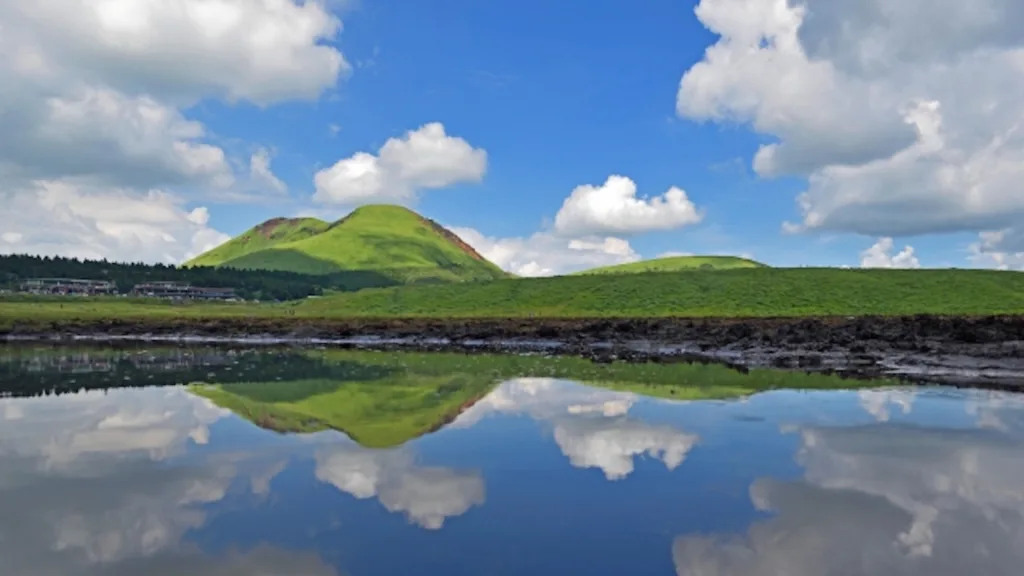
Eboshidake is the westernmost of the five peaks, recognizable from the Kumamoto plains by its sharply angular triangular profile. Kusasenrigahama spreads across its northern slopes — which is why the grassland is often described as lying “at the foot of Eboshidake within the greater Mount Aso volcanic system.” Eboshidake is also known locally as “Kunimiyama” (国見山, “peak for surveying the land”) for its commanding views: from the summit, visitors can take in Nakadake, Takadake, Kishimadake, the outer rim to the south, and on clear days, the northern edges of the Kyushu mountain range.
The active volcano — the one producing the plumes visible from Kusasenrigahama — is not Eboshidake but Nakadake, located roughly at the center of the five-peak chain. All recorded eruptions in the historical era have originated from Nakadake’s First Crater (Nakadake Dai-ichi Kako), which remains the sole active vent since the 1940s.
The Eruption History of Nakadake
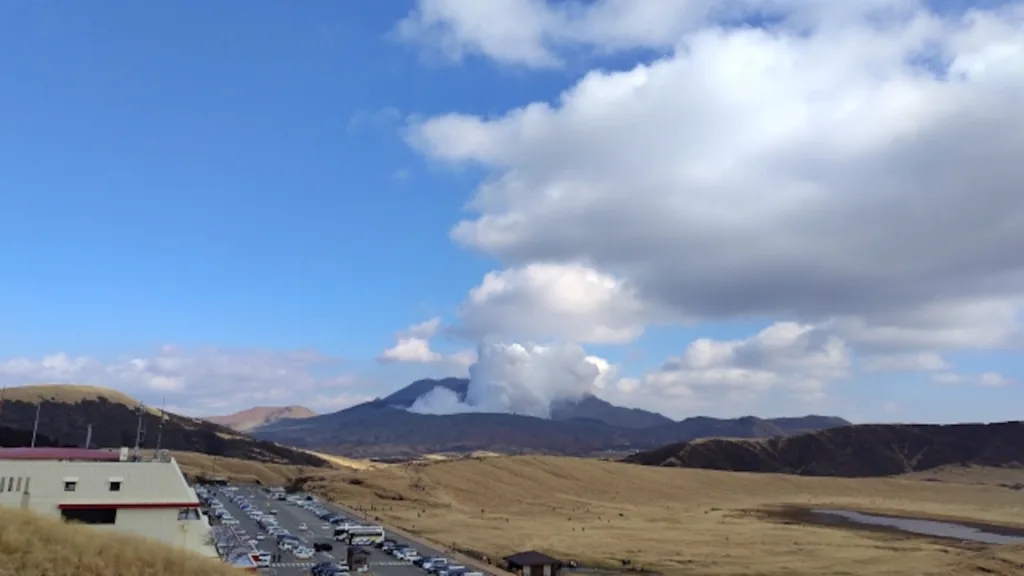
Nakadake has one of the longest documented eruption records of any volcano in Japan, with the earliest historical account dating to 553 CE. Activity has continued intermittently ever since. The most recent large-scale eruption occurred on October 20, 2021, when the First Crater erupted with a plume rising approximately 3,500 meters above the crater rim. Volcanic bombs were ejected up to 900 meters to the south, and pyroclastic flows traveled roughly 1,300 meters down the northern and southwestern flanks. The Japan Meteorological Agency raised the Alert Level to 3 (No Entry into Mountain) in response.
Following that event, activity quieted for a period. However, on July 4, 2025, seismic tremors intensified and the Alert Level was raised to 2 (Crater Area Restricted), the first such elevation since July 2024. As of April 2026, the Level 2 warning remains in effect. A restricted zone of approximately 1 kilometer from the First Crater is maintained, and the toll road to the crater area stays closed to vehicles.
For visitors, this means Kusasenrigahama itself is fully accessible and unaffected. Crater viewing via road is currently unavailable, but the Aso Volcano Museum’s live crater camera feed and the walking access to Sunasenrigahama (see below) provide ways to experience the active volcano at close range without entering the restricted zone.
A Landscape Kept Alive by Human Hands
One more thing distinguishes Kusasenrigahama from a purely “natural” landscape: the grassland is deliberately maintained. Left unmanaged, the meadow would gradually give way to scrub and forest. Each year, local pastoral associations in coordination with prefectural and municipal authorities carry out noyaki — a controlled burn of the dried winter grass — to clear the land and encourage fresh growth in spring. The most recent burn took place in February 2026. What visitors see as pristine natural scenery is, in fact, the product of a centuries-old partnership between the land and the people who have lived alongside it. Poets and scholars have praised the landscape of Kusasenrigahama since ancient times, and that beauty endures in large part because of this ongoing human commitment.
A View That Belongs to No Other Place
Standing at Kusasenrigahama and absorbing the scene whole is the essential experience. To the east, Nakadake exhales its steady column of white steam above the crater rim. Closer in, free-ranging horses move unhurriedly through the grass or stand at the pond’s edge. The juxtaposition — an active volcano and a pastoral meadow coexisting in the same frame — is what makes this landscape singular. There is nothing quite like it in Japan, and very little like it anywhere.
The Kusasenri Observation Deck (草千里展望所), reached by a short walk from the parking area, opens up an even wider panorama over the caldera basin. On clear days, Kimpusan to the northwest and Unzen-Fugen-dake to the southwest become visible on the horizon.
The Meadow Through the Seasons
Kusasenrigahama looks and feels entirely different depending on when you visit.
Spring (March–May)
After the noyaki burn, fresh pale-green shoots emerge across the meadow from March into April. The contrast between tender new growth and patches of residual snow creates a landscape that feels genuinely alive with regeneration. Late May brings the blooming of Miyama Kirishima (Japanese azalea) on the slopes of nearby peaks, adding flashes of pink to the greens.
Summer (June–August)
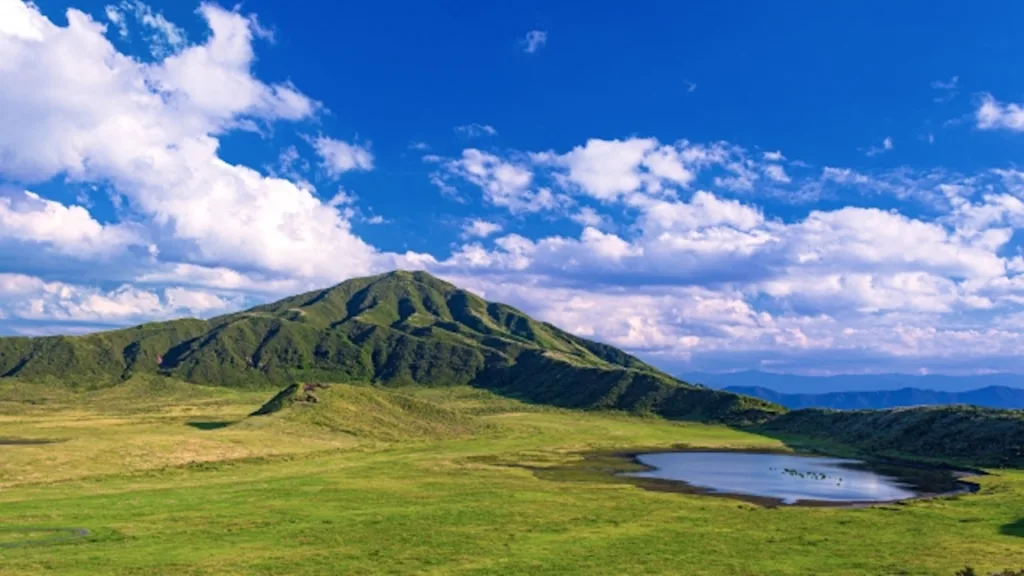
The meadow reaches its richest, most vibrant state. Grass grows thick and a deep, full green; ripples move across it in the wind like waves on water. Horses stand in the ponds cooling themselves. The high elevation keeps temperatures notably lower than the Kumamoto plains below, making this a welcome refuge from summer heat.
Autumn (September–November)
The grass transitions to muted gold and amber as the season turns. The air becomes crisp and transparent, extending visibility across the caldera and into the mountain ranges beyond. The Five Peaks of Aso take on a particularly clear, sculptural quality in autumn light.
Winter (December–February)
Snow transforms the grassland into a silver-white landscape of unusual stillness. The ponds freeze over, and volcanic plumes drift above a world reduced to white and grey. When conditions align, frost flowers (juhyo) form on branches near the meadow, lasting through mid-February most years. Note that the horse-riding club operates from early March to late November only; horses are not present in the meadow during winter.
Experiences and Facilities at Kusasenrigahama
Aso Kusasenri Riding Club
Horseback riding at Kusasenrigahama is an experience that shifts the perspective — literally. Mounted on a large horse, the eye level rises dramatically, transforming the already sweeping landscape into something even more expansive. All rides are guided lead-rein rides (hikima), making them accessible to children and first-timers without prior experience. Three course options (A, B, and C) are available. The club operates from early March through late November.
Aso Volcano Museum
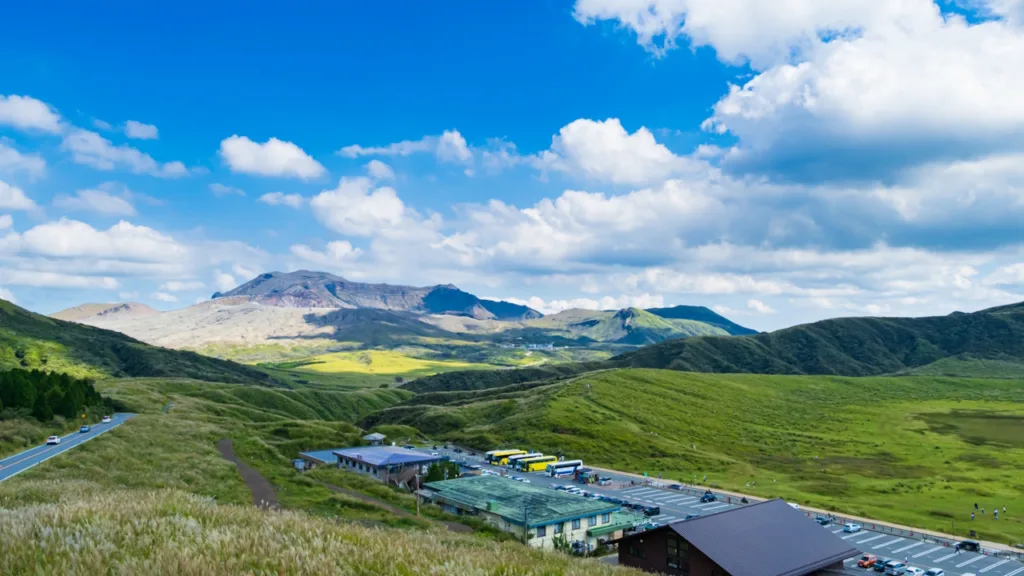
Adjacent to the parking area, the Aso Volcano Museum is Japan’s largest volcano museum and a genuinely worthwhile stop. Its five-screen immersive theater — the “Aso Volcano Drama” — condenses tens of thousands of years of geological history into a visceral audiovisual experience. A live feed from cameras mounted at the Nakadake crater provides real-time images of the crater floor and steam activity, which is especially valuable when crater access itself is restricted. The museum also functions as practical shelter when mountain weather deteriorates suddenly.
| Item | Details |
|---|---|
| Name | Aso Volcano Museum |
| Address | 1930-1 Akamizu, Aso City, Kumamoto Prefecture |
| Hours | 9:00–17:00 (last entry 16:30) |
Kusasenri Coffee Roastery
Opened in September 2021, Kusasenri Coffee Roastery (草千里珈琲焙煎所) occupies a prime vantage point overlooking the meadow. Operated by Kafè Kairou, a well-regarded roaster from Kumamoto City, the café serves carefully prepared drip coffees, lattes, and cold brews. Taking a cup to the window or terrace and watching the horses and volcanic plume against the sky is one of the quieter, more lasting pleasures of a day at Kusasenrigahama.
Trails and the Mountaintop Area
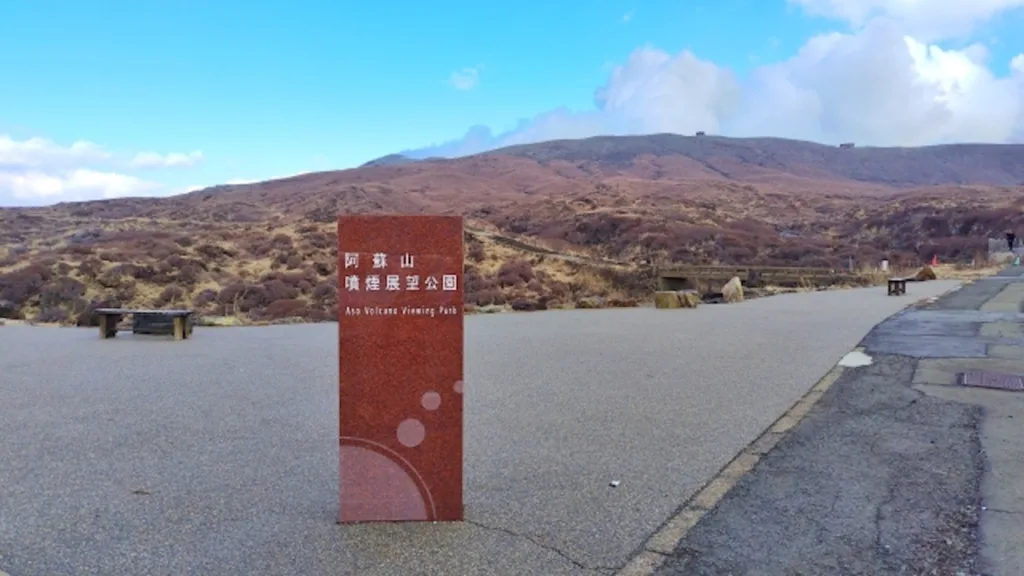
Kusasenrigahama is a natural starting point for exploring deeper into the Aso volcanic landscape on foot.
The Furubouchu–Kusasenri Walking Trail
A gently graded paved path connects the Kusasenri parking area to Furubouchu Parking Lot (also called Aso-sanjo Hiroba, the mountaintop plaza area). The walk proceeds through open grassland with Nakadake’s plume growing larger ahead — a comfortable outing for all fitness levels. The name Furubouchu carries history: during the Kamakura and Muromachi periods (12th–16th centuries), this was a major site of mountain Buddhism, with 37 temple lodges and 51 hermitages housing ascetic monks. Nothing of that religious complex remains above ground today, but a signboard and stone marker preserve the record.
Sunasenrigahama and the Mountaintop Area
Beyond Furubouchu, the toll road to the Nakadake crater passes through Sunasenrigahama (砂千里ヶ浜) — a stark expanse of volcanic ash and lava debris that could scarcely be more different from the lush grassland below. Rounded volcanic bombs scattered across a pale, windswept terrain give the place a distinctly otherworldly quality. Sunasenrigahama is accessible on foot from Furubouchu Parking Lot (approximately 30 minutes round trip), even while the toll road to the crater remains closed to vehicles.
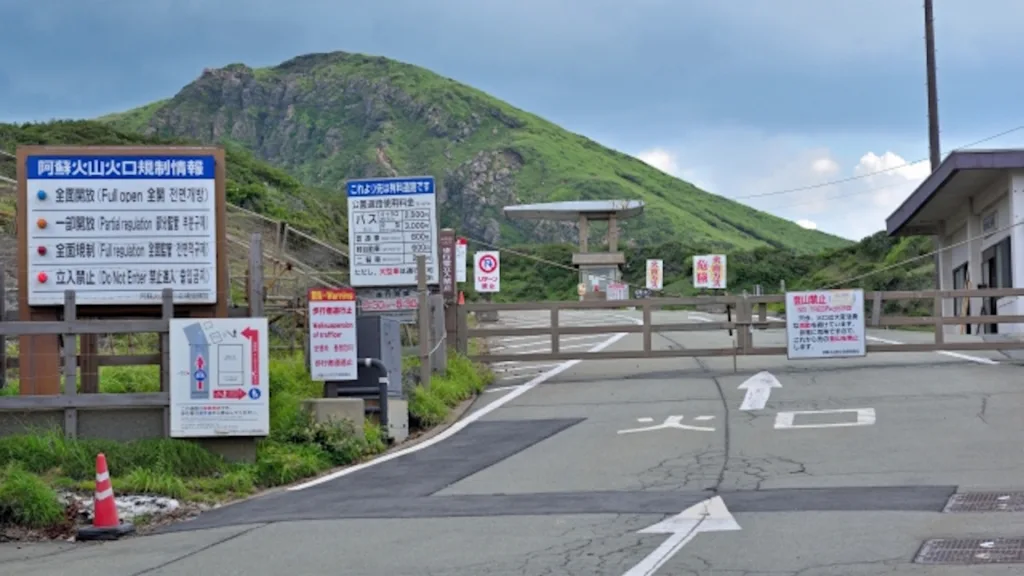
As of May 2026, the toll road is closed and crater viewing is not available. The mountaintop terminal building near Furubouchu offers souvenir shops, light refreshments, and restrooms, and serves as the turnaround point for buses from the Aso Station direction.
Kijimadake (1,326 m)
The trailhead for Kishimadake begins at the eastern edge of the Kusasenri parking lot. Almost the entire ascent follows a concrete-paved path, making it the most accessible climb among the Five Peaks — suitable even for ordinary footwear, though hiking shoes are still preferable. The summit delivers a 360-degree panorama encompassing Kusasenrigahama below, the southern outer rim, the Nakadake crater, and on clear days, Ariake Sea and Unzen-Fugen-dake far to the west. Miyama Kirishima azaleas bloom near the summit in late May.
Eboshidake (1,337 m)
The pointed summit visible across the meadow to the west is Eboshidake itself. A trail from the Kusasenri parking area leads via the eastern route toward the upper slopes, with a round-trip time of approximately two hours. Trail conditions and access restrictions vary — portions of the route and the summit area may be closed depending on volcanic activity and trail maintenance status. Check current conditions before setting out. The terrain beyond the paved Kishimadake route is rough and volcanic in character; ankle-supporting footwear is strongly recommended.
Getting There
By car, Kusasenrigahama is approximately 80 minutes from central Kumamoto City and around 50 minutes from Aso Kumamoto Airport via National Route 57. By public transport, take a local bus from the front of JR Aso Station and alight at “Kusasenri Aso Volcano Museum Mae” (approximately 30 minutes). Buses are limited in frequency, so checking the timetable in advance is advisable. A rental car or taxi offers considerably more flexibility, especially if combining Kusasenrigahama with nearby attractions across the caldera.
Nearby Attractions
Daikanbo
About 30 minutes north by car, Daikanbo stands at the highest point of the northern outer rim at approximately 936 meters elevation. The view south from here encompasses the entire caldera basin in a single frame — the Five Peaks of Aso arranged in the profile that resembles a reclining Buddha figure (nehan-zo), with Nakadake’s plume rising from the center. Early autumn and winter mornings sometimes produce a sea of cloud that fills the caldera below while the peaks emerge above it.
Aso Shrine and Monzen-cho
Approximately 30 minutes east by car, Aso Shrine is one of the oldest and most significant Shinto shrines in Kyushu, with a history spanning more than 2,000 years. Its grand two-story gate (romon) — one of the three largest in Japan — suffered severe damage in the 2016 Kumamoto earthquakes and underwent an eight-year restoration that was completed in December 2024. The gate has been fully restored to its former grandeur and is now open again to visitors. The traditional shopping street (monzen-cho) flanking the approach offers local foods, sake, and handcrafts alongside several natural spring water points (mizuki) set into the storefronts.
Yonezuka (Komezuka)
Just five minutes from Kusasenrigahama by car, Komezuka is a small volcanic cone rising approximately 80 meters above the surrounding plain. Formed around 3,300 years ago, it has a characteristic rounded silhouette with a shallow depression at the summit that marks the original vent. Its perfectly proportioned form and grass-covered surface make it one of the most photogenic shapes in the Aso landscape, visible from the panoramic road on the approach from Kumamoto City.
Recommended Accommodation
Fairfield by Marriott Kumamoto Aso
A property within the Marriott International portfolio, Fairfield by Marriott Kumamoto Aso is located a two-minute walk from JR Aso Station and directly adjacent to Michi-no-Eki Aso (an Aso roadside rest station). The hotel is about 20 minutes from Kusasenrigahama by car, making it an exceptionally practical base for exploring the caldera region. Rooms are clean, contemporary, and comfortable. A communal lounge with complimentary coffee, tea, and miso soup, plus a microwave and laundry facilities, suits both short stays and multi-day trips. Guest ratings on Booking.com sit at 9.1.
Sozankyo — Aso Uchinomaki Onsen
An established ryokan (traditional inn) in Uchinomaki Onsen, about 20 minutes from Kusasenrigahama by car, Sozankyo combines the warmth of a heritage inn with a thoughtfully updated aesthetic. Its hot spring — a 100% natural flowing onsen bath, undiluted and unheated — is available 24 hours a day from check-in through 10:00 AM the following morning. Large communal baths, private baths, and rooms with attached open-air baths each offer a different dimension of the same high-quality water. The kaiseki dinner course built around Aso’s Akaushi beef is consistently well reviewed. The property carries a 4.41 rating on Rakuten Travel.
Aso Resort Grandvrio Hotel (Route Inn Hotels)
About 10 minutes from Kusasenrigahama by car, the Aso Resort Grandvrio Hotel is a large resort property affiliated with Route Inn Hotels, set on a highland plateau with open views across the Aso outer rim. The hotel’s golf course sprawls beside the main building, and the natural hot spring facility offers both indoor and outdoor baths fed by genuine onsen water. The dinner buffet, featuring local Aso ingredients and a rotating selection of hot-spring-region dishes, is a consistent draw for guests. The full scale of the property — 180 rooms, multiple dining outlets, spa services, and event facilities — makes it one of the most complete resort options in the area.
Traveling to Kusasenrigahama with a Tour Conductor
Navigating Japan’s active volcanic regions independently is entirely possible — and many visitors do it successfully. But there are layers to a place like Kusasenrigahama that become much more accessible with the right support alongside. Current volcanic alert levels, road closures that change without advance notice, bus timetables with limited frequency, access restrictions to specific trails or crater areas: these are the kinds of variables that can turn a simple day trip into a frustrating logistical problem.
A dedicated tour conductor handles the itinerary logistics — transportation coordination, accommodation arrangements, and contingency planning when conditions change — so that your experience of the landscape itself isn’t disrupted by the machinery of travel. In the event of sudden trail closures or alert level changes, a tour conductor can restructure the day in real time rather than leaving you to navigate the situation alone. Language barriers at smaller facilities and attractions across the Aso region can also be a genuine obstacle; having someone on hand who can communicate clearly with local staff makes a meaningful practical difference.
A tour conductor’s role is specifically itinerary management and logistical support — not sightseeing guidance in the traditional sense. But that support, precisely applied, often makes the difference between a trip that works and one that doesn’t.
For private Japan travel with a dedicated tour conductor, visit tours.e-stay.jp.

Final Thoughts
Kusasenrigahama is one of those places that earns its reputation. It genuinely looks like nothing else in Japan: the grassland, the ponds, the horses, and the volcanic plume in one unbroken view. The geological story behind it — four catastrophic eruptions, a world-class caldera, 30,000 years of slow transformation from active crater to pastoral meadow — gives the landscape a weight that mere scenery rarely carries. And then there is the human dimension: the annual burning, the generations of pastoral communities, the ancient shrine at the base of the mountain, the monks who once built an entire religious city here.
The experience is different in every season, and different again depending on the volcanic conditions on the day. That unpredictability is part of what makes it worth returning to. For a first visit, Fairfield by Marriott Kumamoto Aso offers the most convenient base: two minutes from Aso Station on foot, 20 minutes from the meadow by car, and well within range of every key attraction in the caldera.