


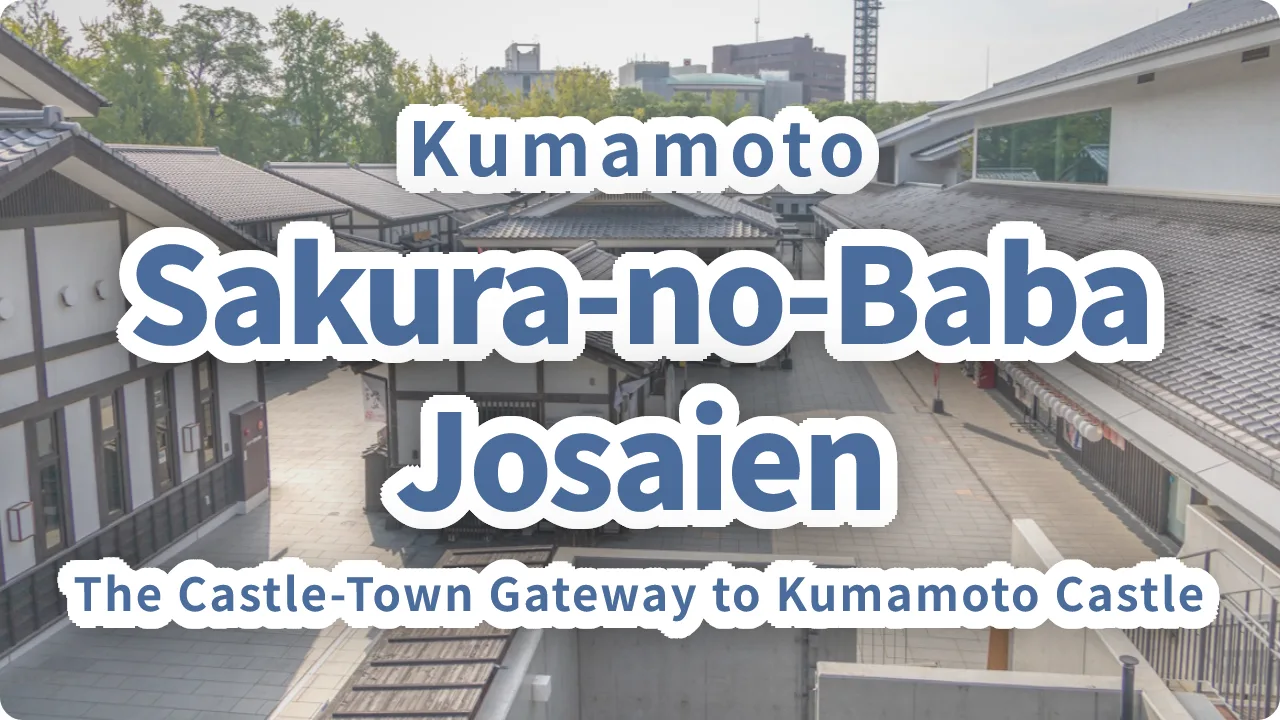
Travel insights from a tour conductor — today’s destination: Sakura-no-Baba Josaien, a lively cluster of shops, food stalls, and a history museum sitting right at the foot of Kumamoto Castle. Built to look like an Edo-period castle town, it’s the kind of place that works equally well as a warm-up before you climb the keep or as a place to unwind afterward with local food and souvenirs.
Getting to know Sakura-no-Baba Josaien
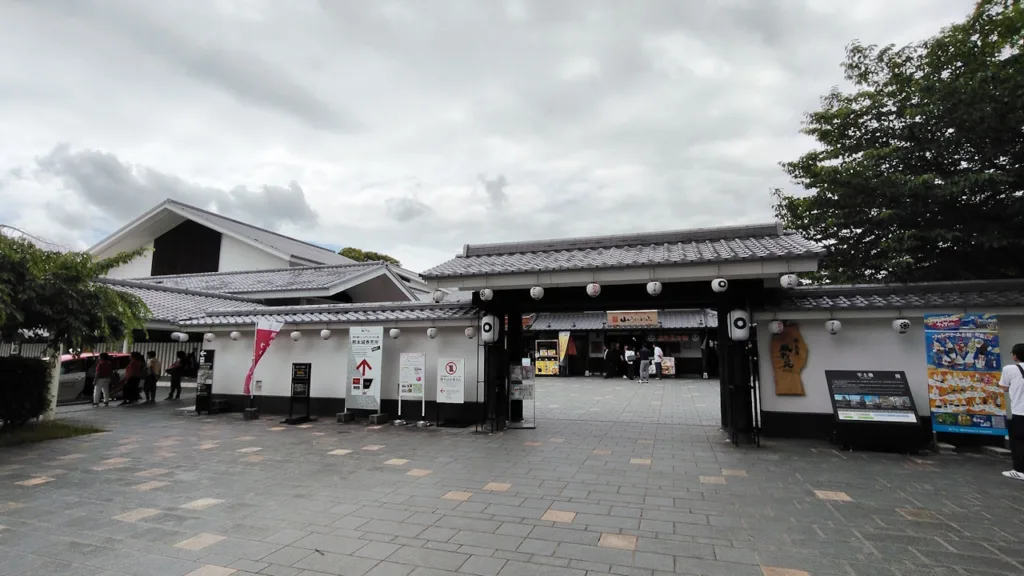
Josaien sits on the western side of Gyoko-zaka, the slope that leads up to Kumamoto Castle’s main entrance, on the very route samurai once rode along on horseback to reach the keep. The complex is made up of three parts: Sakura-no-Koji, a food and shopping lane styled after an old castle town; the Kumamoto Castle Museum Wakuwakuza, where you can dig into the castle’s history through video and hands-on exhibits; and a general tourist information center. There’s no admission charge just to walk through the grounds, which makes it an easy stop whether you’re getting your bearings before heading up to the keep or looking for a bite to eat afterward.
| Item | Details |
|---|---|
| Facility | Sakura-no-Baba Josaien |
| Hours | Sakura-no-Koji souvenir shops 9:00 AM–6:00 PM, restaurants 11:00 AM–6:00 PM; Kumamoto Castle Museum Wakuwakuza 9:00 AM–5:30 PM (last admission 5:00 PM); tourist information center 9:00 AM–5:30 PM |
| Closed | Sakura-no-Koji: open year-round; tourist information center: December 30–31 |
| Address | 1-1 Ninomaru, Chuo-ku, Kumamoto City, Kumamoto Prefecture |
| Access | About a 7-minute walk from the “Kumamoto-jo/Shiyakusho-mae” tram stop; the “Shiromegurin” castle loop bus stops right outside |
A few things worth knowing before you go
Even with its covered walkways, Josaien is essentially an open-air townscape. On a scorching summer afternoon or during the rainy season, the longer you spend walking Sakura-no-Koji, the more the heat or the rain factors into your visit. The Wakuwakuza museum, by contrast, is fully air-conditioned indoors, so on a day when the weather looks unreliable, it can make sense to start there and save the outdoor lane for whenever the sky clears up.
It’s also worth knowing that Sakura-no-Koji’s 23 shops each set their own hours rather than following one fixed schedule, and some restaurants close for a break in the late afternoon before reopening for the evening. If there’s a particular shop you’re after, checking the posted directory once you arrive will save you a wasted trip to a shuttered storefront.
Built on the site of a former public swimming pool
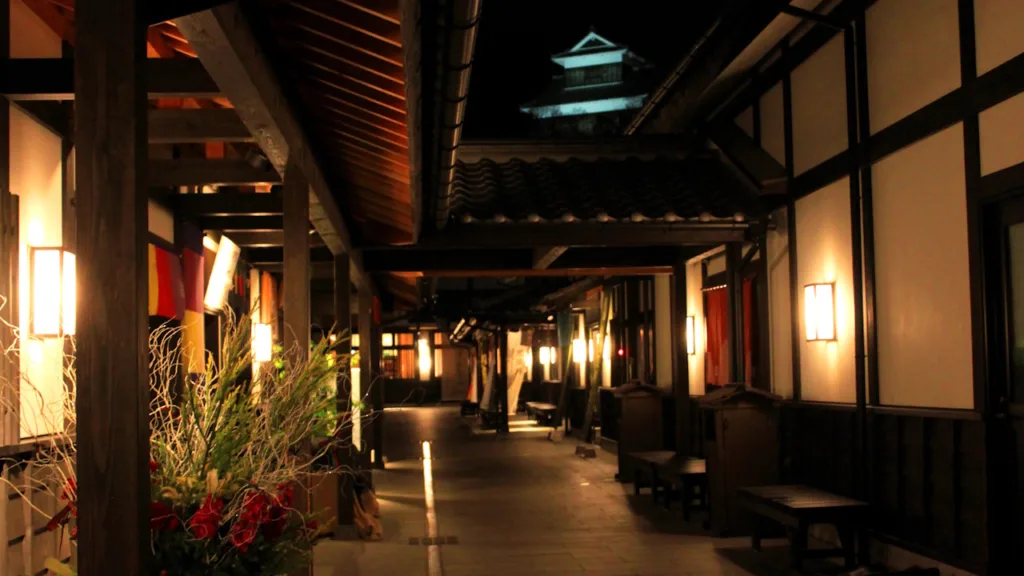
The land Josaien now occupies once held a prefectural swimming pool inside the Kumamoto Castle grounds. Kumamoto Castle itself dates to 1601, when the warlord Kato Kiyomasa began roughly seven years of construction on what would become one of Japan’s three great castles, with walls stretching 5.3 kilometers around a site of nearly a million square meters. The castle marked its 400th anniversary in 2007, and the “Kumamoto Castle 400th Anniversary Festival” ran across the castle grounds from December 2006 through May 2008. Restoration projects tied to that milestone — including the Honmaru Palace’s great hall — were already under way, and the idea for a facility that could showcase the whole castle town’s food, history, and culture took shape alongside them. That idea became Sakura-no-Baba Josaien.
Josaien opened its doors on March 5, 2011. Its town-house-style buildings recreate the look of an Edo-period castle town while packing in Kumamoto’s food culture and hands-on history experiences, and it’s served as the entry point for castle visitors from Japan and abroad ever since. When the 2016 Kumamoto Earthquake caused severe damage to the castle’s structures, Josaien also took on the role of keeping visitors informed about the recovery as it unfolded.
Kumamoto Castle’s history, told through VR and hands-on experiences
One of Josaien’s standout draws is the Kumamoto Castle Museum Wakuwakuza. Inside, striking VR footage paired with live commentary from staff walks you through highlights of the castle’s special viewing corridor — angles and details you wouldn’t otherwise catch from inside the keep itself. A dedicated corner uses projection mapping to show the damage from the 2016 earthquake and the recovery that followed, giving visitors a visual sense of the story of resilience the castle represents.
The hands-on side is just as full: dress up as a feudal lord or princess in period costume, try riding in a palanquin of the kind once used to get around, or test your hand at stacking castle-style stone walls. A ten-minute dramatized performance called “Monogatari Goten” retells episodes from Kumamoto’s history and is a favorite among visitors. Between seeing, hearing, and touching, Wakuwakuza offers several different ways into the same story.
The museum is fully climate-controlled indoors, so neither the height of summer nor a cold winter day gets in the way of a comfortable visit. VR content comes with English, Chinese (both simplified and traditional), and Korean subtitles, which makes it easy to follow along even in a mixed-nationality group.
Sakura-no-Koji: a taste of Kumamoto’s food culture
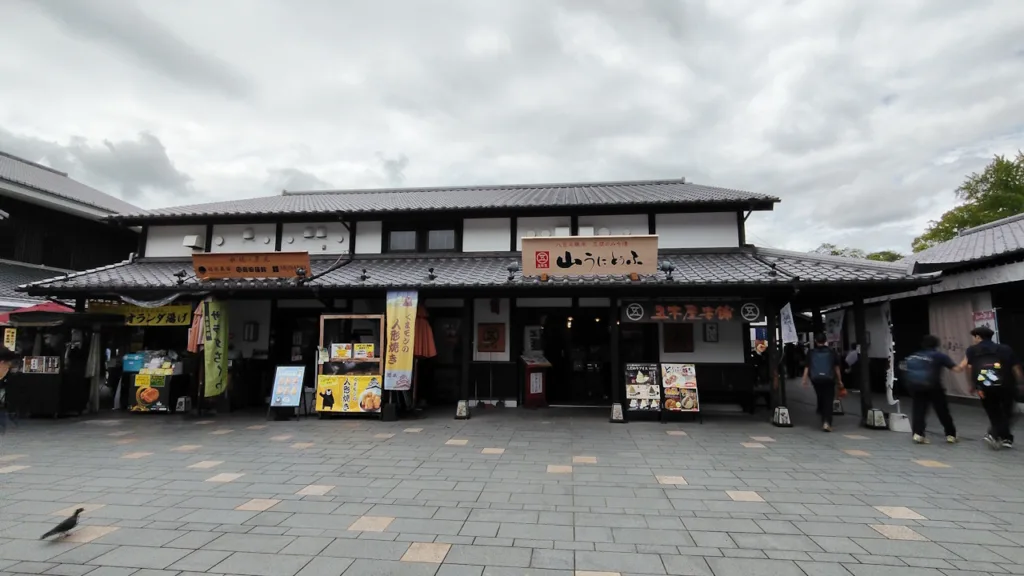
Sakura-no-Koji brings together 23 shops selling regional dishes and specialty products from across Kumamoto Prefecture. There’s a dedicated stall for ikinari dango, a steamed treat of sweet potato and red bean paste wrapped in mochi-like dough; a shop known for its sea urchin croquette, made with a white sauce built from sea urchin and Oguni Jersey milk; and a confectionery famous for its taiko-drum-shaped soft-serve cone, “Jindaiko soft.” It’s an easy place to graze your way through Kumamoto’s food scene one small bite at a time.
The shopping side turns up regional specialties like karashi renkon (mustard-stuffed lotus root) and Kuma shochu, both easy to pack up as souvenirs or to look forward to once you’re home. Walking the wooden, castle-town-style lane while snacking and browsing makes for a natural pause point before or after climbing the keep.
The tourist information center and getting around
Josaien’s tourist information center hands out free information covering not just Kumamoto City but destinations across the wider prefecture. Volunteer guides are on hand as well, so if you want a deeper rundown on the castle or the old castle town’s history, there’s someone to ask.
Getting there is straightforward: it’s roughly a 7-minute walk from the “Kumamoto-jo/Shiyakusho-mae” tram stop, and about 5 minutes on foot from the Kumamoto Kotsu Center bus terminal. From Kumamoto Station, the “Shiromegurin” castle loop bus gets you there in around 23 minutes. Drivers can use Josaien’s own parking lot, and when it’s full, a free shuttle bus runs between Josaien and the castle’s Ninomaru parking area. Booking Kumamoto Castle’s keep ticket online ahead of time can also shorten the wait at the entrance.
One note for anyone traveling with a group of 30 or more: group tickets and the combined Kumamoto Castle–Wakuwakuza pass aren’t picked up at the castle’s own entrance gate — they’re issued at the “Wakuwakuza group reception desk” inside Josaien. It’s a different pickup point from individual tickets, so it’s worth confirming ahead of time if you’re arriving as part of a larger group.
Nearby spots worth combining with your visit
Kumamoto Castle
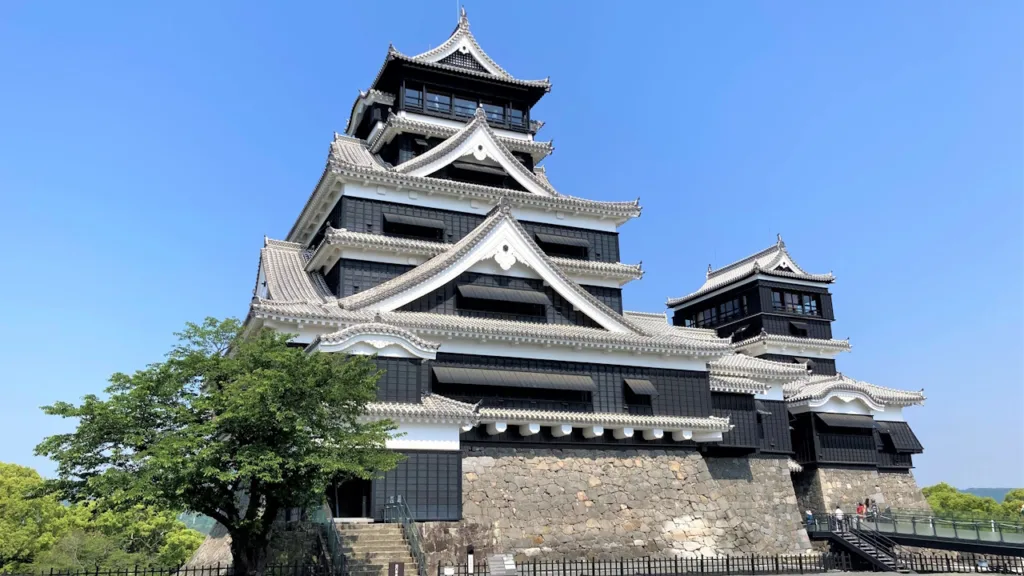
Walk through the special viewing corridor from Josaien and you’re straight into the castle grounds on foot. Highlights include the “musha-gaeshi” stone walls built to repel attackers, engineered by Kato Kiyomasa, and Uto Yagura, a turret that survived even the fires of the Satsuma Rebellion. The keep’s interior exhibits were completely renewed after the earthquake recovery, and the view from the top floor is part of the experience.
SAKURA MACHI Kumamoto
A few minutes away by tram or bus, this large complex centers on the Kumamoto Sakuramachi Bus Terminal and brings together fashion, cosmetics, restaurants, and a multiplex cinema. Airport limousine buses also arrive and depart from the same terminal, making it a handy stop for killing time right after landing or before heading to the airport.
Hanabata Park area
The road heading from Josaien toward central Kumamoto passes Hanabata Park, a green space that hosts seasonal events and doubles as a gathering spot for locals. It’s a change of pace from Josaien’s castle-town atmosphere, offering a look at present-day downtown Kumamoto.
Where to stay near Josaien
KOKO HOTEL Premier Kumamoto
A few minutes from Josaien by tram, this hotel sits inside the SAKURA MACHI Kumamoto complex. Its front desk and lobby occupy the 14th floor, with views out toward Kumamoto Castle, and the rooms lean into a black-and-gold color scheme. Being directly connected to the bus terminal also makes it convenient for anyone arriving on the airport limousine bus.
Natural Hot Spring SUPER HOTEL Kumamoto Chamber of Commerce
A 2-minute walk from the “Kawaramachi” tram stop and about 8 minutes from the Kumamoto Kotsu Center, this hotel is built around its own natural hot spring, Hi-no-Kuni Bihada-no-Yu, with separate baths for men and women — a welcome way to unwind after a day of sightseeing. A 140-space parking lot also makes it a practical choice for anyone arriving by car.
ANA Crowne Plaza Kumamoto New Sky by IHG
Part of the global IHG hotel group, this 25-story city hotel offers sweeping views over central Kumamoto and the Shirakawa River. On site you’ll find Japanese and Italian restaurants along with a bar lounge, and the breakfast buffet spans roughly 80 dishes across Japanese and Western styles. It’s also just one tram stop from JR Kumamoto Station.
Why a tour conductor makes this visit easier
Josaien and Kumamoto Castle reward a bit of local know-how, and that’s exactly what a tour conductor brings to the day. Between Wakuwakuza’s timed VR sessions, Sakura-no-Koji’s shop-by-shop hours, the separate pickup point for group castle tickets, and the free shuttle to the Ninomaru parking area, there are a lot of small logistics to track — and a tour conductor handles all of it as part of managing your itinerary, so you’re not the one juggling schedules and pickup windows.
Language is rarely a smooth ride on your own, either. A tour conductor provides interpretation support at ticket counters, restaurants, and museum information desks, helping you get accurate answers on the spot rather than guessing at a menu or a posted notice. If a train is delayed, a bus is cancelled, or a booking falls through, the tour conductor steps in to rearrange transport and confirm alternate plans on your behalf, so a single hiccup doesn’t derail the rest of your day.
None of this replaces your own itinerary, which stays in the hands of your tour operator — a tour conductor’s role is to execute it smoothly, not redesign it. What you get in exchange is a calmer, more efficient visit: less time spent figuring out logistics, more time actually taking in the castle town. If that kind of support sounds useful for your trip to Kumamoto, you can find out more at tours.e-stay.jp.

Conclusion
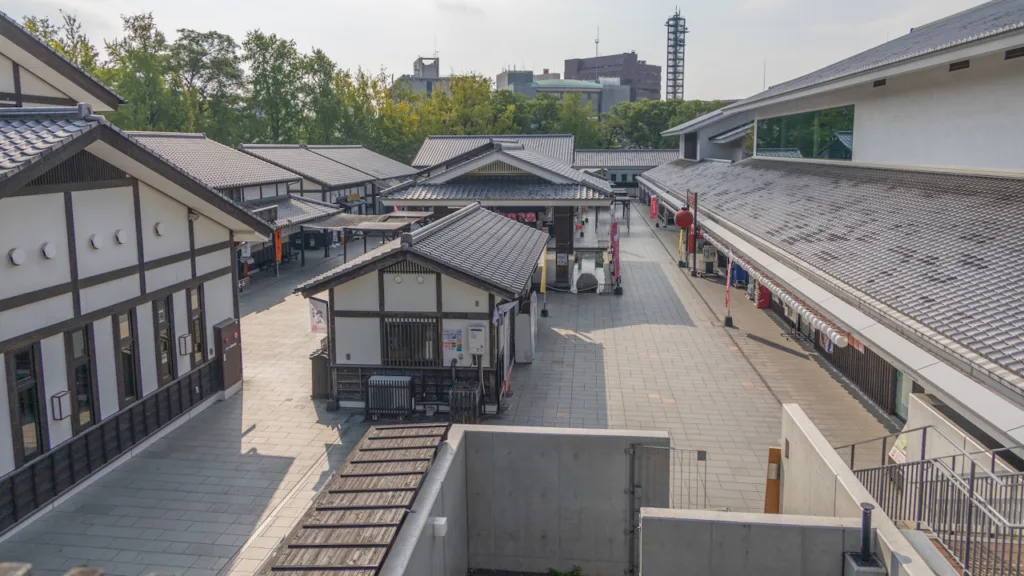
Sakura-no-Baba Josaien pairs the Kumamoto Castle Museum Wakuwakuza’s VR-driven history lessons with Sakura-no-Koji’s concentrated dose of local food, all on grounds that once held a public swimming pool. The idea for the complex grew out of the castle’s 400th-anniversary milestone, and since opening in 2011 it’s functioned as the natural starting point for a Kumamoto Castle visit. Building it into your day before or after the keep lets you experience the castle town from both the history side and the food side. For accommodation, options nearby range from KOKO HOTEL Premier Kumamoto’s castle views to the natural hot spring at SUPER HOTEL Kumamoto Chamber of Commerce and the IHG-affiliated ANA Crowne Plaza Kumamoto New Sky, covering a range of travel styles.