
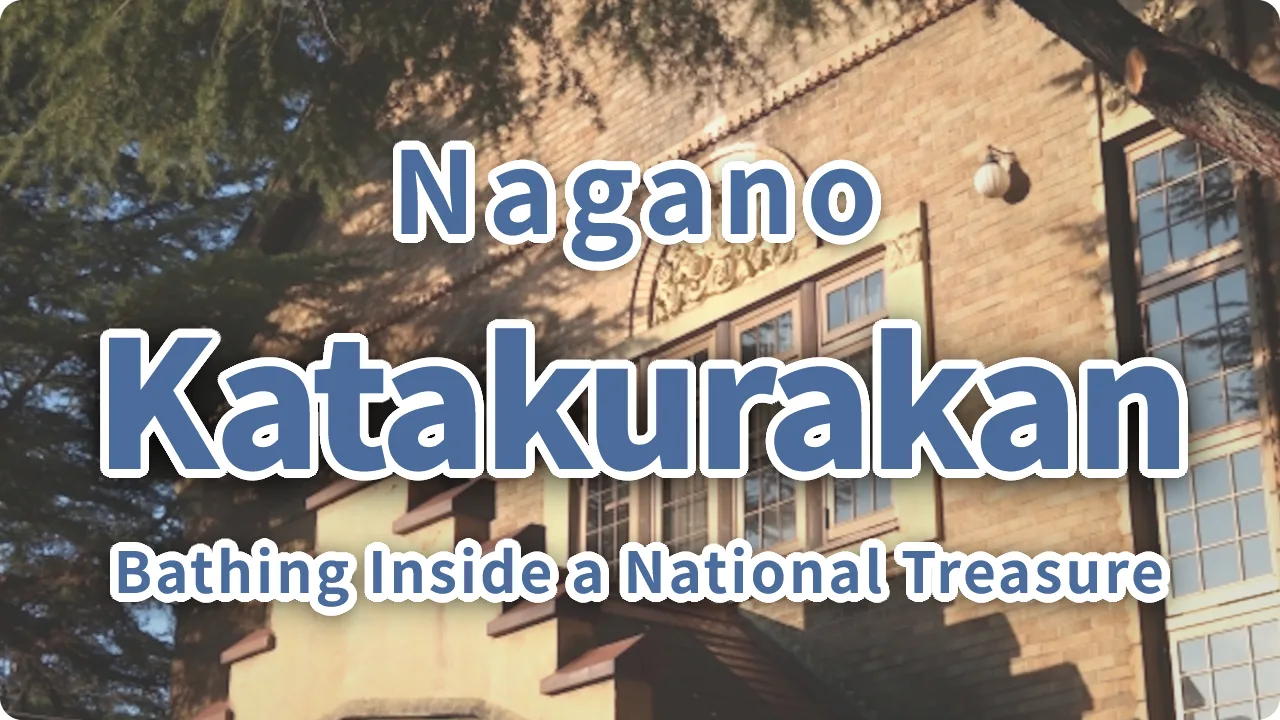
Travel insights from a tour conductor — today’s destination: Katakurakan (片倉館), a designated National Important Cultural Property standing on the shores of Lake Suwa in Suwa City, Nagano Prefecture. Inside a Western-style building that has remained virtually unchanged since the late 1920s, visitors can soak in a natural hot spring bath unlike any other in Japan. This article covers the history of the Katakura zaibatsu and the full story behind the famous “Sennin-buro” (Thousand-Person Bath).
Facility Information
| Item | Details |
|---|---|
| Name | Katakurakan (National Important Cultural Property, Foundation) |
| Bathing Hours | 10:00–20:00 (last entry 19:30) |
| Closed | 2nd and 4th Tuesday of each month |
| Address | 4-1-9 Kohan-dori, Suwa City, Nagano 392-0027 |
| Phone | +81-266-52-0604 |
| Access (Train) | Approx. 8–10 min walk from JR Chuo Main Line “Kami-Suwa Station” |
| Access (Car) | Approx. 7 km from “Suwa IC” on the Chuo Expressway toward Lake Suwa |
| Parking | 100 spaces (free) |
One Thing to Know Before You Go
A building designated as a National Important Cultural Property might conjure images of a museum piece — something to be seen but not touched. At Katakurakan, that assumption needs adjusting. The facility has been in continuous operation since it was completed in 1928, and that unbroken history comes with certain constraints.
There are no open-air baths, no sauna, and no reclining tub. The bathhouse is entirely indoors. The Sennin-buro itself is 1.1 meters deep — a standing bath that reaches chest height on most adults — so leisurely floating or lying down is simply not part of the experience. In summer, ventilation is limited and the bathhouse can feel humid. Washing stations are modest in number and queues can form on busy days.
None of this is a flaw. It is the inevitable character of a working cultural monument. Approaching Katakurakan as a living archive of a 1920s public bathhouse — rather than a modern onsen resort — is the key to a genuinely satisfying visit.
The Silk Emperor and His Gift to the Community
Katakurakan cannot be understood without its history. From the late Meiji era through the Taisho period (roughly 1900–1920s), the Suwa region of Nagano Prefecture was one of Japan’s most productive silk-reeling districts. The Katakura Group — later Katakura Silk Spinning Co., now Katakura Industries — stood at the center of that industry and accumulated such wealth and influence that its leader was dubbed the “Silk Emperor.”
The industry relied heavily on young women recruited from rural villages across the region. As the company grew, awareness of its social obligations grew with it. When the second head of the Katakura family, Kentaro Katakura, toured Europe and encountered public welfare facilities — communal baths, social halls, cultural centers built for ordinary citizens — he resolved to bring something similar to Suwa. The result was Katakurakan, built in 1928 to mark the company’s 50th anniversary: a bathhouse, social venue, and cultural center offered freely to the local community.
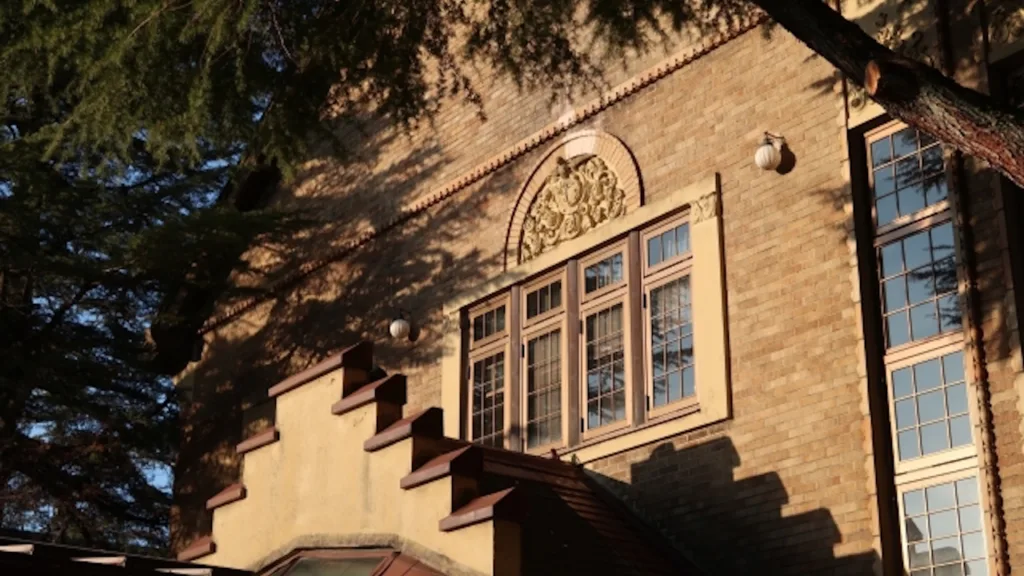
The building was designed by Matsunosuke Moriyama, a graduate of the School of Architecture at Tokyo Imperial University (present-day University of Tokyo) who was also responsible for the Taiwan Governor-General’s Office and numerous other landmarks of modern Japanese architecture. The design draws on Gothic Revival and Romantic Revival styles that flourished in the United States and Europe around 1900–1930, with windows, gabled rooflines, and carved reliefs incorporating elements from multiple Western traditions. The result is a building with no direct equivalent in Japan.
Katakurakan was designated a National Important Cultural Property in 2011, placing it in the same category as Dogo Onsen Honkan in Ehime — an active hot spring facility protected as a national treasure.
The name “Sennin-buro” (Thousand-Person Bath) does not mean the bath holds a thousand people simultaneously. It refers to the fact that 1,000 to 1,200 bathers would use the facility in a single day during its peak era.
Inside the Sennin-buro
The main bath is a marble tub measuring 7.5 m long, 4 m wide, and 1.1 m deep. Both the men’s and women’s baths are identical in design and size. The floor of the tub is covered in smooth black pebbles; standing and walking slowly across them provides a gentle, natural foot massage. A step along the rim of the tub allows bathers to sit with their shoulders submerged at a comfortable depth.
The interior of the bathhouse is decorated with stained glass windows and carved sculptures along the walls, lending the space an atmosphere closer to a European chapel than a conventional Japanese bathhouse. A smaller Jacuzzi tub is also available alongside the main bath.
The spring water is drawn from the Nanatsugama Distribution Center in Suwa City, a blended source combining three local springs. The water is classified as a simple thermal spring (low-osmotic, mildly alkaline, high-temperature) with a source temperature of 63°C. The bath uses circulated and diluted water and is recognized for benefits including relief from joint pain, neuralgia, muscle stiffness, and poor circulation.
Towels, bath towels, razors, toothbrushes, and shower caps are available for purchase at the front desk, making it possible to arrive empty-handed. A 100-yen coin is required for the shoe locker at the entrance (returned on exit).
The Kaikan Hall and Garden
The appeal of Katakurakan extends beyond the bathhouse. Directly adjacent to the bathing building stands the Kaikan (hall) building, which preserves the appearance of a Showa-era social venue in its entirety. A grand room spanning 200 tatami mats (roughly 330 m²), multiple Japanese-style rooms, and a formal hall make up the interior — a striking contrast to the Western exterior.
Walk-in tours of the Kaikan are available daily (fee applies; ¥500 for adults) without advance reservation. Guided tours (requiring a telephone reservation by 17:00 two days prior; available for groups of 5 or more) depart at 13:30 and 15:30. During winter (November through February), visiting hours are shortened to 10:00–16:30.
The second floor of the bathhouse building houses a rest lounge and a dining room serving dishes prepared with Shinshu (Nagano) ingredients. Roof terrace access is also available, offering views of Lake Suwa and the surrounding mountain ranges on clear days. The garden beside the main entrance, including its fountain pool and stone walls, is also within the scope of the cultural property designation.
Nearby: Suwa City Art Museum, Takashima Castle, and the Lake
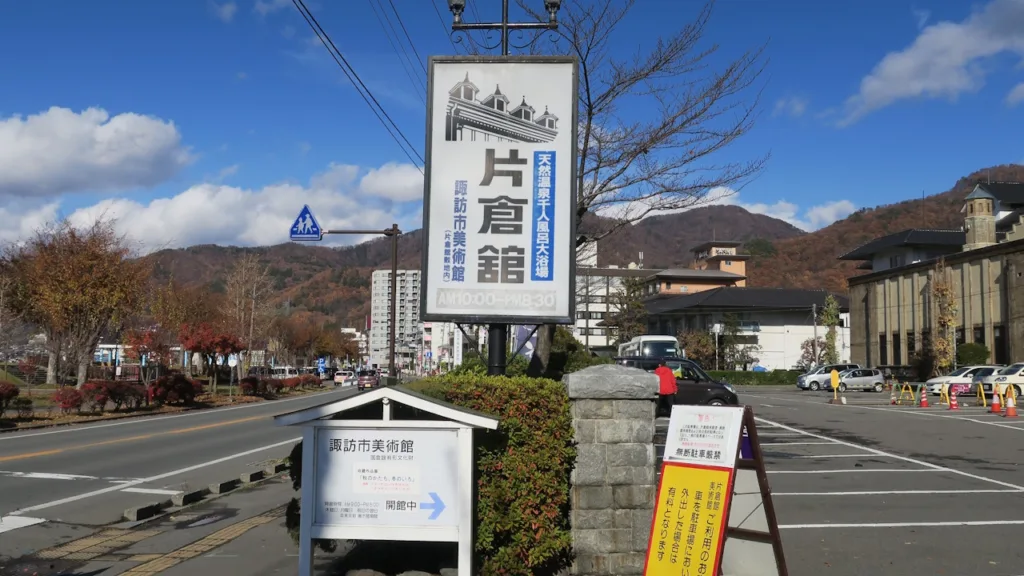
Immediately adjacent to the Katakurakan grounds stands the Suwa City Art Museum, which opened in 1956 as Nagano Prefecture’s first public art museum. The building itself is registered as a Tangible Cultural Property and houses a collection spanning Japanese painting, sculpture, and craft, with particular depth in works by local artists.
Takashima Castle, a reconstructed keep set within Takashima Park, is roughly a 10–15 minute walk from Kami-Suwa Station along the route to Katakurakan. Once known as the “Floating Castle of Suwa” because it was surrounded by lake and rivers, the castle was constructed during the Toyotomi period and served as the seat of the Takashima domain until the end of the Edo era. The park surrounding the castle is one of the area’s best-known cherry blossom destinations.
Walking north along the lakeshore from Katakurakan, the Suwa Lake Geyser Center and several free foot baths are reachable within 10–15 minutes. The Kamisuwa Onsen district is home to more than 60 public bathhouses — the highest number in Nagano Prefecture and fourth highest in Japan — making it possible to combine lakeside walking with genuine onsen culture in a single afternoon.
Recommended Hotels in Kamisuwa Onsen
Rako Hananoi Hotel
The largest hotel in the Suwa area, Rako Hananoi Hotel occupies a lakefront position with commanding views of Lake Suwa. Outdoor hot spring baths overlooking the lake, a signature Japanese sake bath, an indoor pool, and a rooftop terrace are among the highlights. Both Japanese-style tatami rooms and Western rooms are available. A reserved shuttle bus (14:30–17:30) operates from the west exit of Kami-Suwa Station; the hotel is also 8 minutes by car from Suwa IC on the Chuo Expressway.
Hotel Saginoyu
Just a 2–3 minute walk from Katakurakan, Hotel Saginoyu has stood on the shores of Lake Suwa for over a century. It was established around 1905 as a bathing facility and opened as the first inn in the Lake Suwa area in 1911. The hotel’s private spring — an amber-tinted iron-bearing thermal water used for source-flow open-air bathing — has long attracted Japanese painters and calligraphers. The Japanese garden, carp pond, and in-house gallery of Japanese paintings add to the character of the stay. Kaiseki cuisine featuring Shinshu beef shabu-shabu is well regarded. Approx. 8 min walk from Kami-Suwa Station.
Nunohan
Founded in 1848 (Kaei 1), Nunohan is one of Suwa’s oldest ryokan and has earned continuous recognition in the “Pro’s Choice Top 100 Hotels and Ryokan in Japan” ranking for its cuisine since 2011. The kaiseki menus draw on fresh seasonal ingredients from Shinshu and pair naturally with local sake. All rooms are non-smoking. The hot spring bath is fed by Kamisuwa Onsen water, and many rooms offer lake views. Approx. 7–8 min walk from Kami-Suwa Station.
Plan Your Visit with a Tour Conductor
For travelers who want to explore Kamisuwa Onsen, Suwa Shrine, and the broader Nagano highlands with on-the-ground logistical support — including itinerary management, emergency rebooking, and interpretation assistance — a licensed tour conductor service is available through tours.e-stay.jp. This is particularly useful for multi-day itineraries combining Suwa with destinations such as Matsumoto, the Japanese Alps, or the Ina Valley.
Final Note
Katakurakan sits at the intersection of Japan’s modern industrial history and its onsen culture. The fact that a facility built from silk-trade wealth to serve ordinary citizens has remained in daily use for nearly a century — still open to anyone who walks through the door — gives it a weight that goes beyond tourism. The sensation of the pebbles underfoot, the depth of the marble tub, the light through stained glass: none of this can be conveyed at a distance. It requires a visit.
For accommodation, Hotel Saginoyu is the closest option to Katakurakan by foot and is well suited for travelers who plan to visit the bathhouse more than once during their stay.