
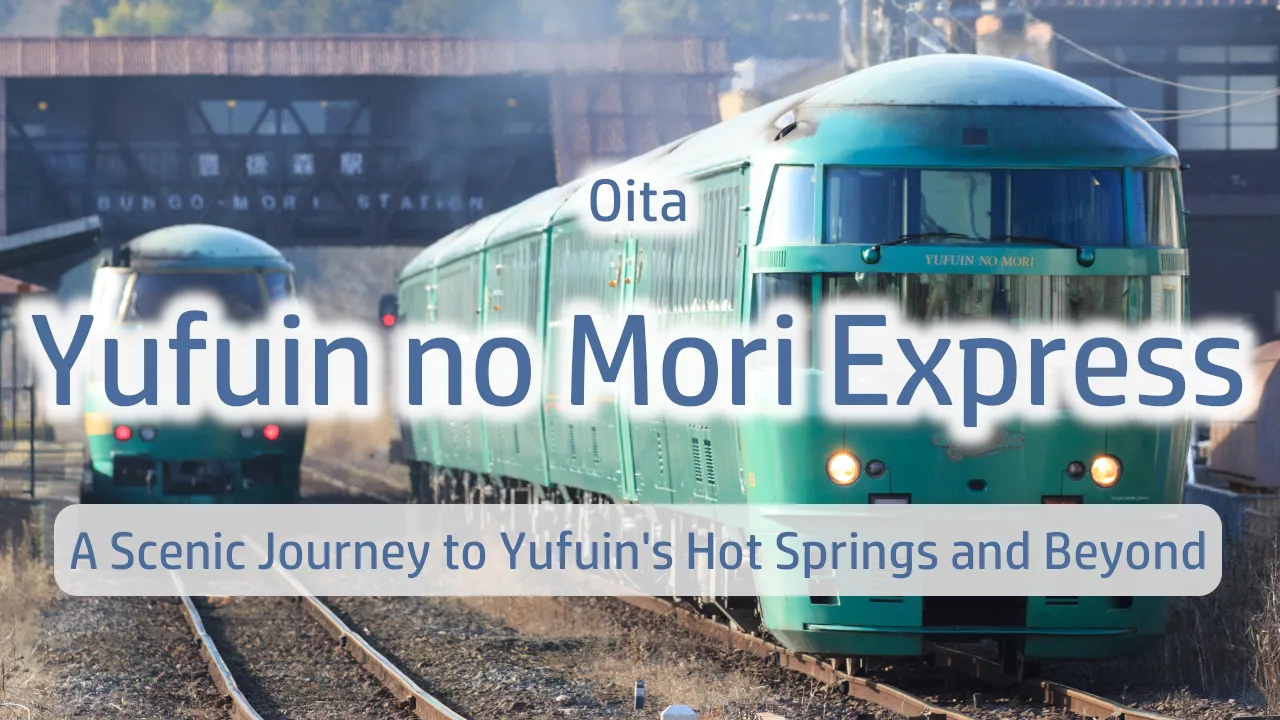
As a tour conductor bringing travel insights from Japan, today we explore the Yufuin no Mori, one of Kyushu’s most beloved sightseeing trains. This emerald-green express has been enchanting travelers since 1989, transforming the journey from Fukuoka’s Hakata Station to the mountain hot spring resort of Yufuin into an experience as memorable as the destination itself. With its distinctive metallic green exterior gliding through forests and valleys, panoramic windows revealing Kyushu’s natural beauty, and warm wooden interiors evoking the tranquility of a forest retreat, the Yufuin no Mori offers more than just transportation—it provides a two-hour escape into Japan’s pastoral heartland.
The Challenge of Securing Reservations
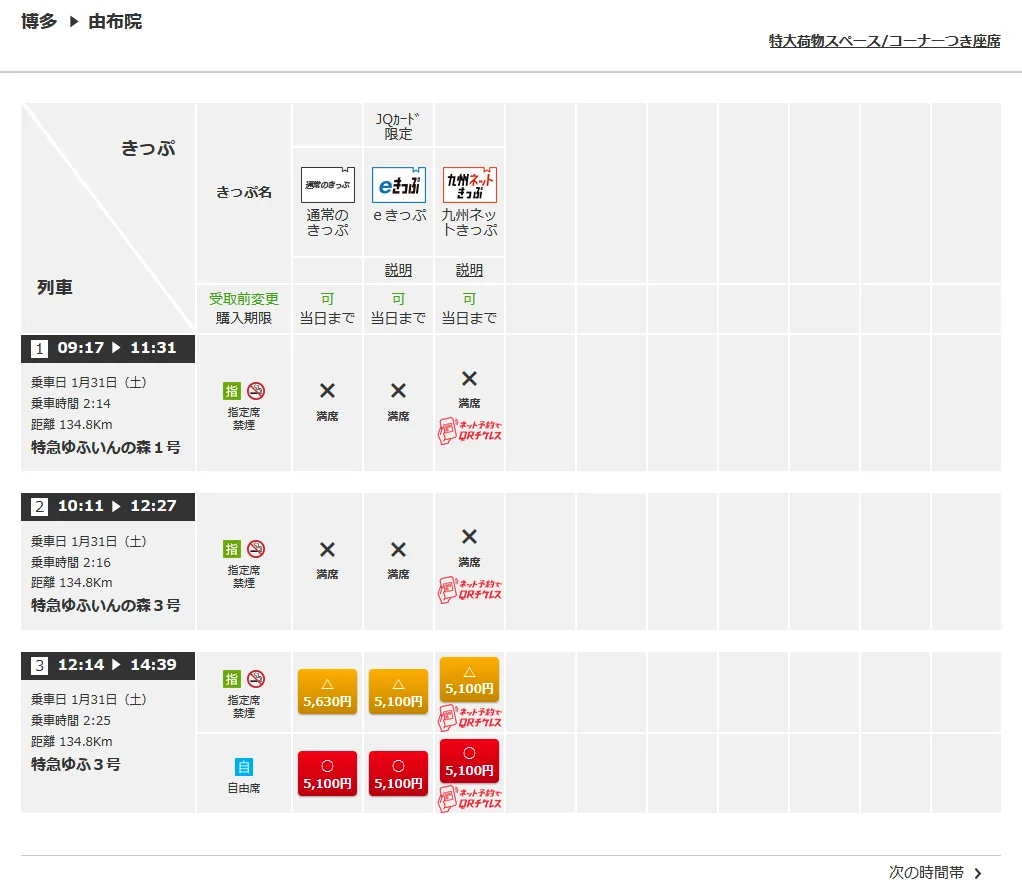
The Yufuin no Mori operates with all reserved seating, and its popularity among both domestic and international travelers means that securing tickets can be remarkably challenging. Weekends, national holidays, the November foliage season, Golden Week, and Obon period see seats fill up within minutes of reservation windows opening.
Reservations open exactly one month before the travel date at 10:00 AM Japan time. The most coveted seats—the front observation deck and booth-style seats for groups—often disappear within the first few minutes. International visitors arriving in Japan just days before their planned journey frequently find themselves unable to secure a spot on this iconic train.
Practical Strategies for Booking Success
Setting an alarm for the precise moment reservations open (one month prior at 10:00 AM JST) and accessing the JR Kyushu online reservation system immediately gives you the best chance of success. However, if your first-choice seats aren’t available, persistence can pay off.
Cancellations tend to appear three days to one day before departure, as travelers finalize their plans. Checking availability multiple times during this window can reveal last-minute openings. Additionally, JR station ticket offices sometimes have access to seats not yet reflected in the online system, making an in-person inquiry worthwhile even when the website shows the train as fully booked.
The afternoon departure (Train 5, leaving Hakata at 2:38 PM) typically experiences lower demand than the morning services, making it a viable alternative if you’re flexible with timing. Arriving in Yufuin at 4:50 PM still allows for an evening soak and dinner at your ryokan.
Weekday travel, particularly Tuesday through Thursday, offers significantly better availability than weekends. The train’s atmosphere also tends to be more relaxed on these days, with more space to move about and shorter lines at the buffet counter.
A Legacy Born from Partnership with a Mountain Town
The Story Behind Kyushu’s First D&S Train
The Yufuin no Mori made its debut on March 11, 1989, shortly after JR Kyushu’s establishment as a private railway company. The timing was deliberate—Yufuin was emerging as a distinctly different kind of hot spring resort, one that prioritized environmental harmony over large-scale development.
Unlike the grand hotel complexes dominating other famous onsen towns, Yufuin’s community leaders envisioned their town as a “green, stay-oriented hot spring health resort.” They advocated for smaller, character-filled accommodations that respected the natural landscape rather than dominating it. When JR Kyushu approached the town about creating a special train service, extensive dialogues ensued between railway planners and Yufuin stakeholders.
The original concept leaned toward a “folk craft” aesthetic, but through these conversations, a more refined vision emerged: a European highland resort aesthetic that would complement Yufuin’s sophisticated yet understated character. This collaborative approach to design—honoring the destination’s identity rather than imposing an arbitrary theme—became the foundation for what would later be known as JR Kyushu’s D&S (Design & Story) train philosophy.
The concept of “Yufuin from the moment you board” was established, with every design element reinforcing the connection to the destination. The metallic forest-green exterior would mirror the surrounding mountains, while the interior’s abundant wood and greenery would create an atmosphere of being enveloped by nature.
Revolutionary Features for 1989
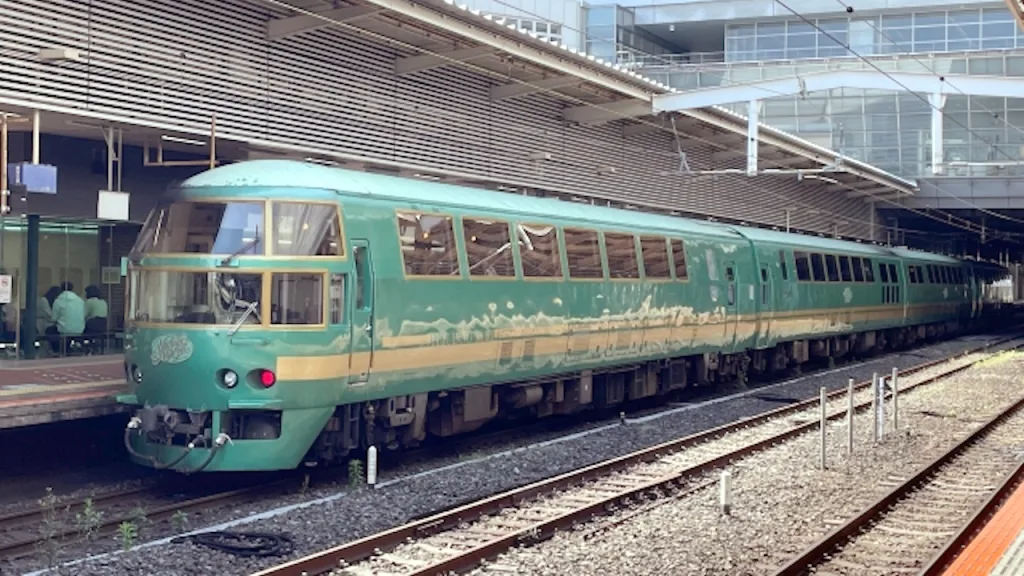
When the Yufuin no Mori launched, it introduced several features that were groundbreaking for Japanese railway cars of that era.
The high-deck structure elevated the passenger floor higher than conventional trains, dramatically improving sight lines through the windows. This architectural choice required more complex engineering and construction but created the panoramic viewing experience that remains the train’s signature feature. To this day, the Yufuin no Mori remains JR Kyushu’s only high-deck train.
Installing a buffet counter within the train was another innovative move. While food and beverage service existed on many limited express trains in the early 1990s, creating a dedicated counter space specifically for showcasing regional products and local specialties represented a new approach to onboard hospitality. This buffet would become a model for future sightseeing trains across Japan.
The introduction of dedicated cabin attendants who provided more than just sales service—offering regional tourism information, facilitating photo opportunities, and creating a welcoming atmosphere—established a service standard that would influence the entire sightseeing train industry. The Yufuin no Mori proved that the journey itself could be as valuable as the destination when supported by thoughtful design and genuine hospitality.
Three Generations of Rolling Stock
The Yufuin no Mori fleet has evolved through three distinct generations of train cars, though only two remain in active service today.
Yufuin no Mori I (Series KiHa 71) debuted with the train’s launch in 1989. This original consist repurposed undercarriages and mechanical components from retired KiHa 58 and KiHa 65 series trains dating to the Japanese National Railways era, while featuring entirely new car bodies. Initially operating as a three-car train, a gallery car was added in 1990 to create the current four-car configuration.
The interior exudes a retro, classical European ambiance, with liberal use of wood throughout the passenger spaces. The design evokes the golden age of European rail travel, with an emphasis on substantial, quality materials and timeless elegance. A 2003 refurbishment updated certain elements while preserving the train’s essential character. Today, Yufuin no Mori I operates as Trains 3 and 4, serving the Hakata-Yufuin-Beppu route.
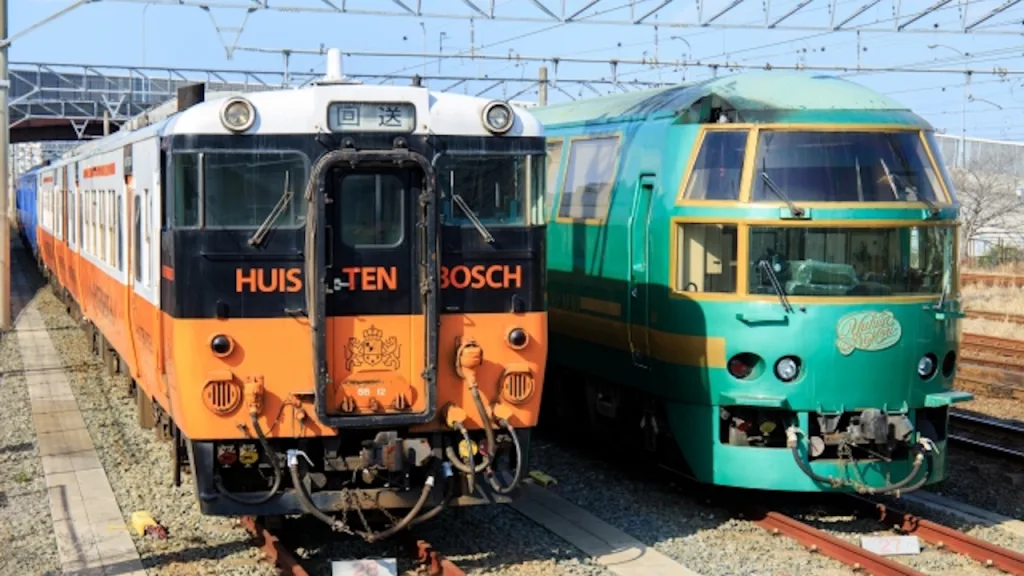
Yufuin no Mori II (Series KiHa 183) served from 1992 to 1999, converted from cars originally used for the “Holland Village Express” service to Huis Ten Bosch theme park in Nagasaki. After concluding its Yufuin service, this set was transformed into the “Seibold” express and eventually became the current “Aso Boy!” train, which continues to delight passengers on different Kyushu routes. The connection between Yufuin no Mori II and Aso Boy represents the resourcefulness JR Kyushu brings to maintaining diverse themed services with a limited fleet.
Yufuin no Mori III (Series KiHa 72) entered service in 1999 as a purpose-built new train. Originally a four-car formation, demand necessitated the construction of an additional car in 2015, bringing it to the current five-car configuration.
Industrial designer Eiji Mitooka, who would go on to design numerous JR Kyushu showcase trains including the Seven Stars in Kyushu luxury cruise train and the Aru Ressha dining train, crafted Yufuin no Mori III’s aesthetic. Mitooka’s design philosophy emphasizes authentic materials—real wood, glass, iron, and aluminum—over cost-saving plastics. His belief that using genuine materials fosters appreciation for craftsmanship and environmental consciousness shaped every detail of the train’s interior.
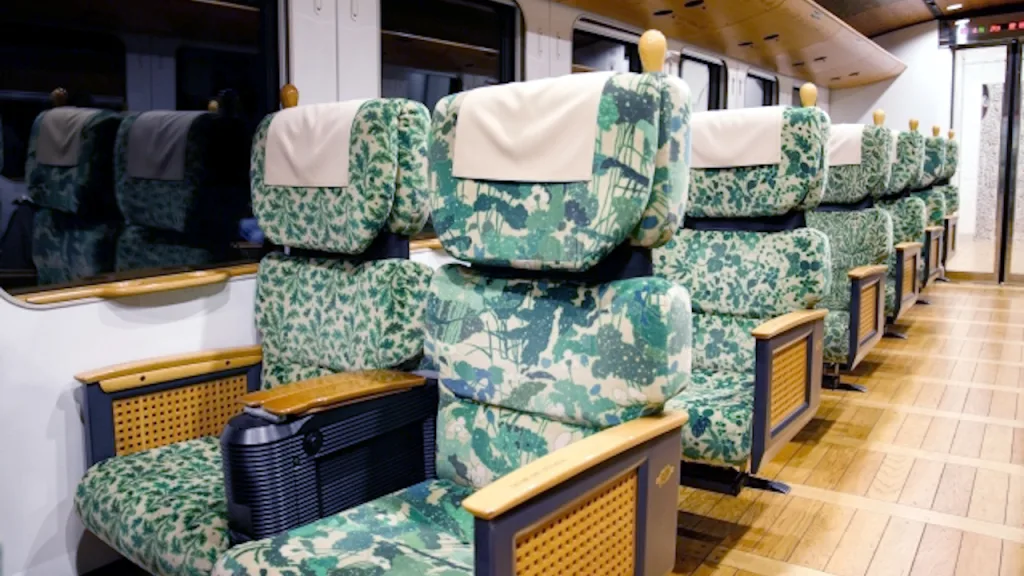
The fourth car added in 2015 merits special attention. As a “KiSaHa” class car without its own engine, it produces significantly less noise and vibration than the powered cars. The seating fabric in this car alone features distinctive botanical patterns, creating the most forest-like atmosphere of any car on the train. This quiet car often becomes a favorite among passengers seeking a more contemplative journey.
Foundation of the D&S Train Network
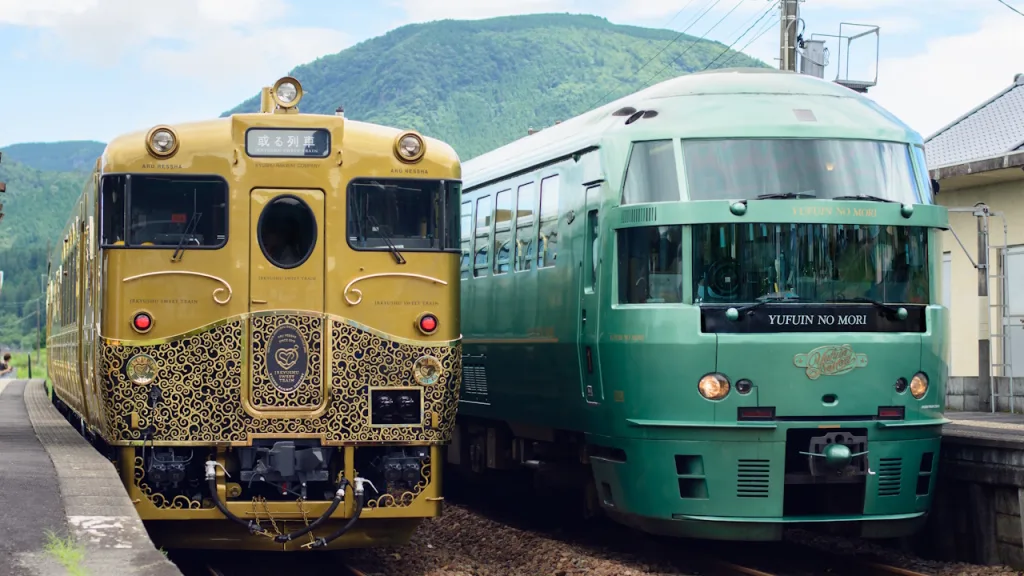
The Yufuin no Mori’s success established the template for JR Kyushu’s extensive D&S train network. The principle that local stories and destinations should drive train design—rather than imposing arbitrary themes—became the company’s guiding philosophy.
Following the Yufuin no Mori came a succession of regionally themed trains: “Hayato no Kaze” highlighting Kagoshima’s samurai heritage, “Ibusuki no Tamatebako” inspired by an ancient legend from southern Kyushu, “Aso Boy!” celebrating the volcanic landscapes of central Kyushu, “Kawasemi Yamasemi” following mountain rivers, and “Futatsuboshi 4047” exploring coastal scenery. Each train tells a unique regional story while maintaining the standards of design and service established by the Yufuin no Mori.
The 2013 introduction of the ultra-luxury “Seven Stars in Kyushu” cruise train, which offers multi-day journeys with onboard accommodation and gourmet dining, represents the ultimate evolution of the philosophy pioneered 24 years earlier. The concept that rail travel can be the primary attraction rather than merely a means of transport traces directly back to the Yufuin no Mori’s groundbreaking approach.
Overcoming Natural Disasters
The Yufuin no Mori’s history includes periods of resilience through natural disasters that damaged the Kyudai Main Line it travels.
In July 2012, severe flooding in northern Kyushu rendered the Ukiha-Hita section impassable. Service was temporarily limited to the Hita-Oita-Beppu portion until restoration was completed in August of that year.
July 2017 brought even more severe flooding that caused extensive damage to the line. To maintain service to Yufuin, JR Kyushu implemented an unusual detour routing the train via the Nippo Main Line through Kokura and Beppu. This alternative route extended travel time from the normal 2 hours 10 minutes to between 4 hours 30 minutes and 5 hours 50 minutes—hardly “express” by any measure. Yet the service continued, maintaining vital tourism connections to Yufuin during the reconstruction period.
Full restoration was achieved on July 14, 2018, allowing the Yufuin no Mori to return to its original route. Passengers and railway staff alike celebrated this return to normalcy, understanding that the train and the communities it serves are inextricably linked.
The COVID-19 pandemic brought another interruption, with service suspended from April 6 to June 18, 2020. The gradual return of passengers following resumption—including many international visitors who had long dreamed of riding this train—demonstrated the enduring appeal of the Yufuin no Mori experience.
The High-Deck Advantage: Panoramic Views Throughout
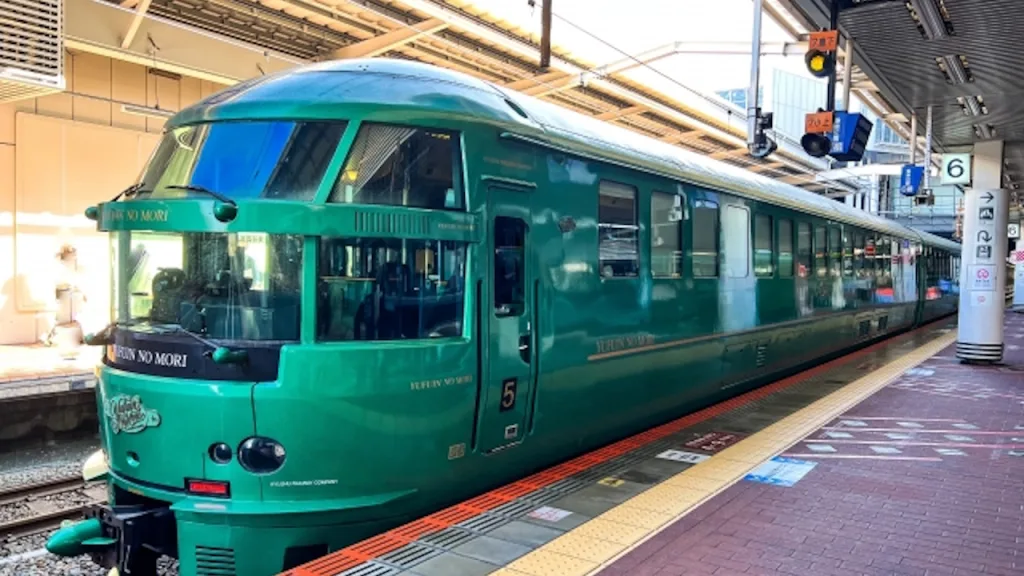
The Yufuin no Mori’s defining architectural feature is its high-deck construction, which elevates the passenger floor approximately 50 centimeters above the height of standard trains. This design choice creates significantly improved sight lines, allowing passengers to see over roadside vegetation and look further into the distance.
Two Train Types in Current Service
The two active generations of Yufuin no Mori trains offer subtly different experiences while maintaining the same high standard of service.
Yufuin no Mori I (4-Car Formation)
The original train, now in its 36th year of service, exudes vintage European elegance. Operating as Trains 3 and 4 (Hakata-Yufuin-Beppu), it features a more traditional aesthetic with darker wood tones and classic styling.
The highlight is Car 3’s salon space, where ceiling-high windows frame the passing landscape like a series of living paintings. The extensive use of quality timber throughout creates an atmosphere of being nestled within a forest lodge rather than aboard a train.
Between Bungo-Mori and Yufuin stations, cabin attendants provide tourism commentary about Yufuin, sharing recommendations for restaurants, shops, and hidden gems. This personalized guidance helps visitors make the most of their limited time in the resort town.
Yufuin no Mori I retains a genuine draft beer server, with cabin attendants drawing fresh pints for passengers. Enjoying a cold beer while watching Kyushu’s countryside roll past remains one of the journey’s signature pleasures.
Yufuin no Mori III (5-Car Formation)
The newer train serving Trains 1, 2, 5, and 6 (Hakata-Yufuin) presents a more contemporary interpretation of the forest theme. Industrial designer Eiji Mitooka’s aesthetic leans toward casual sophistication, with lighter wood tones and more modern furnishings.
The connecting passageways between cars feature a suspension bridge-like structure that adds an element of adventure to moving through the train. This playful architectural detail delights children and adults alike.
Car 4 deserves special mention as the quietest car on the train. Without its own engine, it produces minimal noise and vibration. The seating fabric featuring botanical motifs creates the most forest-immersive atmosphere. As it’s positioned away from both the observation deck and the buffet car, foot traffic remains light, making it ideal for passengers seeking a more meditative journey.
Rather than draft beer, Yufuin no Mori III offers “Yufuin Bakushu” craft beer from local Yufuin breweries, available in bottles and cans. Mobile cart service brings beverages and snacks directly to passenger seats, a convenience especially appreciated by families with young children.
Choosing Your Seat for Maximum Enjoyment
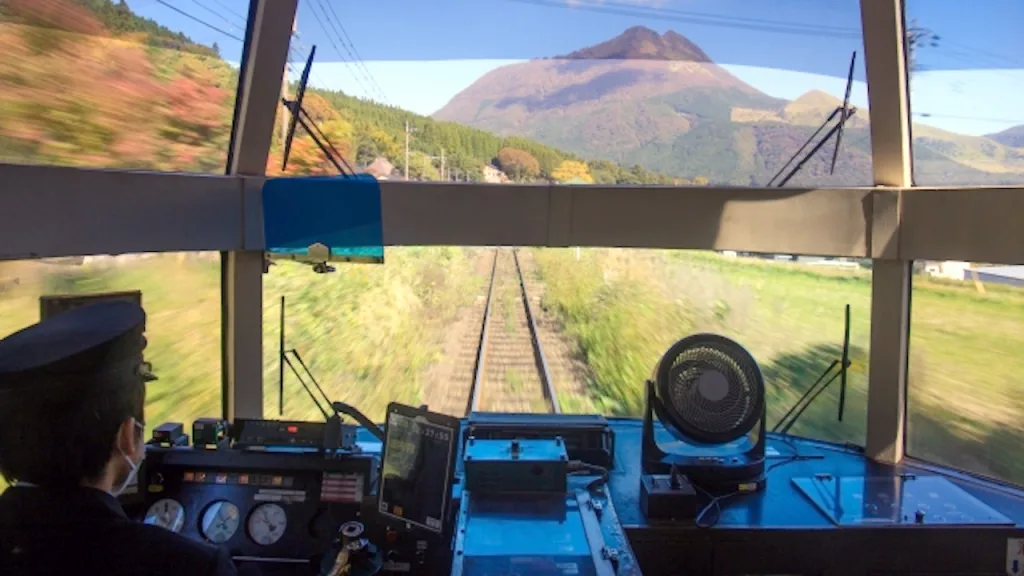
Front Observation Seats: The Premium Experience
The foremost seats offer an unobstructed view straight ahead through the driver’s compartment window. The high-deck positioning creates an elevated vantage point, intensifying the sense of speed and engagement with the landscape.
On Hakata-bound trains, these seats are located in Car 1, Seats 1A, 1B, 1C, and 1D. For Yufuin/Beppu-bound service, the observation positions are in Car 5 (on Yufuin no Mori III) or Car 4 (on Yufuin no Mori I).
These are the first seats to sell out when reservations open, often within minutes. Yet for travelers who secure them, the experience justifies the effort—watching the tracks unfurl ahead while mountains and valleys emerge on the horizon creates an almost meditative connection with the journey.
Rear Observation Seats: An Alternative Perspective
When front observation seats prove unavailable, the rearmost seats offer their own distinct appeal. By rotating the seats to face backward, passengers watch the landscape recede, creating a dreamy, reflective viewing experience distinct from forward-facing observation.
One limitation: rear observation seats cannot recline, as they back up against the next row. This minor inconvenience is offset by the unique viewing perspective and the fact that these seats fill slightly less quickly than front observation, providing a second chance at the observation car experience.
Right-Side Seats (C & D) for Key Landmarks
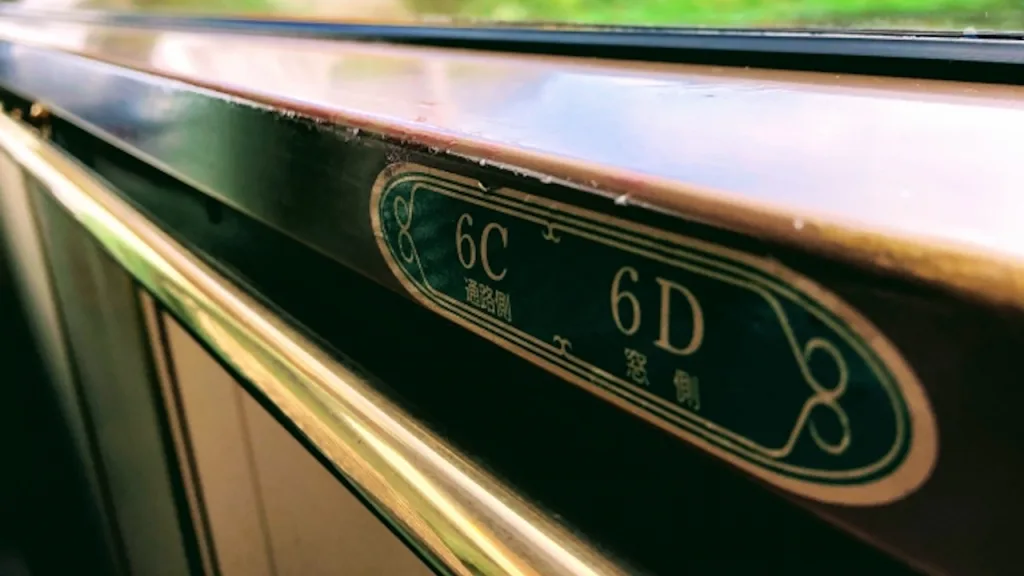
When traveling from Hakata toward Yufuin, seats on the right side of the train (C and D seats) provide the optimal viewing angle for the route’s major highlights. Cabin attendants’ commentary focuses primarily on sights visible from the right side.
Specifically, you’ll have the best view of Bungo-Mori Engine House, Kirikabu-san’s distinctive flat-topped profile, and Jion-no-taki Falls from right-side windows. Left-side passengers can still glimpse these sights, but at less favorable angles.
For Yufuin-to-Hakata return journeys, this relationship reverses—A and B seats become the right side. When making reservations, verify your train’s direction to select appropriately.
Booth Seats for Group Travel
Groups of three or four traveling together should prioritize booking booth-style seating, where two rows of seats face each other with a large table between them. This configuration facilitates conversation, card games, and shared meals from the buffet car.
Yufuin no Mori III positions booth seating in Car 3 (Seats 1-4). Yufuin no Mori I places booth seating in Car 2. With limited booth seats available, early reservation is essential.
For families with children, the booth configuration proves invaluable—parents maintain constant visual contact with kids while having space to spread out toys, snacks, and activities. The table becomes a natural gathering point, turning the journey into quality family time rather than mere transportation.
Kyushu’s Rural Landscapes Unfold
After departing Hakata Station, the train passes through Tosu and Kurume stations before gradually transitioning from the Chikushi Plain into mountainous terrain. The Kyudai Main Line crosses Kyushu’s interior, and the changing scenery encompasses plains, basins, river valleys, and highland plateaus.
The Minou Mountain Range: A Natural Screen
Beyond Kurume Station, the Minou Mountains appear on the left horizon, forming a natural barrier between Fukuoka and Oita prefectures. These ridges, ranging from 300 to 900 meters elevation, create a gentle undulating profile that defines the northern edge of the Chikugo Plain.
This mountain range extends approximately 30 kilometers and harbors on its far slopes the Yame tea-producing region and Hoshino Village, renowned for pristine starry skies. The green patchwork of tea plantations visible on lower slopes represents a quintessentially Japanese agricultural landscape.
Hita Station’s Oversized Geta Monument
Hita Station’s platform displays an enormous wooden geta (traditional Japanese clog) sculpture, easily taller than an average adult. Hita ranks among Japan’s three major geta-producing regions, alongside Shizuoka and Fukushima, with a craft tradition dating to the Edo period.
When the train stops at Hita Station, this monument appears on the right side. Cabin attendants point it out, and it makes for a memorable photo opportunity.
For Yufuin no Mori Train 1 passengers, Hita Station marks the arrival of “Yufuin no Mori Fruit Sandwich,” delivered directly to the train by producers. Made with seasonal fruit from Ukiha City in Fukuoka Prefecture, house-baked bread from a local bakery, and fluffy cream, this limited-quantity item sells out quickly when available.
Jion-no-taki Falls: A Dramatic Two-Stage Cascade
As the train approaches Amagase Station, it dramatically reduces speed. Following an announcement, Jion-no-taki Falls appears on the left side—a two-stage waterfall with the upper cascade dropping 20 meters and the lower stage falling 10 meters, for a combined 30-meter descent.
The falls feed from the upper reaches of the Kusu River, maintaining robust flow throughout the year. When sunlight catches the spray, the water droplets shimmer spectacularly.
The train slows to a crawl for optimal viewing, and display panels in the cars provide information about the falls. There’s ample time for photography, so there’s no need to rush—compose your shot carefully and capture this highlight of the journey.
Bungo-Mori Engine House: Railway Heritage
Just before Bungo-Mori Station, the Bungo-Mori Engine House appears on the right—a fan-shaped brick structure with an adjacent turntable, both dating to the early Showa period. Now preserved as the Bungo-Mori Engine House Park, this facility served as a steam locomotive maintenance base during the age of steam.
The solid brick construction and the perfectly circular turntable that once rotated massive locomotives represent an era when steam power ruled Japanese rails. Even non-railway enthusiasts find this glimpse into transportation history compelling.
Kirikabu-san: The Flat-Topped Mountain
After passing Bungo-Mori Station, Kirikabu-san appears on the left—a 685-meter peak with an unusually flat summit resembling an enormous tree stump. This distinctive profile is rare among Japanese mountains.
The summit plateau covers approximately nine hectares of naturally level terrain. It serves as a launch site for hang gliders and paragliders, and seasonal flower displays—rapeseed in spring, cosmos in autumn—transform the mountaintop into a photographer’s paradise.
Passing Yufuin no Mori Trains
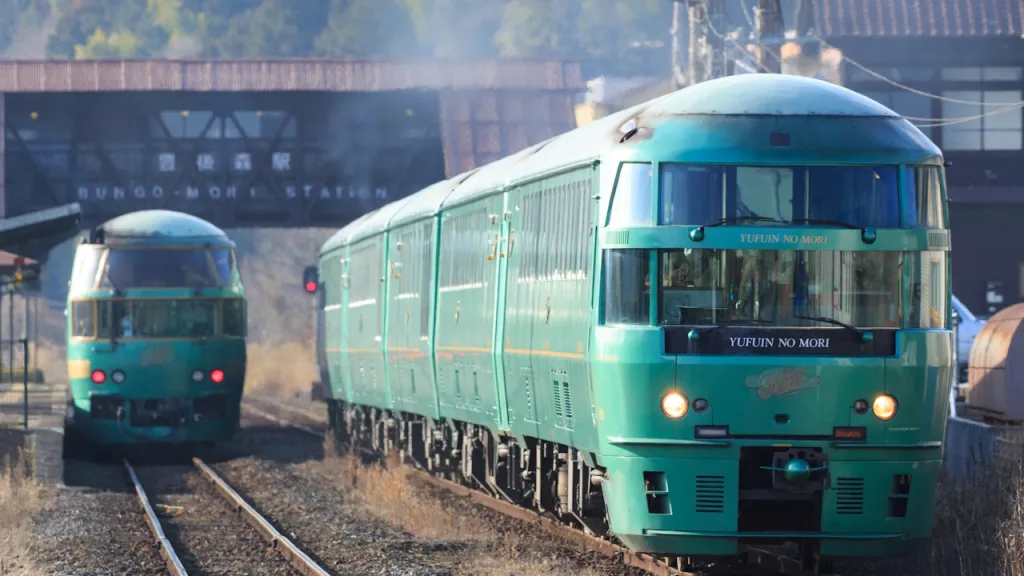
At certain times of day, your Yufuin no Mori train will pass another Yufuin no Mori traveling in the opposite direction. The sight of two metallic green trains meeting in the mountains creates a mirror-image moment that feels almost surreal.
Passengers often wave to each other across the narrow gap as the trains pass. Cabin attendants announce these encounters in advance, giving everyone time to prepare cameras for this fleeting but memorable moment.
Mount Yufu: The Destination Comes Into View
As the train enters the Yufuin Basin, Mount Yufu’s majestic profile dominates the forward view. This 1,583-meter peak, often called “Bungo Fuji” for its symmetrical conical shape, serves as Yufuin’s iconic landmark.
The mountain’s appearance changes with the seasons—vivid green in spring, deep verdant in summer, flaming colors in autumn, and snow-mantled in winter. Each visit reveals a different face. When you see Mount Yufu fill the windscreen, Yufuin Station is just minutes away.
Buffet and Mobile Service: Culinary Highlights
The Yufuin no Mori maintains one of the few remaining onboard buffet counters on Kyushu trains. Yufuin no Mori I places the buffet in Car 2, while Yufuin no Mori III positions it in Car 3, where cabin attendants manage sales and service.
Exclusive Onboard Bento Boxes
Three special bento lunch boxes are available exclusively aboard the Yufuin no Mori, all requiring advance reservation.
Yufuin no Mori Oita Wagyu Bento (¥3,000) represents the premium option, featuring Grade 4 or higher “Oita Wagyu” beef prepared three ways: roast beef, simmered sweet-soy style, and thick-cut slices. This bento showcases the quality of Oita Prefecture’s renowned beef.
Yufuin no Mori Bento (¥1,500) centers on mushroom-infused rice and features abundant Yufuin vegetables. The variety of small side dishes creates a balanced, satisfying meal suitable for most appetites.
Yufuin Wappa (¥1,000) contains four types of onigiri rice balls in a traditional wappa wooden container. The bite-sized format and colorful presentation appeal to those preferring a lighter meal or multiple small tastings.
All bento boxes must be pre-ordered at least three days before travel through the JR Kyushu website, and reservations require your seat assignment. The Yufuin no Mori Bento occasionally has limited same-day availability, but advance ordering ensures you won’t miss out.
Local Craft Beer and Beverages
The buffet stocks “Yufuin Bakushu WEIZEN light ale,” a locally brewed beer with a fruity character that pairs well with scenic viewing.
Yufuin no Mori I features a draft beer system, with cabin attendants pulling fresh pints for passengers. Sipping golden beer from a proper glass while watching rural Kyushu scroll past embodies the relaxation this journey offers.
Hot coffee, tea (hot and iced), Japanese tea, and soft drinks provide non-alcoholic options.
A particular recommendation is “Yuzu Mitsu Squash” (¥400), made using the recipe from Tea Room Nicole at Tama-no-Yu inn in Yufuin. Yuzu citrus honey sourced from Hita City gives this drink a perfect balance of sweetness and refreshing tartness.
Sweets and Souvenirs
The buffet display case holds three-layer cheesecake made with 100% Yufuin milk, cakes from popular local patisseries, and various ice cream options. These treats work perfectly as mid-journey refreshments or post-meal desserts.
Yufuin no Mori original merchandise includes keychains, towels, and postcards—popular souvenirs that capture memories of the journey. For children, Plarail model trains of the Yufuin no Mori are available, often becoming treasured keepsakes.
On Yufuin no Mori III, mobile cart service brings drinks and merchandise directly to passenger seats, eliminating the need to navigate to the buffet car—especially convenient for families with young children or passengers who prefer to remain settled.
Cabin Attendant Hospitality: Personal Touches
The cabin attendants aboard the Yufuin no Mori distinguish this experience from standard limited express trains. Their attentive service and personal engagement create an atmosphere found on few other trains in Japan.
Commemorative Photo Service
Cabin attendants circulate through the cars with date-stamped “Yufuin no Mori” photo panels, offering to assist passengers with commemorative photos.
For children, a uniform and cap lending service allows them to dress as either a train conductor or cabin attendant. The joy on a child’s face while wearing an official-looking uniform creates photo opportunities parents cherish for years.
Candy Distribution and Scenic Announcements
When passing scenic highlights like Jion-no-taki Falls, cabin attendants make detailed announcements describing what passengers are seeing. They also distribute complimentary candy, creating a tour bus-like atmosphere of shared discovery.
The cabin attendants’ approachability encourages passengers to ask questions about Yufuin—restaurant recommendations, hot spring options, shop suggestions. The staff responds with genuine enthusiasm, sharing insider knowledge that guidebooks rarely contain.
Station Platform Greetings
When the train arrives at major stations, cabin attendants station themselves at car doorways, warmly seeing off departing passengers and welcoming new arrivals. These small ceremonial touches—absent on most trains—signal that you’re part of something special.
These accumulated gestures transform the Yufuin no Mori from mere transportation into a curated experience. It’s this human dimension of hospitality that passengers remember most vividly.
After Arrival: Exploring Yufuin
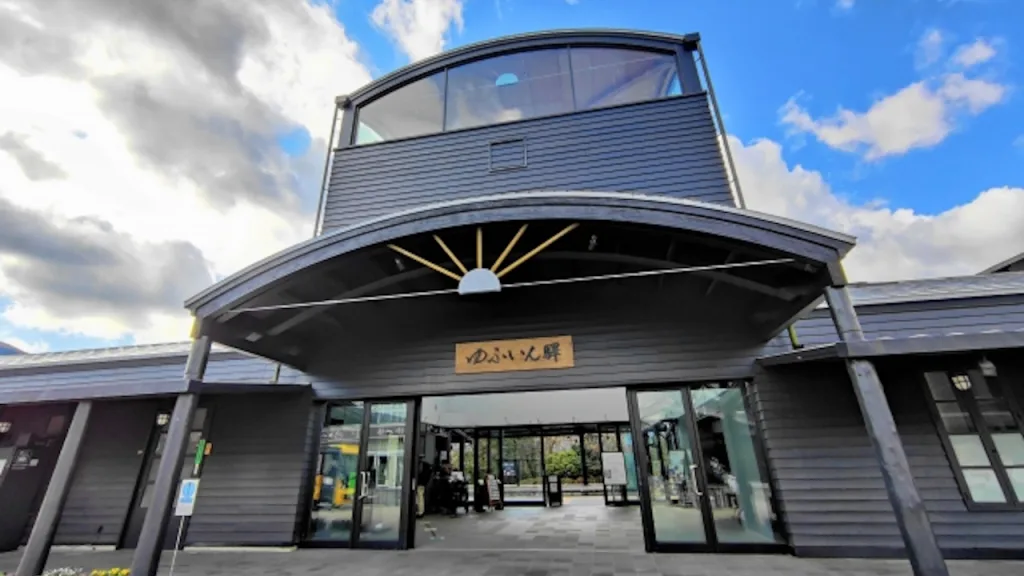
After approximately 2 hours and 10 minutes from Hakata, the train arrives at Yufuin Station. The wooden station building exudes warmth, and Platform 1 features a footbath where weary travelers can soak their feet in genuine hot spring water before continuing their journey.
Yunotsubo Kaido: Yufuin’s Main Street
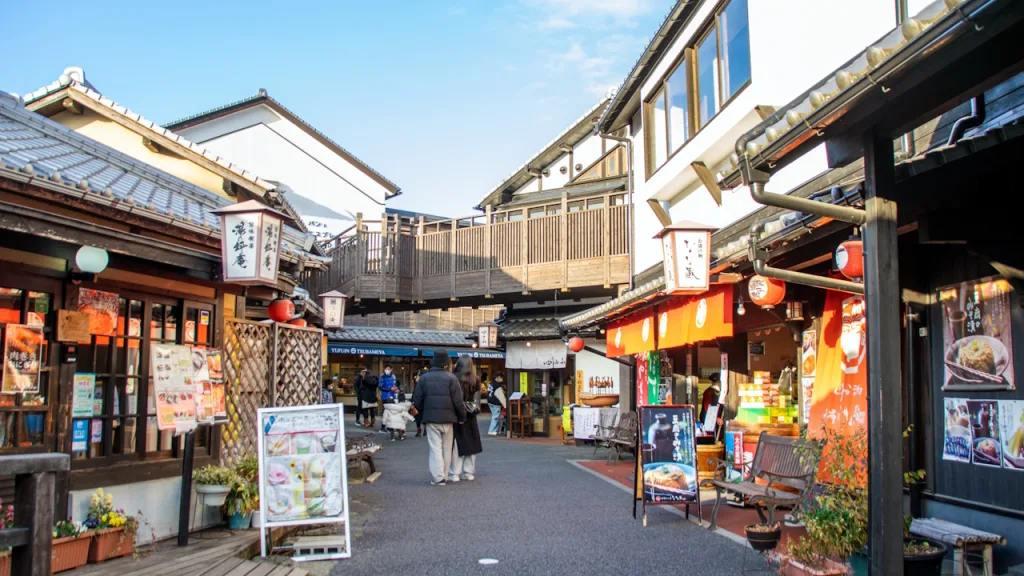
A ten-minute walk from Yufuin Station leads to Yunotsubo Kaido, the resort town’s approximately 800-meter main thoroughfare. This street hosts a delightful concentration of cafes, craft shops, dessert boutiques, and galleries that invite leisurely exploration.
As you stroll, wisps of hot spring steam rise from various points along the street, creating an atmospheric reminder of Yufuin’s geothermal foundations. Popular street foods include “Yunooka Pudding” and “Yufuin Roll Cake,” staples of the Yufuin eating-while-walking experience.
Kinrin Lake: Mystical Morning Mist
Continuing past Yunotsubo Kaido brings you to Kinrin Lake, Yufuin’s most iconic natural feature. Fed by both cold springs and hot springs, the lake maintains elevated water temperatures year-round. From autumn through winter mornings, this temperature differential creates ethereal mist that hovers above the water’s surface.
The name “Kinrin” (golden scale) originates from a Meiji-era Confucian scholar, Mori Kuso, who observed sunlit fish scales shimmering gold beneath the water. A maintained walking path circles the lake, allowing visitors to appreciate seasonal changes in the surrounding vegetation.
For overnight guests, visiting Kinrin Lake at dawn to witness the morning mist phenomenon ranks among Yufuin’s most magical experiences. When conditions align, the scene resembles a living ink wash painting.
Mount Yufu Hiking and Trekking
Those with time and energy can tackle Mount Yufu itself. At 1,583 meters, it’s considered accessible to novice hikers, with the trailhead-to-summit route requiring approximately 2.5 to 3 hours.
Along the way, multiple viewpoints offer sweeping vistas of the Yufuin Basin. From the summit, 360-degree panoramas extend from Beppu Bay to the Kuju Mountain Range.
For those less inclined toward full-scale hiking, easier trekking routes around the mountain’s base provide pleasant walks through nature without requiring summit-level exertion.
Yufuin Hot Springs: Quality and Abundance
Yufuin ranks second nationally in both number of hot spring sources and volume of water output. The predominant spring types are simple springs and alkaline simple springs, both gentle on skin and reputed to enhance complexion.
Numerous day-use bathing facilities throughout the town allow visitors to enjoy the waters without overnight accommodation. Each facility offers different spring chemistry and atmosphere, making “onsen-hopping”—visiting multiple baths in succession—a quintessentially Yufuin activity.
Overnight accommodations range from venerable traditional ryokan to contemporary resort hotels. Regardless of style, most feature open-air baths with views of Mount Yufu or are nestled in forest settings, creating environments far removed from daily life’s stress.
Recommended Accommodations in Yufuin
Yufuin offers exceptional lodging options, many within walking distance of the station or a short drive away. Here are five particularly distinguished properties.
Yufuin Tama no Yu
Located approximately 12 minutes’ walk from Yufuin Station, Tama no Yu represents one of Yufuin’s premier luxury ryokan. As one of the “Yufuin Big Three” establishments, it traces its origins to 1953 when it began as a retreat facility for a Rinzai Zen temple.
Thirteen wooden detached buildings nestle within approximately 13,000 square meters of mixed-growth forest. The concept of “a rustic inn befitting the beautiful natural surroundings graced by hot spring mist” translates into spaces of refined simplicity, avoiding excessive decoration in favor of quiet quality.
All 16 guest rooms feature natural hot spring baths fed directly from the source. Cuisine emphasizes local fresh vegetables, “Toyo no Shamo” chicken raised through contracts with area farmers, carefully selected Kyushu-raised wagyu beef, and stream-raised river fish—ingredients that convey Yufuin’s authenticity.
On the property, Tea Room Nicol and Gallery Tama no Yu shop welcome non-guests. The yuzu honey squash sold aboard Yufuin no Mori trains originates from Nicol’s recipe.
Kamenoi Bessou
Approximately 20 minutes’ walk from Yufuin Station, near Kinrin Lake, stands Kamenoi Bessou, a historic property dating to 1921. Originally built as the mountain villa of Kumahachi Aburatani—a key figure in Beppu tourism development—it ranks alongside Tama no Yu and Sanso Murata as one of Yufuin’s “Big Three.”
A mere 15 detached buildings—6 Western-style rooms in the main building and 15 farmhouse-style detached structures—occupy an expansive 30,000 square meter forested garden. Every room features its own source-fed hot spring bath, each with a unique design.
Cuisine centers on local ingredients with an emphasis on how vegetables taste—many guests specifically praise the quality and preparation of seasonal produce. Breakfast offers both Japanese and Western options, with outdoor terrace dining available in the May-through-September season at Keikaen restaurant.
The property includes Sajiki Chabo tea house, built from a relocated sake brewery dating to the late Edo period. Daytime service features deeply roasted European-style coffee and desserts; at 7 PM it transforms into “Bar Yamaneko” (Bar Wildcat), inspired by the Italian film “The Leopard.” Non-guests are welcome, providing an accessible taste of Kamenoi Bessou’s atmosphere.
Sanso Murata
About 10 minutes by car from Yufuin Station, in a tranquil setting, sits Sanso Murata, the third member of Yufuin’s “Big Three.” This property’s concept revolves around reviving historic Japanese architecture, merging traditional farmhouse aesthetics with modern comfort.
All 12 accommodations are detached buildings, each created by renovating and relocating antique Japanese structures. Individual furnishings and bathing facilities give each unit distinct character, ensuring privacy for guests.
Meals highlight Oita’s abundant seafood—including seki-saba mackerel and seki-aji horse mackerel from the Bungo Channel—plus seasonal vegetables and meats. Dining occurs either in guest rooms or private dining spaces, eliminating concerns about other diners.
The property encompasses a restaurant, bar, art museum, and select shop. The museum focuses on music-themed art, and classical music plays throughout the facility, creating a cultured, contemplative atmosphere.
Hoshino Resorts KAI Yufuin
Opened in 2022 on a quiet hilltop overlooking terraced rice fields, this hot spring ryokan sits about 15 minutes by car from Yufuin Station. Designed by renowned architect Kengo Kuma, the structure extensively incorporates bamboo, creating a harmonious modern-Japanese aesthetic.
Guest rooms look out over terraced paddies that change appearance with the seasons, with Mount Yufu rising beyond. Room lighting features “firefly basket lanterns” woven from rare “Shichito” rush plants cultivated on Oita’s Kunisaki Peninsula—these create a gentle, flickering light quality that soothes the spirit.
Indoor and outdoor baths both frame views of Mount Yufu, allowing guests to contemplate the iconic peak while soaking. The post-bath lounge overlooking the rice terraces offers complimentary ice treats and beverages.
As part of Hoshino Resorts’ “KAI” brand, the property offers “local activity” experiences unique to each location. At KAI Yufuin, guests can try “wara naiji”—traditional straw rope twisting practiced by farmers during winter dormancy—creating a talisman charm from twisted rice straw, a meaningful cultural connection.
Morning exercise sessions on the terrace overlooking the terraced fields provide refreshing starts to the day in the crisp highland air.
Asagirinomieru Yado Yufuin Hanayoshi
Located approximately five minutes by car from Yufuin Station, Asagirinomieru Yado Yufuin Hanayoshi bills itself as an inn “where you can see the morning mist,” with all guest rooms commanding views of Mount Yufu. In early morning, the ryokan overlooks the ethereal fog that blankets the Yufuin Basin.
Rooms are primarily Japanese-style, each with different design elements, but the common thread is unobstructed sight lines to Mount Yufu. Watching the mountain’s appearance shift with weather, season, and time of day from your private room creates an intimate relationship with Yufuin’s defining landmark.
The hot spring baths use natural free-flowing source water, with both indoor and outdoor facilities available. The outdoor bath especially allows guests to soak while gazing directly at Mount Yufu—an open-air bathing experience with few equals.
Cuisine follows kaiseki multi-course principles using Oita local ingredients, with seasonal flavors carefully prepared and beautifully presented. Japanese breakfast includes local vegetables and onsen tamago eggs, offering authentic Yufuin morning tastes.
The convenient station proximity and short drives to major attractions like Yunotsubo Kaido and Kinrin Lake make Yufuin Hanayoshi an excellent base for exploring the area.
Nearby Attractions Beyond Yufuin
Using Yufuin as a base, several worthwhile destinations lie within reasonable traveling distance.
Beppu Onsen
About 30 minutes by car from Yufuin, Beppu boasts Japan’s highest hot spring output volume. The “Jigoku Meguri” (Hell Tour) circuit lets visitors observe colorful geothermal phenomena at sites like Umi Jigoku (Sea Hell), Chinoike Jigoku (Blood Pond Hell), and Shiraike Jigoku (White Pond Hell).
Beppu offers diverse bathing styles unique to the area: sand baths where hot sand covers your body, mud baths, and steam chambers. Yufuin no Mori Train 3 continues to Beppu, providing direct rail access.
Kokonoe Yume Otsurihashi (Dream Suspension Bridge)
Japan’s highest pedestrian suspension bridge spans 390 meters at a height of 173 meters, approximately 40 minutes by car from Yufuin. Views from the bridge encompass the gorge below and the Kuju Mountain Range beyond—dramatic scenery from a thrilling vantage point.
The late October through early November autumn foliage season transforms the gorge into a tapestry of reds and golds, creating the sensation of walking through the sky above a living painting.
Kurokawa Onsen
Near the Kumamoto Prefecture border, about one hour’s drive from Yufuin, Kurokawa Onsen occupies a quiet mountain valley. The atmospheric hot spring village offers a different character from Yufuin—more rustic and intimate.
Purchasing an “nyutotemichi” (bathing hand permit) grants access to outdoor baths at multiple ryokan, each with distinct spring chemistry and ambiance. Kurokawa provides a contrast to Yufuin’s polish—a chance to experience hot spring culture in its more elemental form.
Yufuin Floral Village
A 15-minute walk from Yufuin Station brings you to Yufuin Floral Village, a theme park recreating England’s Cotswolds region. Stone-built structures line streets that evoke European countryside charm.
Inside, “Owl Forest” offers a Harry Potter-themed experience, and Peter Rabbit merchandise shops appeal to fans of Beatrix Potter’s creations. The photogenic streetscapes make this a popular stop for capturing European-style imagery without leaving Japan.
Enhancing Your Journey with a Private Tour Conductor
While the Yufuin no Mori provides an exceptional travel experience, navigating Japan’s transportation systems and maximizing your time in destinations like Yufuin can present challenges for international visitors. Language barriers, unfamiliar customs, and the complexity of coordinating multiple elements of a trip can create stress that detracts from enjoyment.
This is where a private tour conductor service offers significant value. Unlike group tours that follow rigid schedules, or guides who primarily provide historical commentary, a personal tour conductor manages the practical aspects of your journey while offering cultural interpretation and logistical support.
A tour conductor assists with train reservations—including securing those competitive Yufuin no Mori observation seats—coordinates accommodation bookings at properties like Tama no Yu or Kamenoi Bessou, arranges ground transportation, and provides real-time translation assistance. When unexpected situations arise—missed connections, sudden weather changes, or the need to modify plans—your tour conductor handles these adjustments seamlessly.
Beyond logistics, tour conductors offer cultural context that deepens your understanding and appreciation of places you visit. They can explain the significance of design elements on the Yufuin no Mori, introduce you to local proprietors along Yunotsubo Kaido, or arrange private experiences not typically available to independent travelers.
For those seeking to maximize a limited time in Japan without the constraints of group tours, private tour conductor services bridge the gap between independent travel’s freedom and organized tour reliability.
Conclusion: The Journey as Destination
The Yufuin no Mori transforms the two-hour journey from Hakata to Yufuin into an experience as memorable as the hot spring resort itself. Through its distinctive high-deck architecture offering panoramic views, warm wooden interiors evoking forest tranquility, attentive cabin attendant service, and carefully curated onboard dining options, this train exemplifies how transportation can transcend mere functionality to become an attraction in its own right.
Since its 1989 debut, the Yufuin no Mori has evolved alongside the town it serves, maintaining the delicate balance between development and preservation that defines Yufuin’s character. As the foundational train in JR Kyushu’s D&S network, it established principles of regional storytelling through design that influenced subsequent showcase trains throughout the island.
The challenge of securing reservations reflects not a flaw but rather validation of the train’s enduring appeal. Strategic booking one month in advance, flexible travel dates, persistent checking for cancellations, and consideration of less popular departure times can overcome reservation obstacles. The effort invested in securing a seat proves worthwhile the moment you settle into your observation deck position and watch Mount Yufu grow larger on the horizon.
From the metallic green cars waiting at Hakata Station’s platform to the dramatic front-window views, from the carefully slowed approach to Jion-no-taki Falls to the warm interactions with cabin attendants, from sampling local craft beer to arriving at Yufuin Station’s wooden structure—every element combines to create an integrated experience. The destination of Yufuin, with its quality hot springs, refined dining, and mountain scenery, certainly deserves the journey. But the journey itself, aboard the Yufuin no Mori, carries its own intrinsic value.
When planning Kyushu travel, allocate time for this train journey. Reserve early, select your seat thoughtfully, and approach the experience with anticipation. The landscape flowing past your window, the forest-inspired interior surrounding you, and Yufuin’s hot spring pleasures awaiting you at journey’s end combine into memories that endure long after you’ve returned home.