



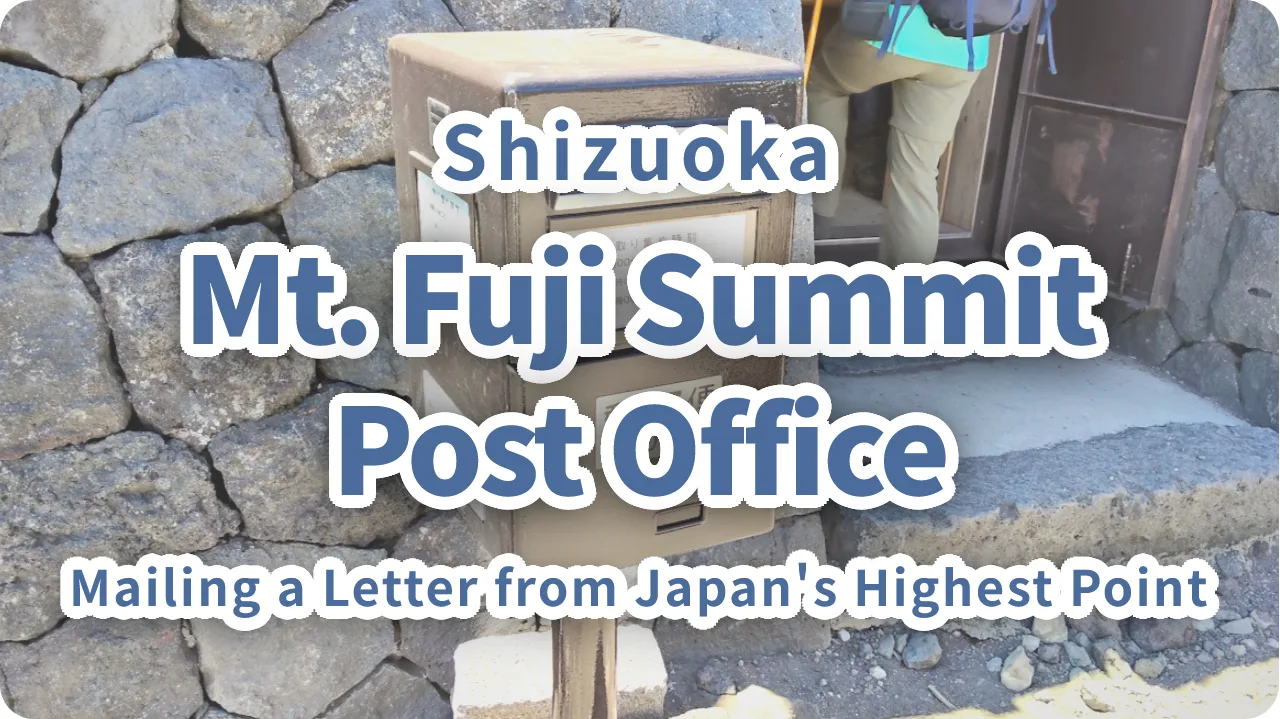
Travel insights from a tour conductor — today’s destination: the Fujisan-chojo Yubinkyoku, or Mt. Fuji Summit Post Office, in Fujinomiya City, Shizuoka Prefecture.
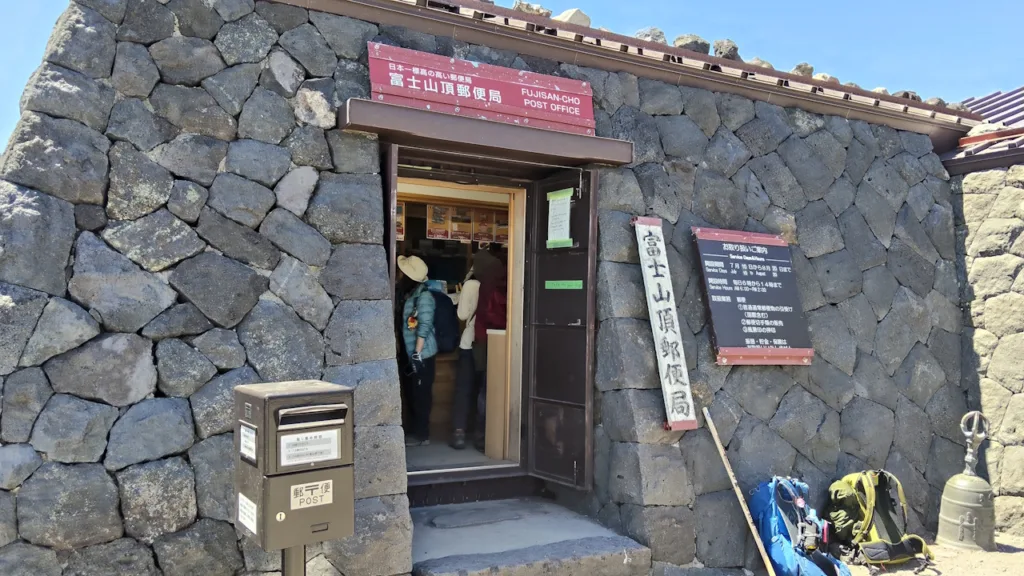
Perched at 3,776 meters on the Fujinomiya Trail side of Mt. Fuji’s crater rim, inside the grounds of the Okumiya shrine of Fujisan Hongu Sengen Taisha, sits Japan’s highest post office. It only opens for a short window each summer, and climbers who reach the top during that window can send a postcard stamped with a scenic date stamp found nowhere else in the country.
| Item | Details |
|---|---|
| Name | Mt. Fuji Summit Post Office (富士山頂郵便局) |
| Hours | 6:00 AM–2:00 PM, during the open season only |
| Closed | Outside the open season (roughly late August through early July the following year) |
| Address | Fujinomiya City, Shizuoka Prefecture, at the summit of Mt. Fuji (grounds of Fujisan Hongu Sengen Taisha Okumiya) |
| Access | About 5–7 hours on foot from the 5th Station on the Fujinomiya Trail |
A tiny window, a demanding climb
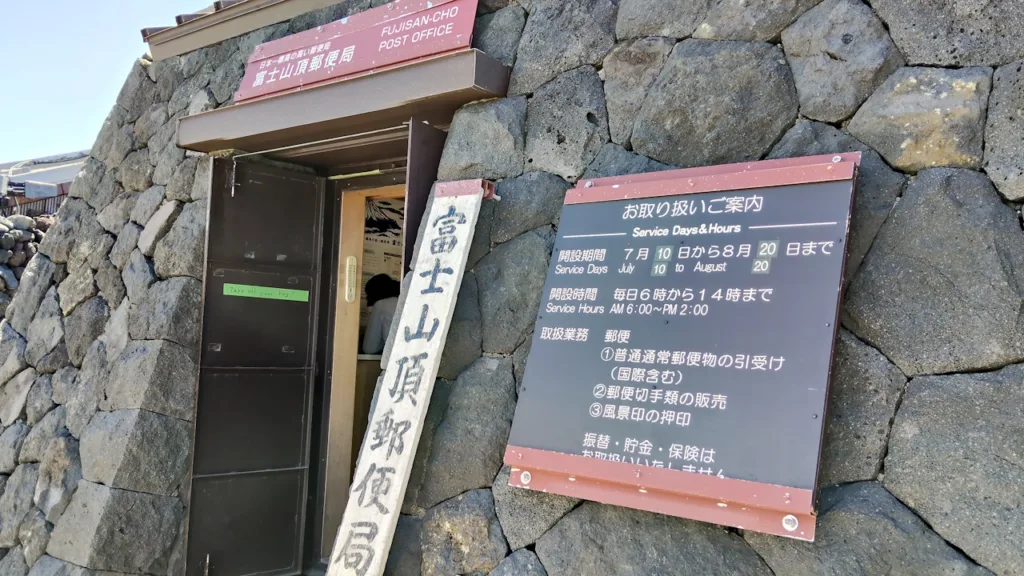
The post office only operates for around 40 days each summer, typically from early July through late August, and the counter itself is open just eight hours a day, from 6:00 AM to 2:00 PM. Step outside those hours, or outside the season, and there’s no window service at all — mail can only go into a dedicated post box that’s set up during the open period.
At 3,776 meters, conditions can shut the counter down without warning: strong wind and thick fog both interrupt service from time to time. The office doesn’t handle savings accounts or insurance products — it’s limited to regular mail acceptance and stamp sales. There’s no parking, obviously; the only way in is on foot, up whichever trail you choose.
Because the post office sits on the Fujinomiya Trail side of the crater rim, climbers who summit via the Yoshida, Subashiri, or Gotemba trails need to walk the crater-rim path (known as Ohachi-meguri) to reach it. Plan for that extra stretch in your schedule — arriving exhausted after sunrise and then discovering the walk to the post office adds another 20–30 minutes can catch people off guard. The 6:00 AM opening also overlaps with the crowd that’s just watched the sunrise, so the window can get busy right when it opens.
From a Meiji-era outpost to today’s summit counter
The office dates back to 1906, when it opened as a third-class post office under the name Mt. Fuji Post Office. It was renamed to its current name, Mt. Fuji Summit Post Office, in 1949. In 1931, together with the now-defunct Mt. Fuji North Post Office, it became one of the first post offices in the country to use a pictorial date stamp. That stamp was redesigned in 1995 into the shaped stamp still used today, which outlines Mt. Fuji and reads “Mt. Fuji Kengamine 3,776m.”
The office’s history hasn’t been uninterrupted. Renovation work on the Okumiya shrine office building it occupies pushed operations temporarily to a building at the Gotemba Trail summit from 2013 through 2016, and the 2021 season was skipped entirely as a pandemic precaution. Staff work on a rotating basis, living at the summit for the duration of their shifts to keep the counter running through each short season. Anyone wanting the fuller cultural backdrop before the climb — Mt. Fuji’s UNESCO World Heritage status and its long history as an object of worship and art — can find that context at the Mt. Fuji World Heritage Centre, Yamanashi, on the mountain’s north side.
A letter that only exists at the summit
The main draw for most climbers is the pictorial date stamp itself: an outline of Mt. Fuji, the post office building, and the words “Mt. Fuji Kengamine 3,776m,” pressed onto a postcard or letter as proof it was mailed from the country’s highest point. The counter also issues a certificate of ascent — pair it with Mt. Fuji-themed stamps and the date stamp, and you’ve got a dated, official-looking keepsake of the climb.
Because the open season overlaps with Japan’s midsummer greeting-card custom, sending a note from the summit carries a bit more weight than dropping one in a mailbox at the base. International mail is accepted too, so a letter from the roof of Japan can reach friends or family overseas just as easily as it reaches someone across town.
Souvenirs and the human side of the counter
Beyond the date stamp and the certificate, the post office sells its own postcards and commemorative sets. What sticks with people, though, is the staffing arrangement: postal workers rotate in for shifts of up to a week, living at 3,776 meters through wind, cold, and thin air just to keep a tiny counter open through the summer.
Visitors often mention the staff taking a moment to acknowledge how tough the climb was before getting down to business — a small gesture that turns a transactional stop into something more memorable. The counter runs every day the season is open, weekends and holidays included, so there’s no need to time a summit attempt around a day off.
Circling the crater: what else is up there
The Fujinomiya Trail summit, where the post office sits, doubles as one of the starting points for Ohachi-meguri, the walk around the crater rim. Budget roughly 90 minutes to two hours for the full loop, not counting stops, as it winds past the eight peaks ringing the crater.
Fujisan Hongu Sengen Taisha Okumiya
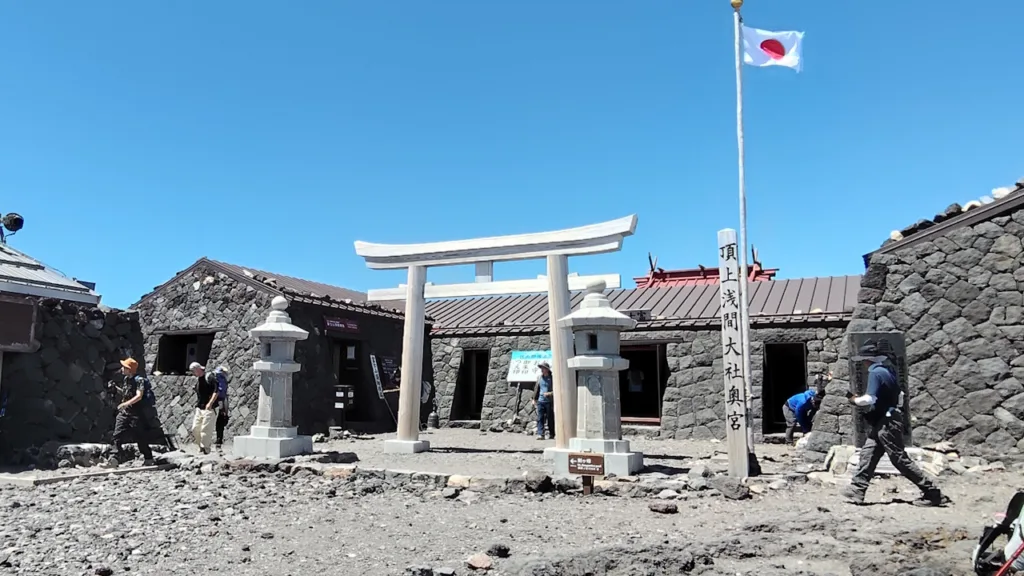
Sharing the same grounds as the post office, this shrine building marks the traditional end point of a Mt. Fuji pilgrimage climb. The post office counter sits inside the shrine’s office, so a visit to one naturally leads to the other.
Kengamine
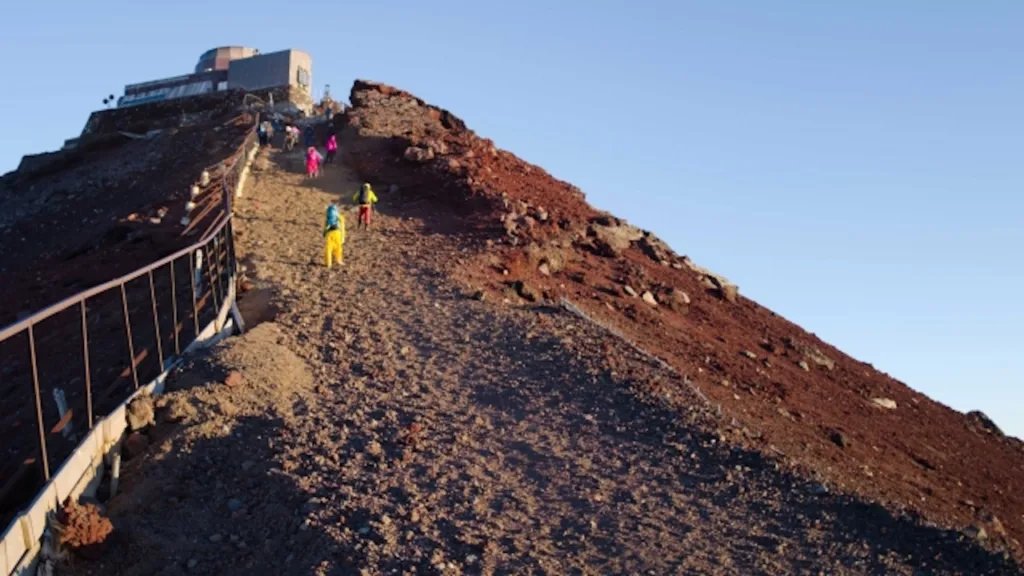
The true summit of Mt. Fuji, at 3,776 meters, sits along the crater-rim walk. Reaching it from the post office means following the rim path and then a final steep push up and back down. The old Mt. Fuji Weather Station still stands here, and the 360-degree view from the top takes in the whole crater and beyond.
Kinmeisui and Ginmeisui springs
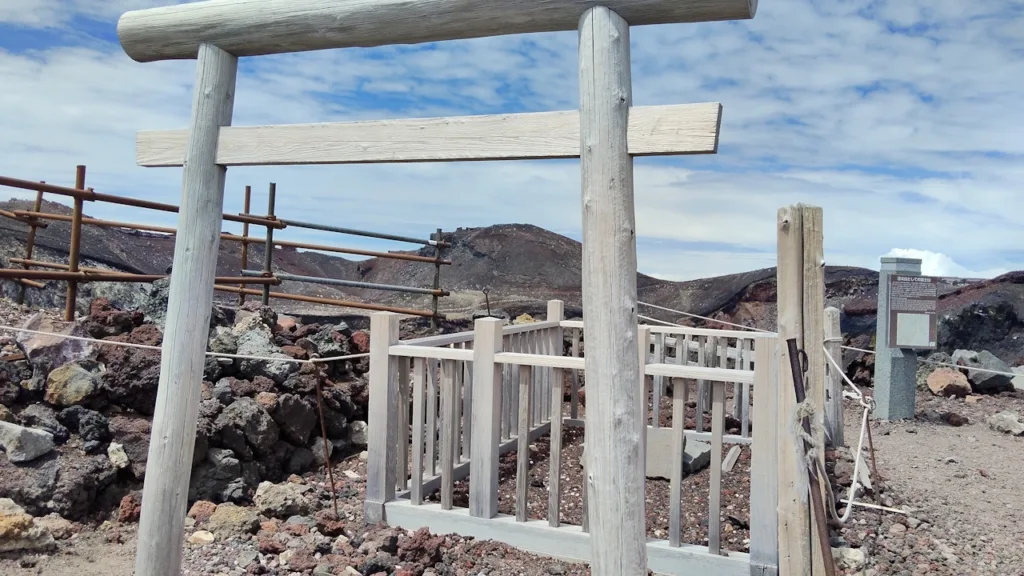
Two spring sites along the crater-rim walk, one near Mt. Hakusan and the other close to the Gotemba Trail summit. Pilgrims from the historic Fuji-ko faith tradition have long treated both as places to receive the mountain’s blessing.
Kusushi Shrine
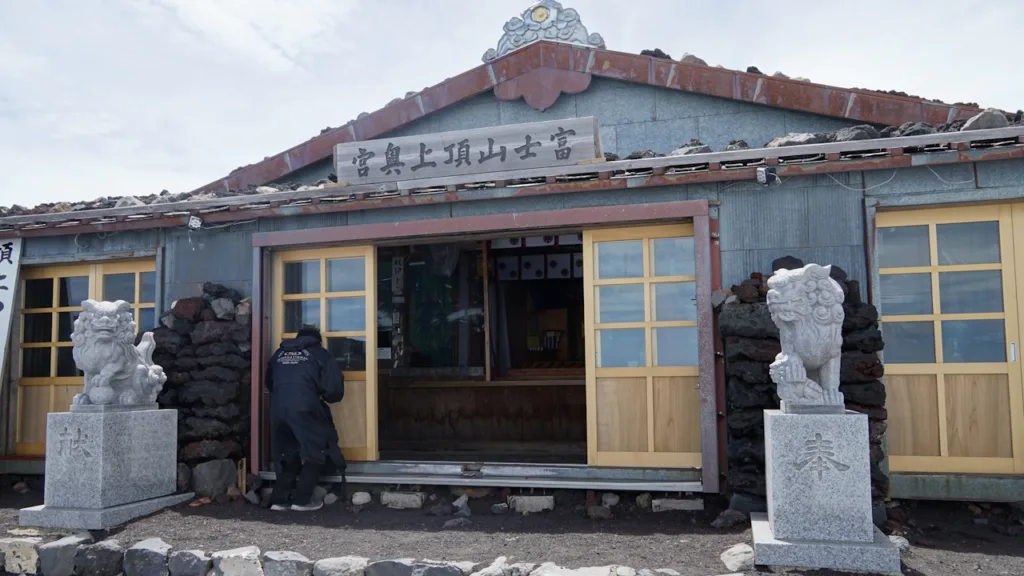
An auxiliary shrine of Fujisan Hongu Sengen Taisha, standing at the summit on the Yoshida and Subashiri trail side, once known as Yakushi-do. Following the crater rim counter-clockwise from the post office leads here. Climbers who summit via Yoshida or Subashiri typically stop to pay respects before starting the descent.
Where to stay before and after the climb
Most climbers tackling the Fujinomiya Trail base themselves near Shin-Fuji or Fujinomiya Station, or out by Lake Tanuki, either the night before the climb or after coming back down. Here are three properties with easy access to the Fujinomiya 5th Station trailhead.
Super Hotel Fujinomiya
About a 7-minute drive from JR Fujinomiya Station and 9 minutes from the Shin-Tomei Expressway’s Shin-Fuji IC. This business hotel has a natural hot-spring bath, Sakuya no Yu, split by gender and open from 3:00 PM to 9:00 AM the next morning — good for soaking out the soreness before or after a climb. A complimentary breakfast is included, and both Shin-Fuji and Fujinomiya Stations, where the Fujinomiya 5th Station bus departs, are within easy reach.
Hotel Route Inn Shinfuji Ekiminami
Around a 10-minute walk from Shin-Fuji Station on the Tokaido Shinkansen line. The hotel has a large communal bath fed by artificial radium-enriched water, and a breakfast buffet is available as an add-on. Its walking distance from Shin-Fuji Station, where the Fujinomiya 5th Station climbing bus departs, makes it a convenient base the night before an early start.
Kyukamura Fuji
Set on the shore of Lake Tanuki at the western foot of Mt. Fuji, with every room facing the mountain across the water. A mildly alkaline hot spring helps ease the fatigue of a climb, and the lake is about 45 minutes from Fujinomiya Station by local bus. Lake Tanuki is also a known spot for viewing Diamond Fuji, making the time before or after the climb worth lingering over.
Climbing with a tour conductor
Mt. Fuji’s summit is not a forgiving place to sort out logistics on the fly. Language barriers at mountain huts, sudden weather changes that force a change of trailhead, and the sheer physical toll of the altitude all add up fast — and a dedicated tour conductor is built to handle exactly that.
A tour conductor manages the itinerary from departure to return: coordinating trailhead transport, confirming hut reservations, and keeping the group moving on a schedule built around sunrise timing and weather windows. If a bus is cancelled or a route closes due to conditions, the tour conductor handles the rebooking on the spot, so climbers aren’t left improvising a new plan at altitude. Interpretation support at mountain huts and at the summit post office itself — explaining postal procedures, certificate requests, or hut check-in — removes one more layer of stress from an already demanding day.
None of this replaces the climb itself, and a tour conductor doesn’t act as a sightseeing guide or rework the itinerary on a whim — that’s the tour operator’s role. What it does provide is the peace of mind that comes from knowing the logistics are handled, so all that’s left to focus on is the mountain. Tours built around this kind of support are available through tours.e-stay.jp.
Final thoughts
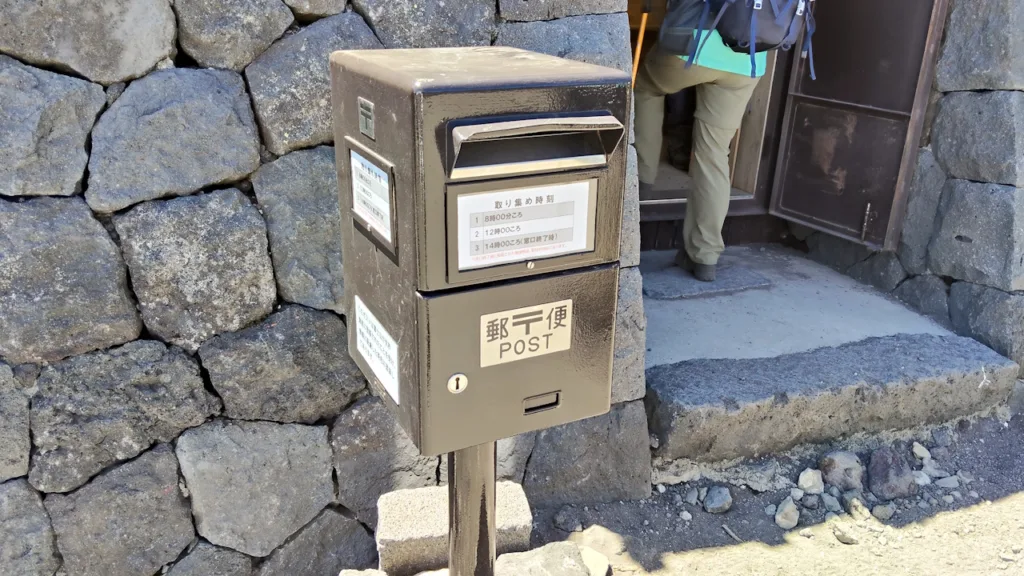
The Mt. Fuji Summit Post Office is only open for a matter of weeks each summer, and only for eight hours a day within that window, so anyone climbing the Fujinomiya Trail with a letter in mind needs to check the season and the clock before setting out. Its pictorial date stamp and the certificate of ascent it issues are among the more distinctive souvenirs a Mt. Fuji climb has to offer, and pairing a visit with the nearby Okumiya shrine and a lap of Ohachi-meguri makes for a fitting way to spend time at the top. Whichever hotel serves as a base before or after the climb — Super Hotel Fujinomiya, Hotel Route Inn Shinfuji Ekiminami, or Kyukamura Fuji on Lake Tanuki — the reward at 3,776 meters is a letter no other post office in Japan can send.