


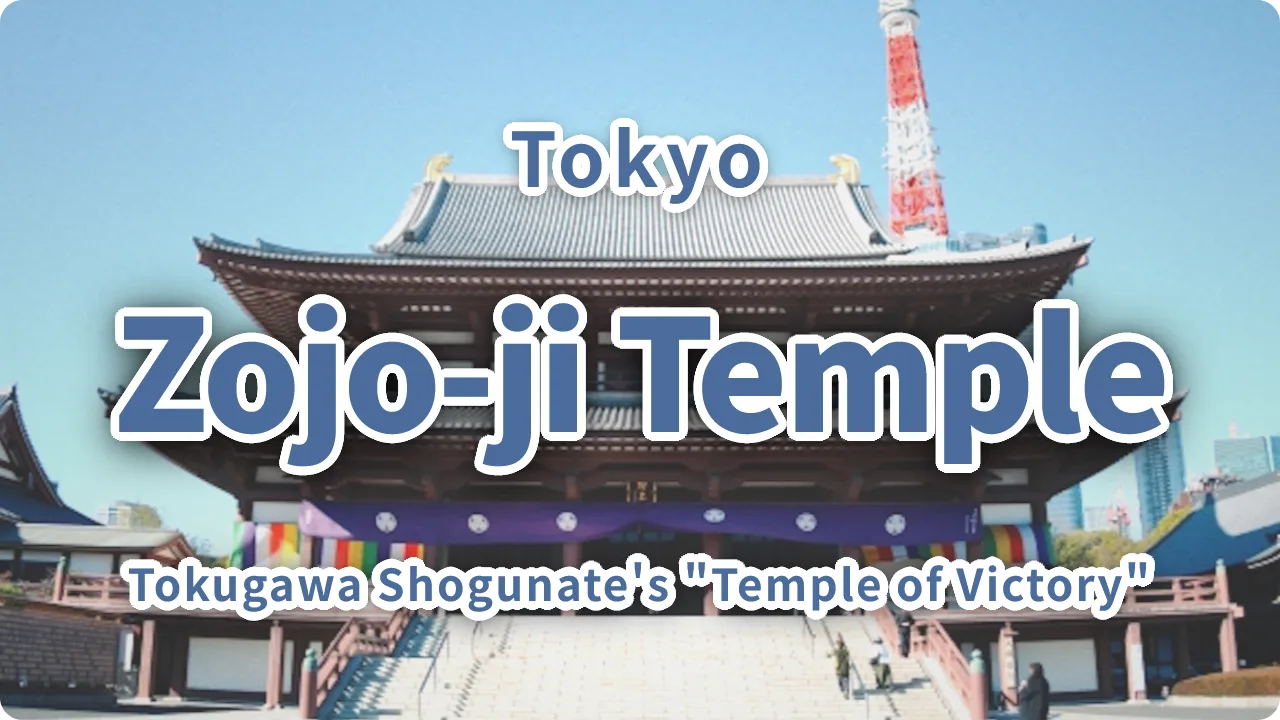
Travel insights from a tour conductor – today’s destination: Zojo-ji Temple. Few places in Tokyo leave as lasting an impression. Tucked beside Shiba Park in Minato Ward, this grand Buddhist complex rises directly in front of Tokyo Tower, creating one of the city’s most striking and photographed scenes. Yet beyond the iconic view lies more than 600 years of history, six Tokugawa shoguns buried within its grounds, and a secret Buddha whose legend reaches back to the warlord who shaped Japan itself.
| Item | Details |
|---|---|
| Official Name | Sanenzankoudo-in Zojo-ji (三縁山広度院 増上寺) |
| Denomination | Jodo-shu (Pure Land Buddhism), Head Temple |
| Principal Object of Worship | Amida Nyorai (Amitabha Buddha) |
| Address | 4-7-35 Shiba-koen, Minato-ku, Tokyo 105-0011 |
| Hours | Temple grounds: open 24 hours / Main Hall interior: 6:00–17:30 |
| Closed | Never |
| Access | 3 min walk from Onarimon or Shiba-koen Station (Toei Mita Line) / 5 min from Daimon Station (Toei Asakusa/Oedo Lines) / 10 min from Hamamatsucho Station (JR/Tokyo Monorail) |
A Temple That Rewards the Prepared Visitor
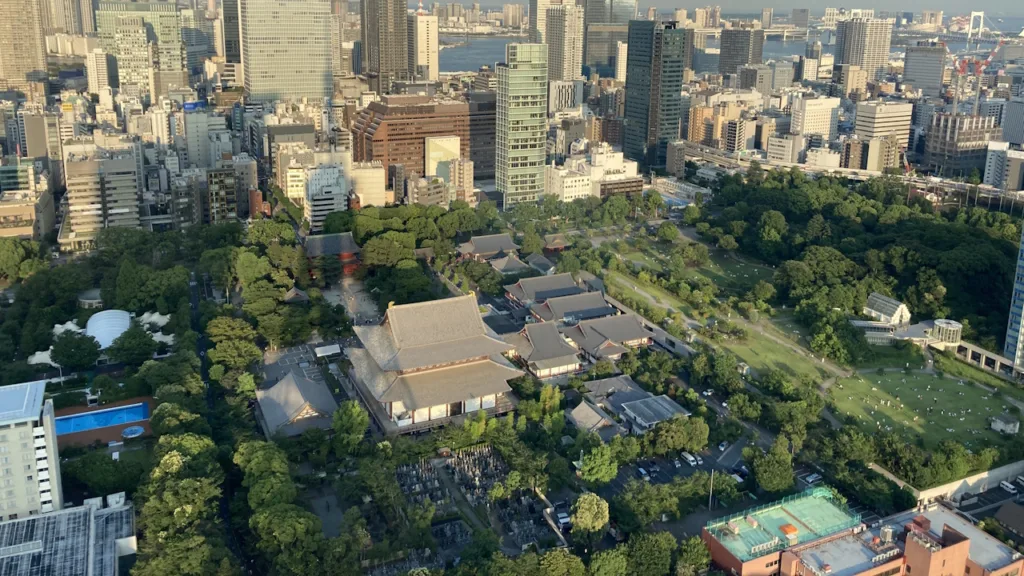
One of the most common surprises for first-time visitors to Zojo-ji is the sheer scale of its grounds. From the Great Gate (Daimon) to the Three Liberation Gates (Sangedatsu-mon) and on to the Main Hall (Daiden), the sacred approach stretches approximately 196 meters. The hall housing the mausoleum scale model, the Tokugawa Shogunal Mausolea, and a number of smaller shrines are scattered across the complex. Without some advance familiarity with the layout, it is easy to miss key attractions altogether. A quick review of the temple map before arrival makes for a far more satisfying visit.
Six Hundred Years of History: From a Muromachi Prayer Hall to a Shogunal Sanctuary
The story of Zojo-ji begins in 1393, during the Muromachi period, when the Eighth Patriarch of the Jodo sect, Priest Yuyo Sessho, established a Pure Land Buddhist training hall on a plot of land in what is now the Hirakawa-cho and Kojimachi area of Chiyoda Ward. From those modest origins, the temple grew steadily as a center of Jodo doctrine in the Kanto region, consolidating its position through the turbulent Sengoku (Warring States) era.
The Meeting That Changed Everything
The pivotal turning point in Zojo-ji’s history came in 1590. Tokugawa Ieyasu, newly appointed to govern the Kanto region, developed a profound spiritual bond with the temple’s abbot, Priest Gennyo Zon’no. So moved was Ieyasu by the abbot’s teachings that he designated Zojo-ji as the official family temple of the Tokugawa clan. In 1598, the temple was relocated to its current site in Shiba, setting the stage for an era of extraordinary expansion. Under the patronage of the newly established Edo Shogunate, major construction followed in swift succession: the Three Liberation Gates, the Sutra Repository (Kyozo), and the Main Hall were erected, and three complete sets of the Buddhist canon were donated. The Imperial Court conferred upon Abbot Zon’no the honorific title of “Fukko Kanchi Kokushi,” a mark of the temple’s elevated prestige. When Ieyasu died in 1616 at the age of 75, his final instructions specified that his funeral rites be conducted at Zojo-ji — a wish that was honored in full.
The Height of Edo Power
Following the establishment of the Edo Shogunate, Zojo-ji reached the peak of its influence. As the administrative headquarters overseeing Jodo Buddhist affairs across Japan, and as the head of the eighteen prestigious training halls of the Kanto region, the temple stood as the eastern counterpart to Chion-in in Kyoto. At its height, the temple’s landholdings exceeded 10,000 koku in assessed value, and its 82.6-hectare grounds contained 48 sub-temples and over 100 monastic study halls, with some 3,000 monks in residence at any given time. The temple’s standing was summed up in the phrase “temple rank of one million koku.”
Trials of the Meiji Era and Recovery from Wartime Destruction
The upheavals of the Meiji Restoration dealt a severe blow to Zojo-ji. In the early Meiji period, much of the temple’s land was confiscated by the new government, and the grounds were briefly used as a training facility for Shinto priests. Fires in 1873 and 1909 destroyed the Main Hall and other precious structures. Despite these losses, the temple was elevated to the rank of Head Temple in 1875 and began attracting a new generation of lay supporters, including the statesman Ito Hirobumi. Reconstruction continued through the Taisho era.
The air raids of 1945 erased what had been painstakingly rebuilt during the Meiji and Taisho periods. In the postwar years, a temporary main hall was erected in 1952, and between 1971 and 1974, a major reconstruction project — involving four years of work and the equivalent of 3.5 billion yen — produced the magnificent Main Hall that stands today. Ongoing restoration work through the Showa and Heisei eras completed the compound as it now appears.
The Three Great Canons and UNESCO Recognition
In 2026, Zojo-ji is drawing renewed international attention following the inscription of its Three Great Buddhist Canons on the UNESCO Memory of the World register. The temple’s vast scriptural collection, considered among the most significant in Japan for both its scale and cultural value, underscores Zojo-ji’s role not merely as a historic monument but as a living center of Buddhist scholarship and culture.
The Black Honzon: The Secret Buddha That Rode to Battle with Ieyasu
The central reason Zojo-ji is revered as a “temple of victory and fortune” is the presence of a sacred hidden Buddha known as the Kuro Honzon, enshrined in the Ankoku-den hall. This Amida Nyorai statue, attributed by some traditions to the Heian-period monk Eshin Sozu Genshin, was held in the deepest personal veneration by Ieyasu, who is said to have carried it into battle to pray for victory.
The name “Black Honzon” derives from two intertwined legends. The first holds that centuries of incense smoke have gradually darkened the statue’s surface. The second, and perhaps more poignant, explanation is that the statue has absorbed the misfortunes and disasters of the faithful, turning black under the weight of human suffering. Both explanations are attributed to Ieyasu himself. After his death, the statue was donated to Zojo-ji, where it has been venerated ever since as a source of victory, fortune, and protection from calamity — a tradition extending unbroken from the Edo period to the present day.
The Kuro Honzon is a hidden Buddha and is not on regular public display. However, on the 15th of each month, and during special ceremonies in the first, fifth, and ninth months of the year, a surrogate image (the Omae-dachi) is revealed for worship.
A Closer Look: The Principal Attractions Within the Grounds
The Great Gate (Daimon)
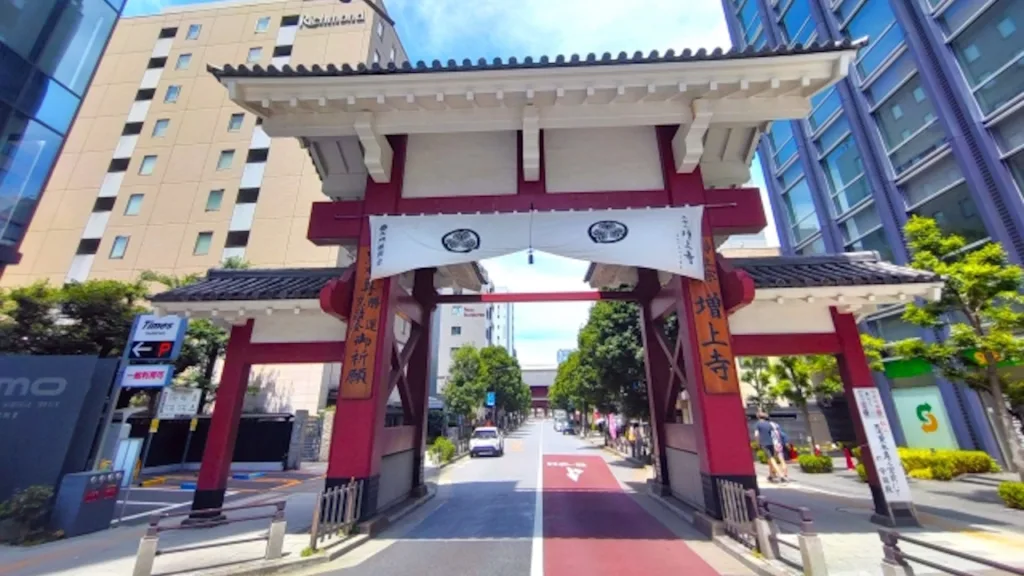
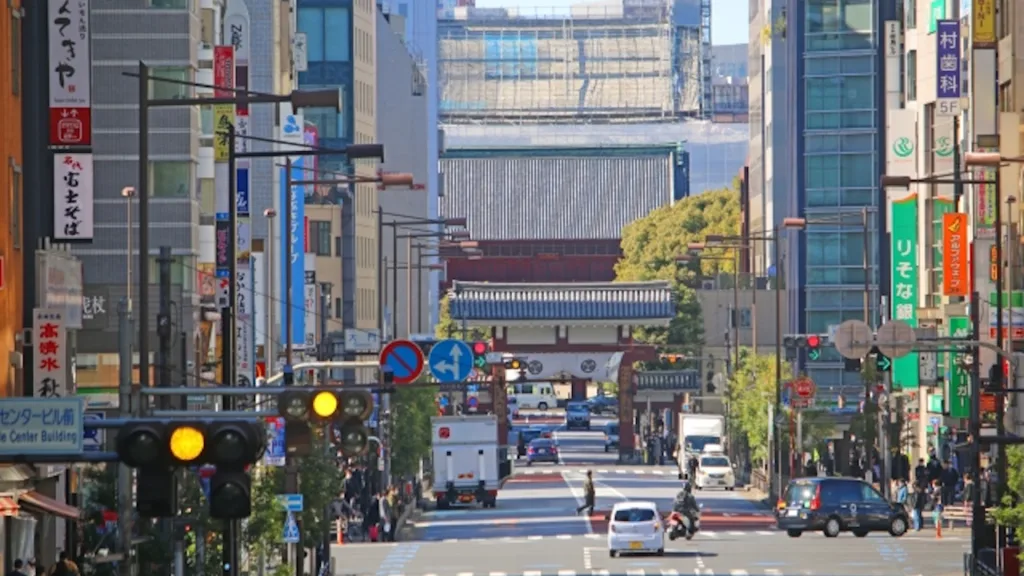
The Daimon — the name shared by both the outer gate and the nearby subway station — serves as the main approach gate to Zojo-ji. The current structure dates to 1937, when it was rebuilt in reinforced concrete on a larger scale to accommodate road-widening works, and is designated an Intangible Cultural Property of Minato Ward. The original gate had a far more distinguished origin: when the temple relocated to Shiba in 1598, Ieyasu donated a Korai-style gate that had previously served as the main gate of Edo Castle. That gate survived until the Great Kanto Earthquake of 1923 prompted its removal to Eko-in Temple, where it was destroyed in the 1945 air raids. From the Daimon to the Three Liberation Gates stretches approximately 196 meters, a distance said to represent the 108 worldly passions that one sheds in the act of approaching the sacred precinct.
The Three Liberation Gates (Sangedatsu-mon)
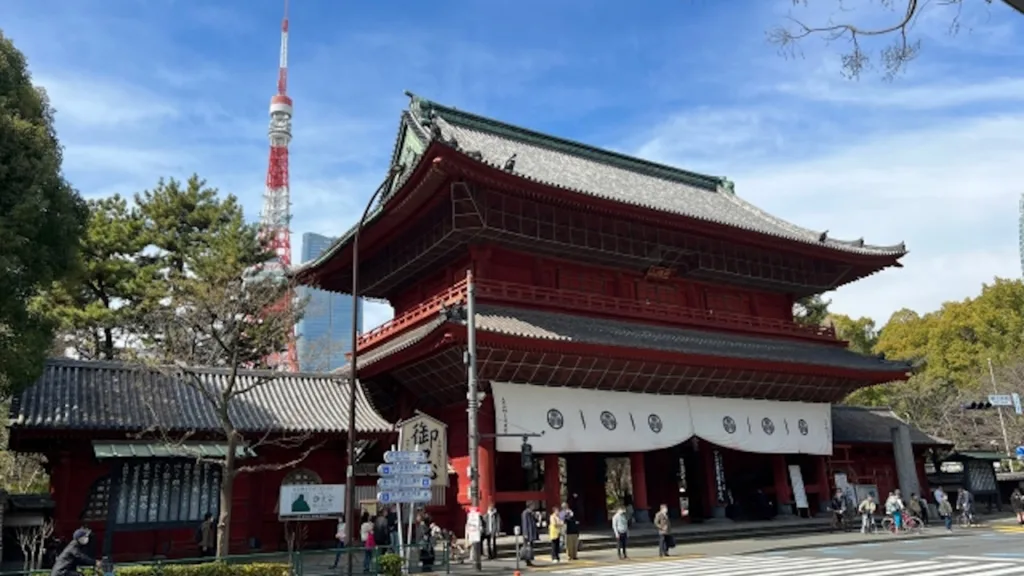
Standing partway along the main approach, the Three Liberation Gates date to 1611, when they were constructed under shogunal patronage by master carpenter Nakai Masakiyo. Following damage from a storm in 1621, the gate was rebuilt in 1622 and has stood in its present form ever since. The oldest surviving structure on the grounds and one of the oldest buildings in Tokyo, it is designated an Important Cultural Property by the Japanese government. The gate embodies the Buddhist concept of liberation from the three poisons: the three “liberation gates” of emptiness, formlessness, and non-attachment through which one passes to leave worldly suffering behind. Note that the gate is currently undergoing conservation and repair work scheduled from January 2025 through June 2032, and may be partially covered during this period.
The Black Gate (Kuro-mon / Former Hojo-mon)
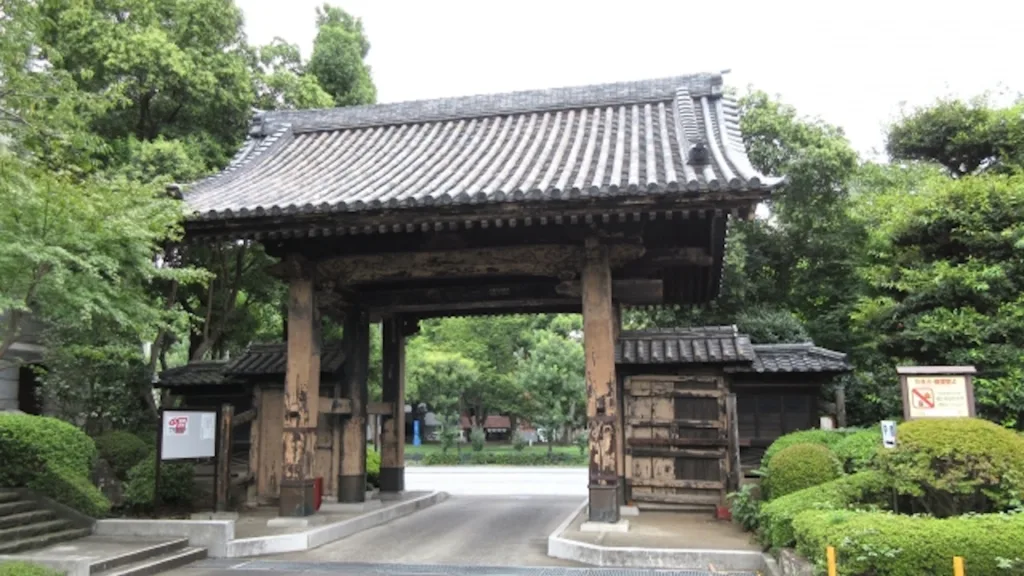
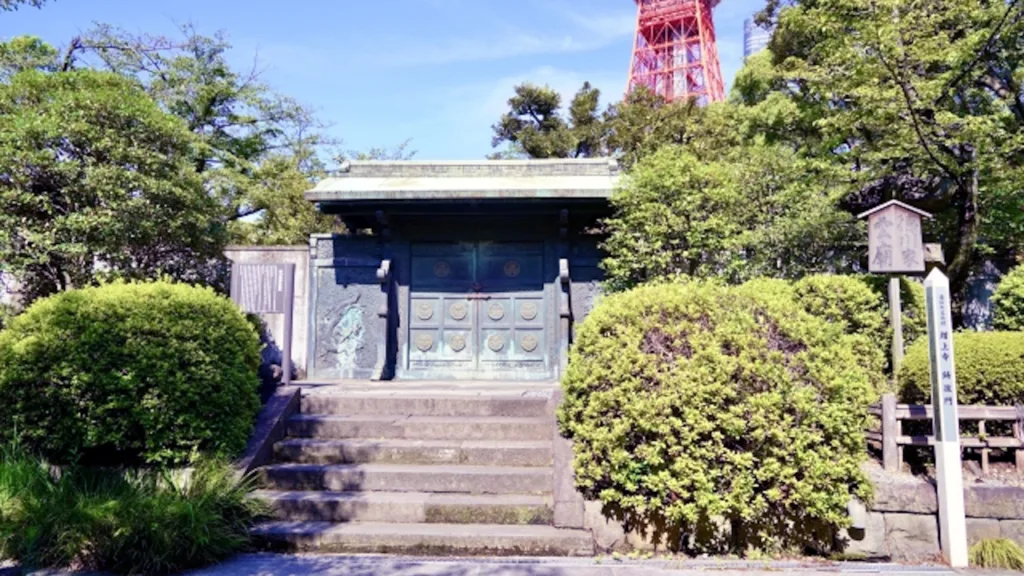
Standing along Hibiya Street, the Black Gate — formally the Former Hojo-mon (Main Gate of the Head Abbot’s Residence) — is a four-legged timber gate with a gabled roof, approximately 8 meters in height, said to have been donated by the third shogun, Iemitsu, during the Keian era (1648–1652). Its name derives from the black lacquer that once coated its surface, a deliberate contrast to the vermilion-painted structures that dominated the Edo-period compound. The gate originally stood at the entrance to the hojo, the abbot’s formal residence near what is now the Onarimon intersection, where it also served as a reception point for visiting shoguns. Relocated several times over the centuries, it reached its current position along Hibiya Street in 1980. As one of the few Edo-period structures to survive the wartime air raids, it is designated a Tangible Cultural Property of Minato Ward.
The Former Taitoku-in Mausoleum Outer Gate (Kyu-Taitoku-in Reibyo Soomon)
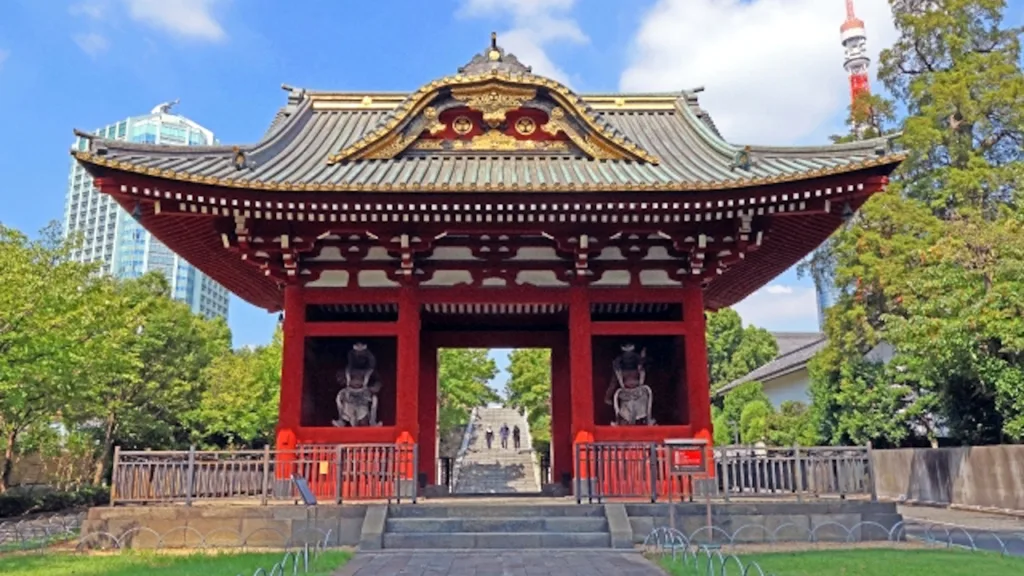
Located within the grounds of The Prince Park Tower Tokyo, this gate was built in 1632 when the third shogun, Iemitsu, constructed the full mausoleum complex for his father, the second shogun Hidetada (whose posthumous Buddhist name is Taitoku-in). Designated an Important Cultural Property, it stands as the sole surviving structure of a mausoleum that was once considered rival in splendor to the Nikko Tosho-gu. The main buildings of the complex were lost in the 1945 air raids; this outer gate alone retains the scale and craftsmanship of what was once regarded as one of the finest examples of Edo-period mausoleum architecture in Japan.
The Former Yusho-in Mausoleum Second Gate (Niten-mon)
Located within the grounds of Tokyo Prince Hotel, the Niten-mon was built in 1717 by the eighth shogun, Yoshimune, as part of the mausoleum he constructed for the seventh shogun, Ietsugu (posthumous name: Yusho-in). Designated an Important Cultural Property, the gate takes its name from the two guardian deities installed in its flanking bays: Komokuten, guardian of the west, and Tamonten (also known as Bishamonten), guardian of the north. The adjacent mausoleum of the sixth shogun, Ienobu, originally housed the other two heavenly kings — Jikokuten and Zocho-ten — meaning the two gates together enshrined all Four Heavenly Kings as protectors of the shogunal tombs. The mausoleum buildings themselves were lost in 1945, but the Niten-mon survived, and following major conservation work completed in 2018, it has recovered much of its original painted decoration and ornamental carving.
The Main Hall (Daiden)
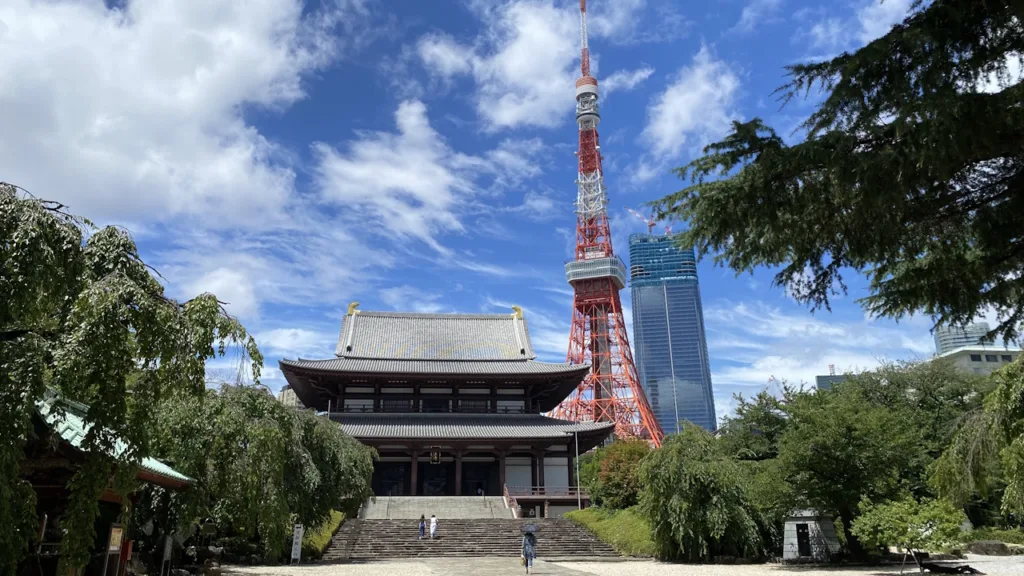
Rebuilt in 1974, the Main Hall at the center of the 5.3-hectare grounds is an imposing reinforced concrete structure enshrining the Amida Nyorai as the principal object of worship. Every dimension of the building carries symbolic meaning: the 25 steps leading up to the hall represent the 25 Bodhisattvas, the 18 steps from the approach to the hall’s entrance represent the 18th Vow of Amida Buddha, and the distance of approximately 87 meters from the Three Liberation Gates to the hall echoes the 48 Vows of Amida.
The Treasure Exhibition Room (Basement Level 1 of the Main Hall)
Opened to mark the 400th anniversary of Ieyasu’s death, the Treasure Exhibition Room houses temple artifacts alongside the centerpiece permanent display: a large-scale model of the Taitoku-in Mausoleum. The original mausoleum was built in 1632 by the third shogun, Iemitsu, to enshrine the spirit of the second shogun, Hidetada. Considered the prototype for the Nikko Tosho-gu and designated a National Treasure in 1930, it was lost in the 1945 air raids. The surviving model — measuring 4 meters by 6 meters and crafted to exacting detail by Tokyo Art School (now Tokyo University of the Arts) in the late Meiji era — was displayed at the Japan-British Exhibition before passing into the British Royal Collection. Returned to Japan in 2014 at the initiative of the British side, it is now displayed with the roof of the main shrine building removed, allowing visitors to appreciate the brilliantly colored interior. A video about the model plays in the lounge outside the exhibition room.
The Tokugawa Shogunal Mausolea
Located to the south of the Main Hall, the mausoleum grounds hold the remains of six shoguns — Hidetada (2nd), Ienobu (6th), Ietsugu (7th), Ieshige (9th), Ienari (12th), and Iemochi (14th) — along with their consorts, concubines, and other family members, totaling 38 individuals. The entrance is marked by the cast-metal Inuki-mon gate, originally positioned before the tomb of the sixth shogun and now serving as the approach to the entire precinct. Within, stone lanterns donated by feudal lords flank the stupa-shaped memorial towers, conveying a sense of the splendor that once characterized the full Edo-period mausoleum complex.
Among the figures interred here, the Princess Kazunomiya — known posthumously as Seikan-in — draws particular reflection. Married to the 14th shogun Iemochi as part of a political union between the Imperial Court and the Shogunate, she lived through the violent unraveling of the Edo order, her loyalties divided between her birthright as an imperial princess and her life as a shogun’s consort. Her bronze stupa, engraved with the imperial chrysanthemum crest, stands in deliberate contrast to the stone towers of the shoguns — a visible record of the era’s fractures.
Where Tokyo Tower and Six Centuries Meet
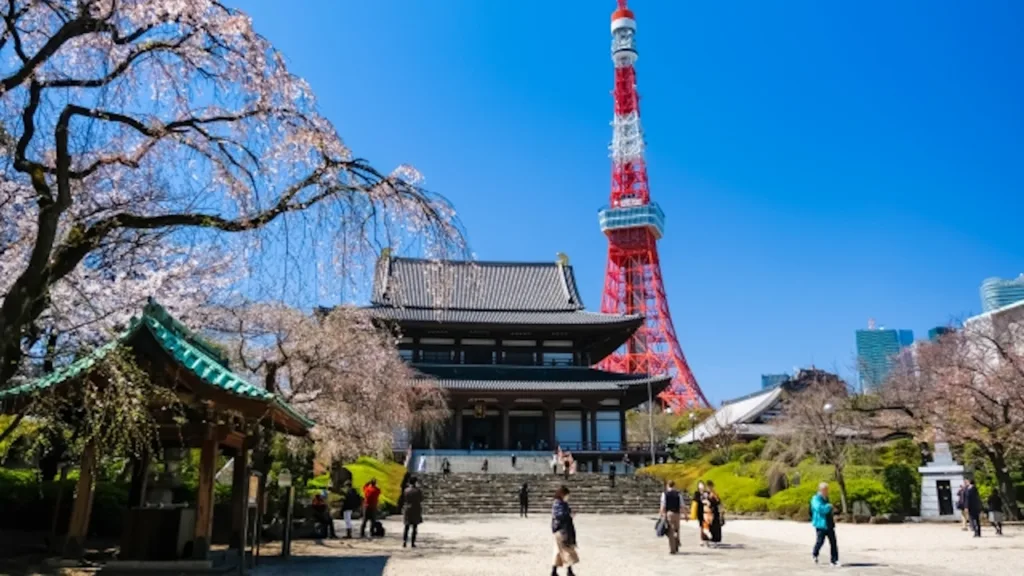
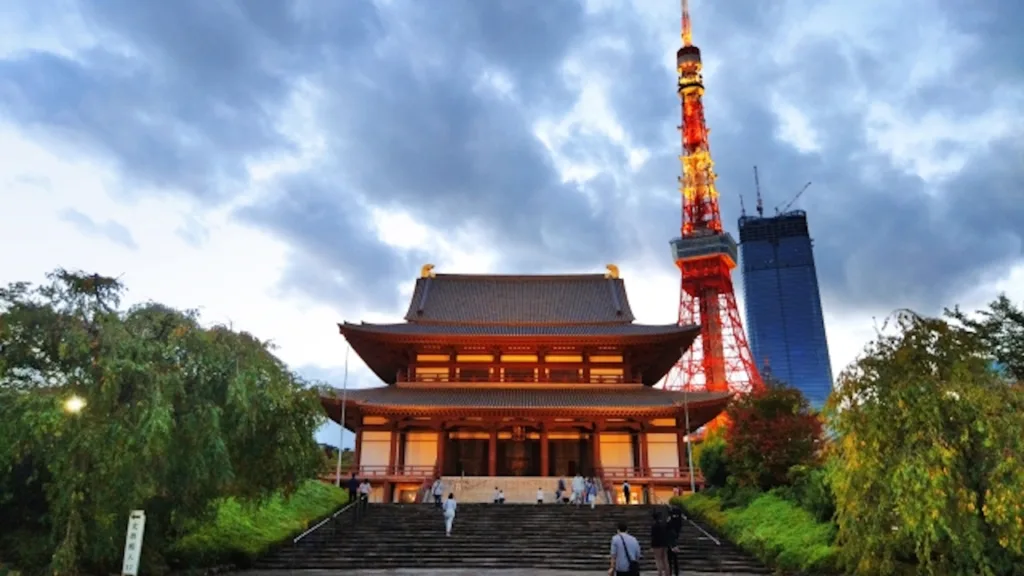
Standing in the plaza before the Main Hall and looking up, visitors encounter a view unlike any other in Tokyo: the 333-meter steel silhouette of Tokyo Tower rising directly in front of the temple gate, with no obstruction between the ancient and the modern. This juxtaposition has made Zojo-ji one of the most photographed locations in Japan, instantly recognizable to visitors from around the world.
At dusk, as the sky shifts through deep blues and the tower’s lights begin to glow, the outline of the great hall and the illuminated tower merge into something that feels simultaneously ancient and alive. During the New Year period, the temple grounds are open through the night from New Year’s Eve, making it possible to ring in the year with the tolling of the temple bell and the tower blazing above.
Nearby Attractions Worth Visiting
Tokyo Tower
A three-to-five minute walk from Zojo-ji, Tokyo Tower was completed in 1958 and reaches 333 meters into the Tokyo skyline. The Main Deck at 150 meters and the Top Deck at 250 meters offer 360-degree panoramas, with views of Mount Fuji on clear days. Many visitors combine a stop at Zojo-ji with a visit to the tower, and the two sites are easily covered on foot within a single afternoon.
Shiba Park
Surrounding the approaches to Zojo-ji, Shiba Park is one of Japan’s oldest public parks, opened in 1873. The green space extends in natural continuity with the temple grounds, and in spring, some 200 cherry trees come into bloom. The park also contains the Shiba Maruyama Kofun, a keyhole-shaped burial mound dating to Japan’s ancient Kofun period, measuring 106 meters in length — a reminder that the history of this corner of Tokyo runs far deeper than the Edo period.
Shiba Tosho-gu Shrine
A short walk from the temple, Shiba Tosho-gu Shrine was founded in 1617 and is dedicated to Ieyasu as a deified figure. The site is said to have served as a temporary resting place for Ieyasu’s remains before their transfer to Kunozan. The shrine’s grounds contain a massive ginkgo tree, planted in 1641 and designated a Tokyo Metropolitan Natural Monument, that towers over the approach in silent testimony to the centuries that have passed.
Recommended Hotels Near Zojo-ji
The Prince Park Tower Tokyo
Standing directly adjacent to the temple grounds — arguably the closest hotel to Zojo-ji — The Prince Park Tower Tokyo is a flagship property of Prince Hotels & Resorts set within Shiba Park itself. The hotel is a two-minute walk from Akabanebashi Station on the Toei Oedo Line and about three minutes on foot from Zojo-ji, with Tokyo Tower visible from guest rooms throughout the building. The upper Panoramic Floors offer sweeping views across the city, while the recently renovated Premium Club Lounge on the 32nd floor provides a setting to take in the shifting Tokyo skyline across the course of the day. For anyone wishing to explore Zojo-ji, Tokyo Tower, and Shiba Park without relying on transit, this is an exceptionally well-placed base.
Tokyo Prince Hotel
A five-minute walk from Zojo-ji and one minute from Onarimon Station, Tokyo Prince Hotel has anchored this corner of the city since 1964. The hotel, also part of Prince Hotels & Resorts, sits within easy reach of Tokyo Tower — a three-minute walk from the entrance — and several guest room categories directly face the tower. Multiple dining options are available on site, including Japanese and Western restaurants, and the calm, residential character of the Shiba area makes it a restful contrast to the more congested central Tokyo hotel districts.
Shiba Park Hotel
Seven minutes on foot from Zojo-ji and two minutes from Onarimon Station, Shiba Park Hotel is a long-established property founded in 1948 and now part of the Rihga Royal Hotels group. The hotel has repositioned itself as a library hotel in collaboration with Ginza Tsutaya Books, with over 2,000 curated volumes available throughout the building. Dining spans Japanese, Western, and Chinese cuisine under one roof at the all-day restaurant The Dining. For travelers who prefer a quieter, more characterful stay with strong access to the Zojo-ji area, it is a reliable and thoughtfully run option.
Explore Japan with a Dedicated Tour Conductor
For travelers making the journey to Japan for the first time, or those hoping to explore sites like Zojo-ji with greater depth and ease, traveling with a dedicated tour conductor makes a tangible difference. As someone who works in tour conduction, I understand that the logistical side of Japan travel — navigating transit systems, managing schedules across multiple sites, and handling unexpected situations — can consume the energy that visitors would rather spend on the experience itself.
A tour conductor’s role centers on itinerary management and on-the-ground support: coordinating connections between sites, assisting with language during transit and check-in, and responding to unforeseen changes in schedule or circumstance. At a place like Zojo-ji, where multiple distinct attractions — the mausolea, the treasure room, the Kuro Honzon ceremony, and the view of Tokyo Tower — each merit dedicated time, having someone to manage the logistics means you can give your full attention to what is in front of you.
If you are planning a trip to Tokyo or elsewhere in Japan and would like to travel with professional itinerary support, details about tour conductor services are available at tours.e-stay.jp.
Conclusion: A Temple That Has Outlasted Empires
Zojo-ji is not a museum piece. It is an active place of worship, a site of ongoing Buddhist scholarship, and a living record of one of history’s most consequential political dynasties. The 600 years since its founding encompass the rise and fall of the Edo Shogunate, two rounds of near-total destruction, and a postwar reconstruction that returned the temple to its present grandeur.
Walking the grounds today, the ancient timber of the Three Liberation Gates stands within sight of Tokyo Tower. The Shogunal Mausolea, where the architects of modern Japan rest beneath stone lanterns donated by the lords who served them, lie a few minutes’ walk from a city that has transformed beyond all recognition. And in the Ankoku-den, the Black Honzon continues to receive the prayers of visitors who, like the warriors who preceded them, come seeking strength for the road ahead.
Of the hotels near Zojo-ji, The Prince Park Tower Tokyo offers the most direct access to both the temple and Tokyo Tower, with Shiba Park’s greenery at the doorstep — a rare combination that makes it well suited to anyone looking to explore this part of the city at their own pace.