



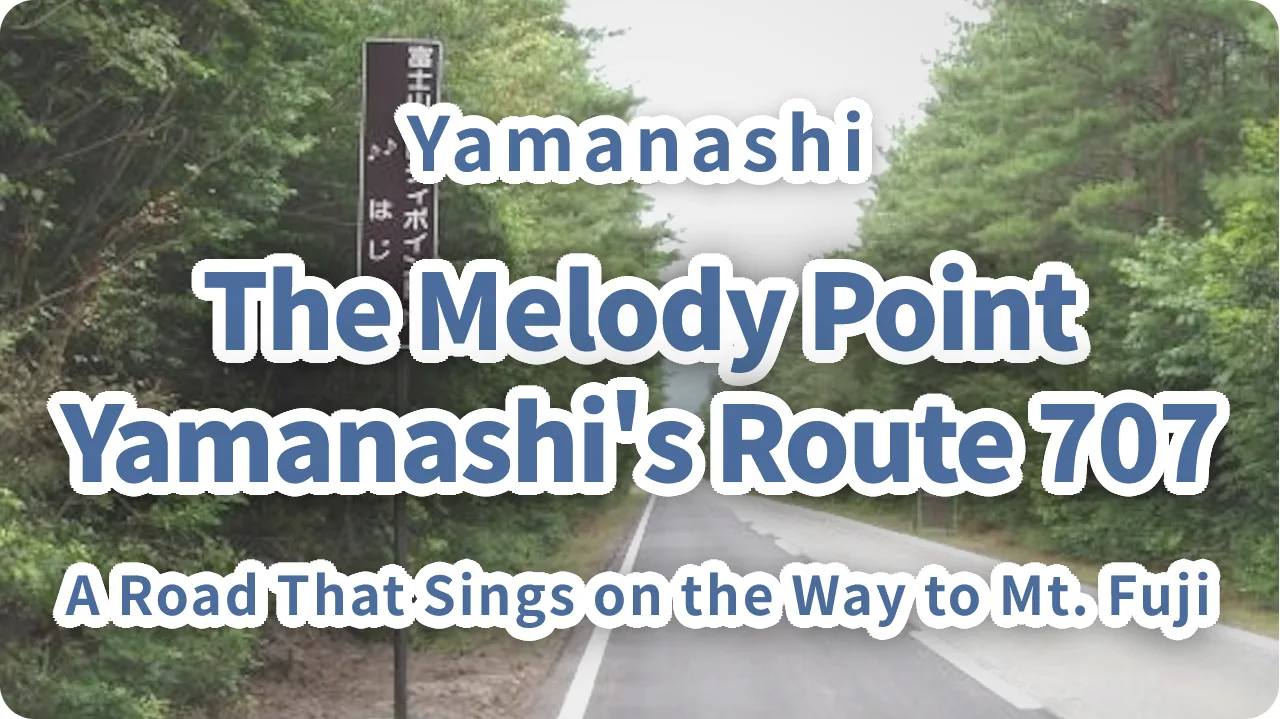
Travel insights from a tour conductor — today’s destination: the Melody Point on Prefectural Route 707 (Fuji-Kawaguchiko–Fuji Line) in Yamanashi Prefecture. There’s no need for a guidebook or a tour guide here — just drive, and the pavement itself starts playing a familiar tune. It’s the only spot of its kind in Yamanashi, and it sits right on the road most visitors take toward Mt. Fuji.
A “melody road” works by cutting evenly spaced grooves into the asphalt. As tires roll over them, the friction between tire and pavement produces a rhythmic sound that comes together as a melody. This stretch in Yamanashi was the prefecture’s first attempt at the technique. It runs through Funatsu in Fujikawaguchiko Town, with about 350 meters of grooved pavement on both the uphill and downhill lanes. Since the road connects the base of Mt. Fuji with the mountain itself, the tune it plays is fitting: the Japanese children’s song “Fuji no Yama” (“The Mountain Called Fuji”).
| Item | Details |
|---|---|
| Name | Melody Point (Route 707, Fuji-Kawaguchiko–Fuji Line) |
| Access hours | Open around the clock — it’s an ordinary public road |
| Closures | None specific to this stretch; it’s part of a regular prefectural route open year-round |
| Location | Funatsu, Fujikawaguchiko Town, Minamitsuru District, Yamanashi (about 350m on each of the uphill and downhill lanes) |
| Getting there | Uphill lane: about 2km from the Subaru Rittai intersection on Route 139, heading toward Mt. Fuji. Downhill lane: about 2.5km from the Tainai Cave entrance intersection near the Fuji Subaru Line tollgate, heading back toward Route 139 |
What to Know Before You Go
Getting the melody to sound its best takes a bit of technique. According to Yamanashi Prefecture’s own guidance, driving at exactly 50 km/h produces about 20 seconds of the clearest, most musical tone. Speed up or slow down, and the pitch and rhythm start to drift. Keep the stereo low and the windows shut, and you’ll hear it far more clearly.
The type of vehicle matters too. In large buses and other vehicles with louder engines, the engine noise tends to drown out the subtle friction sound between tire and road, so the melody may barely register at all. This is really designed with passenger cars in mind. And because each lane’s grooved section is only around 350 meters long, it’s easy to miss the starting point if you’re not watching for the signs.
Where “Singing Roads” Came From
The technology behind the Melody Point traces back to Shibetsu, a town in Hokkaido. Shibetsu, the Hokkaido Industrial Research Institute, and a local construction firm called Shinoda Kogyo developed it together, laying down Japan’s first experimental melody road on a town road called Kawakita-Kita-Nanasen in October 2004. The technique — officially registered as a “melody road and melody road design program” — received a Japanese patent on March 25, 2011.
As the story goes, the idea came from noticing that a stretch of pavement scarred by construction equipment produced an oddly different sound when driven over — and that chance observation led to the insight that grooves could be tuned deliberately: spacing controls the pitch, and groove width controls the volume. From there, the idea of turning a road surface into an instrument took shape. Today, more than 30 melody roads exist across Japan, and this stretch in Yamanashi is one of them — planted right at the gateway to Mt. Fuji.
The Song Hidden in the Pavement
The tune you’ll hear here is “Fuji no Yama,” a well-known Japanese children’s song from the early 20th century. It’s a fitting choice for a road linking the base of Mt. Fuji with the mountain’s upper slopes, and the uphill and downhill lanes are engineered to play two different parts of the melody.
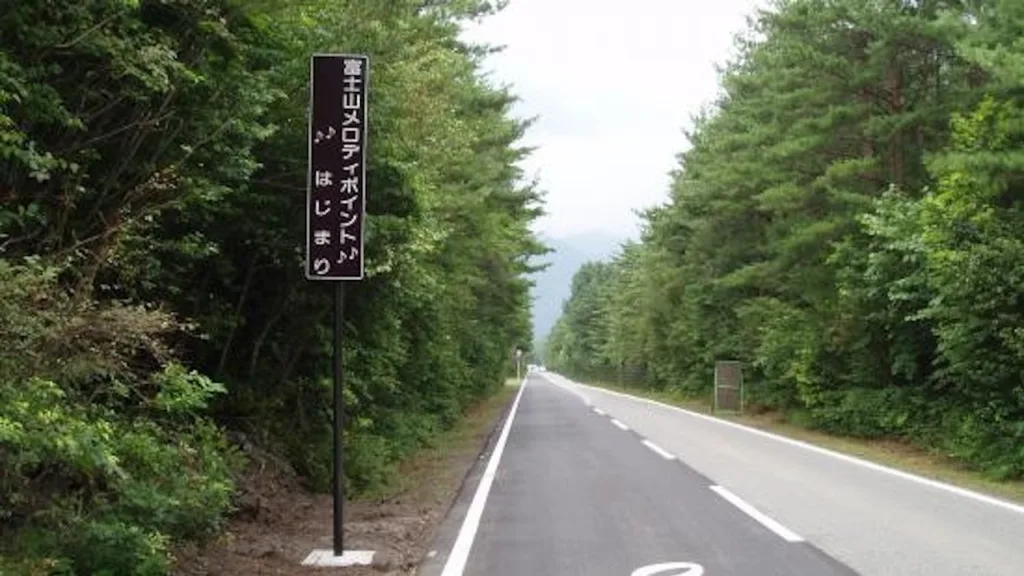
Driving uphill, you’ll pass a signboard marked with an eighth-note symbol and the words “Mt. Fuji Melody Point Ahead,” followed by a treble clef sign marking “Start.” From there, the opening line begins — roughly “Atama wo kumo no…” — and continues through the first two verses, covering the lines about the mountain rising above the clouds and looking down on the four directions, for about 20 seconds in total.
On the way down, the lane instead plays the second half of the song — the verses about thunder rumbling far below and Fuji standing as Japan’s tallest peak. Splitting the song this way means a round trip lets you experience the whole tune from start to finish, which is part of what makes this spot so much fun.
The Mechanics Behind the Music
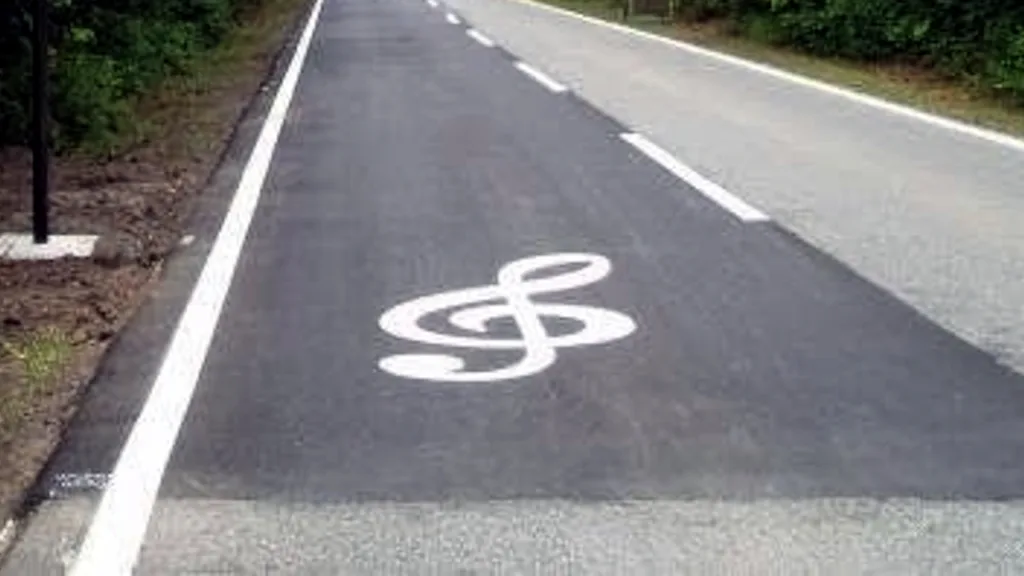
The sound itself comes purely from friction — the contact between tires and the grooves cut into the road surface. Those grooves are spaced at precise intervals calculated to match musical pitch, with groove depth controlling volume. It’s a similar principle to a güiro, the Latin percussion instrument played by scraping a stick across a ridged surface.
Multiple tires generate sound simultaneously, yet the ear pieces it together into a single tune — a trick of the brain known as the cocktail party effect, which filters out noise to focus on a meaningful signal. Knowing the tune in advance, drivers say, makes it noticeably easier to pick out the melody on a first pass. Keep an eye on the speedometer, hold steady at 50 km/h, and quiet the cabin — and road noise gradually resolves into a children’s song.
Gateway to Mt. Fuji
The stretch where the Melody Point sits functions as the starting point for the drive up toward the Fuji Subaru Line, the toll road leading to the mountain’s fifth station. It falls before the tollgate, in the free section of the route, which is exempt from the private-vehicle restrictions imposed during the busy summer climbing season. That means the Melody Point itself stays freely accessible even when the upper section toward the fifth station is off-limits to private cars.
Because it’s before the tollgate, you can enjoy it even without plans to drive the Subaru Line at all. It sits naturally along the route most cars take from Lake Kawaguchi toward Mt. Fuji, which makes it an easy detour for anyone touring the area — whether or not a mountain climb is on the itinerary.
A Side Effect of Holding a Steady Speed
Because the Melody Point sounds best at exactly 50 km/h, drivers naturally end up sticking close to the speed limit while listening for the tune. The curiosity of hearing the melody clearly ends up nudging drivers away from speeding — a neat bit of road design that goes beyond mere novelty. Speed up too much, or brake too hard, and the pitch and rhythm fall apart, so listening for the melody together with passengers becomes, almost incidentally, an exercise in careful driving.
Nearby Stops
The area around the Melody Point is dotted with spots for taking in Mt. Fuji and Lake Kawaguchi. All are roughly a 10-minute drive away, making them easy to fold into the same trip.
Mt. Fuji Panoramic Ropeway (Lake Kawaguchi)
About a 10-minute drive from the Melody Point, this ropeway carries visitors from Kawaguchiko-han Station to Fujimidai Station in around three minutes, opening up sweeping views of Mt. Fuji and Lake Kawaguchi from Mt. Tenjo. It’s still sometimes known by its older name, the Kawaguchiko Tenjoyama Park Kachi Kachi Yama Ropeway. Our dedicated article on the ropeway covers hours and access in more detail — pairing the two spots gives you Mt. Fuji from two completely different angles, road level and summit view.
Mt. Fuji World Heritage Center, Yamanashi
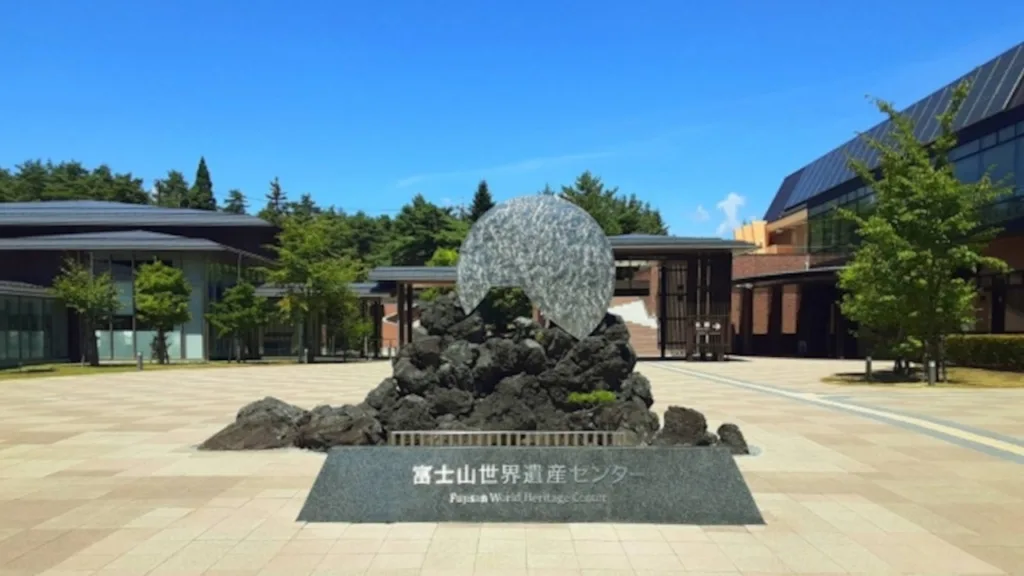
Also on the shore of Lake Kawaguchi, this exhibition hall explores Mt. Fuji’s standing as a UNESCO World Heritage Site and its long history as an object of faith and artistic inspiration. It’s about 10 minutes from the Melody Point by car, and it’s well worth a stop before or after your drive to get more out of the mountain. We’ve covered the center’s exhibits in more detail in a separate article on our site.
Lake Kawaguchi and the Kawaguchiko Ohashi Bridge
Head toward Lake Kawaguchi from the Melody Point and you’ll find lakeside walking paths and Fuji views from the Kawaguchiko Ohashi Bridge. On a clear day, you might catch the “upside-down Fuji” reflected on the water — a fitting way to close out the drive. Shops and restaurants are scattered along the way, so it’s an easy place to stretch your legs.
The Yoshida Trail (Fuji Subaru Line Fifth Station)
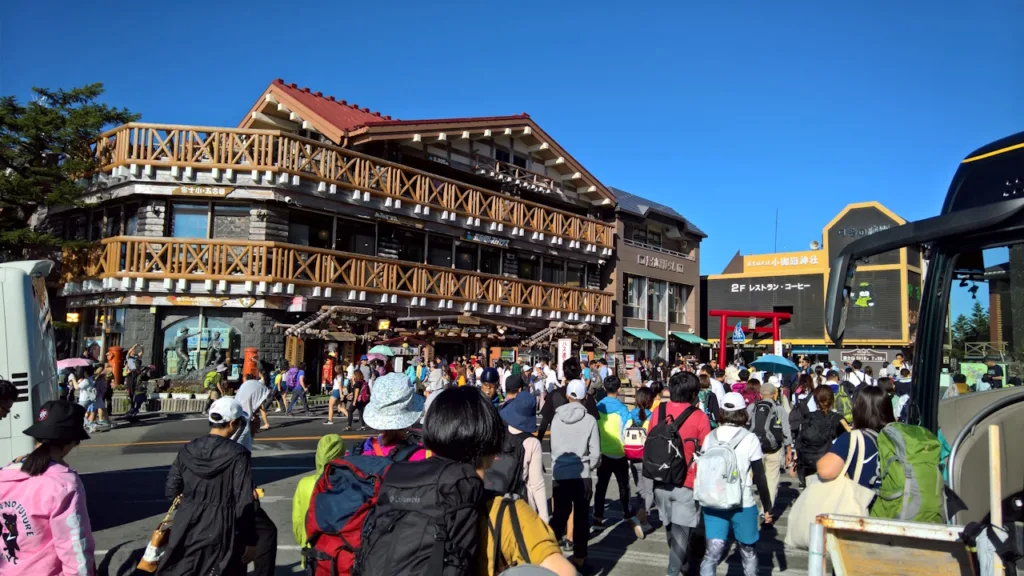
Follow Route 707 past the tollgate and you’ll reach the Fuji Subaru Line Fifth Station, the starting point of the Yoshida Trail — the most heavily used of Mt. Fuji’s four climbing routes. The season typically runs from early July to around September 10, with passage fees, capacity limits, and private-car restrictions in effect, so check the latest rules before planning a climb.

Yoshida Tainai Jukei (Lava Tree Molds)
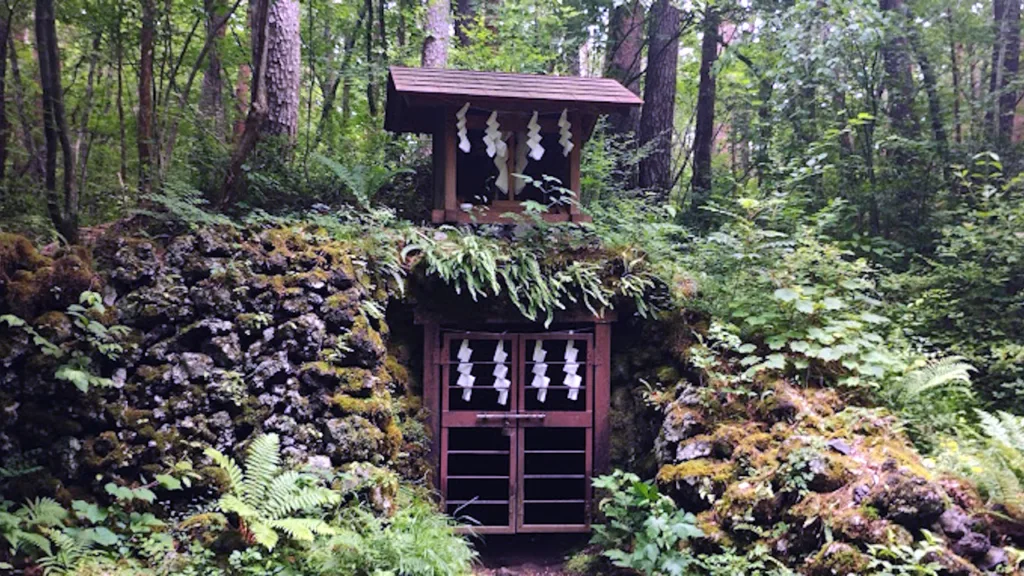
A cluster of lava tree molds formed during Mt. Fuji’s 937 CE eruption, designated a National Natural Monument and a component asset of Mt. Fuji’s World Heritage listing. The interior stays closed except for one day a year, the Yoshida Tainai Festival on April 29. It’s about a 15- to 20-minute drive from the Kawaguchiko IC.
Where to Stay Near Lake Kawaguchi
After a drive that takes in the Melody Point and Mt. Fuji, Lake Kawaguchi makes a convenient base for the night. Here are three hotels with Mt. Fuji views worth considering.
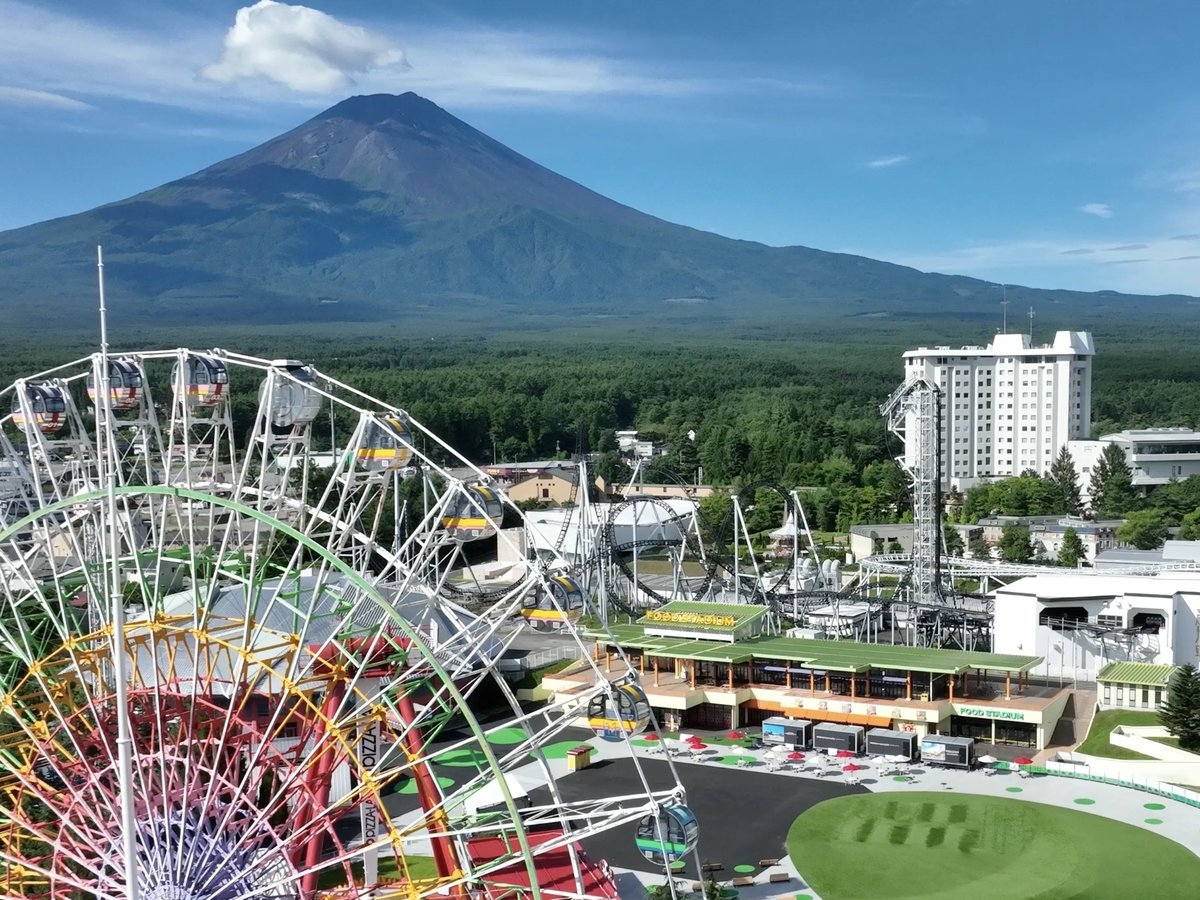
Highland Resort Hotel & Spa is the official hotel of the Fuji-Q Highland amusement park, connected directly to the park and offering guests perks like priority entry. Its “Fujiyama Onsen,” said to be one of Japan’s largest wooden-built bathhouses, is free for hotel guests, and both breakfast and dinner come as Japanese-Western buffets. Rooms with Mt. Fuji views look straight out at the mountain’s imposing silhouette.
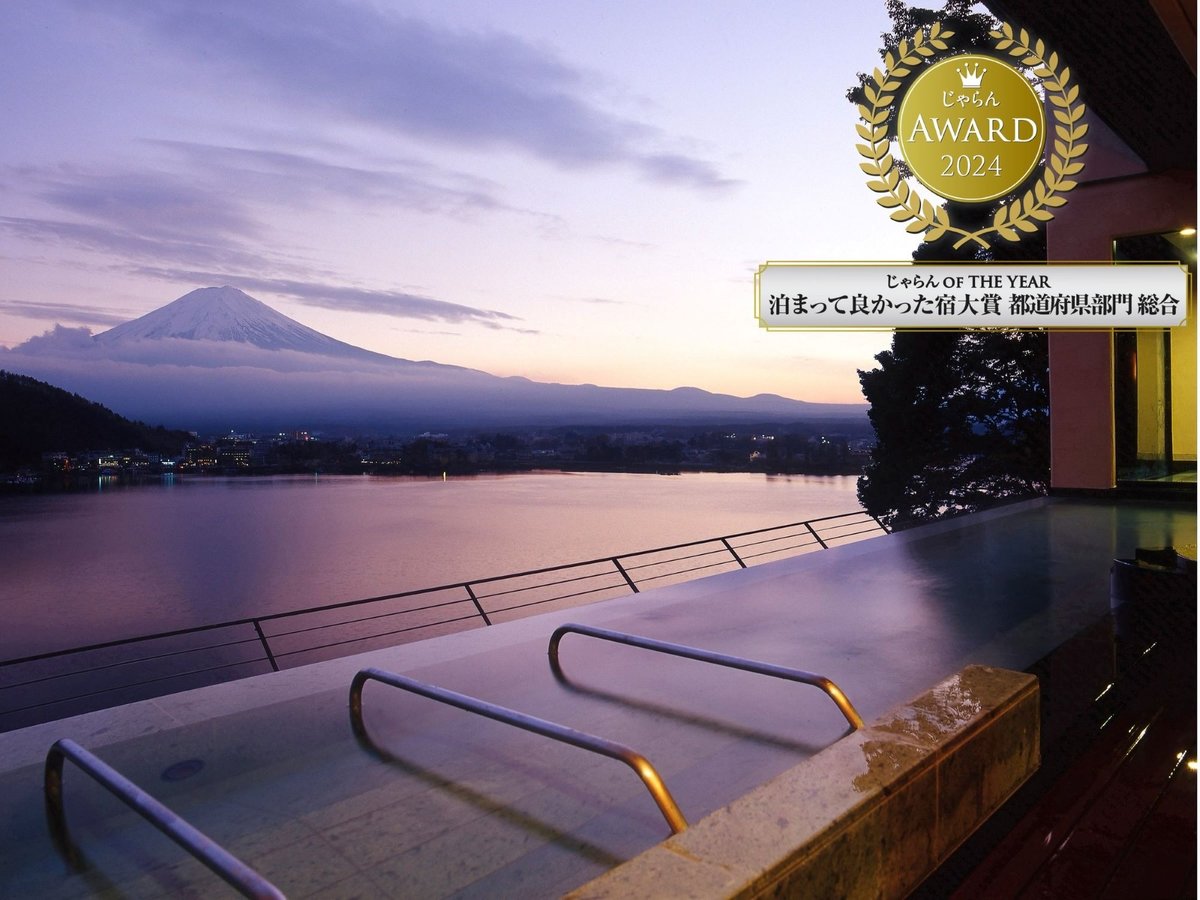
The Kukuna sits right on the shore of Lake Kawaguchi, with views of the lake and Mt. Fuji from every room. The property spans three wings — the Central Building, the Observation Building, and the Plaza Building — and rooms in the Observation Building come with their own terrace open-air baths. The top-floor communal bath looks out across the lake to Mt. Fuji beyond, making for one of the more memorable soaks in the area.
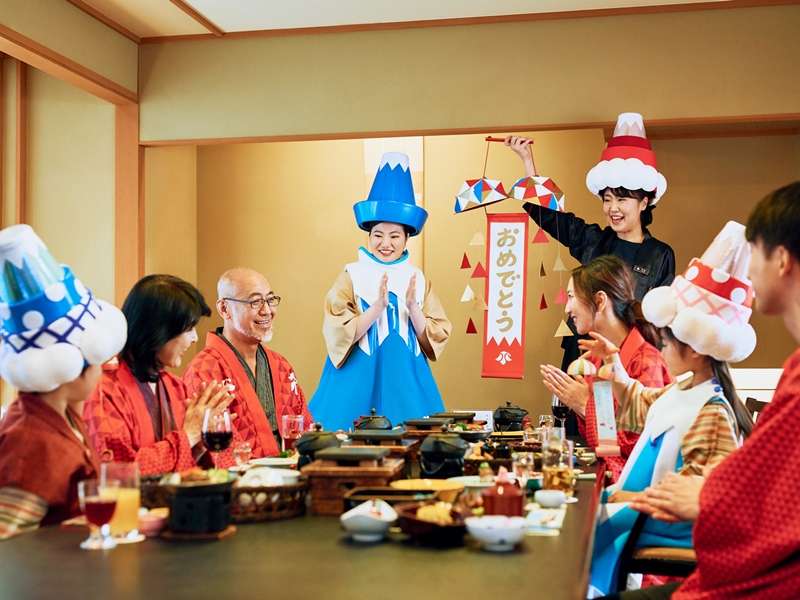
Ubuya, a lakefront ryokan built around the concept of “celebrating life,” faces Mt. Fuji from every single room. The mountain view follows guests from the communal baths to the lounge to the guest rooms themselves, and the ryokan leans into celebrations — anniversaries, birthdays, milestone occasions — with services built specifically around marking those moments.
Why a Tour Conductor Makes This Easier
A destination like the Melody Point sounds simple on paper — just drive at the right speed and listen — but fitting it smoothly into a wider Mt. Fuji itinerary, alongside the ropeway, the World Heritage Center, and an overnight stay by the lake, is where the logistics start to add up, especially if you’re navigating Japanese road signage and rental-car pickup without much Japanese. A dedicated tour conductor takes that friction away: managing the day’s schedule so each stop gets the right amount of time, handling interpretation at hotel check-in or if a reservation needs adjusting, and stepping in immediately if plans need to change on short notice — a closed mountain gate, a sudden downpour, a missed shuttle connection.
It’s worth being clear about what that role does and doesn’t cover. A tour conductor manages the itinerary and steps in to help with language and logistics; it isn’t the same as hiring a guide to walk you through each site’s history, and it isn’t the tour conductor’s job to redesign the itinerary itself — that stays with the tour operator. What a conductor brings is peace of mind: someone handling the moving parts so the day’s plans hold together, letting you focus on actually enjoying the drive and the mountain view. You can learn more about arranging one at tours.e-stay.jp.

In Closing
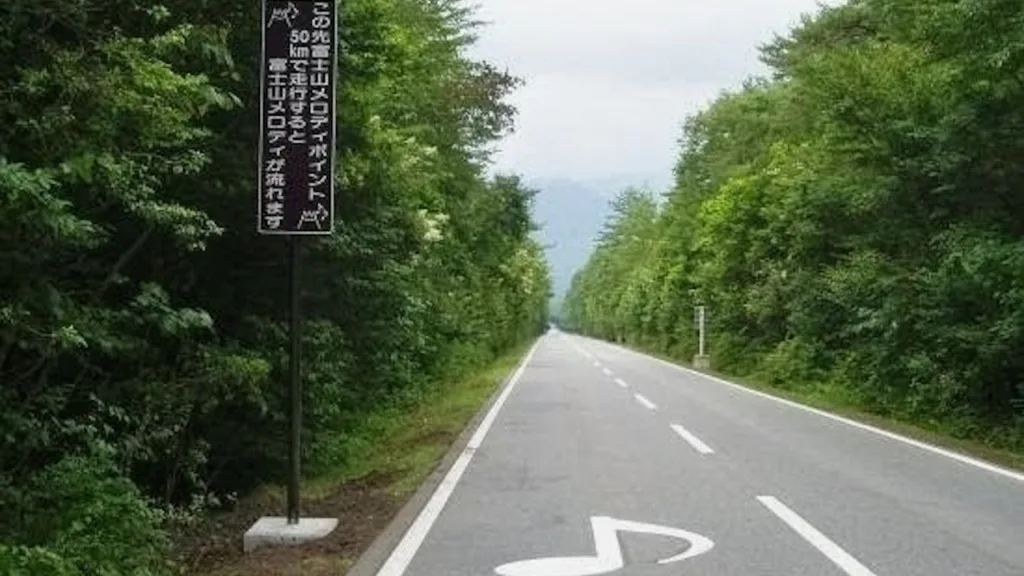
The Melody Point costs nothing to visit and comes with no opening hours to plan around — just drive through, and the road hands you a small, memorable moment on the way to Mt. Fuji. Hold steady at 50 km/h, roll up the windows, quiet the cabin, and the notes of “Fuji no Yama” rising from the pavement make the anticipation of the mountain ahead just a little sharper. Pair it with the nearby ropeway and World Heritage Center, and base yourself at a Mt. Fuji-view hotel like Highland Resort Hotel & Spa by Lake Kawaguchi, and you’ve got the makings of a full day exploring the northern foot of Japan’s most iconic mountain.