


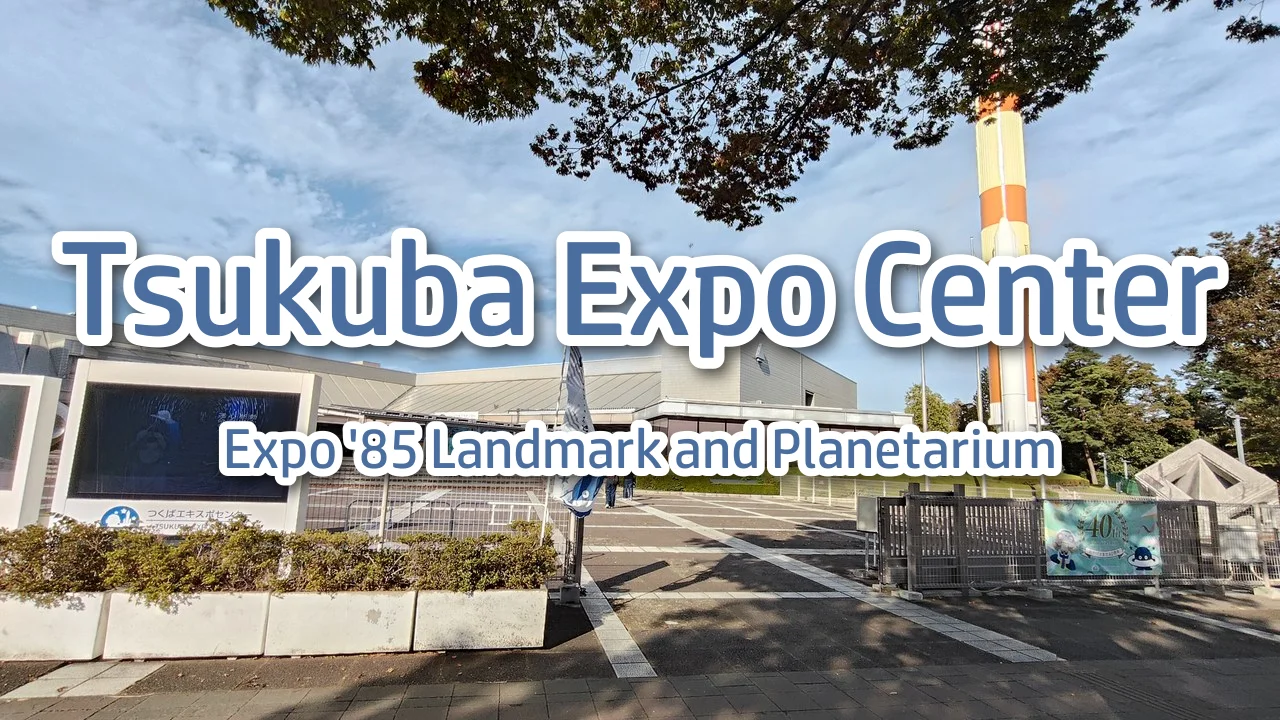
Travel insights from a tour conductor — today’s destination: Tsukuba Expo Center, the science museum in Tsukuba, Ibaraki Prefecture.
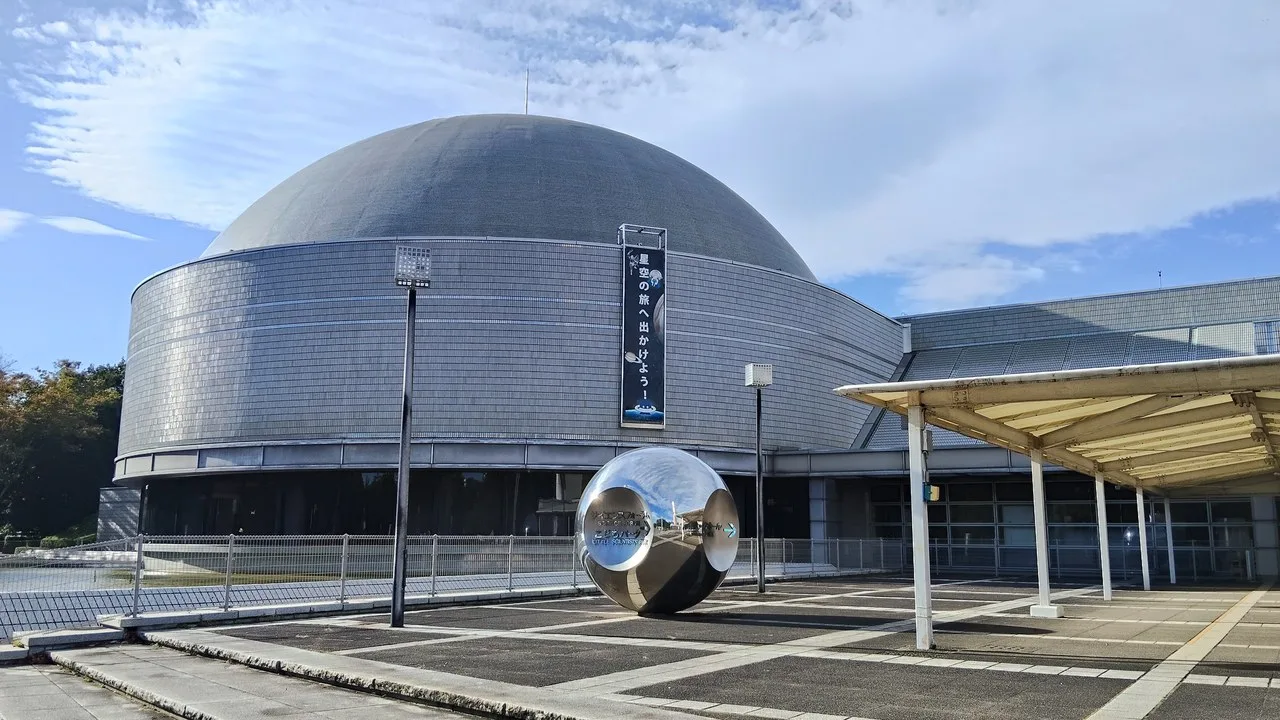
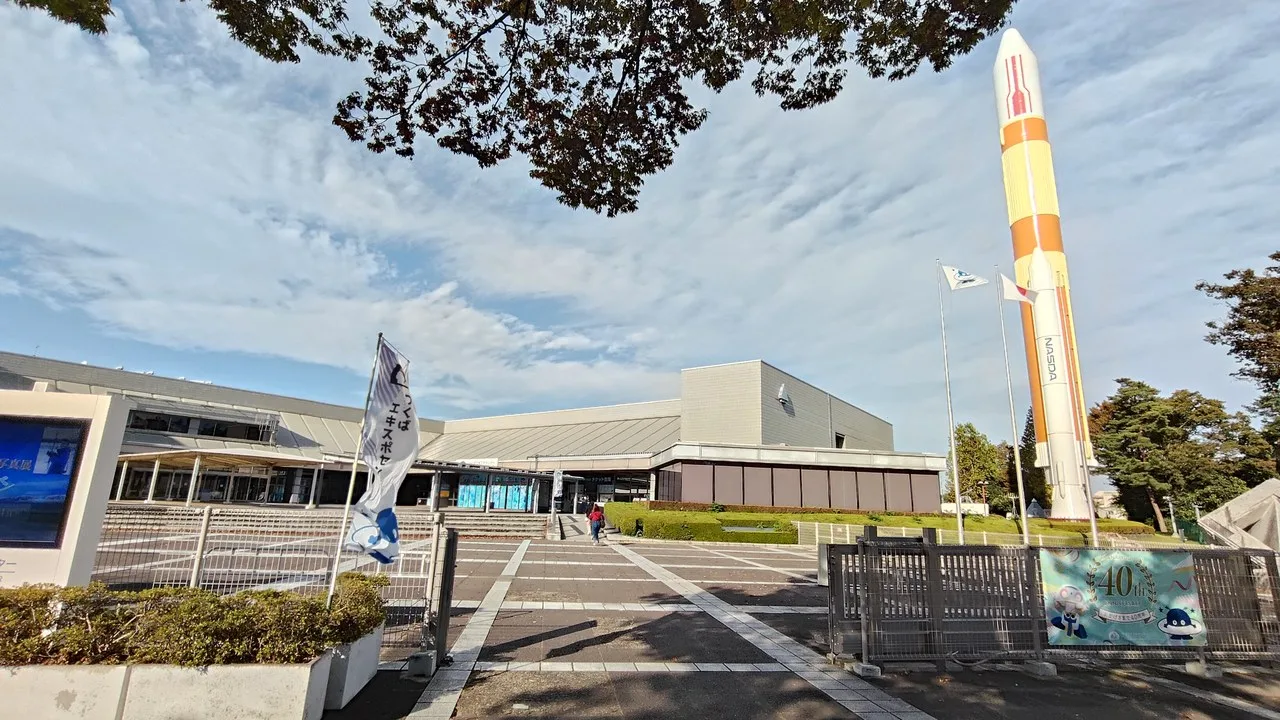
Built as the permanent legacy of Expo ’85, the museum is easy to spot by its 50-meter, full-scale model of the H-II rocket and its planetarium, whose 25.6-meter dome was among the largest in the world when it opened in 1985. It sits a short walk from Tsukuba Station, so the exhibits and a planetarium show fit comfortably into a single day.
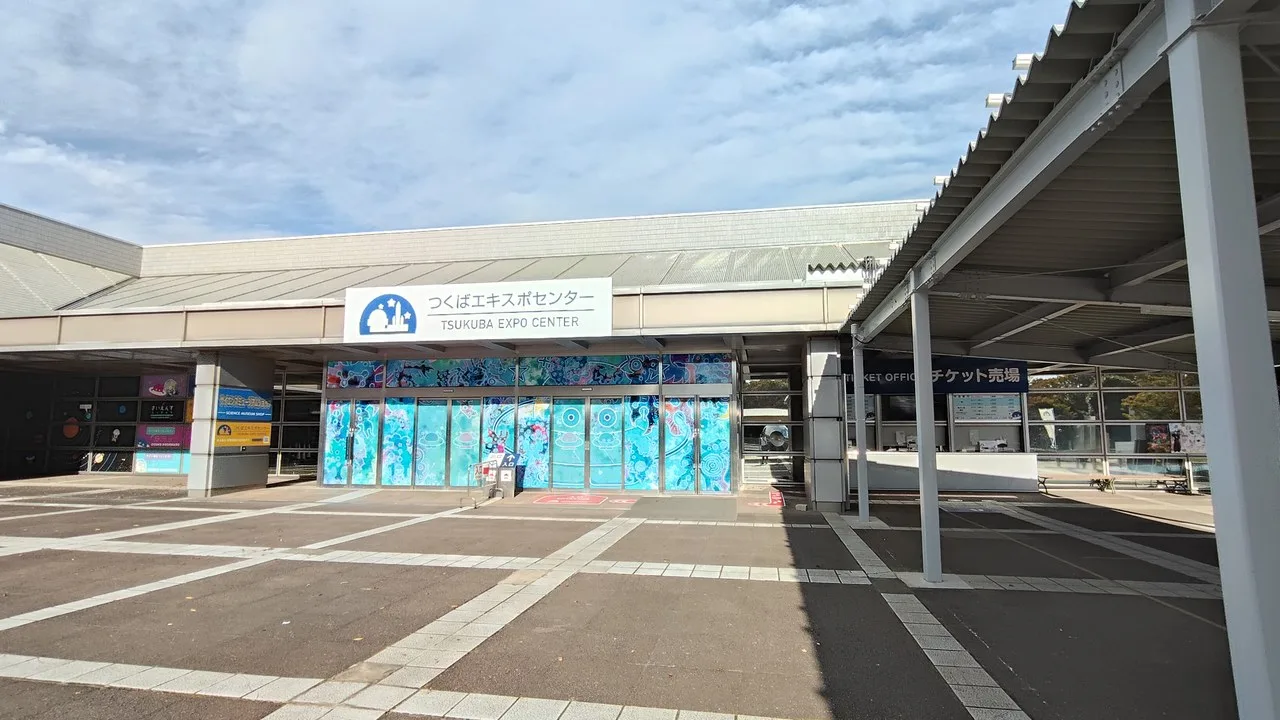
| Item | Details |
|---|---|
| Facility | Tsukuba Expo Center |
| Hours | 9:50 a.m.–5:00 p.m. (last admission 4:30 p.m.) |
| Closed | Mondays (the next weekday if Monday is a national holiday) and the year-end and New Year holidays; occasional temporary closures |
| Address | 2-9 Azuma, Tsukuba, Ibaraki 305-0031 |
| Access | 5-minute walk from Exit A2 of Tsukuba Station (Tsukuba Express) |
Tickets and Dining: What to Know Before You Go
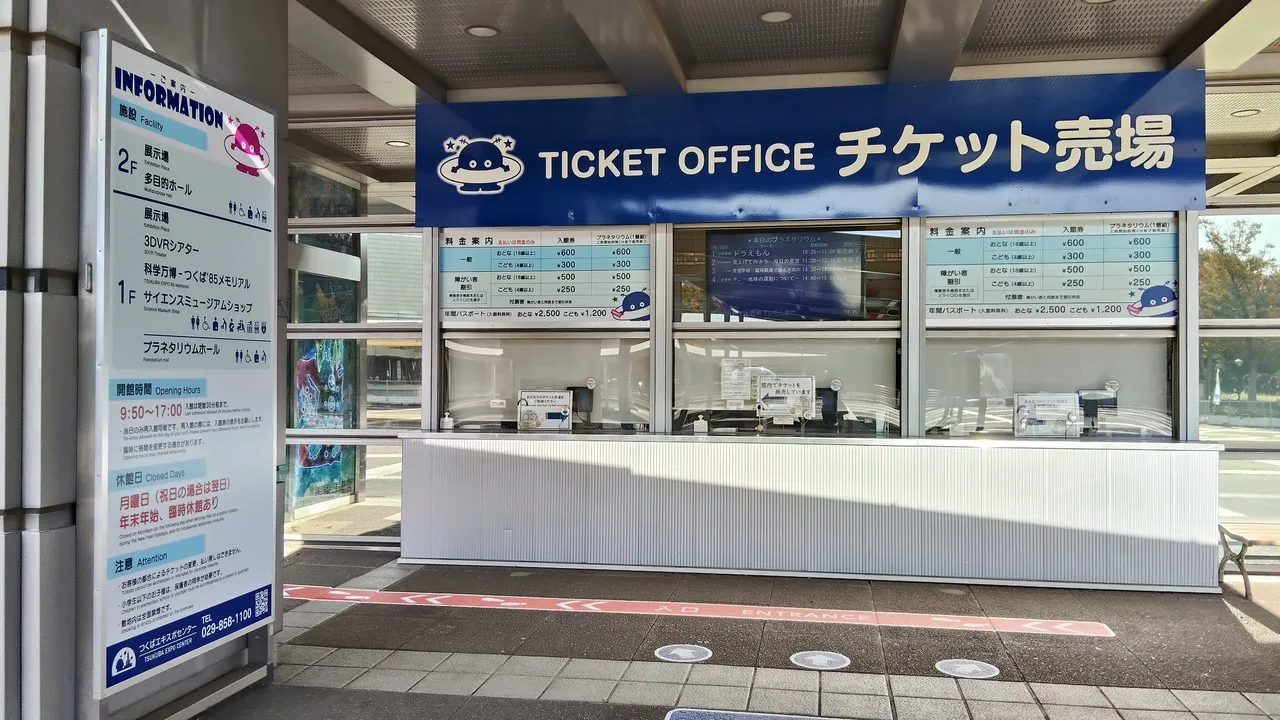
Tickets Are Sold on the Day, in Cash Only
Neither admission tickets nor planetarium tickets are sold in advance. Both go on sale at the ticket counter on the day of the visit, and payment is by cash only. Planetarium tickets stop selling two minutes before a show begins, or as soon as the house is full. After entering, visitors can also buy them at the ticket counter or the information desk. Tickets cannot be exchanged for another showtime or refunded. Re-entry is allowed on the same day on presentation of the admission ticket.
No Café or Restaurant Inside
The museum has no café or restaurant. Food and drink are limited to three rest rooms, which seat about 60, 65 and 130 people. Lunch therefore means either a seat in one of those rooms or a meal around Tsukuba Station before or after the visit.
Seasonal Changes to Closing Times and Closed Days
The standard hours are 9:50 a.m. to 5:00 p.m., but in winter some days close earlier, and during certain periods the museum is closed on days other than Monday. It shuts for an extended period over the year-end and New Year holidays. The annual calendar is set each fiscal year and can change for unavoidable reasons.
Children Under Elementary School Age
Elementary school pupils and younger children are admitted only when accompanied by a guardian aged 18 or older. Children taking part in Expo Science Club activities are the exception.
A Permanent Memorial to Expo ’85
The 1985 International Exposition
In 1985, Tsukuba Science City hosted the International Exposition, Tsukuba, Japan, 1985 (Expo ’85), under the theme “Dwellings and Surroundings: Science and Technology for Man at Home.” It was the third international exposition held in Japan. Tsukuba Expo Center was built as the permanent memorial to the Japanese government’s pavilion, and during the exposition it presented the state of Japanese scientific and technological research and development.
From Planning to Science Museum
Planning began in 1981, when the Science and Technology Agency asked the exposition association to draw up a basic plan for the government’s exhibits. The plan was settled in 1982, and the name “Tsukuba Expo Center” was chosen in 1984. The building was completed in 1985, the year of the exposition. In 1986, the Tsukuba Expo ’85 Commemorative Foundation was established, and the center reopened as a privately run science museum, which it remains today.
The Planetarium That Led the World in 1985
When it debuted at Expo ’85, the planetarium was the world’s first “space-type” planetarium, built around the one-star, one-light-source principle. Its signature feature was the ability to reproduce the universe as seen from any point in the solar system. It projected 23,000 stars, and its 25.6-meter dome ranked among the largest in the world at the time. Departing from the two-sphere Zeiss-style projector, it earned high praise as an original design.
The planetarium was fully renovated on April 1, 2006. The projector that ran for 20 years after the expo is now on display in the Expo ’85 Memorial Zone on the first floor, along with its star projection sphere, projection lenses and star lamps.
Site and Building
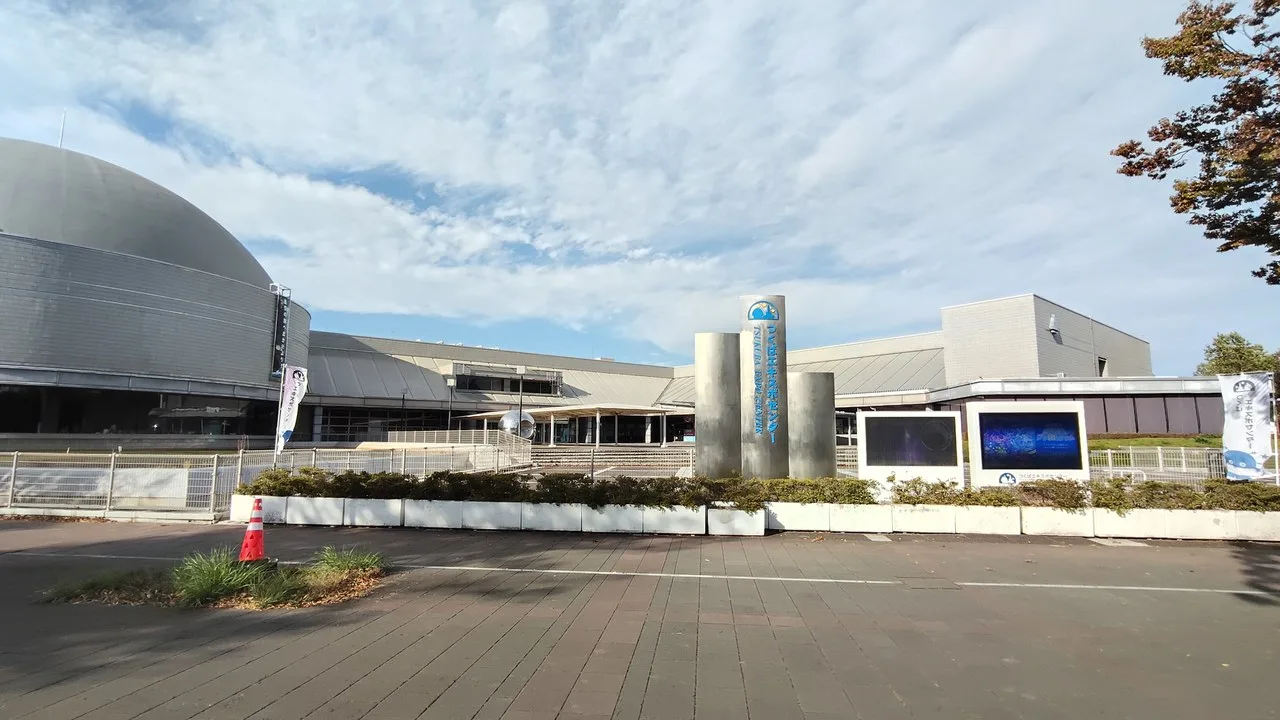
The site covers 25,655 square meters. The reinforced-concrete building (part steel-framed reinforced concrete) has two floors and a total floor area of 10,123 square meters: 5,688 on the first floor and 4,061 on the second.
Larger Planetarium Domes Today
Larger domes have since been built elsewhere in Japan. The FUJI Sky Dome at the Nagoya City Science Museum (FUJI Nagoya Science Museum) in Aichi Prefecture has an inner diameter of 35 meters. It is presented as one of the largest planetarium domes in the world, and it is among the largest in Japan. The planetarium at Kitakyushu Science Museum (Space LABO) in Fukuoka Prefecture has a 30-meter horizontal dome, the next size down. For planetarium fans, seeing the 1985 record-setter at Tsukuba and then comparing the domes elsewhere makes a natural itinerary.
A 25.6-Meter Dome That Once Ranked Among the World’s Largest
The Dome and 232 Seats
The planetarium dome measures 25.6 meters across. It ranked among the world’s largest when it opened in 1985, and it is still large by Japanese standards. The seats all face one direction on a slope, 232 in total, and they are wide reclining models. A space for wheelchair users is also provided.
Six 4K Laser Projectors, Equivalent to 8K Across the Dome
Since February 1, 2020, the dome has been fitted with a multi-projection system of six 4K laser projectors, delivering imagery equivalent to 8K across the entire dome. Images appear bright, vivid and sharp.
The Galaxy Model and Star Data
The projection system is the GEMINISTAR III, which pairs the optical INFINIUM L with the digital Media Globe Σ SE. The galaxy model in the Media Globe Σ SE contains more than 159 billion stars, 40,000 open clusters and 41,000 H II regions (clouds of ionized gas), each stored with its position in a three-dimensional database. It can reproduce the positions of celestial objects not only as they are now but also up to one million years into the past or future. High-definition 3D models of the International Space Station and space probes are included too.
The optical projector shows 29,000 stars down to magnitude 7.6, and around 350,000 stars in the Milky Way region.
Live Commentary, Original Productions and Shows for Children
The program mixes several kinds of shows: live star talks by staff, original productions developed by the center, and animated shows with characters for children. A planetarium ticket covers one viewing, and each additional viewing is charged separately.
Hands-On Exhibits from the First Floor to the Outdoors
The First-Floor Fun Science Zone
The Fun Science Zone on the first floor lets visitors experience light, electricity, force and other principles of science with their whole bodies.
Melody Pipes and the Air Bazooka
Strike the open ends of the melody pipes and each pipe, depending on its length, sounds a different note, so the set can play a tune. The air bazooka fires a burst of air with the force of a projectile, and changing the shape of the muzzle changes the air rings that come out.
The Soap Bubble Wall and the Tornado Machine
The soap bubble wall is a popular large-scale exhibit that lets visitors step inside a giant bubble. It became somewhat larger after a renovation. The tornado exhibit produces a large vortex that visitors can watch form.
Capsule Theater and Programming Experience
The Capsule Theater screens eight 3D films, including ones on the geological history of the Mt. Tsukuba area and the life cycle of insects. In the programming game “Let’s Move the Robot!!”, visitors learn programming concepts through play, using the Algologic method.
LUNARCRAFT and the Periodic Table
LUNARCRAFT, in the Expo Challenge Corner, is a Minecraft-based moon world created by JAXA. It has two mini-games, one for beginners and one for advanced players. At the periodic table exhibit, pressing a button and looking through a window shows how each element is used.
The 3DVR Theater with a 180° Screen
The 3DVR Theater reopened in 2025 after a renovation. Three-dimensional images and surround sound are combined with body-shaking vibration and a “shooting air” system, for an immersive experience that engages all five senses. Each screening seats 30 and lasts about 5 to 10 minutes, with all seats reserved. Numbered tickets are issued in front of the theater from opening time, and no fee beyond the admission ticket is charged. Some seats are limited to children aged 6 and over for safety reasons.
The lineup includes “Aqua World,” a visit to sea creatures; “Little Dina,” the story of a dinosaur parent and child in the Cretaceous; and “Galaxy Tours,” a battle against space pirates.
Science Works: The Work of Scientists
“Science Works” focuses on what scientists do. Its three research settings, modeled on real studies, let visitors handle genuine fieldwork tools and run simulation programs of their own. Messages from researchers working in Tsukuba and from winners of the Leo Esaki Prize, the Tsukuba Prize and the Tsukuba Encouragement Prize are also on display. It is an exhibit that suits the home of Tsukuba Science City.
Expo ’85 Memorial
The Expo ’85 Memorial on the first floor uses a scale model of the site and panels to present the whole exposition. Among the items on display are WASUBOT, the Cosmo Hoshimaru robot, a Japanese sword forged in a live demonstration at the government pavilion “Rekishikan,” and the time capsule from the Mitsubishi Future Pavilion. A video viewer holds more than 300 official record photographs, which visitors can browse by theme. About 200 kinds of related goods are also displayed, from official expo merchandise to souvenirs from individual pavilions.
“Challenge to Dreams” and the Science Gallery on the Second Floor
The second-floor exhibition hall is themed “Challenge to Dreams: Peek into the Future That Science Opens.” Five zones, “Challenge to the Super,” “Challenge to the Nano,” “Challenge to Life,” “Challenge to the Environment” and “Challenge to Space,” introduce research that pushes the limits, from nanotechnology, life science and medicine to global warming, space development, the deep sea and nuclear fusion. At the center of the hall, the Creative Forest “Wonder Lab” hosts science shows, lectures and workshops, and doubles as a rest area when no event is on.
The Science Gallery has two permanent displays: “Stamps and the Development of Science and Technology around the World,” a digitized collection of stamps on scientific themes, and the “Beauty of Science and Technology Panel Exhibition,” full-HD images submitted by researchers and engineers. The multipurpose hall stages special exhibitions at irregular intervals.
The Outdoor H-II Rocket Model and the Swaying Stone
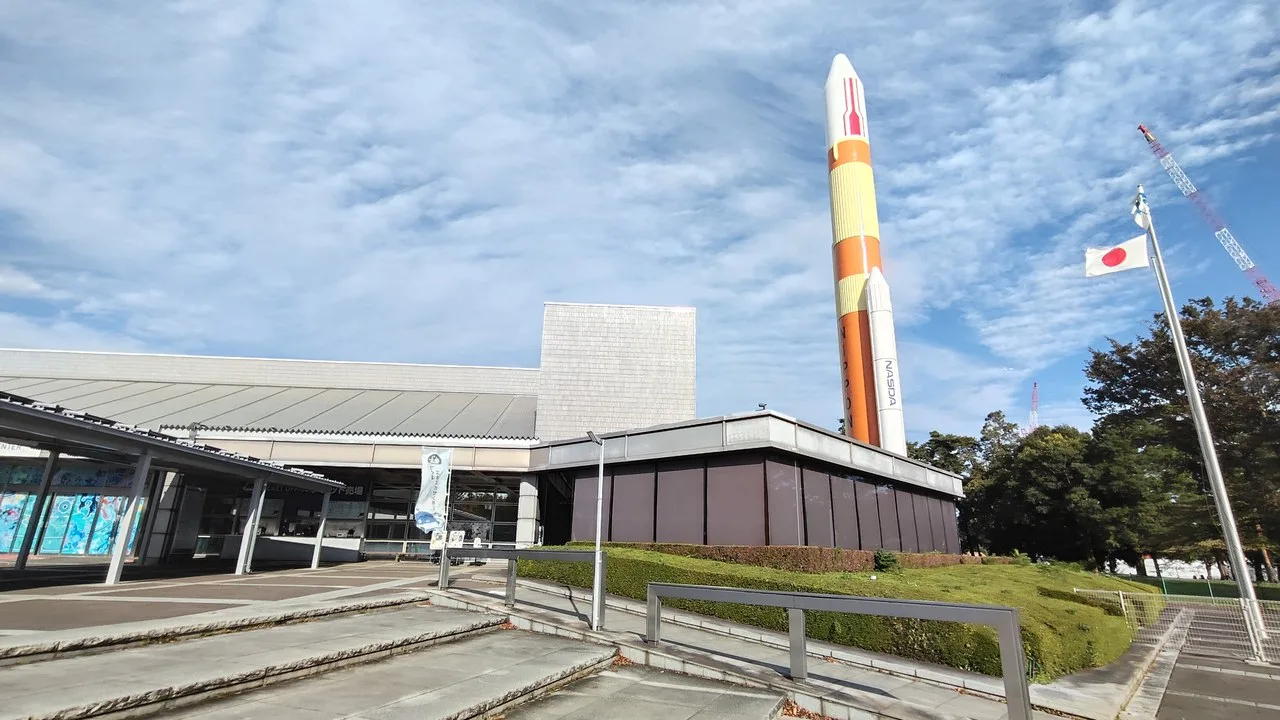
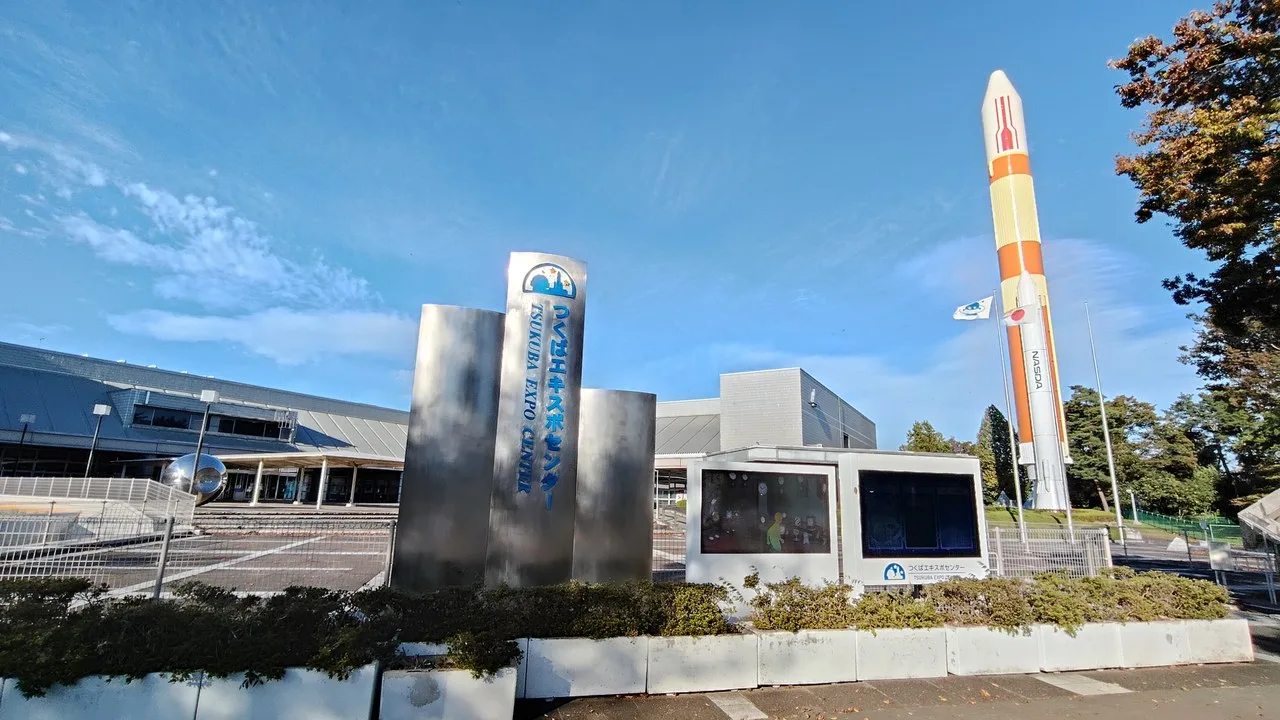
The outdoor symbol of the museum is the “H-II Rocket Full-Scale Model,” 50 meters tall. It reproduces a fully domestic Japanese rocket at actual size, can be spotted from far away, and can be approached to look straight up from its base.
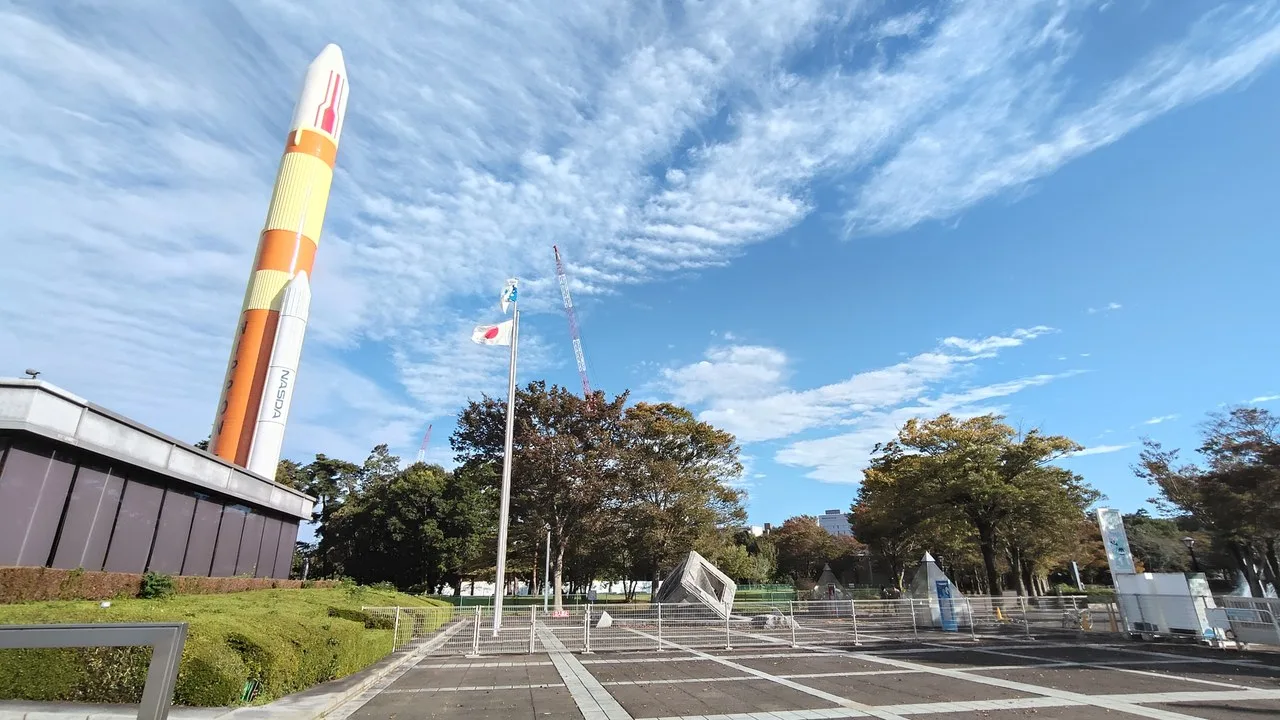
The “Swaying Stone” is a 50-ton stone sculpture balanced on a single point, on the same principle as a balancing toy, so that a person can set it rocking with a push. It was created for Expo ’85.
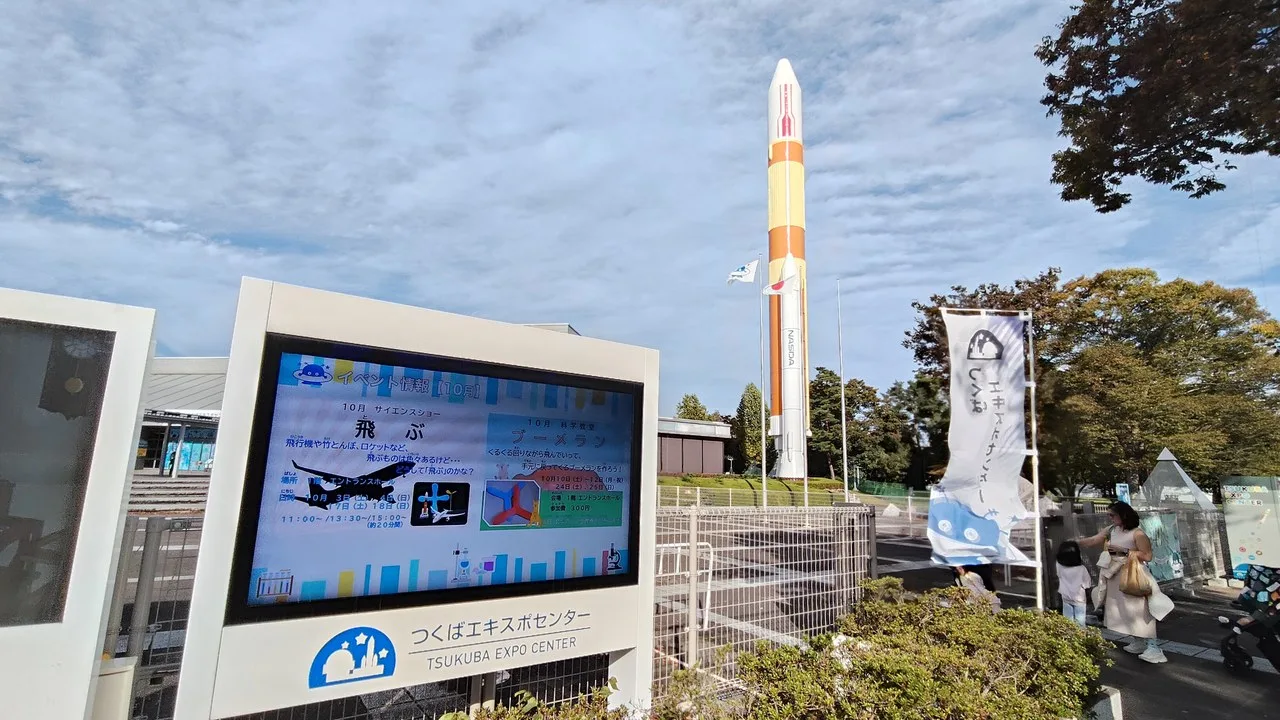
A compact Antarctic snow vehicle, the SM25S, is also on display. The vehicle shown, “254,” was carried to Antarctica by the 30th Japanese Antarctic Research Expedition in 1988, worked there for about 20 years, and returned on the research ship Shirase in April 2011. The Scientist Monuments, moved here from the avenues of the expo grounds, include “Galileo’s Saturn,” “Archimedes’ Crown,” “Newton’s Apple” and “Edison’s Light Bulb,” each with a quiz about the scientist. There is also a photo spot where the Expo mascot Cosmo Hoshimaru poses in front of the H-II rocket.
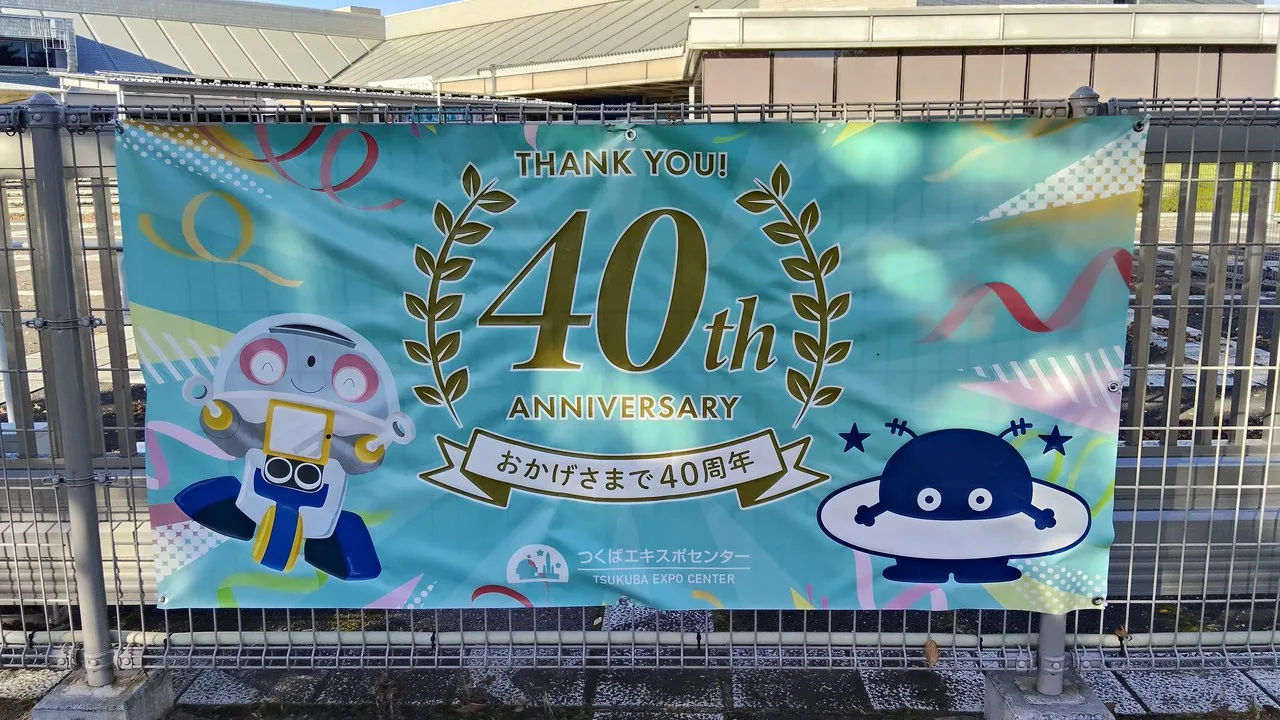
Science Museum Shop
The Science Museum Shop on the first floor sells freeze-dried space food, science goods, space-themed items and constellation merchandise, along with Cosmo Hoshimaru goods available nowhere else.
Admission and Planetarium Fees
An admission ticket covers the exhibition halls. The planetarium requires a planetarium ticket in addition to admission, and each ticket covers one viewing.
| Item | Admission | Planetarium, one viewing |
|---|---|---|
| adult (18 and over) | 600 yen | 600 yen |
| child (4 and over) | 300 yen | 300 yen |
| Ages 3 and under | Free | Children aged 3 and under watch the planetarium on a guardian’s lap. |
Getting There: 5 Minutes from Tsukuba Station by Train, Bus or Car
By Tsukuba Express
Get off at the terminus, Tsukuba Station, and take Exit A2. The museum is a 5-minute walk. The ride from Akihabara to Tsukuba takes about 45 minutes.
By JR Joban Line or Express Bus
From Hitachino-Ushiku, Arakawaoki or Tsuchiura Station on the JR Joban Line, take a bus bound for Tsukuba Daigaku Chuo to Tsukuba Center. The museum is a 5-minute walk from the Tsukuba Center bus terminal. The express bus from the Yaesu South Exit of Tokyo Station also stops at Tsukuba Center, the same 5-minute walk away.
By Car
From the Joban Expressway, the Sakura-Tsuchiura Interchange is about 8 km and 15 minutes away. Via the Ken-O Expressway, the Tsukuba-Chuo Interchange is about 6 km and 10 minutes away. The on-site parking lot holds about 60 cars; when it is full, nearby private lots are used. The closest is the “Kita 2” lot, with “Kita 1” and “Minami 2” as alternatives.
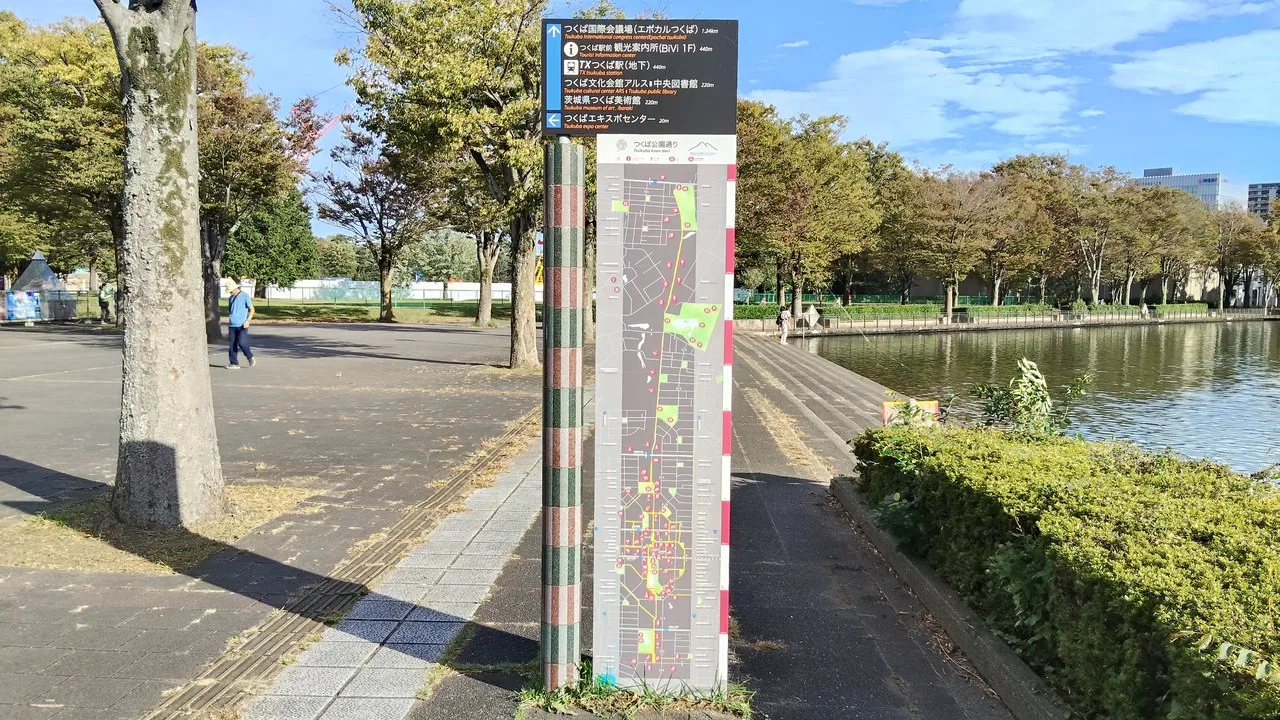
Sights Near Tsukuba Expo Center
The Azuma district around the museum has art galleries and parks clustered close together. Here are four places worth adding, from easy walks to a short bus ride.
Tsukuba Museum of Art, Ibaraki
The museum is a short walk from the Expo Center, inside the Tsukuba Cultural Hall ARS. It opened in 1990 as a branch of the Museum of Modern Art, Ibaraki, and focuses on gallery programs for solo and group shows, giving artists a place to present their work. Saturday lectures, video screenings and children’s workshops such as “Pop-Up Card Making” are also held. Exhibition hours are generally 9:30 a.m. to 5:00 p.m. (last entry 4:30 p.m.). After a day of planetarium and science exhibits, it makes a good stop to see the city from an artistic angle.
Chuo Park
This city park in front of Tsukuba Station sits beside the Expo Center, the Tsukuba Museum of Art, Ibaraki and the Tsukuba Central Library, forming the city’s cultural zone. Inside the park are Sakura Minka-en, which preserves relocated traditional farmhouses, a water plaza and a citizens’ gallery for cultural and artistic activities. A walk among its greenery before or after the museum is an easy way to round out the visit.
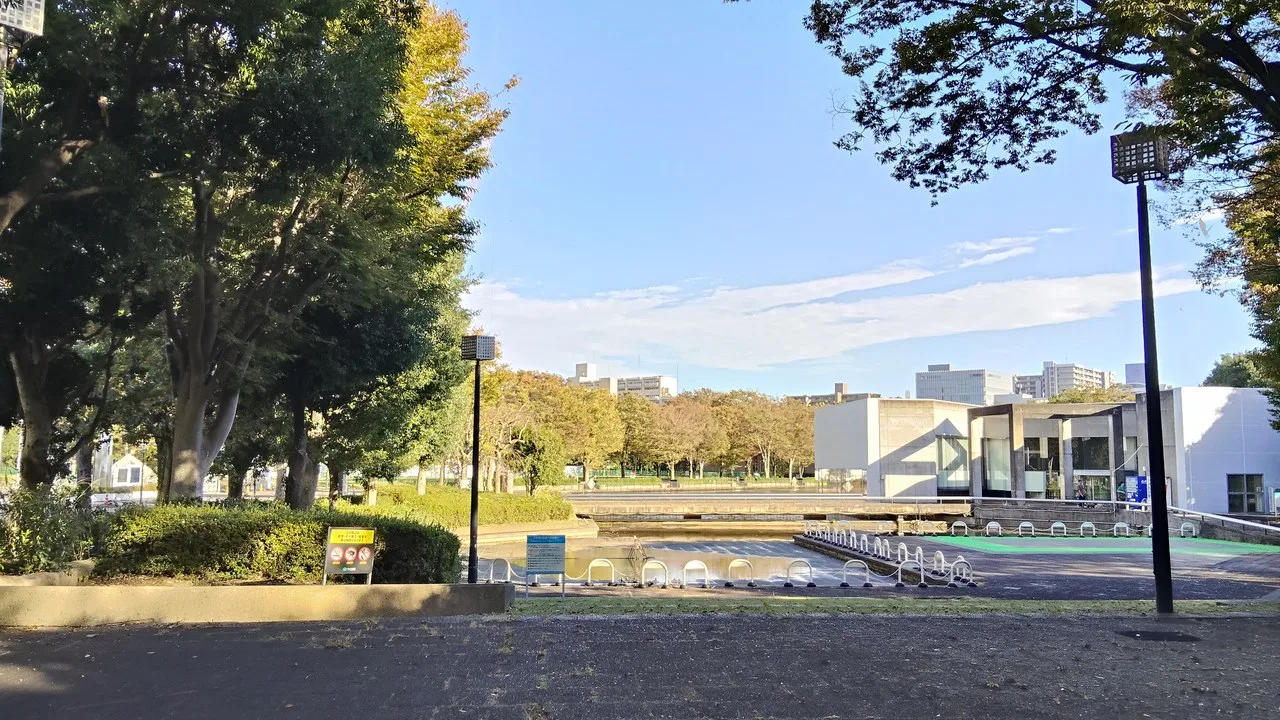
Matsumi Park
A Japanese stroll garden with a pond, Matsumi Park has koi swimming beneath a waterfall and a broad lawn. Its landmark is an observation tower about 45 meters tall, with views over Tsukuba Science City and Mt. Tsukuba. The park is about a 12- to 15-minute walk from Tsukuba Station, which makes it a fitting end point for a stroll from the Expo Center.
JAXA Tsukuba Space Center
Opened in 1972 as a base for Japan’s space development, the center carries out research, development and testing for space projects and tracks and controls satellites. Visitors can see an actual H-II rocket and full-scale satellite models, and the Space Dome exhibition hall is on the grounds. From Tsukuba Station, take the Kanto Railway bus bound for Arakawaoki Station and get off at Busshitsu-Zairyo Kenkyu Kiko, a ride of about 10 minutes. After the full-scale H-II model at the Expo Center, comparing it with the real rocket is a fitting way to close out the same day.
Hotels Near Tsukuba Station
For a trip that covers the Expo Center along with the nearby museums, parks and the JAXA Tsukuba Space Center, a stay around Tsukuba Station keeps everything within easy reach. Here are three hotels close to the station.
Daiwa Roynet Hotel Tsukuba
Just a 1-minute walk from Exit A5 of Tsukuba Station on the Tsukuba Express, this station-front hotel has 240 rooms. The Tonarie Tsukuba shopping complex and the Tsukuba International Congress Center are next door, and direct trains to Kita-Senju and Akihabara make trips to and from central Tokyo easy. Every room has a private bath and toilet, and breakfast is a Japanese and Western buffet at Café Terrace Roy on the second floor. It is a strong choice for travelers who want to use Tsukuba Station as a base for the Expo Center and the sights around it.

Hotel Nikko Tsukuba
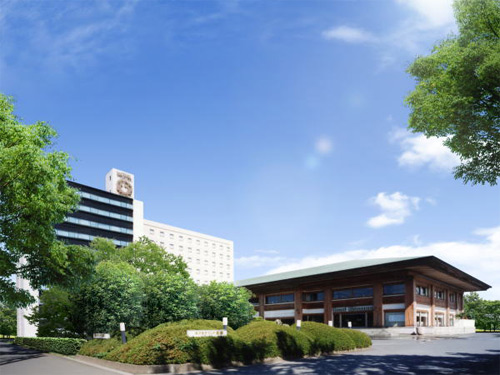
About 2 minutes on foot from Exit A3 of Tsukuba Station, this city hotel stands next to Chuo Park, within walking distance of the Expo Center and the Tsukuba International Congress Center. It was renamed in April 2020 from Okura Frontier Hotel Tsukuba and now operates as part of Okura Nikko Hotels. The main building has 11 floors and the annex has 5. On the second floor of the main building are the restaurant “Selena” and the Chinese restaurant “Toli.” It is the pick for anyone who wants a relaxed, full-service city hotel close to the Expo Center.
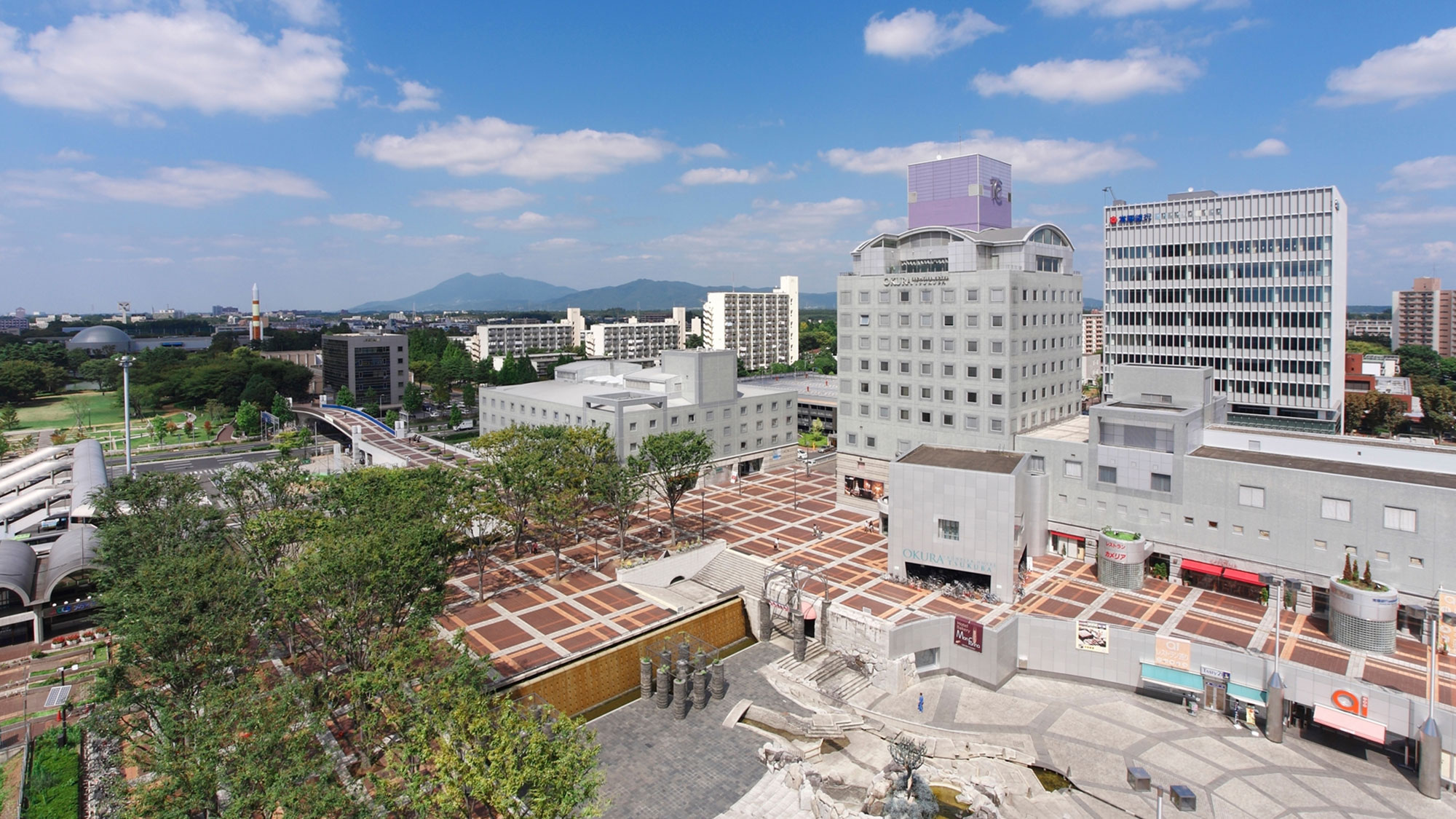
Hotel Grand Shinonome
A city hotel about 10 minutes on foot from Exit A4 of Tsukuba Station, within walking distance of the Tsukuba International Congress Center. It stands near the center of Tsukuba Science City and has 108 rooms. The building also houses a wedding hall and a Chinese restaurant. It suits travelers who prefer to stay a little away from the bustle in front of the station, and those arriving by car.
Travel with a Dedicated Tour Conductor
Reaching Tsukuba from Tokyo involves train transfers, a cash-only ticket counter and a few lunch logistics. Travelers who would rather have the itinerary handled from start to finish can arrange a dedicated tour conductor through tours.e-stay.jp. A tour conductor manages the schedule, rearranges plans in an emergency, assists with interpretation and checks luggage, so the day runs smoothly from Tokyo to Tsukuba and back.
Wrapping Up: Plan Your Tsukuba Trip
Tsukuba Expo Center is a science museum built in memory of Expo ’85. A 232-seat planetarium anchors the visit, with hands-on exhibits on the first and second floors and the 50-meter H-II rocket model outside, enough to fill a day. Because tickets are sold only on the day and the building has no café or restaurant, planning lunch shapes the rhythm of the visit.
After the museum, a walk through Chuo Park and Matsumi Park, then a trip to the JAXA Tsukuba Space Center the next morning, brings out the best of this science city. Book a night at Hotel Nikko Tsukuba, a 2-minute walk from the station beside Chuo Park, and let the afterglow of the stars and exhibits carry you onto the morning bus to the Space Center. It makes a two-day trip well worth planning.