
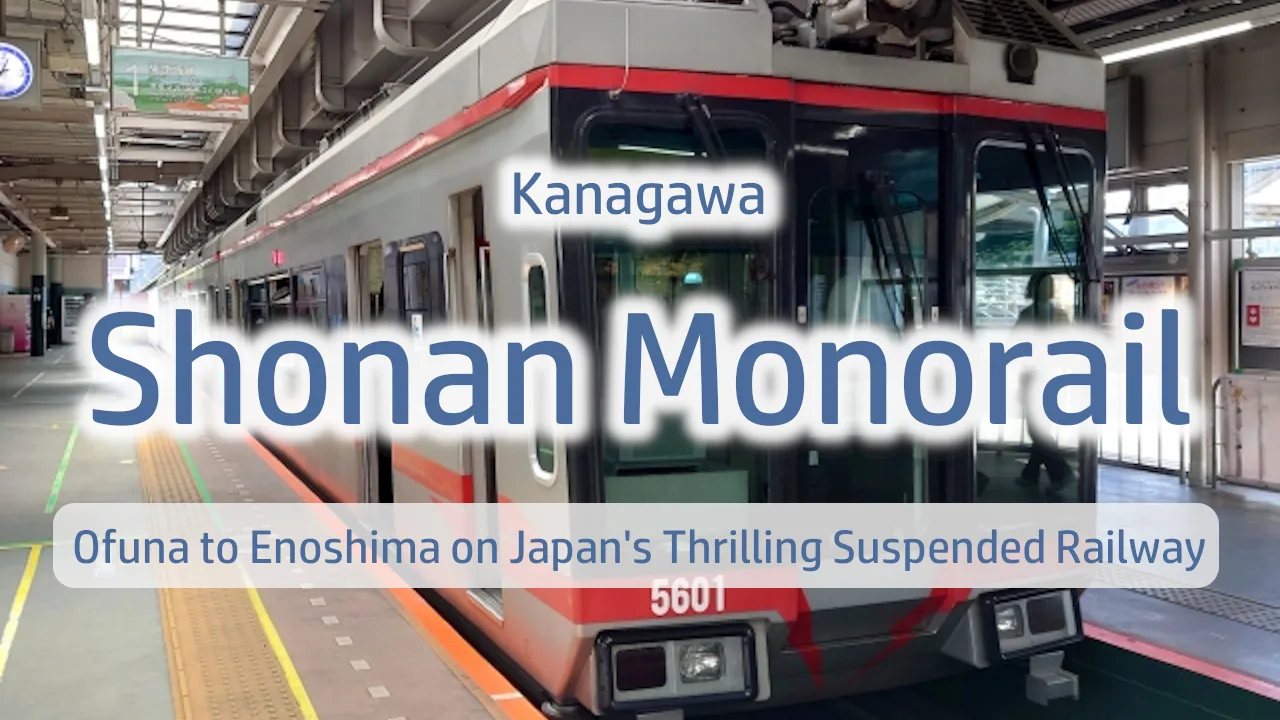
A travel writer and licensed tour conductor brings you the latest on one of Kanagawa’s most distinctive ways to get around. This guide covers the Shonan Monorail, an unusual suspended railway that links Ofuna with Enoshima in just 14 minutes — and makes the journey itself a reason to ride.
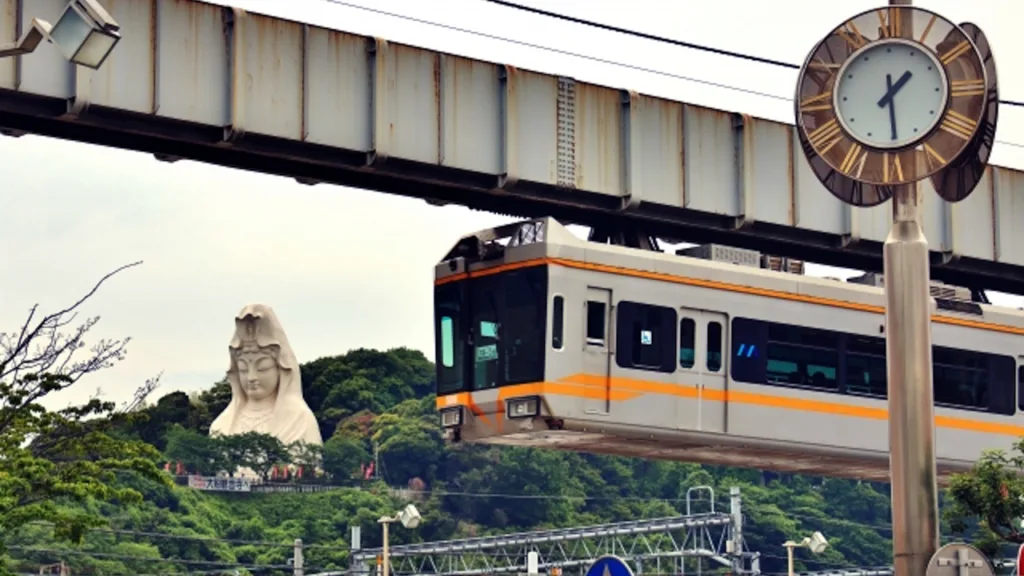
The Shonan Monorail is far more than a commuter line. It skims the rooftops of residential neighborhoods, dives through mountain tunnels, and flings passengers through sharp curves and dramatic climbs at roller-coaster intensity. It is one of only two lines in Japan operating this particular style of suspended monorail, and combining it with visits to Kamakura and Enoshima adds a dimension to any Kanagawa itinerary that conventional transport simply cannot offer.
| Facility | Shonan Monorail |
|---|---|
| Line | Shonan Monorail Enoshima Line |
| Route | Ofuna Station to Shonan-Enoshima Station (8 stations) |
| Distance | 6.6 km |
| Journey time | Approx. 14 minutes (full line) |
| Frequency | Every 7–8 minutes during daytime hours |
| System | SAFEGE-type suspended monorail |
| Top speed | 75 km/h |
| Official site | https://www.shonan-monorail.co.jp/ |
What First-Time Visitors Often Overlook
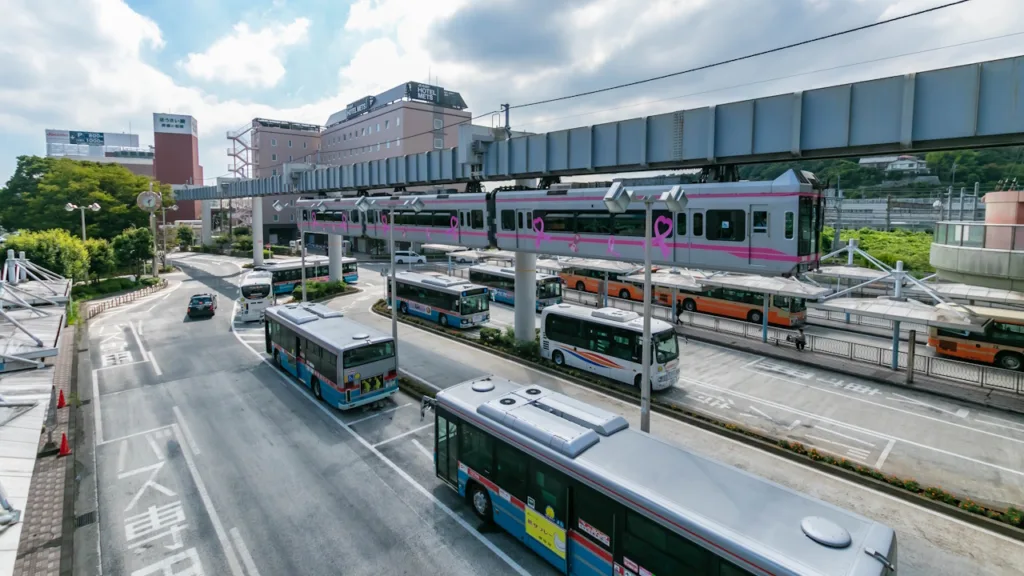
When people plan a trip to the Shonan and Kamakura area, the Enoden (Enoshima Electric Railway) and the JR Yokosuka Line tend to dominate the conversation. The Shonan Monorail follows a different path — departing from Ofuna, it cuts through the western side of Kamakura before arriving at the edge of Enoshima. It does not stop at Kamakura’s central sights such as Komachi-dori or Tsurugaoka Hachimangu, and the residential neighborhoods along its route do not offer the dense cluster of tourist attractions that Kamakura proper provides. For visitors unfamiliar with the line, it can be difficult to know how to fit it into an itinerary.
The line also has a distinctly local character: passengers cannot move between carriages, several stations are unstaffed, and the experience feels quite different from the polished metro systems of central Tokyo. Understanding the line’s character in advance makes for a much smoother and more rewarding visit.
Born from Japan’s Monorail Technology Wars
The Shonan Monorail carries a surprisingly rich industrial history. In the late 1950s and 1960s, as Japan’s postwar economy accelerated, monorails were being promoted as the future of urban transit, and competing technologies battled for dominance. Hitachi led the development of the straddle-beam type — where the vehicle rides on top of the rail — and made a high-profile statement by opening the Tokyo Monorail between Hamamatsucho and Haneda Airport just ahead of the 1964 Olympic Games.
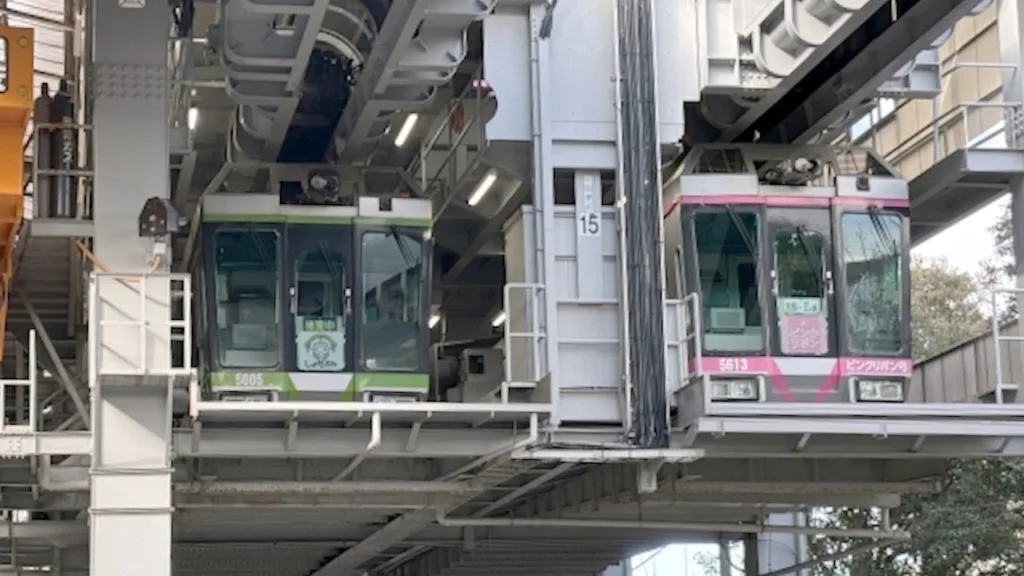
The counter-proposal came from a consortium centered on Mitsubishi Heavy Industries, Mitsubishi Electric, and Mitsubishi Corporation, working with the French-developed SAFEGE suspended system. In the SAFEGE design, the running gear is enclosed inside a boxed beam track, and the vehicle hangs below. The protected mechanism is less vulnerable to rain and snow, and the hanging configuration produces a natural pendulum stability through curves. To demonstrate the system’s advantages, the developers deliberately routed the line through some of the most demanding terrain available — the steep, winding hills between Ofuna and Enoshima.
Construction began after the company was established in 1966. Partial service between Ofuna and Nishi-Kamakura opened on 7 March 1970, the year of Expo ’70 in Osaka, and the full line through to Shonan-Enoshima opened on 1 July 1971. The engineering achievements along the route were considerable, including the world’s first mountain tunnel bored for a suspended monorail — the 451-metre Kamakura-yama Tunnel — and grades as steep as 74 per mille with curves as tight as 25 metres in radius. The technology developed here was subsequently inherited by the Chiba Urban Monorail, which went on to become the world’s longest suspended monorail network. Ownership passed from the Mitsubishi Group to Michinori Holdings in 2015, and the line now serves over ten million passengers annually. It marks its 55th anniversary of full-line operation in 2026.
Riding the “Shonan Roller Coaster”
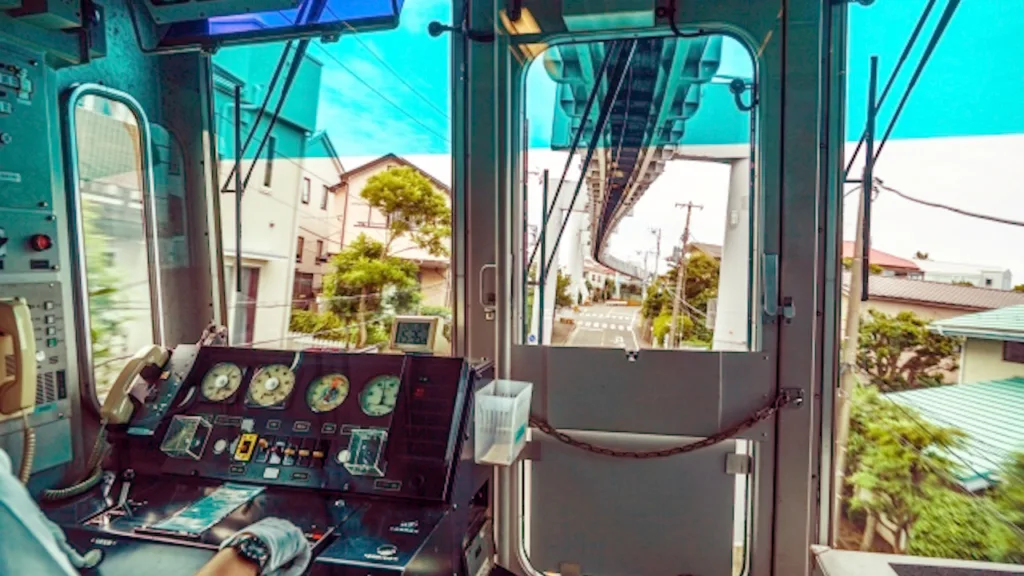
The defining quality of the Shonan Monorail is the ride itself. Passengers hang below the overhead track rather than sitting above a conventional rail, which produces a floating sensation unlike anything on a standard train or even a straddle monorail. At 75 km/h through tight residential streets, up and over sharp ridgelines, and through tunnels that appear without warning, the experience has earned the line its popular nickname: the Shonan Roller Coaster.
Standing behind the driver’s cab in the front carriage gives a particularly vivid impression — the raised track stretches ahead, the streets and rooftops fall away below, and the approach into each curve arrives with real momentum. Children tend to love it unreservedly; adults who weren’t expecting it are frequently surprised by how exhilarating a short commuter journey can be.
Since passengers cannot move between carriages once the journey has started, it is worth choosing your position on the platform deliberately. Photographers and enthusiasts tend to head for the front cab view, while those after the best coastal glimpses prefer the left-hand window seats when travelling from Ofuna toward Enoshima.
Window-watching has its own rewards. From the right side travelling south from Ofuna, the forested ridgelines of Kamakura’s hills scroll past; from the left, glimpses of Sagami Bay appear in the gaps between buildings, and on clear days Mount Fuji becomes visible from certain vantage points along the line. At Ofuna Station itself, watching a train arrive at the platform — hanging beneath the overhead beam as it glides to a stop — is a sight that tends to prompt a photograph even before boarding.
Free Driving Simulator at Shonan-Enoshima Station
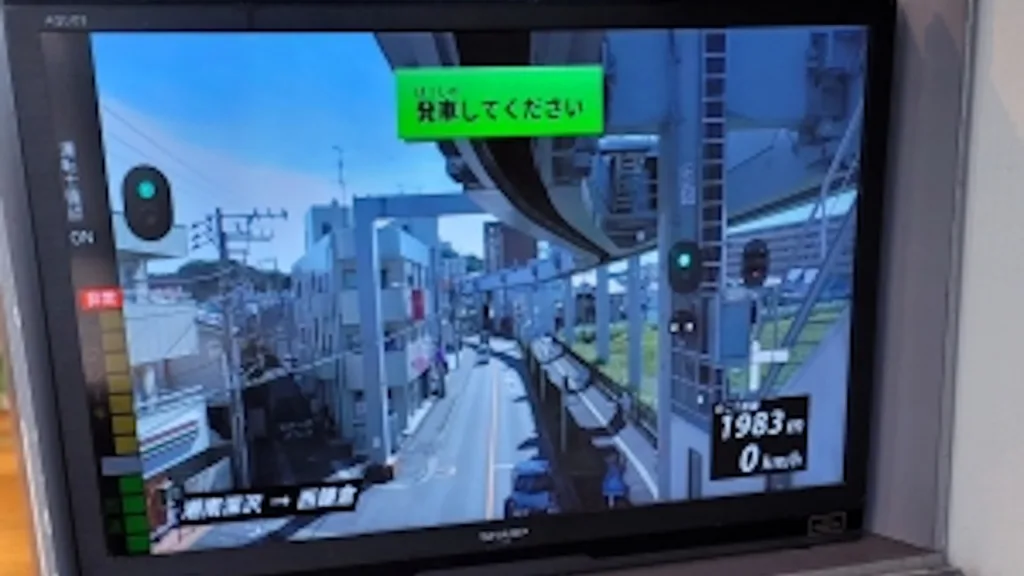
On the third floor of the Shonan-Enoshima Station building, just outside the ticket barriers, a full driving simulator based on a real retired Series 500 cab is available to use at no charge. The cab used is from vehicle number 554, which was withdrawn from service in 2016, and it has been fitted with simulation software that recreates the full run from Ofuna to Shonan-Enoshima. Passengers operate the master controller and brake handle, stopping at each station along the route, with current speed and stopping-point distance shown on a monitor.
The gradient profile of the line — the very feature that makes riding it so memorable — also makes controlling it genuinely difficult. Managing brake pressure on the downhill sections requires real concentration, and it is common to overshoot a platform on the first attempt. The experience is free for anyone to try, takes around fifteen minutes for a full run, and tends to attract queues at weekends. Weekday mornings are the quieter option.
| Facility | Series 500 Driving Simulator |
|---|---|
| Location | Shonan-Enoshima Station Building, 3F (outside ticket barriers) |
| Admission | Free |
| Duration | Approx. 15 minutes (full line) |
| Equipment | Original cab from retired Series 500 vehicle (No. 554) |
Tickets and Passes
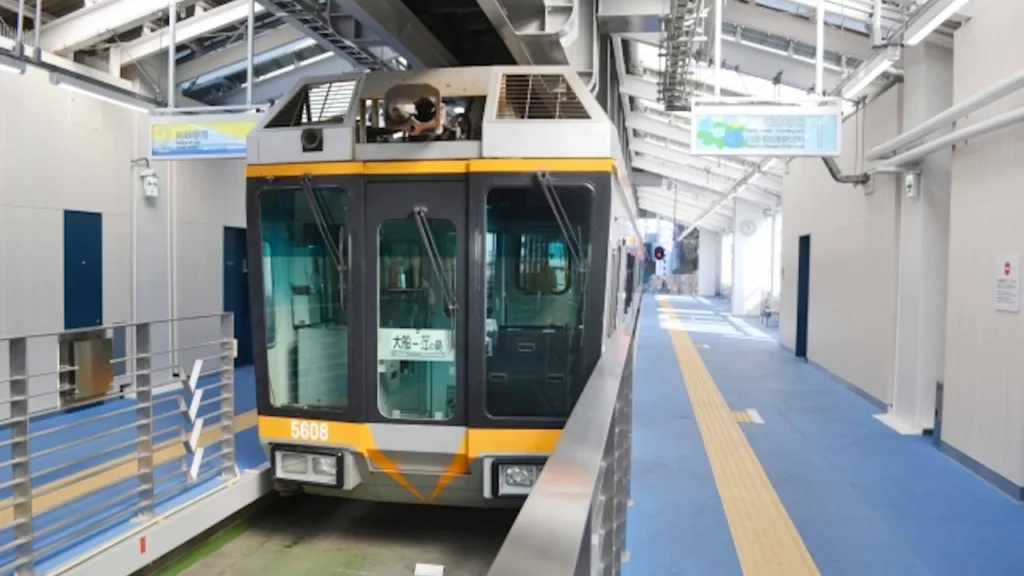
IC Cards and Single-Journey Fares
PASMO, Suica, and all nationally compatible IC cards are accepted on the Shonan Monorail. Tapping in and out is the most convenient option for a single journey. For visitors planning to ride more than once during the day, the One-Day Free Pass offers considerably better value.
One-Day Free Pass
The One-Day Free Pass covers unlimited travel across all eight stations for the full day of use. It can be purchased at ticket machines at any station, or bought in advance via the smartphone app Pass Case (available from April 2026) or the Shonan Monorail’s official ticket website. The pass also entitles holders to discounts and special offers at around fifty partner businesses along the line.
Monorail de Enosui (Aquarium Combination Ticket)
A combination ticket pairing the One-Day Free Pass with admission to Enoshima Aquarium (Shin-Enoshima Suizokukan) is available as a QR digital ticket through the Shonan Monorail’s official ticketing platform. The bundle is particularly well-suited to families and represents a practical saving over purchasing the two tickets separately.
All Eight Stations
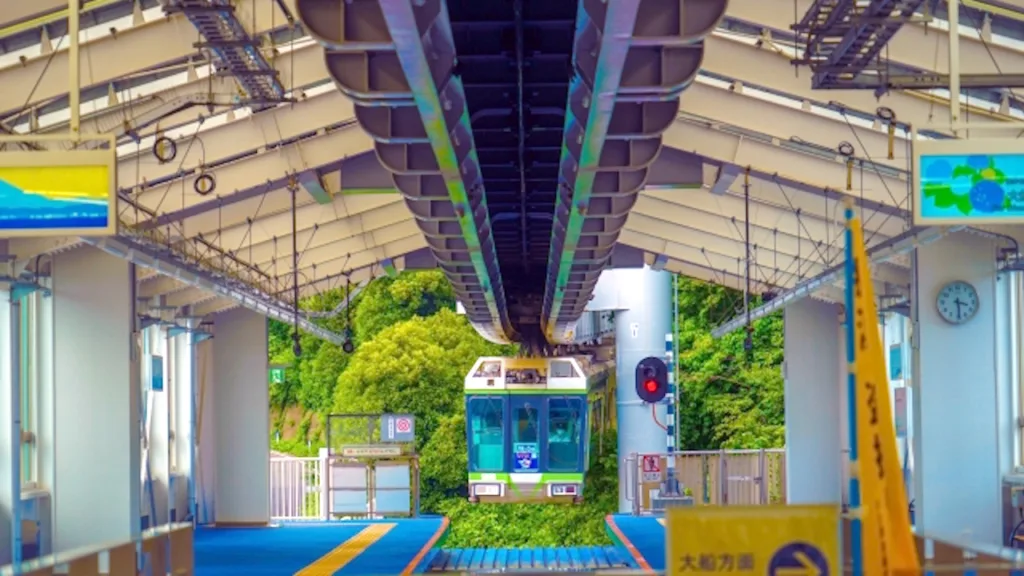
The line is compact enough to ride end-to-end in fourteen minutes, but each station opens onto a different character of the surrounding area.
| Shonan Monorail Stations | Connections | Key sights and nearby spots |
|---|---|---|
| Ofuna | JR Tokaido Line / Yokosuka Line / Negishi Line / Yokohama Line | Ofuna Kannon Temple, Atre Ofuna |
| Fujimichou | — | Fujimi-zaka hill (Mount Fuji views) |
| Shonan-Machiya | — | Quiet residential area |
| Shonan-Fukasawa | — | Independent cafés, specialty coffee roasters |
| Nishi-Kamakura | — | Kamakura-yama district, local bakeries and pâtisseries |
| Kataseyama | — | Steep drops and tight curves |
| Mejiroyamashita | — | Kataseyama Tunnel (205 m) |
| Shonan-Enoshima | Enoden (Enoshima Station, approx. 5 min walk) | Enoshima, rooftop terrace views |
Ofuna Station (terminus)
Ofuna is served by several JR lines including the Tokaido, Yokosuka, and Negishi lines, and sits roughly fifty minutes from Tokyo Station and twenty minutes from Yokohama by train. The Shonan Monorail platform adjoins the JR station directly. Ofuna Kannon Temple, whose large white bust of Kannon is visible from the monorail itself, is a short walk away. The station also has a shopping complex with dining and retail options.
Fujimichou and Shonan-Machiya Stations
These two stations sit in a settled residential belt just south of Ofuna. Around Fujimichou, a hillside viewpoint called Fujimi-zaka offers rooftop-level views of Mount Fuji on clear days, with the mountain appearing above the surrounding houses.
Shonan-Fukasawa Station
The most understated station on the line, Fukasawa has attracted a quiet cluster of independent coffee roasters and neighbourhood cafés that have drawn a local following. The depot branch line diverges here, and occasionally retired or maintenance vehicles can be spotted standing in the yard.
Nishi-Kamakura Station
The nearest station to the elevated residential district of Kamakura-yama, an area of substantial post-war houses set among forested slopes. The neighbourhood has an unhurried atmosphere and a scattering of well-regarded bakeries and pâtisseries. Bus connections from here can reach forested walking routes and viewpoints in the Kamakura hills.
Kataseyama and Mejiroyamashita Stations
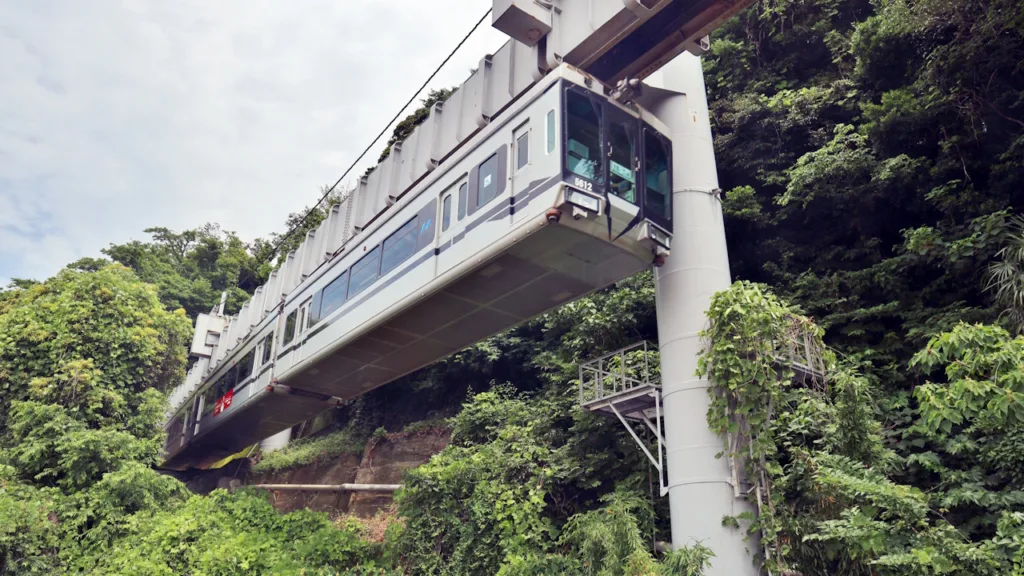
This pair of stations brackets the most dramatic section of the line. The descent from Kataseyama toward Shonan-Fukasawa involves steep grades and tight curves that concentrate the roller-coaster sensation. Between Mejiroyamashita and Shonan-Enoshima, the train enters the Kataseyama Tunnel — 205 metres, and the first mountain tunnel ever bored for a suspended monorail anywhere in the world.
Shonan-Enoshima Station (terminus)
The station occupies the fifth floor of a building above street level, and stepping out of the ticket barriers leads directly to a rooftop terrace with open views toward Enoshima and, in clear weather, Mount Fuji. The Enoden Enoshima Station is a few minutes’ walk away, making the connection between the two lines straightforward.
Dining Near Shonan-Enoshima Station
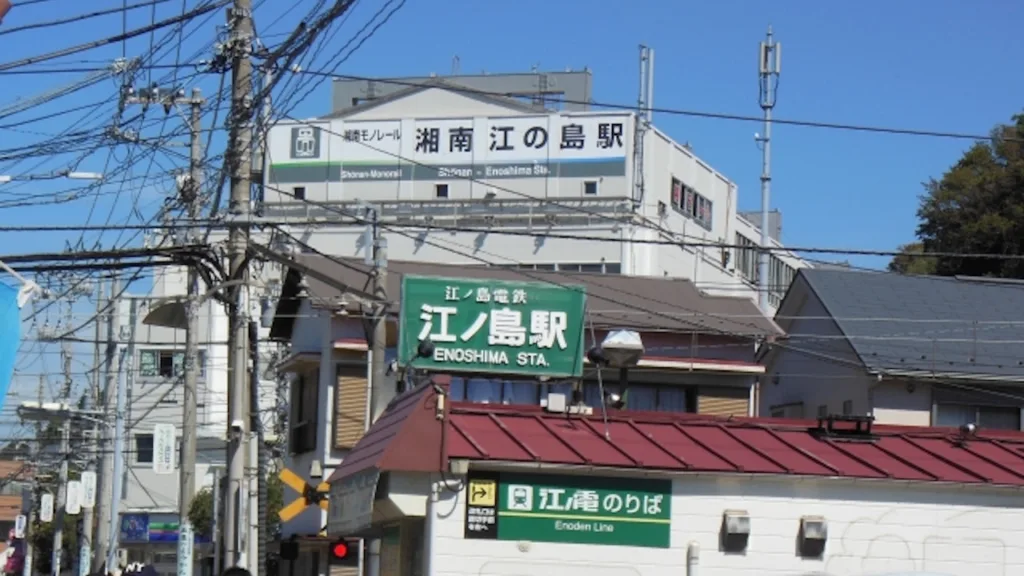
Shonan-Enoshima Station delivers passengers into an area centred on Katase-Kaigan, the beach town just west of Enoshima, where seafood restaurants, casual bars, and cafés line the streets within easy walking distance.
Shirasudonya Tobiccho (Enoshima Main Branch)
Tobiccho is the most prominent shirasu (whitebait) restaurant on Enoshima, operated directly by a wholesaler with roots going back to the Meiji era. The restaurant’s signature dish is the tobiccho-don, a large bowl piled with fresh seafood sourced that morning. Live shirasu — the translucent, freshly caught variety — is available only when the boats have been out, which means it is off the menu during the spawning moratorium from January to mid-March and on days when the catch is too small. It is worth checking the restaurant’s social media before visiting specifically for live shirasu.
| Facility | Shirasudonya Tobiccho (Enoshima Main Branch) |
|---|---|
| Address | 1-6-7 Enoshima, Fujisawa, Kanagawa |
| Access | Approx. 17 min walk from Shonan-Enoshima Station |
Hemingway Enoshima (Main Branch)
A café and bar built around views of the sea and Enoshima island, with surfboards repurposed as table surfaces and a generous set of windows facing the water. The kitchen covers a wide range of dishes: soup curry, a shirasu and garlic pasta using locally landed whitebait, burgers, and the house-signature baguette French toast prepared in a rich egg batter. There is also a bayside barbecue area for groups, available by reservation, and the location is well suited to an unhurried lunch after arriving by monorail.
| Facility | Hemingway Enoshima (Main Branch) |
|---|---|
| Address | 1-12-4 Katase-Kaigan, Fujisawa, Kanagawa |
| Access | Approx. 3 min walk from Shonan-Enoshima Station |
Enoshima Ramen Hanamizuki
A locally popular ramen shop with a menu built around shirasu and other seafood from the surrounding waters. The house ramen uses a kelp and seafood broth and arrives topped with whitebait, prawns, wakame seaweed, and clams. The shop operates at lunchtime only.
| Facility | Enoshima Ramen Hanamizuki |
|---|---|
| Address | 1-12-17 Katase-Kaigan, Enoshima View Tower 1F, Fujisawa, Kanagawa |
| Access | Approx. 3 min walk from Shonan-Enoshima Station |
Café Living Room
A compact, characterful café a minute’s walk from Enoden’s Enoshima Station, with walls lined with records and CDs and a Californian-casual food menu. The draw for many visitors is the draught Kamakura Beer and Enoshima Beer, both available on tap and not easily found elsewhere. The café also handles takeaway orders, which suits the nearby beach promenade.
| Facility | Café Living Room |
|---|---|
| Address | 1-8-38 Katase-Kaigan, Gran Bleu Shonan 103, Fujisawa, Kanagawa |
| Access | Approx. 3 min walk from Shonan-Enoshima Station |
Nearby Attractions
Enoshima Aquarium (Shin-Enoshima Suizokukan)
The aquarium sits about ten minutes on foot from Shonan-Enoshima Station, facing Sagami Bay directly. The main tank holds sea turtles and large pelagic fish alongside species native to the Sagami Bay ecosystem. The facility has a long-standing reputation for its jellyfish programming, including what was at the time of its development a world-first projection mapping installation that wraps the animals in abstract visual sequences. Holders of the Shonan Monorail One-Day Free Pass receive a discount on admission, and the combination ticket with the pass is the most economical way to visit.
| Facility | Enoshima Aquarium |
|---|---|
| Address | 2-19-1 Katase-Kaigan, Fujisawa, Kanagawa |
| Access | Approx. 10 min walk from Shonan-Enoshima Station |
Ofuna Kannon Temple
Visible from the monorail itself shortly after departing Ofuna, this temple is defined by a large white stone Kannon bust approximately 25 metres in height, the construction of which began in 1929 and was completed in 1960. The grounds are well maintained through the seasons, with cherry blossom particularly notable in spring.
Enoshima
The island reached from Shonan-Enoshima Station is one of Kanagawa’s most visited destinations. The approach along Enoshima Benzaiten-nakamise-dori leads to the Enoshima Shrine, while further into the island the Enoshima Sea Candle observation tower offers simultaneous views across Sagami Bay and toward Mount Fuji. The far end of the island opens onto the Iwaya Caves and the rocky inlet at Chigogafuchi. When the sunset aligns with Mount Fuji’s peak — the phenomenon known as Diamond Fuji — it draws crowds from across the region.
The Great Buddha at Kotoku-in, Kamakura
The National Treasure bronze statue of Amida Buddha at Kotoku-in stands approximately 11.3 metres tall and has been seated in the open air since the hall that originally sheltered it was destroyed in the late fifteenth century. It is accessible via Enoden from Shonan-Enoshima Station, alighting at Hase, or via JR from Ofuna. Entry to the interior of the statue is available to visitors for a small additional fee.
Koshigoe Beach and Shichirigahama
Riding the Enoden from Shonan-Enoshima station toward Kamakura passes through a series of coastal stations. From Shichirigahama in particular, the alignment of Enoshima and Mount Fuji across the water produces one of Shonan’s signature views — clearest in the colder months when the air is dry. The stretch is well known for surfing and for the atmosphere of the beachside restaurants and cafés that face the waves.
Recommended Hotels Near Ofuna Station
JR East Hotel Mets Kamakura Ofuna
Connected directly to JR Ofuna Station, this hotel is the most convenient base for travellers planning to use the Shonan Monorail as part of their itinerary. The Shonan Monorail platform is a short walk from the hotel. Rooms are fitted with Simmons beds and the property has full Wi-Fi coverage. A breakfast buffet with both Japanese and Western options is available.
| Facility | JR East Hotel Mets Kamakura Ofuna |
|---|---|
| Address | 1-2-3 Ofuna, Kamakura, Kanagawa |
| Access | Approx. 1 min walk from JR Ofuna Station |
Sotetsu Fresa Inn Kamakura Ofuna Higashiguchi
A well-regarded business hotel a short walk from Ofuna Station’s east exit. The property offers connecting rooms suited to families, and the entire building uses a filtered water system. Complimentary amenities are provided, and the hotel has built a consistent reputation for cleanliness and value.
| Facility | Sotetsu Fresa Inn Kamakura Ofuna Higashiguchi |
|---|---|
| Address | 1-22-3 Ofuna, Kamakura, Kanagawa |
| Access | Approx. 2 min walk from JR Ofuna Station (East Exit) |
Combining the Shonan Monorail with the Enoden
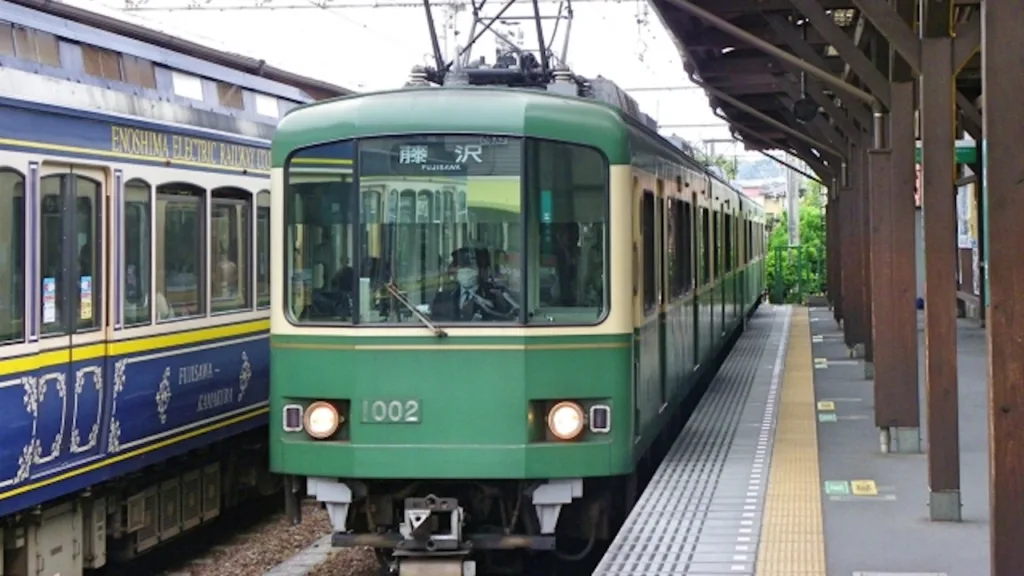
A few minutes’ walk from Shonan-Enoshima Station brings you to Enoden’s Enoshima Station. From there, the Enoden runs along the coast through Koshigoe, past the famous Kamakura Koko-mae level crossing, along Shichirigahama and Inamuragasaki, and on to Hase and Kamakura — covering Shonan’s most celebrated coastal scenery along the way. Arriving by Shonan Monorail and continuing by Enoden is one of the most efficient ways to take in both Enoshima and central Kamakura in a single day.
| Facility | Enoden (Enoshima Electric Railway) |
|---|---|
| Route | Fujisawa Station to Kamakura Station (15 stations) |
| Journey time | Approx. 37 minutes (full line) |
| Day pass | Noriorikun — available at stations and via app |
| From Shonan-Enoshima Station | Approx. 5 min walk to Enoden Enoshima Station |
For a detailed guide to riding the Enoden and exploring Kamakura’s sights along the way, see our companion article:
Travelling with a Private Tour Conductor
Planning a trip to the Shonan and Kamakura area involves a number of moving parts: monorail timings, Enoden connections, temple opening hours, and the unpredictable availability of seasonal seafood like live shirasu. Having a dedicated tour conductor accompanying your group means that logistics are handled throughout the journey — coordinating transfers, providing translation support where needed, and managing any unexpected changes that arise on the day. The focus stays on the places themselves rather than the logistics of getting between them.
For details on private tour conductor services for Japan travel, visit tours.e-stay.jp.
A Line Worth Riding for Its Own Sake
The Shonan Monorail is one of only two lines in Japan using the SAFEGE suspended system, and it runs through terrain that was deliberately chosen to demonstrate the technology’s capabilities. The result is a fourteen-minute ride that earns its roller-coaster reputation through genuine engineering rather than novelty. Paired with Enoshima and, via the Enoden, the streets and temples of Kamakura, it makes a compelling centrepiece for a day trip from Tokyo or Yokohama. With the line approaching its 55th anniversary of full operation in 2026, this is a good moment to take a closer look at what Shonan’s less famous railway has to offer.