
A travel writer and tour conductor brings you the latest Japan travel information. This guide covers everything you need to know about exploring Kamakura and the Shonan coast aboard the beloved Enoden — the Enoshima Electric Railway. Packed into just 10 kilometers between Fujisawa and Kamakura, this iconic line weaves past ancient temples, sweeping ocean views, and vibrant local eateries. The ride itself is half the adventure. With a day pass, you can hop on and off freely and get far more from your visit without spending a lot on transport.
| Line | Enoshima Electric Railway (Enoden) |
|---|---|
| Route | Fujisawa Station – Kamakura Station (approx. 10 km) |
| Stations | 15 stations |
| Journey Time | Approx. 37 min (full line) |
| IC Cards | PASMO, Suica, and all nationwide IC cards accepted |
Expect Crowds, Especially on Weekends
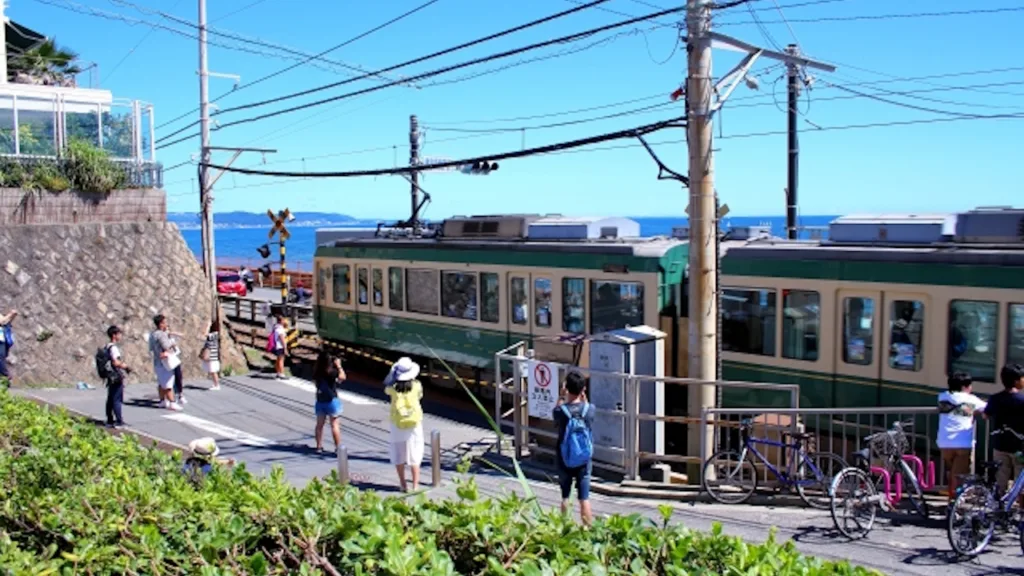
The Enoden’s biggest drawback is its own popularity. Ever since the crossing near Kamakura Koko-mae Station became globally recognized as a setting in the manga Slam Dunk, visitors from around the world have flocked to the line at all hours. On weekends in particular, queues at Kamakura Station can form before boarding, and the stretch between Kamakura and Hase sees heavy congestion. A 2023 timetable revision also extended the full journey time from 34 to 37 minutes, so leave a little buffer in your schedule. Visiting on a weekday or starting early in the morning makes for a much more relaxed experience.
A Railway with Over 120 Years of History
The Enoden story begins on September 1, 1902, when the Enoshima Electric Railway — then known as Enoshima Denki Tetsudo — opened its first stretch of just 3.42 kilometers between Fujisawa Station and the Enoshima area (then called Katase Station). The opening was no easy feat. Local rickshaw operators and residents of Koshigoe pushed back hard against the new line, but support from the Kugenuma community, who donated land to the project, ultimately made it possible.
The railway expanded gradually, and on November 4, 1910, the full line reached Komachi, near present-day Kamakura Station. At that time, the completed route had 39 stopping points — more than double today’s 15 stations — reflecting just how deeply the Enoden was woven into everyday local life.
The Great Kanto Earthquake of 1923 caused serious damage, and the rise of car culture in the 1960s and 70s brought the line close to closure. It was rescued in part by a wave of cultural attention: a popular television drama aired in 1976 and an NHK documentary the following year both featured the line, cementing its reputation as a beloved scenic railway. In 2014, it was recognized by the Japan Society of Civil Engineers as a nationally significant civil engineering heritage site for preserving the atmosphere of Japan’s Meiji-era railway origins.
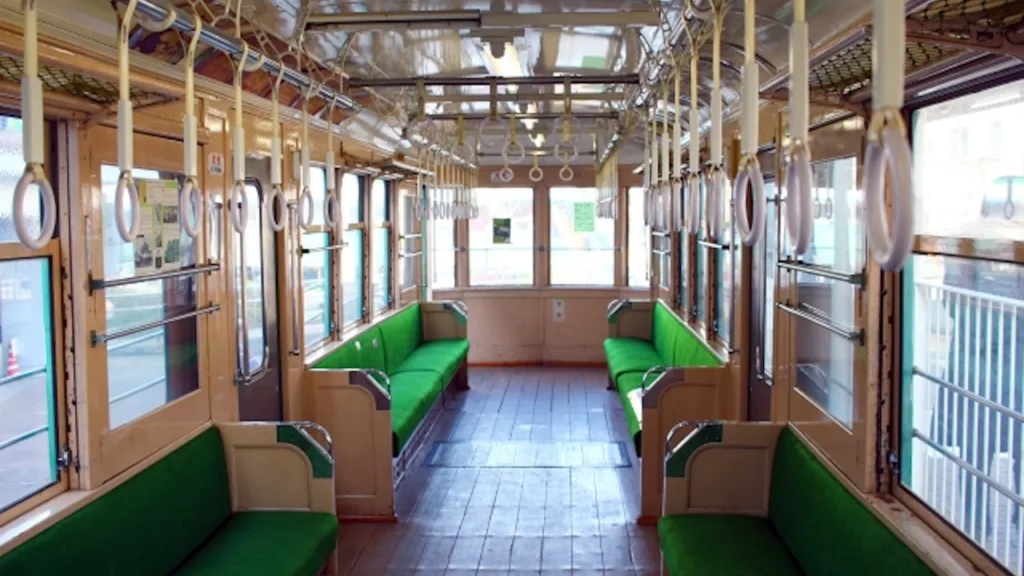
Even today, the 300 Series train — built in 1960 — remains in active service, a living piece of history that still runs the same tracks it has for over sixty years.
The View from the Window Is the Destination
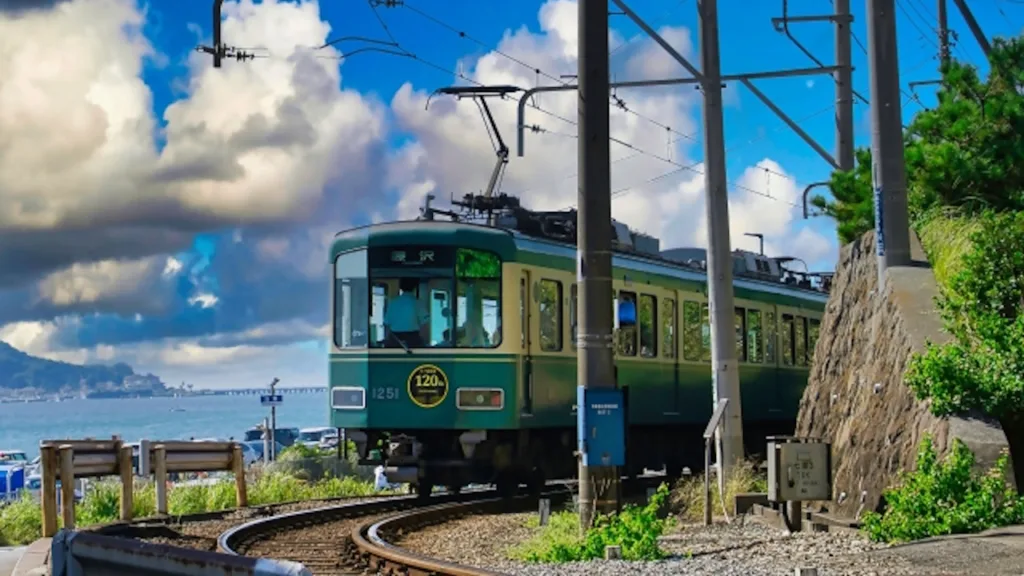
Riding the Enoden is itself a highlight of any Kamakura trip.
Leaving Kamakura Station, the train immediately threads through narrow residential streets, its sides barely clearing the eaves of houses on both sides — an experience unlike anything you’ll find on a conventional rail line. Passing through the brick-lined Gokurakudo Tunnel, carved out during the Meiji era, the scenery suddenly opens up to reveal the blue expanse of Sagami Bay.
Between Shichirigahama and Inamuragasaki, passengers can often spot Enoshima Island and Mount Fuji side by side through the left-hand windows on a clear day. Further along, near Koshigoe, the train shares the road with cars in a rare on-street running section, adding yet another dimension to the ever-changing view.
Sightseeing Spots Along the Enoden
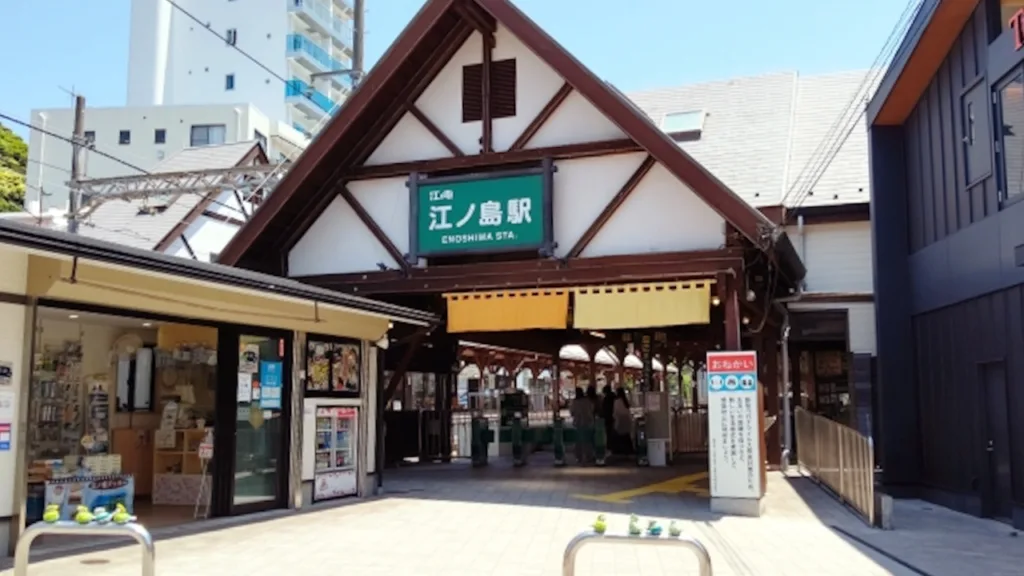
Each of the Enoden’s 15 stations offers a different character and a different set of attractions. The table below maps every station from Fujisawa to Kamakura with connecting lines and key sights, making it easy to plan your day before you board.
| No. | Station | Connecting Lines | Key Attractions |
|---|---|---|---|
| EN01 | Fujisawa | JR Tokaido Line, Odakyu Enoshima Line | — |
| EN02 | Ishigami | — | — |
| EN03 | Yanagikoji | — | — |
| EN04 | Kugenuma | — | — |
| EN05 | Shonan Kaigan-Koen | — | Katase Beach (steps away) |
| EN06 | Enoshima | Odakyu Enoshima Line (Katase-Enoshima Stn, approx. 9 min walk) · Shonan Monorail (Shonan Enoshima Stn, approx. 5 min walk) | Enoshima Shrine (approx. 25 min walk) · Shonan no Sato Aquarium (approx. 5 min walk) |
| EN07 | Koshigoe | — | Koshigoe Fishing Port (approx. 5 min walk) |
| EN08 | Kamakura Koko-mae | — | Famous railway crossing · Shichirigahama Beach (steps away) |
| EN09 | Shichirigahama | — | Shichirigahama Beach (steps away) |
| EN10 | Inamuragasaki | — | Inamuragasaki Park (approx. 5 min walk) |
| EN11 | Gokurakuji | — | Gokurakuji Temple (approx. 2 min walk) · Jojuin Temple (approx. 3 min walk) |
| EN12 | Hase | — | Hasedera Temple (approx. 5 min walk) · Kotokuin (Great Buddha) (approx. 7 min walk) |
| EN13 | Yuigahama | — | Kamakura Museum of Literature (approx. 7 min walk) · Yuigahama Beach (steps away) |
| EN14 | Wadatsuka | — | — |
| EN15 | Kamakura | JR Yokosuka Line | Tsurugaoka Hachimangu Shrine (approx. 10 min walk) · Komachi-dori Street (steps away) |
Hasedera Temple
Founded, according to tradition, in 736 CE, Hasedera is one of Kamakura’s most revered temples. Its principal object of worship is an eleven-faced Kannon statue standing 9.18 meters tall — one of the largest wooden Buddhist sculptures in Japan — known affectionately as Hase Kannon. The on-site Kannon Museum displays treasures from the temple’s collection, including revered statues and religious artifacts. A scenic viewing terrace in the grounds offers sweeping views over Yuigahama Beach and the surrounding coastline.
| Name | Hasedera Temple |
|---|---|
| Address | 3-11-2 Hase, Kamakura, Kanagawa |
| Nearest Station | Approx. 5 min walk from Hase Station (Enoden) |
| Opening Hours | Mar–Sep: 8:00–17:00 / Oct–Feb: 8:00–16:30 |
Kotokuin — The Great Buddha of Kamakura
Kotokuin is a Pure Land Buddhist temple whose principal image — a monumental bronze Amida Buddha — has been designated a National Treasure. Standing roughly 11.3 meters tall and weighing approximately 121 tonnes, the statue has sat in the open air since the temple hall collapsed in the late Muromachi period. Visitors can step inside the hollow figure through a small entrance in its side, an experience that gives a sense of the extraordinary craftsmanship behind it.
| Name | Kotokuin (Great Buddha of Kamakura) |
|---|---|
| Address | 4-2-28 Hase, Kamakura, Kanagawa |
| Nearest Station | Approx. 7 min walk from Hase Station (Enoden) |
Enoshima Shrine
Situated on the island of Enoshima, this venerable shrine is counted among the three great Benzaiten shrines in Japan alongside those at Chikubushima in Shiga and Itsukushima in Hiroshima. The shrine traces its origins to 552 CE and enshrines three sister goddesses. Walking the approach through the bronze torii and the vermillion torii to the inner sanctuary is one of the most atmospheric experiences in the Shonan area.
| Name | Enoshima Shrine |
|---|---|
| Address | 2-3-8 Enoshima, Fujisawa, Kanagawa |
| Nearest Station | Approx. 25 min walk from Enoshima Station (Enoden) |
| Hoanden Hall Hours | 8:30–16:30 |
Enoshima Aquarium (Shonan no Sato)
Centered on the marine ecosystem of Sagami Bay, this aquarium features expansive floor-to-ceiling ocean views, jellyfish galleries, and regular dolphin and penguin shows. It appeals to visitors of all ages, from families with young children to couples, and is one of the most visited attractions on the Shonan coast.
| Name | Enoshima Aquarium (Shonan no Sato) |
|---|---|
| Address | 2-19-1 Katasekaigan, Fujisawa, Kanagawa |
| Nearest Station | Approx. 5 min walk from Enoshima Station (Enoden) |
Tsurugaoka Hachimangu Shrine
The guardian shrine of Kamakura since Minamoto no Yoritomo relocated it to its present site in 1180, Tsurugaoka Hachimangu is the spiritual heart of the city. The approach along Wakamiya-oji — a ceremonial avenue stretching roughly 1.8 kilometers from Kamakura Station — sets the tone for what is one of Japan’s most impressive shrine precincts. The grounds come alive in spring with cherry blossoms and in autumn with vivid maple foliage.
| Name | Tsurugaoka Hachimangu Shrine |
|---|---|
| Address | 2-1-31 Yukinoshita, Kamakura, Kanagawa |
| Nearest Station | Approx. 10 min walk from Kamakura Station (Enoden / JR) |
Komachi-dori Street
Stretching roughly 360 meters from Kamakura Station toward Tsurugaoka Hachimangu, Komachi-dori is lined with around 250 shops, cafes, and restaurants. Local craft goods, Kamakura lacquerware (Kamakurabori), regional sweets, and souvenir foods make this the most popular shopping street in the city.
| Name | Komachi-dori Street |
|---|---|
| Address | Komachi, Kamakura, Kanagawa |
| Nearest Station | Steps from Kamakura Station (Enoden / JR) |
Jojuin Temple (Juju-in)
Said to have been founded in 1219 by Hojo Yasutoki, Jojuin enshrines Fudo Myoo as its principal deity. The 108 stone steps leading to the main hall symbolize the 108 earthly desires in Buddhist teaching, and the temple draws many visitors seeking blessings for relationships and marriage. From the elevated stone steps, panoramic views of Sagami Bay and Yuigahama Beach open up, and in June the grounds are carpeted with hydrangeas.
| Name | Jojuin Temple |
|---|---|
| Address | 1-1-5 Gokurakuji, Kamakura, Kanagawa |
| Nearest Station | Approx. 3 min walk from Gokurakuji Station (Enoden) |
Gokurakuji Temple
Founded in 1259 under the patronage of Hojo Shigetoki, Gokurakuji enshrines Shakyamuni Buddha and belongs to the Shingon Ritsu school. The stone pagoda dedicated to the revered monk Ninshō stands within the grounds as an Important Cultural Property; it is opened to the public only once a year on Hana Matsuri (April 8), the celebration of Buddha’s birthday. The wooden station building of Gokurakuji Station itself is a well-known photographic subject.
| Name | Gokurakuji Temple |
|---|---|
| Address | 3-6-7 Gokurakuji, Kamakura, Kanagawa |
| Nearest Station | Approx. 2 min walk from Gokurakuji Station (Enoden) |
Kamakura Museum of Literature
Housed in a Western-style mansion designated as an important landscape building by the City of Kamakura, this museum displays manuscripts, letters, and first editions from writers with ties to the city — among them Natsume Soseki and Nobel laureate Yasunari Kawabata. The surrounding garden, visible from the reading rooms, looks out over Yuigahama Bay and changes character with every season.
| Name | Kamakura Museum of Literature |
|---|---|
| Address | 1-5-3 Hase, Kamakura, Kanagawa |
| Nearest Station | Approx. 7 min walk from Yuigahama Station (Enoden) |
Inamuragasaki Park
Perched on the clifftop west of the station, this park commands views recognized as one of the 50 Scenic Spots of Kanagawa. At dusk, Enoshima Island, Mount Fuji, and the Izu Peninsula line up along the horizon in one of the most photographed sunsets on the Shonan coast. A walking path winds along the headland, offering a peaceful escape from the busier parts of the route. The site also carries historical weight: it was here that Nitta Yoshisada is said to have crossed the sea to attack Kamakura in the fourteenth century.
| Name | Inamuragasaki Park |
|---|---|
| Address | 1-19 Inamuragasaki, Kamakura, Kanagawa |
| Nearest Station | Approx. 5 min walk from Inamuragasaki Station (Enoden) |
Dining Along the Enoden
The Shonan coastline has long attracted food-lovers as well as sightseers, and several restaurants right along the line are worth building your day around.
bills Shichirigahama
The Japan flagship of Sydney-born chef Bill Granger’s celebrated all-day dining brand, bills Shichirigahama was the label’s first international outpost and remains one of the most iconic breakfast destinations in the country. The menu that won it worldwide acclaim — ricotta pancakes with fresh banana and honeycomb butter, organic scrambled eggs — is served here from 7 AM with the full breadth of Shichirigahama Bay, Enoshima Island, and, on clear days, Mount Fuji laid out before you through floor-to-ceiling windows. Terrace seating lets you take in the sea air directly. Lunch and dinner menus include wagyu burgers, open-faced salmon sandwiches, and a selection of salads for lighter appetites.
| Name | bills Shichirigahama |
|---|---|
| Address | 1-1-1 Shichirigahama, Kamakura, Kanagawa (WEEKEND HOUSE ALLEY) |
| Nearest Station | Approx. 2 min walk from Shichirigahama Station (Enoden) |
| Hours | 7:00–21:00 (irregular closures) |
Shirasuya Koshigoe Fishing Port Branch
Run directly by Kanhama Suisan, a fishing family with roots in Koshigoe Port, this seafood restaurant serves whatever the boats brought in that morning. The signature dishes are the ni-shoku shirasu-don — a rice bowl with both raw and boiled whitebait — and the shirasu-zukushi teishoku, a set meal that showcases whitebait across half a dozen preparations. The seasonal blackboard menu changes with the catch, so every visit offers something different. Note that raw whitebait is unavailable during the closed season, which typically runs from mid-November to mid-March.
| Name | Shirasuya Koshigoe Fishing Port Branch |
|---|---|
| Address | 2-10-13 Koshigoe, Kamakura, Kanagawa |
| Nearest Station | Approx. 3 min walk from Koshigoe Station (Enoden) |
| Hours | 11:00–22:00 (closed Thursdays) |
Kogaei
One of Kamakura’s three great Western-style mansions, the Kogaei estate was built in 1916 and opened as a gastronomic restaurant in 2015. The sprawling 5,000-square-meter grounds on a hillside five minutes from Kamakura Station feel removed from the city entirely, with manicured gardens and seasonal blooms surrounding the century-old building. A chef change in 2024 brought a new direction: modern Spanish cuisine drawing on the estate’s own kitchen garden and local Kamakura and Shonan produce. The restaurant has been recognized in the Tabelog French EAST Top 100 list. Lunch and dinner courses are available; advance reservation is strongly recommended.
| Name | Kogaei |
|---|---|
| Address | 1-7-23 Ogicho, Kamakura, Kanagawa |
| Nearest Station | Approx. 5 min walk from Kamakura Station West Exit (Enoden / JR) |
| Hours | Lunch: 11:00–15:00 / Dinner: 17:30–21:00 (closed Tue & Wed) |
Day Pass Options
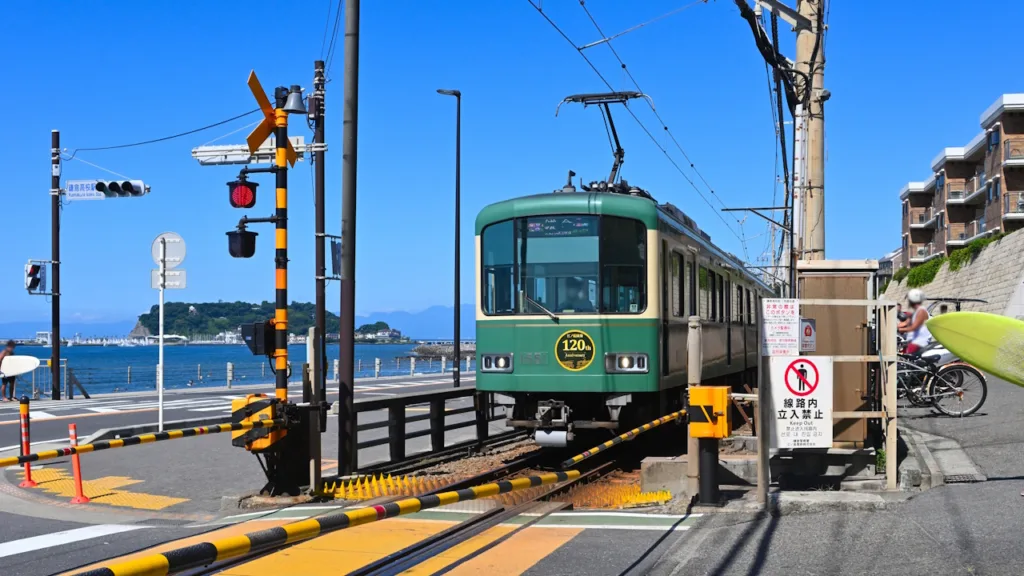
IC cards such as PASMO and Suica are accepted on the Enoden, but they carry no discount. For sightseeing that involves multiple stops, a day pass will almost always save you money.
| Pass Name | Coverage | Adult Fare | Child Fare | Where to Buy |
|---|---|---|---|---|
| Enoden 1-Day Pass “Noriorikun” | Unlimited rides on the full Enoden line | ¥800 | ¥400 | EMot app, all station ticket machines, Pass Case app |
| Kamakura Free Kankyou Tegata | Enoden (Kamakura–Hase) + 5 Kamakura city bus routes | ¥900 | ¥450 | Enoden Kamakura/Hase stations, Keikyu Bus offices |
| Odakyu Enoshima–Kamakura Free Pass | Full Enoden line + Odakyu Enoshima Line (Fujisawa–Katase-Enoshima) + discounted round-trip on Odakyu from your departure station | Varies by station (from Shinjuku: ¥1,640) | Varies (¥410–¥430) | EMot app, Odakyu station ticket machines and windows |
Enoden 1-Day Pass “Noriorikun”
The Noriorikun allows unlimited boarding and alighting at any Enoden station for a full day, and comes with discounts and special offers at around 30 facilities along the line. It can be purchased through the EMot app, at ticket machines in any Enoden station, or via the Pass Case app.
Kamakura Free Kankyou Tegata (Environmental Pass)
In addition to the Enoden between Kamakura and Hase stations, this pass covers five local bus routes operated by Keikyu Bus and Enoden Bus, connecting Kamakura Station to areas including Kita-Kamakura, Daibutsu-mae (for the Great Buddha), Jomyoji, and Daitoryu. Around 70 shops and temples along the routes offer discounts and small gifts to pass holders. Available year-round except January 1.
Sales locations: Enoden Kamakura Station (7:00–17:00) and Hase Station (7:00–17:00); Keikyu Bus Kamakura Office (9:00–17:00); Kamakura Station Bus Information Booth (weekdays 10:00–18:00, weekends 9:00–14:00).
Odakyu Enoshima–Kamakura Free Pass
Ideal for visitors arriving from Tokyo or the greater Odakyu network, this pass bundles a discounted round-trip ticket from your departure station to Fujisawa, unlimited riding on the Odakyu Enoshima Line between Fujisawa and Katase-Enoshima, and unlimited riding on the full Enoden line. It also includes discounts at a range of attractions, cafes, and shops in the Enoshima and Kamakura areas. Tickets can be purchased up to one month in advance via the EMot app, at Odakyu station ticket machines and windows, and at select travel agencies.
Sample fares (adult / child):
| Departure Station | Adult | Child |
|---|---|---|
| Shinjuku | ¥1,640 | ¥430 |
| Shimokitazawa | ¥1,570 | ¥430 |
| Noborito | ¥1,400 | ¥430 |
| Machida | ¥1,180 | ¥430 |
| Yamato | ¥1,040 | ¥430 |
| Shonandai | ¥950 | ¥430 |
| Fujisawa | ¥810 | ¥410 |
Child fares vary by departure station: ¥410 from Fujisawa, Hon-Kugenuma, Kugenuma-Kaigan, and Katase-Enoshima; ¥430 from all other stations.
A Suggested One-Day Itinerary
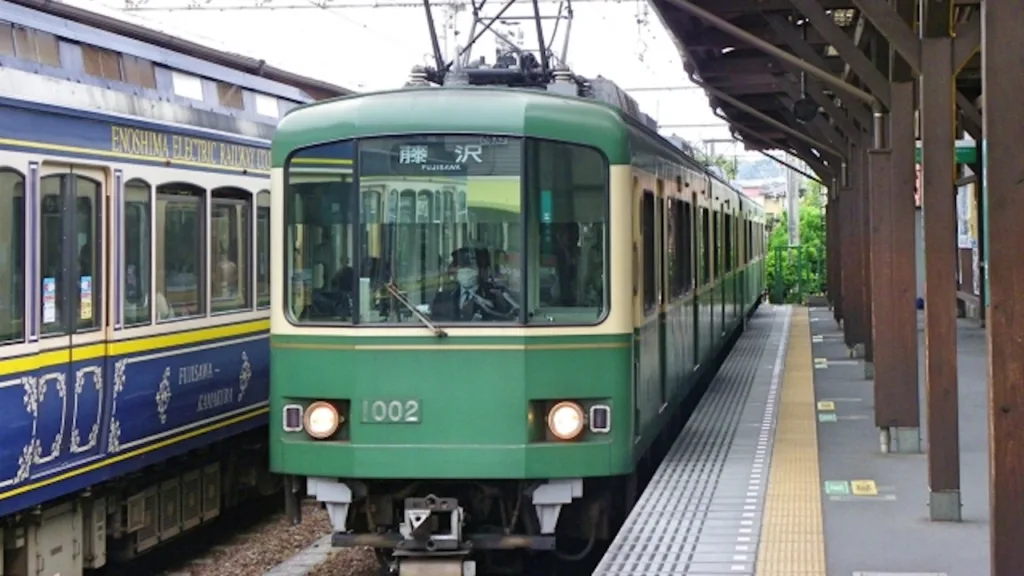
Using the Kamakura Free Kankyou Tegata, a rewarding day might unfold like this: start at Kamakura Station and take the bus north to Kita-Kamakura, where Engakuji and Kenchoji temples can be explored on foot. Return by bus to Tsurugaoka Hachimangu Shrine for late morning, then browse Komachi-dori for lunch. Switch to the Enoden in the afternoon to visit the Great Buddha at Kotokuin and Hasedera Temple, then ride out to Inamuragasaki Park in time for sunset. The entire journey — bus and train combined — is covered by a single ¥900 pass.
Hotels Along the Enoden
Kamakura Prince Hotel
Set on a hillside eight minutes from Shichirigahama Station, Kamakura Prince Hotel offers uninterrupted views of Sagami Bay from every room and from its restaurant. On a clear day, Enoshima Island and Mount Fuji appear together on the horizon. A Noriorikun day pass is included in certain room plans, making the hotel a natural base for an Enoden sightseeing day.
| Name | Kamakura Prince Hotel |
|---|---|
| Address | 1-2-18 Shichirigahama-higashi, Kamakura, Kanagawa |
| Nearest Station | Approx. 8 min walk from Shichirigahama Station (Enoden) |
HOTEL AO KAMAKURA
A design-forward hotel a short three-minute walk from Yuigahama Station, HOTEL AO KAMAKURA draws on the natural character of Kamakura in its interiors and atmosphere. Considered service and thoughtfully appointed rooms have earned it consistently strong reviews, and its location is convenient for day trips to the Great Buddha and Hasedera Temple.
| Name | HOTEL AO KAMAKURA |
|---|---|
| Address | 1-9-23 Yuigahama, Kamakura, Kanagawa |
| Nearest Station | Approx. 3 min walk from Yuigahama Station (Enoden) |
Kamakura Park Hotel
Perched on a wooded hillside five minutes from Inamuragasaki Station, Kamakura Park Hotel is a full resort property where every room faces the ocean. Views take in Sagami Bay, Enoshima Island, and Mount Fuji, and the hotel’s restaurants serve both Japanese cuisine and French cooking, making it a fine choice for special occasions or a longer stay.
| Name | Kamakura Park Hotel |
|---|---|
| Address | 2-3-7 Inamuragasaki, Kamakura, Kanagawa |
| Nearest Station | Approx. 5 min walk from Inamuragasaki Station (Enoden) |
Combine Your Trip with the Shonan Monorail
The Shonan Monorail is another distinctive way to experience the Shonan area alongside the Enoden. Running 8 stations in approximately 14 minutes between JR Ofuna Station and Shonan Enoshima Station, it uses a suspended monorail system — the carriage hangs below the rail rather than sitting on top — one of only two such lines in Japan. The route through sharp curves, steep gradients, and tunnels at a top speed of 75 km/h has earned it the nickname “the Shonan roller coaster,” and riding in the front car is a genuine thrill. Seven rainbow-colored trains operate on the line, and the terminal Shonan Enoshima Station is just a five-minute walk from Enoden Enoshima Station, making a combined loop itinerary — Shonan Monorail from Ofuna to Enoshima, then Enoden along the coast to Kamakura, then JR back to Ofuna — one of the most enjoyable ways to cover the whole area.
| Line | Shonan Monorail Enoshima Line (Ofuna – Shonan Enoshima) |
|---|---|
| Stations / Journey Time | 8 stations / approx. 14 min |
| Top Speed | 75 km/h |
| 1-Day Free Pass | Adult ¥750 / Child ¥380 (station machines and online) |
| From Shonan Enoshima Station | Approx. 5 min walk to Enoden Enoshima Station |
Make the Most of Kamakura with a Private Tour Conductor
Navigating the Enoden, timing temple visits to beat the crowds, and knowing which platforms to use for connections are the kinds of details that can make or break a day trip. If you’d like to experience Kamakura and the Shonan coast with the confidence of having a dedicated professional alongside you, a private tour conductor service is available through e-stay.jp. Your conductor will handle the logistics, accompany you throughout the day, and assist in English — so you can focus entirely on the journey.
Explore private tour conductor services →
Kamakura Is Best Experienced One Stop at a Time
The Enoden is not just a way to get around Kamakura — it is a piece of the place itself. More than 120 years after its first train ran between Fujisawa and the coast, this compact line continues to offer one of the most atmospheric rail journeys in Japan. With the right pass, a flexible itinerary, and an early start to beat the crowds, a day along the Enoden can be one of the most memorable experiences of any trip to Japan.
Weekends draw the heaviest visitor numbers, so a weekday visit or an early morning departure is recommended. Board at Fujisawa or Kamakura, find a window seat, and let the Shonan coast unfold.