



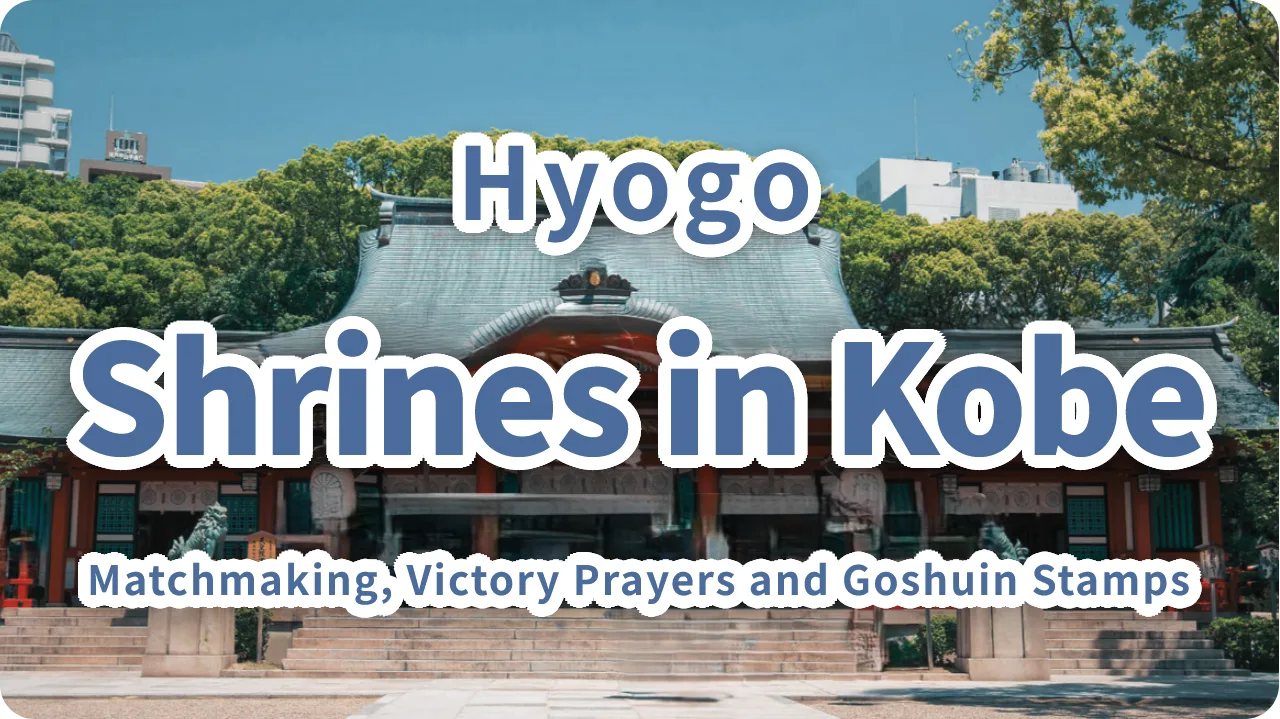
Travel insights from a tour conductor — today’s destination: the shrines of Kobe.
Kobe has built its name on harbor views and Western-style mansions, yet the city also holds shrines with roots stretching back to legend. This guide covers nine of them, sorted by what visitors come to pray for: matchmaking at Ikuta and Himuro, victory at Yuzuruha and Ninomiya, scholarship at Kitano Tenman, and more. You’ll find visiting hours, access details and goshuin (the calligraphed stamps shrines give to visitors) for each.
Four Things to Know Before You Go
Kobe’s shrines reward a little planning. A few practical quirks catch first-time visitors off guard.
The Nine Shrines Are Spread Across the City
These shrines sit in five different wards. Yuzuruha and Hokura are in the eastern suburbs near Mikage and Okamoto stations, and Maiko Roku Shrine is out in Tarumi Ward near the Akashi Kaikyo Bridge. Ikuta and Ninomiya, by contrast, are a short walk from the downtown Sannomiya area. Trying to cover all nine in a single day is a stretch, so splitting the list by area makes for a calmer trip.
Gate Times and Goshuin Hours Don’t Match
Being allowed into the grounds doesn’t mean you can collect a goshuin. Ikuta Shrine opens at 7:00, but its closing time shifts with the season, anywhere from 17:00 to 18:30. Kitano Tenman Shrine opens its gate from 7:30 to 17:00, and the office at Nagata Shrine hands out goshuin and charms from 9:00 to 16:00. Arrive late in the afternoon and you may find the gate open but the stamp desk closed.
Hokura Shrine Means a Steep Hike
Hokura Shrine sits on a hillside 185 meters above sea level. From Hankyu Okamoto Station it’s a 25 to 30 minute walk, and the final stretch is steep. Wear sturdy shoes. The payoff is a wide view over Osaka Bay, but you’ll earn it.
Minatogawa Shrine Has a Misleading Station Name
The nearest station to Minatogawa Shrine is Okurayama on the Kobe Municipal Subway, about five minutes away on foot. Plenty of visitors get off at Minatogawa-koen Station, one stop to the west, because of the name, and end up with an 11 minute walk. JR Kobe Station is roughly three minutes from the shrine, so pick your stop based on the line you’re riding.
A History Shaped by Legend, Warlords and Earthquakes
Kobe’s shrines carry stories of an empress’s voyage, a warlord’s capital and a city rebuilt after disaster. Knowing a little of that history changes how the grounds look.
How Ikuta Shrine Gave Kobe Its Name
Ikuta Shrine is said to date from the year 201, the first year of Empress Jingu’s regency, and it appears in the Nihon Shoki, one of Japan’s oldest chronicles. The families who served the Ikuta deity were called kanbe, or “god’s household,” and that word is the source of the name Kobe. The shrine once owned the land of what is now all of Chuo Ward. Local tradition even holds that rice gathered from around the country was brewed into sake in its precincts, a story linked to the origins of Nada’s famous sake industry.
The Eight-Shrine Pilgrimage and Ninomiya’s Name
According to tradition, Empress Jingu made a pilgrimage to eight shrines around Ikuta after enshrining the Ikuta deity. They were numbered one to eight in the order she visited them, and visitors still walk the “Kobe Hassha Meguri” route today. Ninomiya Shrine gets its name, which means “second shrine,” from the fact that it was her second stop.
Taira no Kiyomori and the Short-Lived Capital
In 1180, the warlord Taira no Kiyomori moved the imperial capital to Fukuhara, in present-day Kobe. To guard the new capital’s unlucky northeastern corner, a deity was invited from Kitano Tenmangu in Kyoto to a new shrine, and that became Kitano Tenman Shrine. Himuro Shrine has its own link to Kiyomori. He brought the goddess Ichikishima-hime here from Miyajima in Hiroshima during construction of the new capital, and the shrine counts as one of the seven Hyogo-tsu Benzaiten shrines. Its name refers to an ice cellar, and the Nihon Shoki records the discovery of one nearby. The old ice cellar site in the grounds is thought to be that place.
Rebuilding After 1995
Minatogawa Shrine honors the 14th-century warrior Kusunoki Masashige. It was founded in 1872 by order of Emperor Meiji. The grounds include the site traditionally identified as the place where Masashige died, plus a memorial stone raised by the lord of Mito, Tokugawa Mitsukuni. Yuzuruha Shrine lost its shrine office in the 1995 Great Hanshin-Awaji Earthquake, and its torii gate and stone lanterns collapsed. Local parishioners pulled together to rebuild. Nagata Shrine was damaged as well and restored by 2000.
What Makes Kobe’s Shrines Special
Each shrine here has a clear identity, so it’s easy to choose one that suits your hopes. Some are famous for romance, others for success in competition, exams or business. Their goshuin and goshuin books differ in design too, which gives collectors a reason to visit more than one.
Two Shrines for Love and Matchmaking
Ikuta and Himuro are where people go to pray for love. Both have clear legends behind them, and both offer small rituals to go with your wish.
Ikuta Shrine: Matchmaking in the Heart of Sannomiya
Ikuta Shrine stands a short walk north of Sannomiya Station, in the middle of downtown Kobe. It enshrines the goddess Wakahirume-no-mikoto. Together with Nagata and Minatogawa, it makes up Kobe’s “big three” shrines, and its grounds hold several smaller shrines devoted to everything from business success to family safety.
Behind the main hall lies Ikuta Forest, a patch of woodland that was once a battlefield during the Genpei War. Step inside and the downtown noise falls away almost at once.
Love charms are the shrine’s specialty. The “water fortune” slip, in which writing floats to the surface once it touches water, is a favorite. For goshuin, the regular offerings are two: one for the main shrine and one for the Ichikishima Shrine, which honors Benzaiten, one of Kobe’s seven lucky gods. Seasonal limited editions are issued too.
| Item | Details |
|---|---|
| Shrine | Ikuta Shrine |
| Hours | Gate opens at 7:00 (closing time varies by season, 17:00 to 18:30); goshuin and charms 9:00 to 16:30 |
| Closed | Open year-round |
| Address | 1-2-1 Shimoyamate-dori, Chuo Ward, Kobe, Hyogo |
| Access | About 10 minutes on foot from JR Sannomiya Station |
Himuro Shrine: The Love Letter Post
Himuro Shrine sits in a residential neighborhood in Hyogo Ward. It enshrines Okuninushi, a god of matchmaking, along with Ichikishima-hime, and has a history of roughly 1,800 years. Locals call it “Renai Benten,” the love goddess shrine.
Legend says Taira no Michimori and his wife, Kozaisho, said farewell here on the eve of a battle. Michimori never returned. The couple’s story, however sad, is credited with building the shrine’s reputation for romance.
In front of the main hall stands the “Love Post.” Visitors write a detailed description of their ideal partner on a “love letter” and drop it in. The paper is provided at the shrine, so it helps to think about what you’ll write beforehand.
| Item | Details |
|---|---|
| Shrine | Himuro Shrine |
| Hours | Grounds open to visitors at all times; shrine office 8:00 to 18:00 |
| Closed | Open year-round |
| Address | 2-15-1 Himuro-cho, Hyogo Ward, Kobe, Hyogo |
| Access | Take Kobe City Bus Route 7 from JR Sannomiya Station (about 23 minutes) to Ishii-cho, then walk about 5 minutes |
Three Shrines for Victory and Success
Yuzuruha, Ninomiya and Minatogawa draw people facing exams, competitions and career turning points. Each has a symbol or story tied to winning.
Yuzuruha Shrine: The Three-Legged Crow
Yuzuruha Shrine is in a quiet residential area of Higashinada Ward, about five minutes on foot from Hankyu Mikage Station. Its main hall is said to have been built in 849, and it enshrines the Kumano deity. According to legend, Empress Jingu prayed for victory in battle here and dedicated a bow and armor.
The shrine’s emblem is the yatagarasu, a three-legged crow sent as the messenger of the Kumano deity. The Japan Football Association uses the same bird as its symbol, and in 2013 the shrine placed a granite soccer ball carved with the crow in its grounds. The name is pronounced “Yuzuruha,” which has made it a pilgrimage spot for fans of the figure skater Yuzuru Hanyu, who has visited several times. Votive plaques from supporters hang near the main hall.
An old muku tree near the entrance is a designated natural monument of Kobe. The approach, paved with local Mikage granite, feels far from the neighborhood around it.
| Item | Details |
|---|---|
| Shrine | Yuzuruha Shrine |
| Hours | Grounds open at all times; shrine office 9:00 to 17:00; prayer service reception 9:30 to 16:00 |
| Closed | Open year-round |
| Address | 2-9-27 Mikage-gunke, Higashinada Ward, Kobe, Hyogo |
| Access | About 5 minutes on foot from Hankyu Mikage Station |
Ninomiya Shrine: A Local Favorite for Winning Luck
Ninomiya Shrine sits about eight minutes northeast of Sannomiya Station, near the Ninomiya shopping street. It’s dedicated to Masakatsu Akatsu Katsuhayahi Ame-no-oshihomimi-no-mikoto, the eldest son of the sun goddess Amaterasu. Locals call him “Masakatsu-san,” and students, job seekers and couples come to pray for good fortune.
Fans of the Japanese idol group Arashi also visit, since one member shares the shrine’s name. Charms come in five colors matching the group’s member colors. In the grounds stands a zelkova tree believed to be over 700 years old, a survivor of wartime destruction.
| Item | Details |
|---|---|
| Shrine | Ninomiya Shrine |
| Hours | Gate open 7:00 to 17:00; shrine office 9:00 to 17:00 |
| Closed | Open year-round |
| Address | 3-1-12 Ninomiya-cho, Chuo Ward, Kobe, Hyogo |
| Access | About 8 minutes on foot northeast of Sannomiya Station |
Minatogawa Shrine: Home of “Nanko-san”
Minatogawa Shrine stands near Kobe Station in a broad, green compound. Locals call it “Nanko-san,” after Kusunoki Masashige, a general remembered for wisdom, benevolence and courage. People come to ask for good fortune and the fulfillment of big ambitions.
The grounds hold the traditional site of Masashige’s last stand and the memorial stone raised by Tokugawa Mitsukuni. It’s a rare spot where a city shrine and a historic site share the same ground. The goshuin carries the chrysanthemum-on-water crest of the Kusunoki family.
| Item | Details |
|---|---|
| Shrine | Minatogawa Shrine |
| Hours | Sunrise to sunset |
| Closed | Open year-round |
| Address | 3-1-1 Tamon-dori, Chuo Ward, Kobe, Hyogo |
| Access | About 3 minutes on foot from JR Kobe Station; about 5 minutes from Okurayama Station |
Two Shrines for Scholarship and Sweeping Views
Some shrines reward the climb. Kitano Tenman and Hokura Shrine each pair a prayer with a view.
Kitano Tenman Shrine: Above the Foreign Mansions
Kitano Tenman Shrine stands just east of the Weathercock House, one of Kobe’s best-known Western-style mansions, and enshrines Sugawara no Michizane, the god of learning. The Kitano neighborhood takes its name from the shrine. The main hall, built roughly 300 years ago, is a designated traditional structure of Kobe City, along with the front hall and other buildings.
From the terrace in front of the hall you look out over the city and the port, which is why locals sometimes call it the “shrine in the sky.” During exam season the grounds fill with votive plaques left by students. Alongside the regular goshuin, a monthly paper-cut version is available.
| Item | Details |
|---|---|
| Shrine | Kitano Tenman Shrine |
| Hours | Gate 7:30 to 17:00; shrine office 9:00 to 17:00 |
| Closed | Open year-round |
| Address | 3-12 Kitano-cho, Chuo Ward, Kobe, Hyogo |
| Access | About 15 minutes on foot from JR Sannomiya Station |
Hokura Shrine: The Lone Flame of Nada
Hokura Shrine clings to the slope of Mt. Hokura in Higashinada Ward, 185 meters up, with views across Osaka Bay. It’s listed in the Engishiki, a 10th-century register of shrines, and enshrines Shiinetsuhiko-no-mikoto among others. Pottery used in rituals from the middle Yayoi period has turned up in the grounds, a sign that people have treated this hilltop as sacred for a very long time.
The shrine’s best-known feature is the stone lantern called Nada no Hitotsubi, “the lone flame of Nada,” which stands south of the main hall. Ships out at sea once used it as a navigation marker, and the flame is lit at dusk. A plum grove on the grounds blooms in season.
| Item | Details |
|---|---|
| Shrine | Hokura Shrine |
| Address | 680 Kitahata, Motoyama-cho, Higashinada Ward, Kobe, Hyogo |
| Access | About 25 to 30 minutes on foot from Hankyu Okamoto Station (mountain trail) |
Two Shrines for Business Luck and Goshuin Collectors
One of these shrines is a neighborhood institution, the other a magnet for goshuin collectors. Both reward visits timed to a particular day.
Nagata Shrine: “Nagata-san” and the Festival of Demons
Legend holds that Nagata Shrine was founded after Empress Jingu, returning from Silla, received an oracle at the Muko harbor gate. The main deity, Kotoshironushi, is known as Ebisu, a god of business, good fortune and protection from misfortune, and locals affectionately call the shrine “Nagata-san.”
Every year on February 3, the Setsubun festival brings the Koshiki Tsuina ritual, which dates to the Muromachi period. Seven demons wave torches on stage to burn away the troubles of the new year, and the charred torch ends demons toss aside are said to ward off evil if hung at home. On the first of each month, a visit known as “Otsuitachi-mairi” draws large crowds. The grounds also hold Kusunomiya Inari Shrine, a nationally registered tangible cultural property.
| Item | Details |
|---|---|
| Shrine | Nagata Shrine |
| Hours | Gate 5:00 to 18:00 (from 6:00 October to March); shrine office 9:00 to 16:00 |
| Closed | Open year-round |
| Address | 3-1-1 Nagata-cho, Nagata Ward, Kobe, Hyogo |
| Access | About 5 minutes on foot from Nagata Station on the Kobe Municipal Subway |
Maiko Roku Shrine: Monthly Goshuin by the Sea
Maiko Roku Shrine stands in Maiko, in Tarumi Ward near the Akashi Kaikyo Bridge, about two minutes east of Sanyo-Nishimaiko Station on the Sanyo Electric Railway. Old records say a shrine to six deities was built here in 1686. Today it enshrines Izanagi, Izanami, Amaterasu, Susanoo, Ebisu and Tsukuyomi.
The shrine is known for its variety of goshuin. Besides the regular stamp, there’s a “Muika-mairi” edition given only to those who visit on the sixth of the month, plus flower-themed designs that change with the seasons. The shrine also takes part in the “Hyogo Susanoo Four-Shrine Pilgrimage,” a joint goshuin project among shrines that enshrine Susanoo.
| Item | Details |
|---|---|
| Shrine | Maiko Roku Shrine |
| Hours | Visits allowed at all times; goshuin and charms 9:00 to 16:00 |
| Address | 1-5-7 Nishimaiko, Tarumi Ward, Kobe, Hyogo |
| Access | About 2 minutes on foot east of Sanyo-Nishimaiko Station (Sanyo Electric Railway) |
Nearby Spots Worth a Stop
A shrine visit pairs well with a stroll nearby. These three are within walking distance of the shrines above.
Kitano Foreign Residences District
Kitano, home to Kitano Tenman Shrine, was developed as a foreign residential quarter in the late Meiji and early Taisho periods. Western-style houses line its slopes. Walking down from the shrine’s hilltop past the mansions is a classic way to get a feel for Kobe, and well worth building into your day.
Sannomiya Shrine
Sannomiya Shrine gave the Sannomiya district its name. It’s about eight minutes on foot from JR Sannomiya Station, right beside the former foreign settlement. A monument by the torii gate marks the site of the 1868 Kobe Incident. Because it belongs to the same eight-shrine circuit as Ikuta and Ninomiya, it fits neatly into a downtown shrine walk.
Kobe Nunobiki Herb Garden and the Uroko House
Around Shin-Kobe Station you’ll find the Uroko House, one of the city’s foreign mansions, and the Kobe Nunobiki Herb Garden, a leafy escape. If you’ve just come down from Kitano Tenman Shrine, continuing toward Shin-Kobe is an easy way to trade city streets for greenery. We’d suggest adding it to the day.
Hotels for a Kobe Shrine Trip
Because the shrines are spread out, a hotel with good transport links makes planning easier. These three combine access with views.
ANA Crowne Plaza Kobe
Part of IHG’s hotel family, this 37-story hotel connects directly to Shin-Kobe Station, where the Shinkansen stops. Every guest room is on the 14th floor or higher, with views over the city and Osaka Bay. Sannomiya is a two-minute subway ride away, which puts Kitano Tenman, Ikuta and Ninomiya within easy reach. It’s a strong base for a shrine-focused trip.

Hotel Okura Kobe
This 35-story hotel rises over Meriken Park, about a 10 minute walk from JR Motomachi Station. A free shuttle bus runs from the Sannomiya bus terminal, so getting back to the center is simple. With sea and mountain views, it works well as a base for a day at Minatogawa and Nagata shrines.
Kobe Meriken Park Oriental Hotel
Shaped like a ship against the harbor, this hotel gives every room a balcony with a sea breeze. It’s roughly 15 minutes on foot from JR Motomachi Station, and a free shuttle bus links it with Sannomiya. Planning tomorrow’s shrine route over a harbor night view makes a stay here worthwhile.
Traveling Kobe’s Shrines with a Tour Conductor
A route that jumps between Mikage, Sannomiya, Kobe Station and Tarumi involves a lot of trains, buses and timing. That’s where a tour conductor comes in. A tour conductor doesn’t lead you around the shrines as a guide would. The job is managing the itinerary so the day runs smoothly.
For a group visiting several shrines, that means keeping to the schedule, which matters when gate times and goshuin hours differ from place to place. It means checking that luggage is where it should be after each change of train or bus. If a train is delayed or a bus is missed, the conductor handles emergency re-booking so the rest of the day isn’t lost. Interpretation assistance is also part of the job, helping visitors who don’t speak Japanese communicate at stations, hotels and restaurants.
The result is a trip where visitors can concentrate on the experience rather than the logistics. To learn how a dedicated tour conductor can support your Japan trip, visit tours.e-stay.jp.
Making the Most of Kobe’s Shrines
Kobe’s shrines are tied to the city’s history, from Empress Jingu’s legend to Kiyomori’s capital and the rebuilding after 1995. Ikuta and Himuro for love, Yuzuruha and Ninomiya for victory, and Kitano Tenman for study give you a shrine for nearly every wish.
A sensible plan is to walk the downtown trio of Ikuta, Sannomiya and Ninomiya on one day, then head to Yuzuruha and Hokura in Higashinada, or to the shrines of Hyogo and Nagata wards, on another. Leave a margin before closing time and you’ll collect your goshuin without rushing.
Wander through the Kitano mansion district, climb to Kitano Tenman Shrine for the view, and finish the evening in the glittering night view from ANA Crowne Plaza Kobe at Shin-Kobe Station. It’s a day that captures what makes Kobe’s shrines so special, and one we’d gladly recommend.