

Travel insights from a tour conductor — today’s destination: Yokohama.
Close to Haneda Airport and well connected by rail, Yokohama packs a giant waterfront Ferris wheel, a 19th-century trading port, Japan’s largest Chinatown and a classical garden into one stretch of coast. This guide sorts 21 attractions by who’s travelling, from families with small children to couples, friends and solo travelers. A few big names are closed at the moment, so the first section covers those.
What’s Closed or Limited Right Now
Several Yokohama attractions are shut for major repairs, and a few others run on unusual schedules. Knowing this before you plan saves a wasted trip.
Yokohama Landmark Tower’s Sky Garden Is Closed
The Sky Garden, the observation floor on the 69th level of Yokohama Landmark Tower, has been closed since the end of 2025 for large-scale repair work. The Yokohama Royal Park Hotel inside the tower is also temporarily closed for the same reason. The shops and restaurants in Landmark Plaza at the foot of the tower are still open, so the building remains a good place to eat and shop.
The Equine Museum Is Closed
The Equine Museum of Japan (Uma no Hakubutsukan) has been closed since 28 January 2024 while its collection is restored. The neighbouring pony centre inside Negishi Racecourse Memorial Park is also shut for construction work.
Maintenance Days and Weather Changes
Yokohama Marine Tower sets aside regular maintenance days, and strong winds can interrupt service on its observation deck. Yokohama Cosmo World closes on Thursdays, though that can change when a Thursday falls on a public holiday or a big event is held nearby.
How Port Opening and Earthquake Recovery Shaped Yokohama
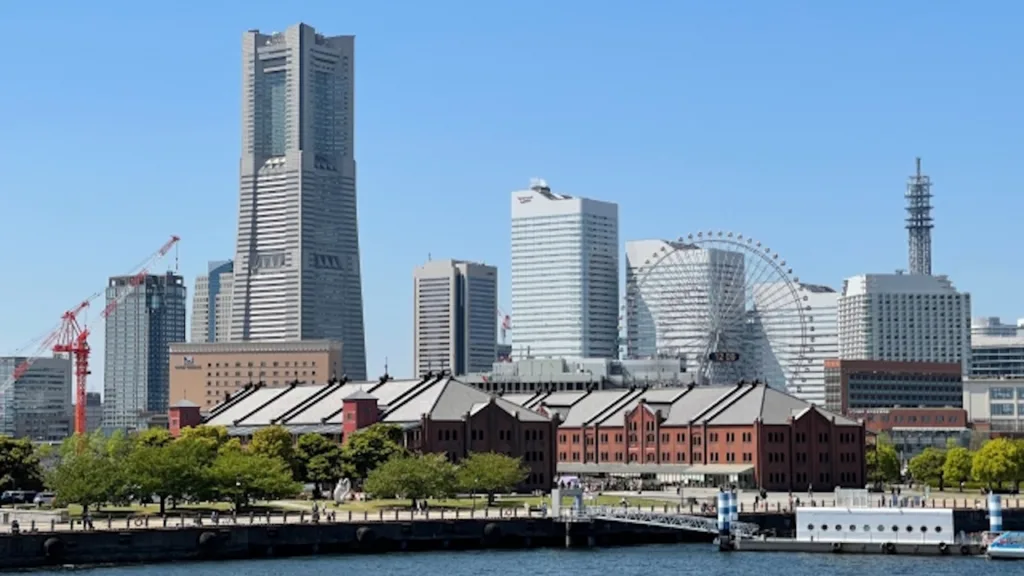
Most of Yokohama’s best-known sights trace back to two events: the opening of the port in 1859 and the Great Kanto Earthquake of 1923. Knowing the story makes the waterfront far easier to read.
Chinatown and Guan Yu Temple
Yokohama Chinatown began with the port’s opening in 1859. Westerners who landed in the new treaty port relied on Chinese go-betweens, mostly from Guangdong, who could read and write Chinese characters. Yokohama Kanteibyo, the Guan Yu Temple, grew from a small shrine built by residents around 1873 near 140 Yamashita-cho.
Fire has hit it again and again. The earthquake destroyed the temple in 1923, and the second building burned in the 1945 air raids. A third temple went up in 1947 and was damaged by a fire on New Year’s Day 1986. The current fourth temple was completed in 1990, rebuilt by a Chinatown community that refused to give up on it.
Red Brick Warehouse and the Port Anniversary Landmarks
Yokohama Red Brick Warehouse began as a logistics base soon after the port opened. Building No. 2 dates to 1911 and Building No. 1 to 1913. The city bought the complex from the national government in 1992 and reopened it in 2002 as a cultural and commercial facility.
Other landmarks mark the port’s 100th anniversary. The Silk Center opened in 1959 to promote the silk trade and tourism, and the 106-metre Yokohama Marine Tower followed in 1961.
Sankeien Garden and Its Founder’s Vision
Sankeien was created by Hara Sankei, a businessman who made his fortune in silk trading, and opened to the public on 1 May 1906. The garden covers about 17.5 ha and holds 17 historic buildings moved from Kyoto, Kamakura and other places to save them from neglect. Ten are Important Cultural Properties and three are designated tangible cultural properties of Yokohama City. In its early years the outer garden stayed open around the clock, reflecting Hara’s belief that beautiful things should be shared.
Minatomirai Station: The Easiest Starting Point
Many of Yokohama’s top attractions sit within walking distance of Minatomirai Station on the Minatomirai Line, which is a big reason the city works so well for sightseeing. The Yokohama Museum of Art and Landmark Tower are each about three minutes away on foot, and Cosmo World is about two minutes. Cup Noodles Museum takes about eight minutes, and Red Brick Warehouse about twelve.
That makes it easy to combine several stops in half a day. The sections below are organized by travel style: families, couples, hidden gems, friends and solo travelers.
Yokohama Attractions for Families
Many family-friendly spots here are indoors, so rain rarely ruins the plan. They range from hands-on museums to a huge hillside park.
Cup Noodles Museum Yokohama
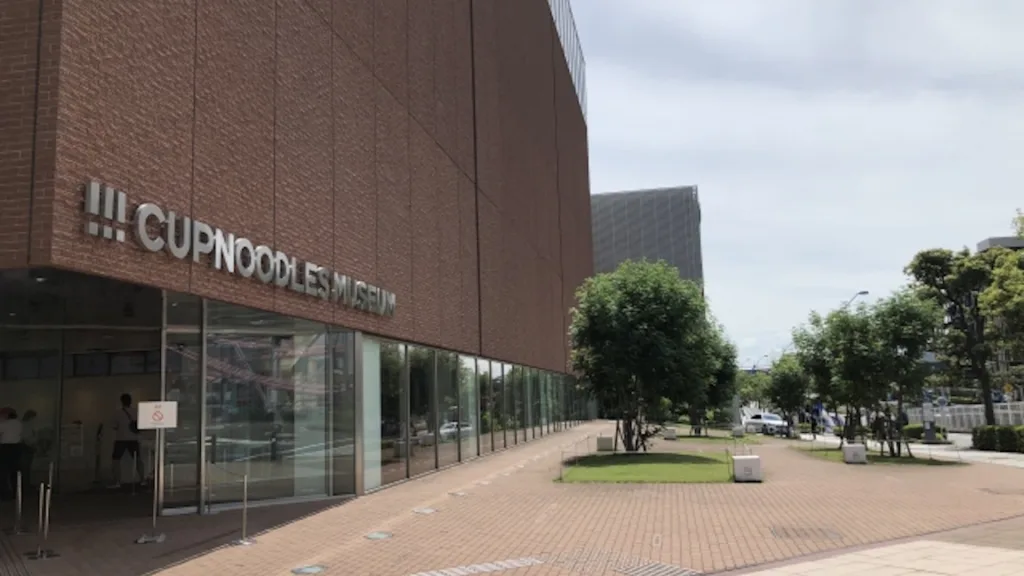
The museum introduces the creative thinking of Momofuku Ando, who founded Nissin Foods and invented the world’s first instant noodles. Opened in September 2011, it has welcomed more than 13 million visitors.
The top draw is My Cup Noodles Factory, where you design your own cup and choose the soup and toppings. There’s also the Chicken Ramen Factory, where you make the original instant noodles by hand, and the Noodles Bazaar food attraction, where you taste noodles from eight countries. Hours are 10:00 to 18:00 (last entry 17:00), and the museum is closed on Tuesdays (the next day if Tuesday is a holiday) and over the New Year period. It’s about eight minutes on foot from Minatomirai and Bashamichi stations, or about twelve from Sakuragicho Station.
Yokohama Anpanman Children’s Museum
Yokohama Anpanman Children’s Museum opened on 20 April 2007 and moved to its current site at 6-2-9 Minatomirai on 7 July 2019. The earlier “Yokohama Anpanman Children’s Museum & Mall” closed when the new building opened.
The third-floor museum has a main stage, a bakery-themed play area and a school-themed area, and the whole facility is indoors, which suits rainy or very hot days. The first floor has shops and restaurants. The museum is open 10:00 to 17:00 (last entry 16:00), while the first-floor shops and restaurants run from 10:00 to 18:00.
Hamagin Space Science Center
Hamagin Children’s Space Science Museum (Hamagin Kodomo Uchu Kagakukan) is a hands-on science museum about three minutes on foot from Yokodai Station on the JR Negishi Line. Its five floors above ground and two below are designed to feel like a giant spaceship.
The planetarium is the main attraction. Its 23-metre dome uses a projector named Hama-Ginga (MEGASTAR-IIA), which can show at least 700 million stars and earned a Guinness World Record in February 2023. The museum is open 9:30 to 17:00 (last entry 16:00) and closes on the first and third Tuesday of each month and over the New Year holidays. Temporary closures also happen.
Kodomo no Kuni
Kodomo no Kuni (“Children’s Land”) sprawls across about 100 ha of the Tama Hills, straddling Yokohama’s Aoba Ward and Tokyo’s Machida City. It opened on 5 May 1965 after the public’s wedding gifts to the Crown Prince in 1959 were set aside for a children’s facility.
Inside you’ll find a dairy farm, a miniature steam train, cycling paths and the longest roller slide in Yokohama at 115 metres. Winter brings an ice rink, and summer brings a swimming pool. The park is about three minutes on foot from Kodomo no Kuni Station on the Tokyu Kodomonokuni Line. It’s open 9:30 to 16:30, closed on Wednesdays (open if Wednesday is a holiday) and on 31 December and 1 January.
Yokohama Hakurankan
Yokohama Hakurankan is a three-storey themed shopping centre on Chinatown’s main avenue, which opened on 18 March 2013. The ground floor holds a large market of Yokohama souvenirs, the dim sum counter Kaikaro and a stall where artists write your name in decorative calligraphy.
On the second floor, Baby Star Land serves Japan’s first freshly made Baby Star noodle snacks. The third floor has a capsule-toy corner of local sweets, so it’s an easy combination of shopping and snacking.
The Equine Museum of Japan (Closed)
This museum has been closed since 28 January 2024 for restoration of its collection. Opened in 1977 inside Negishi Racecourse Memorial Park, on the grounds of Japan’s first full-scale Western-style racecourse, it showcased cultural objects born from the relationship between humans and horses.
Yokohama Attractions for Couples
Couples have a long list to choose from here, including a giant Ferris wheel, brick warehouses, and rooftop views over the bay.
Yokohama Cosmo World
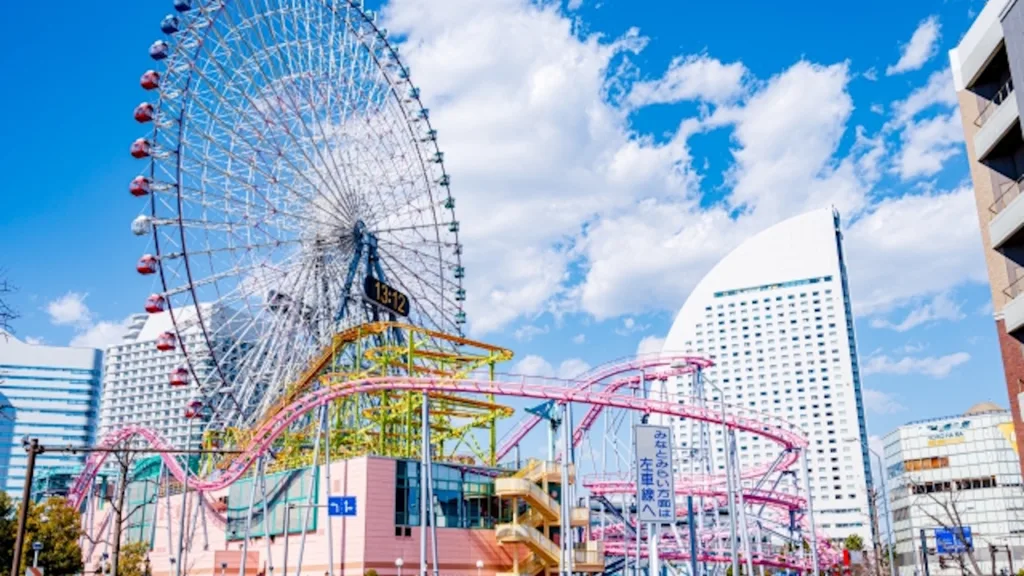
Yokohama Cosmo World is an urban amusement park about two minutes from Minatomirai Station. It has no entry ticket, so you pay per ride and can drop in between other stops.
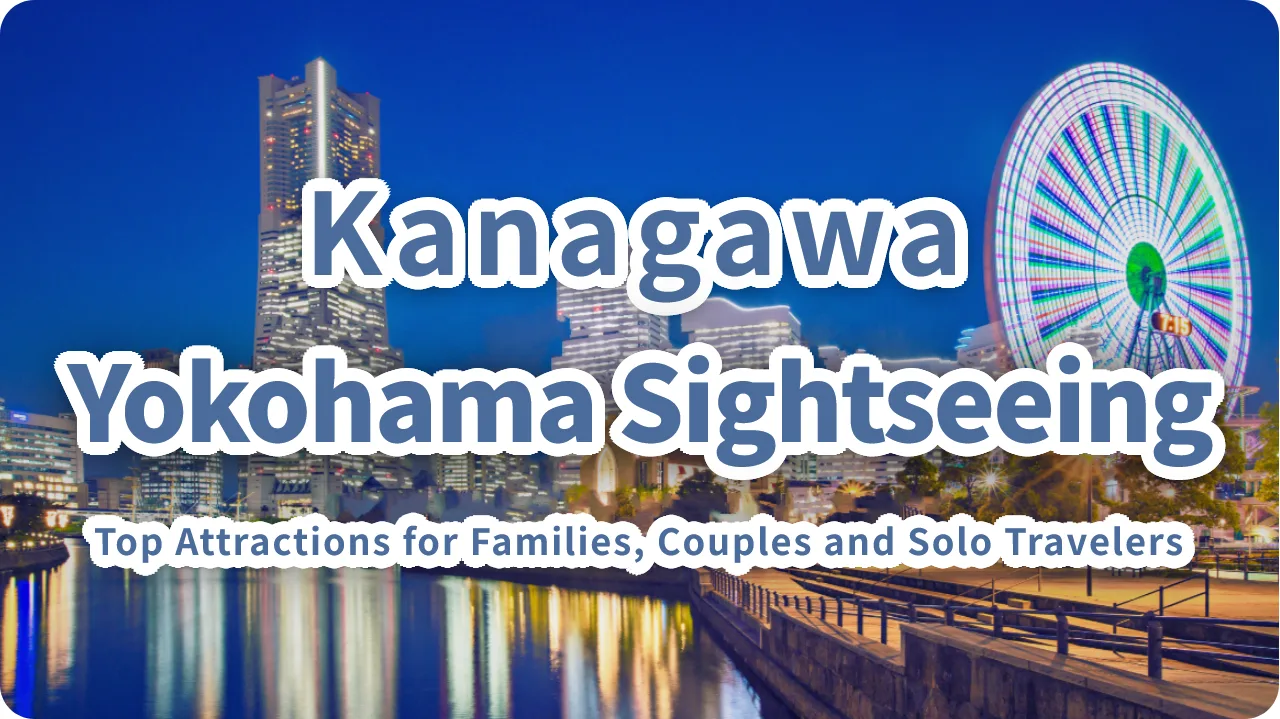
Its symbol is the Cosmo Clock 21, a 112.5-metre clock-faced Ferris wheel that ranks among the largest in the world. A lap takes about 15 minutes, with sweeping harbor views by day and the lights of Minato Mirai by night. The last boarding is 15 minutes before closing. Cosmo World is open 11:00 to 21:00 on weekdays and 11:00 to 22:00 on weekends and holidays, with seasonal changes, and it closes on Thursdays.
Yokohama Red Brick Warehouse
The red-brick buildings date from the late Meiji and early Taisho eras. Building No. 1 houses a hall and event spaces, while Building No. 2 holds shops, cafes and restaurants. The plaza between them hosts seasonal events throughout the year.
Building No. 1 is open 10:00 to 19:00 and Building No. 2 from 11:00 to 20:00. Bashamichi and Nihon-odori stations are about six minutes away on foot, and Minatomirai Station about twelve.
Yokohama World Porters
Yokohama World Porters opened in 1999 and sits on the walking route from Sakuragicho and Minatomirai stations toward Red Brick Warehouse. In 2024 it replaced 68 of its shops in a large-scale renovation that reimagined it as an entertainment mall.
In July 2025, a roughly 5,600 m² rooftop terrace called Roof Top World opened. It has a deck with views in every direction over Minato Mirai and a putting-golf corner.
Shin-Yokohama Ramen Museum
The Shin-Yokohama Ramen Museum opened on 6 March 1994 as the world’s first food amusement park. Its basement floors recreate a 1958 streetscape and bring together noodle shops from all over Japan. You’ll also find a gallery on ramen’s history, a hands-on session of making noodles by traditional bamboo-pole kneading, and a lab where you build your own cup noodles.
Hours are 11:00 to 21:00 on weekdays and 10:30 to 21:00 on weekends and holidays, with last orders at 20:30. It closes only on 31 December and 1 January. The museum is about five minutes on foot from Shin-Yokohama Station.
Yokohama Hakkeijima Sea Paradise
Yokohama Hakkeijima Sea Paradise combines an aquarium complex and an amusement park on an artificial island in Tokyo Bay. In the Aqua Museum, a whale shark glides through a giant tank, and in Dolphin Fantasy a glass tunnel lets dolphins pass overhead.
The nearest station is Hakkeijima on the Yokohama Seaside Line. A One-Day Pass bundles entry to four aquariums with unlimited rides, and a Paradise Night Pass is valid from late afternoon. Opening hours vary by day, and the park generally runs every day of the year.
Yokohama Landmark Tower (Sky Garden Closed)
The 296-metre, 70-storey tower is the symbol of Minato Mirai. Its Sky Garden, a 360-degree glass-walled observation floor at 273 metres reached by Japan’s fastest elevator in about 40 seconds, has been closed since the end of 2025 for major repairs.
For now, the shops and restaurants of Landmark Plaza are the main reason to stop by. The tower is about five minutes from Sakuragicho Station via a moving walkway, and about three minutes from Minatomirai Station.
Hidden Gems in Yokohama
A few steps off the main routes, Yokohama offers quieter corners where history and harbor views take center stage.
Yokohama Hammerhead
Yokohama Hammerhead takes its name from the Hammerhead Crane installed here in 1914. Today it combines a cruise ship terminal with shops and restaurants, and its terrace deck is a spot for watching ships come into port. It’s about ten minutes on foot from Red Brick Warehouse.
Yokohama Kanteibyo (Guan Yu Temple)
Yokohama Kanteibyo honors Guan Yu, the general from the Romance of the Three Kingdoms, who is worshipped for business success, traffic safety and academic luck. The present building uses materials such as dragon-cloud stone brought from Beijing, and craftsmen from Beijing and Taiwan came to build it in 1990. Visitors follow a custom of paying respects at five incense burners.
Guan Yu’s birthday is celebrated each year on the 24th day of the sixth lunar month, a festival that spills across Chinatown.
Yokohama Mazu Temple (Yokohama Masobyo)
This temple is dedicated to Mazu, the Taoist goddess who protects sailors. It was founded in 2006 on the site of the former Qing Chinese consulate. The building is relatively new, but Mazu worship is said to have reached Yokohama Chinatown in its earliest days, a link to the district’s seafaring roots.
Nissan Stadium (Yokohama International Stadium)
Nissan Stadium hosted football at the 2002 FIFA World Cup and at the Tokyo Olympics. It’s about seven minutes on foot from Kozukue Station on the JR Yokohama Line. The stadium shop opens on weekends, public holidays and home-game days.
Yokohama Attractions for Friends and Food Lovers
Street food and harbor views make Yokohama a natural fit for a trip with friends.
Yokohama Chinatown
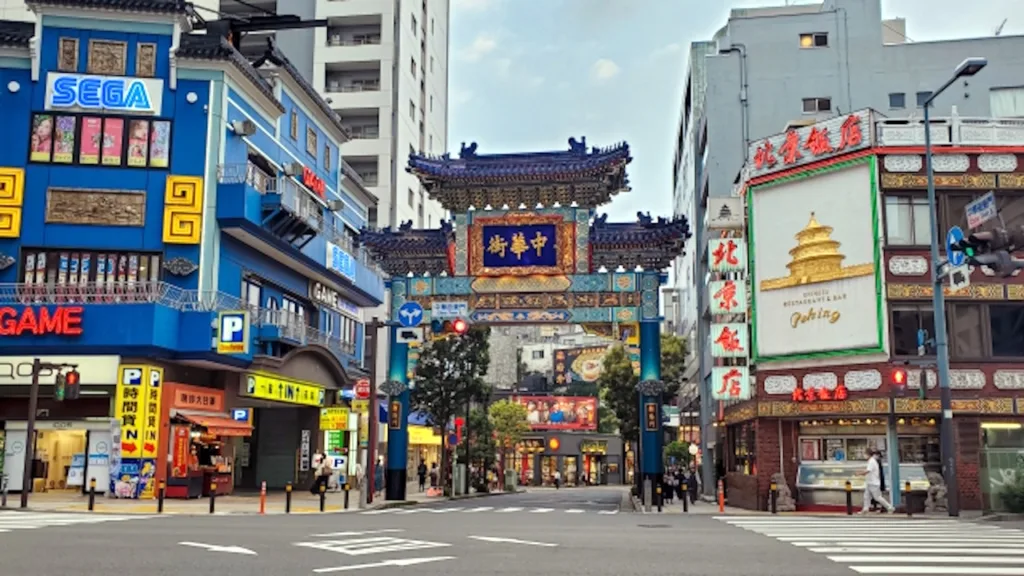
Yokohama Chinatown covers roughly a 500-metre square, bounded by ornate gates, and ranks among the largest Chinatowns in Japan. Pork buns and xiaolongbao are the street-food staples, and the area’s temples and Yokohama Hakurankan are within easy walking distance.
The first Spring Festival was held here in 1986, and seasonal events continue through the year. It’s about a minute from Motomachi-Chukagai Station and about five minutes from JR Ishikawacho Station.
Yokohama Marine Tower
Yokohama Marine Tower was built in 1961 for the port’s 100th anniversary. It closed in March 2019 and reopened on 1 September 2022. Its circular observation deck gives a full 360-degree look at the harbor, Yokohama Bay Bridge and Minato Mirai, and Mount Fuji appears on clear days.
After dark the deck becomes a media-art gallery where projections blend with the night view, and in November 2025 the tower was certified as a Japan Night View Heritage site. The day ticket runs 10:00 to 18:00 and the night ticket 18:00 to 22:00 (starting at 19:00 from June to August), with last entry 30 minutes before closing. It’s about one minute from Motomachi-Chukagai Station.
Yokohama Attractions for Solo Travelers
Quiet galleries, wide piers and a calm garden make Yokohama easy to enjoy at your own pace.
Yokohama Museum of Art
Designed by Kenzo Tange, one of postwar Japan’s leading architects, the museum opened in 1989. After a renovation that began in 2021, parts reopened in 2024 and the whole building reopened on 8 February 2025.
The grand gallery anchors an open area called the Jiyu Area, where you can see artworks and the architecture without joining an exhibition. The museum is open 10:00 to 18:00 (last entry 30 minutes before closing) and closed on Thursdays and over New Year. It’s about three minutes from Minatomirai Station’s Exit 3.
Yokohama Osanbashi Pier
The Yokohama Osanbashi International Passenger Terminal is a pier where large cruise ships dock, with open views of the harbor and the Bay Bridge. It also draws crowds for its night views. The pier is about ten minutes on foot from Red Brick Warehouse, and its wide, open deck leaves plenty of room to be alone with the sea.
Sankeien Garden
Sankeien’s 17.5 ha include the Old Tomyoji Pagoda moved from Kyoto and Rinshunkaku, an Important Cultural Property said to have been built as a villa for the Kishu Tokugawa family in the early Edo period. Spring brings cherry and plum blossoms, early summer brings fireflies, autumn brings colored leaves and evening illumination, and winter brings a still, snowy quiet.
The garden is open 9:00 to 17:00 (last entry 30 minutes before closing) and closes on a few days at the end of each year. From the east exit of Yokohama Station, a city bus runs to the Honmoku Sankeien-mae stop in about 35 minutes.
More Waterfront Stops to Add to Your Day
Yamashita Park, Hikawa Maru and Yokohama Park sit along the route between Minatomirai and Kannai, and all three fit neatly into a sightseeing day.
Yamashita Park
Yamashita Park opened in March 1930 as Japan’s first seaside urban park, built on rubble from the 1923 earthquake. It stretches about 700 metres along the harbor. Monuments here, including the Girl in Red Shoes statue and the Guardian of Water fountain from sister city San Diego, tell the story of Yokohama’s links with the world, and about 1,900 rose plants bloom in spring and autumn.
It’s about three minutes on foot from Motomachi-Chukagai Station, so pairing it with a Chinatown lunch is easy.
Hikawa Maru
Moored beside Yamashita Park, Hikawa Maru is a passenger-cargo liner built by Nippon Yusen in 1930 for the Seattle route and now an Important Cultural Property. A photo of the ship floating against the park is a classic Yokohama keepsake.
Yokohama Park and Yokohama Stadium
Yokohama Park in Kannai grew out of Higa Park, which was completed in 1876 and became Yokohama Park in 1899. The baseball stadium on its grounds opened as Yokohama Stadium in 1978 and is the home of the Yokohama DeNA BayStars. Pair a stroll through the park with a ballgame if the season allows.
Where to Stay in Yokohama
These three hotels put you within easy reach of the waterfront sights above, and each suits a different kind of trip.
Hotel New Grand
Hotel New Grand on Yamashita-cho is a classic hotel that has stood in front of Yamashita Park since 1927 and still carries the feel of the early port era. Staying here puts Chinatown, Marine Tower and Osanbashi Pier on your doorstep, so it’s an excellent base for a harbor-focused trip.
InterContinental Yokohama Pier 8 (an IHG Hotel)
InterContinental Yokohama Pier 8 belongs to IHG’s InterContinental brand and opened on 31 October 2019. It stands on a pier in the Shinko area, surrounded by water on three sides, and every room is at least 46 m² with a ship-voyage theme. Cup Noodles Museum and Red Brick Warehouse are a short walk away, which makes it a strong pick for couples who want an elegant stay at the heart of the waterfront.

Yokohama Bay Hotel Tokyu
Yokohama Bay Hotel Tokyu connects directly to Minatomirai Station and overlooks the harbor. Cosmo World, the Yokohama Museum of Art and Landmark Plaza are all within walking distance, and the direct station link keeps rainy-day plans simple.
Visiting Yokohama with a Dedicated Tour Conductor
A tour conductor manages the journey itself, so the group can focus on the sights. In Yokohama that matters, because a typical day can mean several rail lines and a mix of venues with different closing days and entry times.
The conductor keeps the schedule running smoothly, from train transfers between the Minatomirai Line, the JR lines and the Seaside Line to luggage checks at hotels and stations. Interpretation assistance helps at ticket counters, restaurants and hotel desks. When something goes wrong, such as a venue closing unexpectedly or a delayed train, the conductor handles emergency re-booking of transport and reservations.
Conductors aren’t sightseeing guides, and they don’t change the tour plan. They keep the arrangements already made on track, which brings peace of mind and a more efficient day. To see how this works in practice, explore tours with a dedicated tour conductor.
Plan Your Yokohama Trip Around the Waterfront
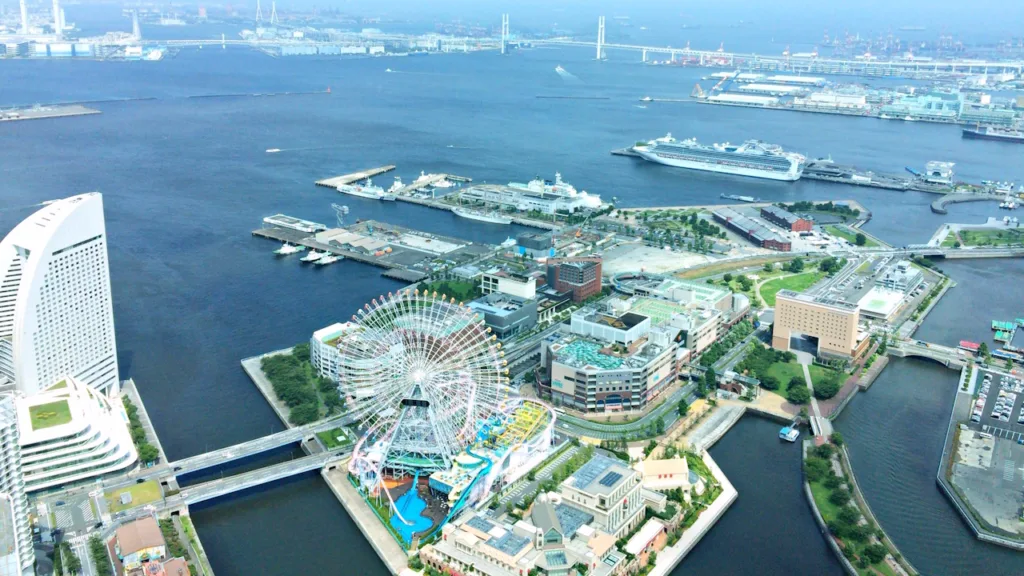
Yokohama rewards almost every kind of traveler, from families heading for hands-on museums to couples on the harbor and solo visitors in quiet galleries. Landmark Tower’s Sky Garden and the Equine Museum are closed, but Cosmo World, Red Brick Warehouse, Marine Tower and the Yokohama Museum of Art are all within easy reach of one another.
Spend the day wandering Chinatown and Yamashita Park, watch the harbor lights from Marine Tower after dark, and settle into Hotel New Grand for a night that carries the atmosphere of the old port. It’s the most memorable way to experience Yokohama, so make it your next trip.