


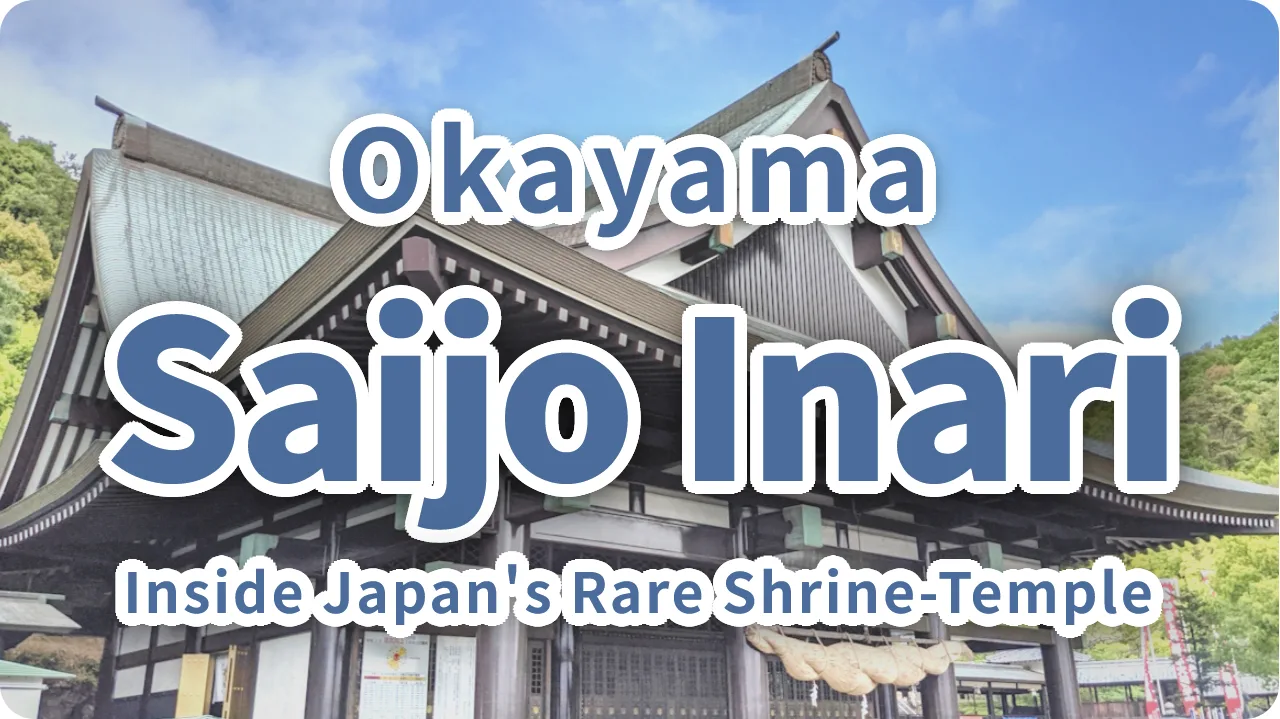
Travel insights from a tour conductor — today’s destination: Saijo Inari, in Okayama Prefecture, western Japan. Ranked alongside Kyoto’s Fushimi Inari and Aichi’s Toyokawa Inari as one of Japan’s “Three Great Inari” sites (a claim that varies depending on the source), Saijo Inari draws close to 600,000 visitors over the New Year’s holiday alone — more than any other spot in the prefecture. Its official name is Saijo Inari-san Myokyo-ji, a Nichiren Buddhist temple, yet the grounds are marked by a towering torii gate and a shrine-style main hall, making this one of the few places in Japan where Buddhist and Shinto worship still exist side by side.
| Item | Details |
|---|---|
| Name | Saijo Inari (Saijo Inari-san Myokyo-ji) |
| Worship hours | Grounds open to visitors at all times; prayer reception 5:30 AM–4:30 PM; gift shop 9:00 AM–4:30 PM |
| Closed | None — open year-round |
| Address | 712 Takamatsu Inari, Kita-ku, Okayama City, Okayama Prefecture |
| Access | About 5 minutes by taxi from Bicchu-Takamatsu Station on the JR Kibi Line (roughly 40 minutes on foot); about 10 minutes by car from the Okayama-Soja IC on the Okayama Expressway |
Entry to the grounds is free. Only the garden, Kansho-tei, charges a small admission fee, which is used to maintain the grounds.
A Few Things to Know Before You Go
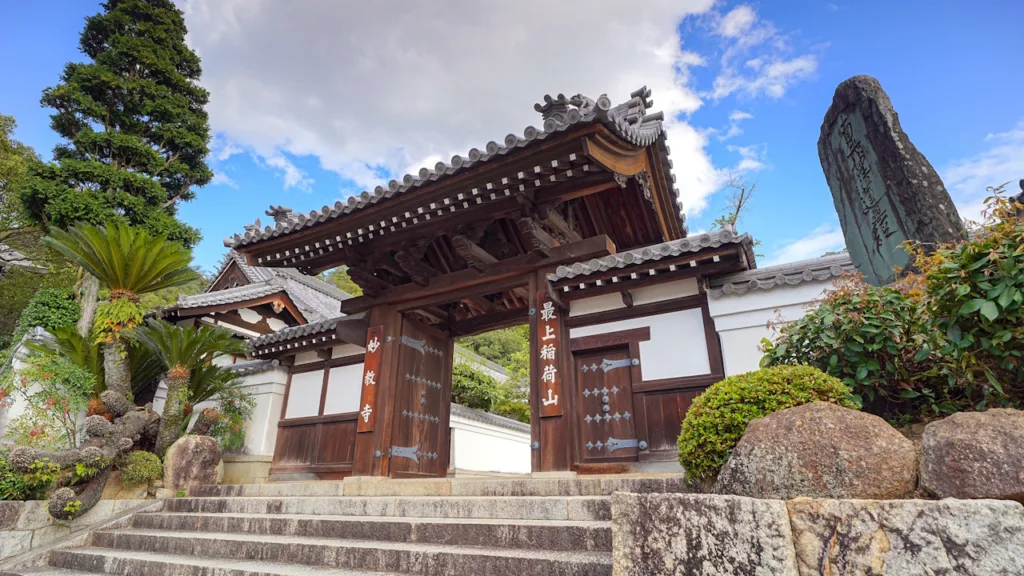
Saijo Inari sits at the foot of Mount Ryuo, and it’s not the kind of place you reach on public transport alone. The walk from Bicchu-Takamatsu Station covers roughly 2 kilometers and takes about 40 minutes on foot, so a taxi is the far more practical option — just don’t expect one to be waiting at the station at all hours. Building in some buffer time makes the whole trip smoother.
New Year’s is the one time to plan around carefully. With around 600,000 visitors over the first three days of January, the roads nearby see traffic restrictions and the approach to the main hall can mean a long wait. The crush peaks from New Year’s Eve into the morning of January 1st, so if a quieter visit matters more to you than the festival atmosphere, aim for after January 4th or arrive early in the day. The Setsubun bean-scattering ceremony in February draws a similar crowd.
The grounds climb the hillside, but an elevator is on site, making the walk manageable for visitors with mobility needs or families with young children. Reaching the inner sanctuary or Hachijo-iwa Rock does mean a proper hike up a mountain trail, so comfortable shoes are worth packing if that’s on your list.
Over 1,250 Years of History, Rooted in an Emperor’s Recovery
The story goes back to the Nara period. According to temple records, in 752 the monk Hoon Daishi was tasked with praying for the recovery of Empress Koken, who had fallen ill. He climbed Mount Ryuo and prayed at a rock ledge known as Hachijo-iwa, where the principal deity, Saijo-i Kyoo Daibosatsu, is said to have descended riding a white fox. The empress recovered soon after. A second imperial recovery followed in 785, this time for Emperor Kanmu, and in gratitude the emperor ordered a temple, then called Ryuozan Jingu-ji, built on the current site.
Centuries later, the temple was caught in the crossfire of one of Japanese history’s most famous military campaigns: the flooding siege of nearby Bicchu-Takamatsu Castle by the warlord Hideyoshi (then known as Hashiba Hideyoshi). The main buildings burned, though the principal image was moved to safety beneath Hachijo-iwa and survived. In 1601, the region’s new lord invited the priest Nichien from the Kanto region to rebuild the site, renaming it Inariyama Myokyo-ji — the foundation of the temple’s modern era.
What makes Saijo Inari genuinely unusual is what happened during the Meiji era’s forced separation of Buddhism and Shinto. While shrines and temples across Japan were pulled apart under government order, Saijo Inari was granted a rare exception, reportedly the only site in Okayama Prefecture spared from the policy. That’s why, more than a century later, it still carries both traditions at once — a Buddhist temple with a torii gate and a shrine-style main hall (Reiko-den). Visitors sometimes aren’t sure whether they’re looking at a shrine or a temple, and that ambiguity is really the whole point.
Where You Can Pray to Cut a Bad Bond and Tie a New One
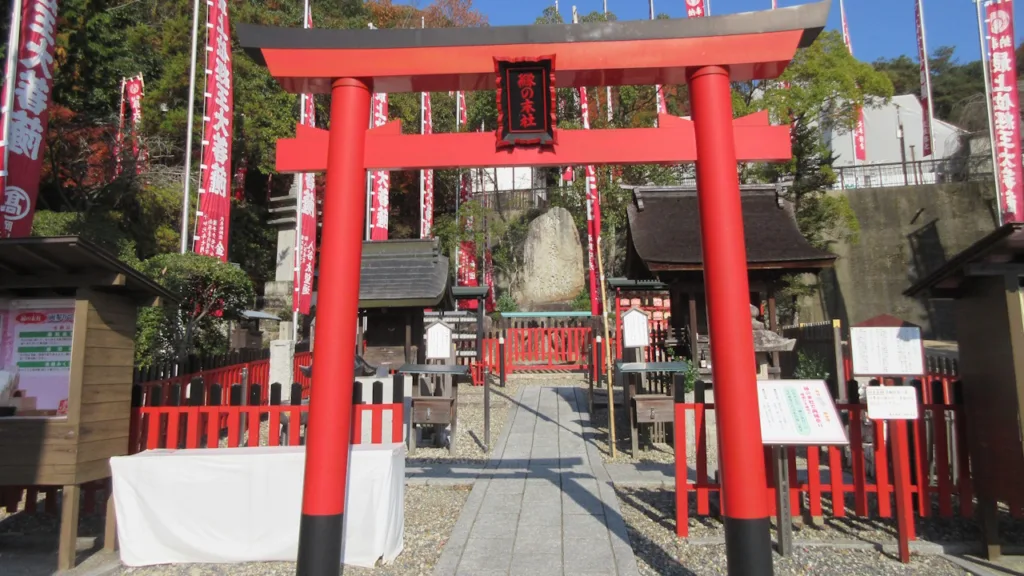
One reason Saijo Inari stands out nationally is the Shrine of Connections, one of the 77 sub-shrines ringing the old main hall. It’s one of the few places in Japan where you can pray for both en-musubi (forming good connections) and en-kiri (severing bad ones) in a single visit — a combination that’s genuinely rare at any single site in the country.
The “connections” here go well beyond romance. Alongside wishes for good relationships, career success, or academic achievement, people pray to cut ties with toxic relationships, illness, or habits they’re trying to break. The temple holds a formal ritual called Ryoen-mairi (visiting for both kinds of connection) on the 7th of every month except January, in the correct order — severing first, then welcoming the new — and priests are on hand to walk visitors through the proper way to pray. It’s easy to see why people visiting at a turning point in life keep coming back.
What to See: A Site Built on an Impressive Scale
The Great Torii — 27.5 Meters Tall
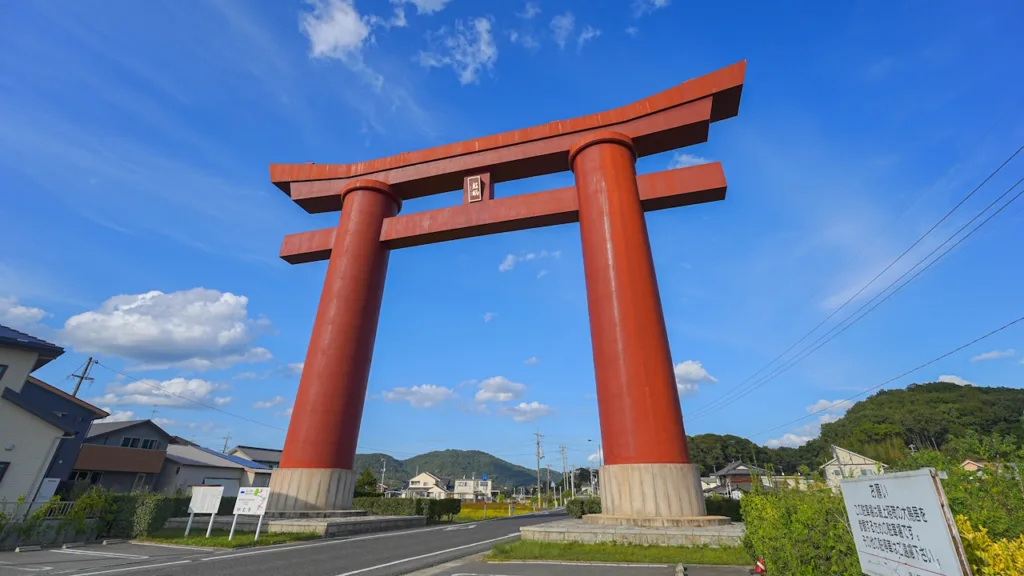
Rising over the farmland of the Kibi Plain, the Great Torii is Saijo Inari’s most recognizable landmark. Built in 1972 from reinforced concrete, it stands 27.5 meters tall, with pillars 4.6 meters in diameter and a total weight of 2,800 tons. A 2014 restoration gave it the vivid reddish-brown color (bengara) it wears today, visible from a considerable distance. Okayama is also home to torii built from Bizen ware — most famously at Yuga Shrine in nearby Kurashiki — and the color similarity leads some visitors to assume Saijo Inari’s torii is Bizen pottery too. It isn’t; the resemblance is in the paint, not the material. If you’re arriving by car, passing under this gate is really where the visit begins.
The Main Hall (Reiko-den) and the Three Saijo Deities
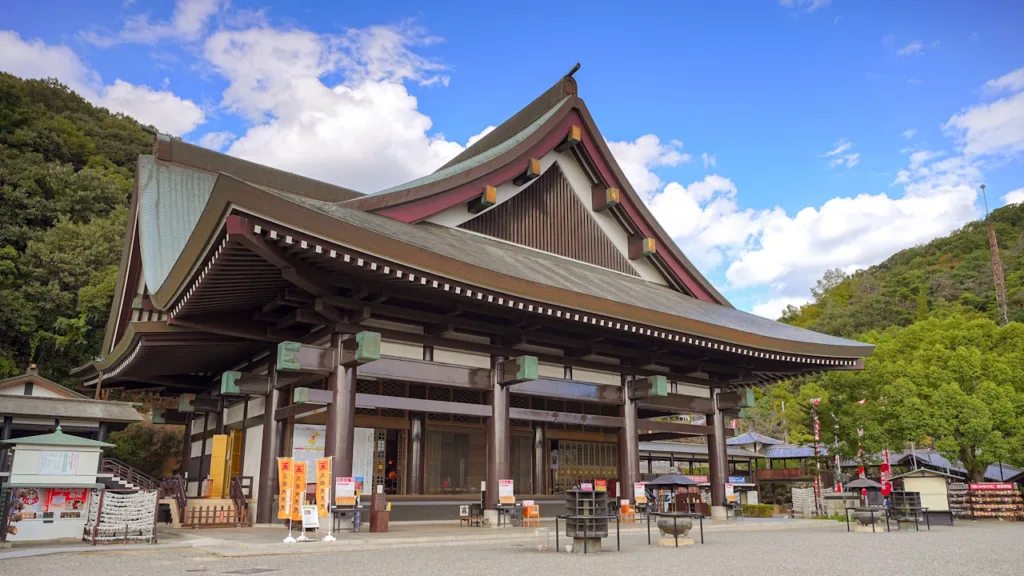
Completed in 1979, the main hall — Reiko-den — is a substantial structure, measuring 24 meters across its frontage, depth, and ridge height alike. At its center sits the principal image, Saijo-i Kyoo Daibosatsu, flanked by Hachidai Ryuo-son, guardian of water, on the left, and Sanmen Daikoku-son, bringer of fortune, on the right — together known as the Three Saijo Deities. Beside the offering box, the fortune slips (omikuji) are printed from woodblocks dating back to the Edo period, and picking one up is a small ritual many visitors make part of their visit.
The Old Main Hall (Reio-den) and the 77 Sub-Shrines
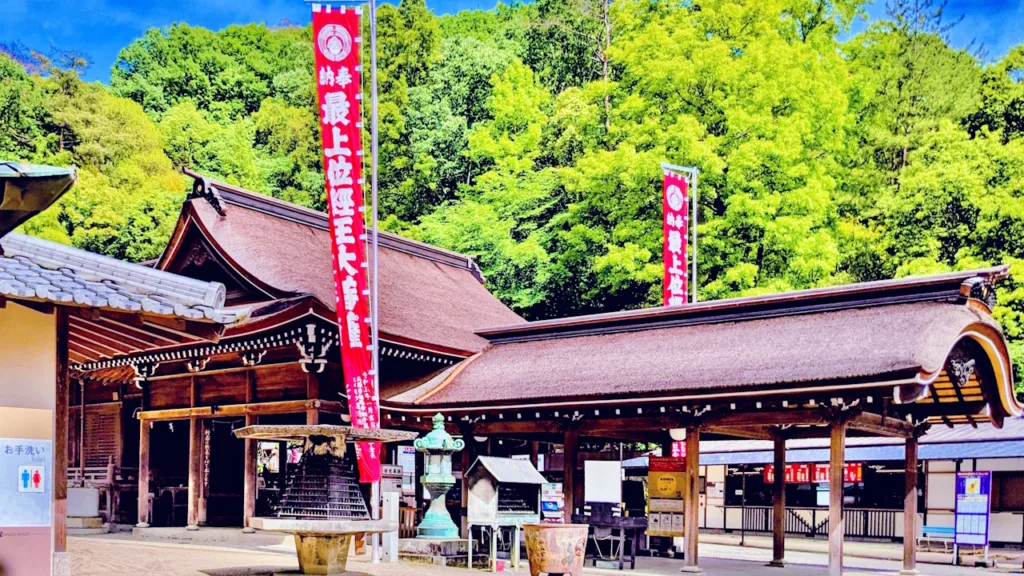
Behind the main hall stands the Old Main Hall, Reio-den, rebuilt in 1741 and the oldest wooden structure on the grounds — designated an Important Cultural Property by Okayama City. Its weighty, medieval shrine-style architecture is a direct link to the site’s syncretic past. Surrounding it are the 77 sub-shrines, each dedicated to one of the guardian deities said to serve the principal image, covering everything from warding off misfortune to safe childbirth to matchmaking. Each shrine carries a small plaque naming the deity and its area of blessing, so it’s worth taking the time to find the one that matches whatever you’re hoping for.
Kansho-tei: The Garden Where the Descent Story Is Told in Stone
Beside the main hall lies Kansho-tei, a dry landscape garden built in the Momoyama style around the idea of “the Buddhist heart,” known for its bold, dramatic stone arrangements. At the highest point stands the central stone, backed by a black pine — the garden’s own stand-in for the principal deity. In front of it, a dry cascade represents an unbroken flow of compassion from Saijo-i Kyoo Daibosatsu, filling the pond below where all beings are said to gather.
Partway down that dry cascade, a large stone leaning over the flow represents Hachijo-iwa, the rock where the deity is said to have descended, while a smaller stone just above and to the left — the yogo-ishi — marks the moment the deity appeared before Hoon Daishi. Standing at the worship stone that juts out into the pond gives visitors a direct sightline onto that entire descent scene, laid out entirely in rock.
At the foot of the worship stone sits a large lotus-shaped water basin, kept filled with clean water to represent purity in Buddhist thought. Just behind it grows a chisha tree, said to have been chosen for how its Japanese name echoes the word for a learned monk.
Kansho-tei charges a small admission fee on top of the free entry to the rest of the grounds — worth the extra few minutes if you’d like a quieter moment away from the crowds near the main hall.
The Nio Gate, Built in the Style of an Indian Temple
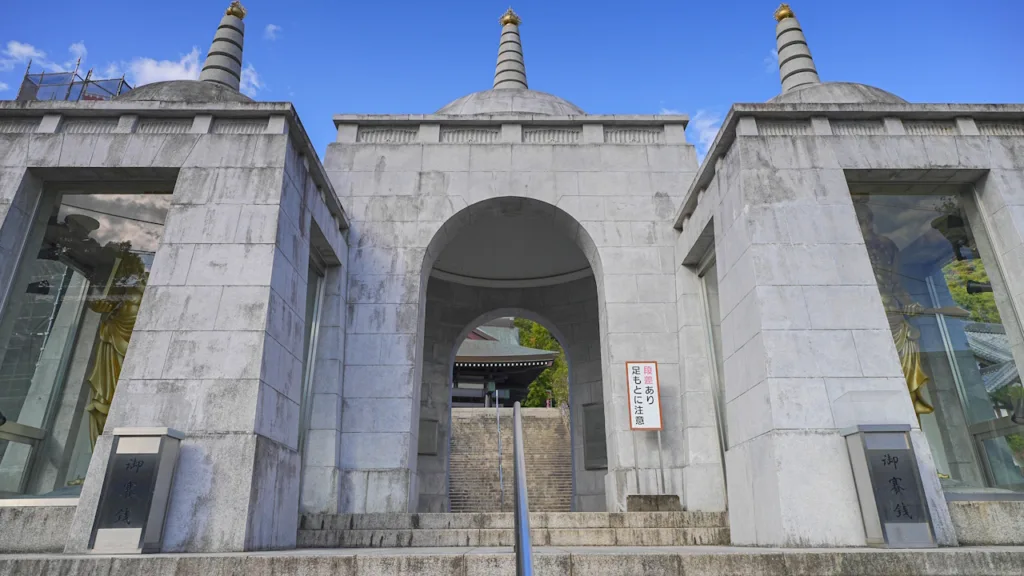
Rebuilt in 1958, the Nio Gate is a stone structure styled after Indian temple architecture — an unusual choice anywhere in Japan. The previous wooden gate had burned in a mountain fire, so the replacement was built in stone specifically to be fireproof. It earned a listing as a Registered Tangible Cultural Property in 2009. Step inside and you’ll find gilded statues of the guardian Nio deities alongside a white fox, greeting everyone who passes through.
Hachijo-iwa Rock and the Inner Sanctuary
From the west side of the Old Main Hall, a mountain trail climbs Mount Ryuo (286 meters) to Hachijo-iwa, the rock ledge where the principal deity is said to have first appeared. The name refers to its flat top, roughly the size of eight tatami mats, and the view from here stretches out over the Kibi Plain, including the site of Bicchu-Takamatsu Castle below. Another 15 minutes up the trail brings you to the inner sanctuary. History buffs might also want to look for the remains of “Ichi-no-Maru,” said to be where Hideyoshi’s forces camped during the castle siege.
The Approach Street
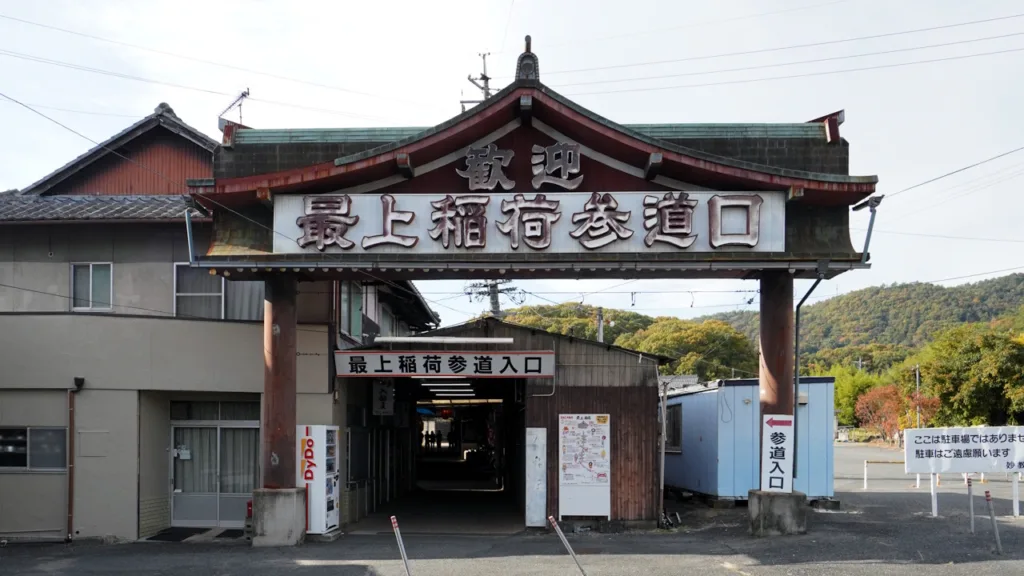
The road leading from the Great Torii to the Nio Gate is lined with around 50 shops and food stalls, forming a classic temple approach street. Yuzu senbei crackers are the local specialty, and grazing your way along the approach is part of the experience for most visitors.
Worth the Detour: Nearby Sights
Bicchu-Takamatsu Castle Ruins Park
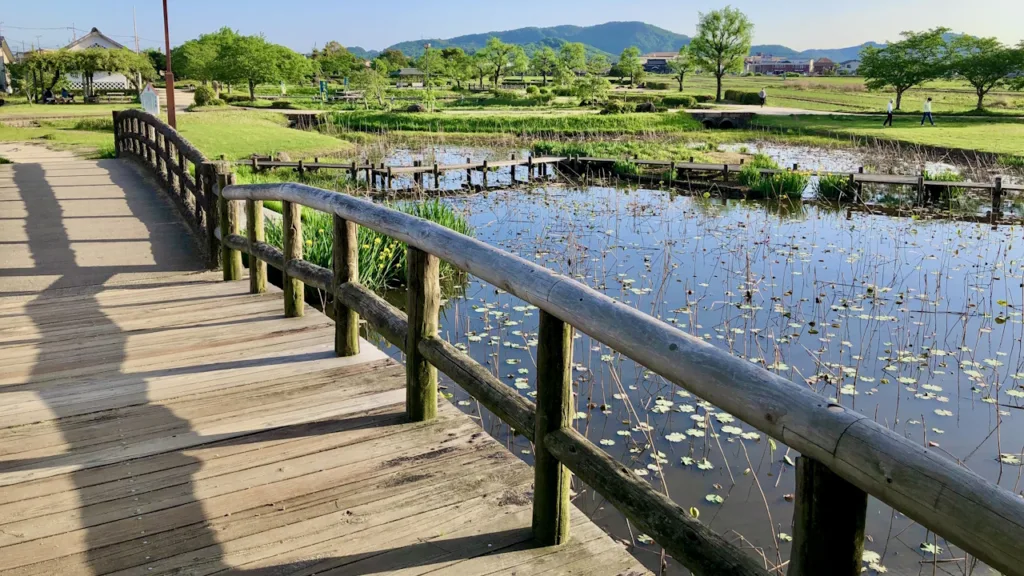
About 5 minutes by car south of Saijo Inari lies the site of Bicchu-Takamatsu Castle, famous for the flooding siege carried out by Hashiba Hideyoshi in 1582 — an almost unheard-of siege tactic that involved damming a river to submerge the entire castle. The castle’s lord, Shimizu Muneharu, took his own life on a boat above the flooded grounds in exchange for his soldiers’ lives. It was also from here that Hideyoshi launched his famous forced march back to Kyoto — the “Chugoku Return” — after learning of Oda Nobunaga’s assassination. Today it’s a quiet public park, but the ground beneath it marks a genuine turning point in Japanese history.
Ryusenji Temple
Sharing the same Mount Ryuo foothills, Ryusenji Temple is another Nichiren Buddhist site about 5 minutes away by car. Its waterfall is used for suigyo, a form of ascetic water training, set within thick, quiet forest. The atmosphere here is a deliberate contrast to Saijo Inari’s crowds — this is where to go for stillness.
Kibitsu Shrine
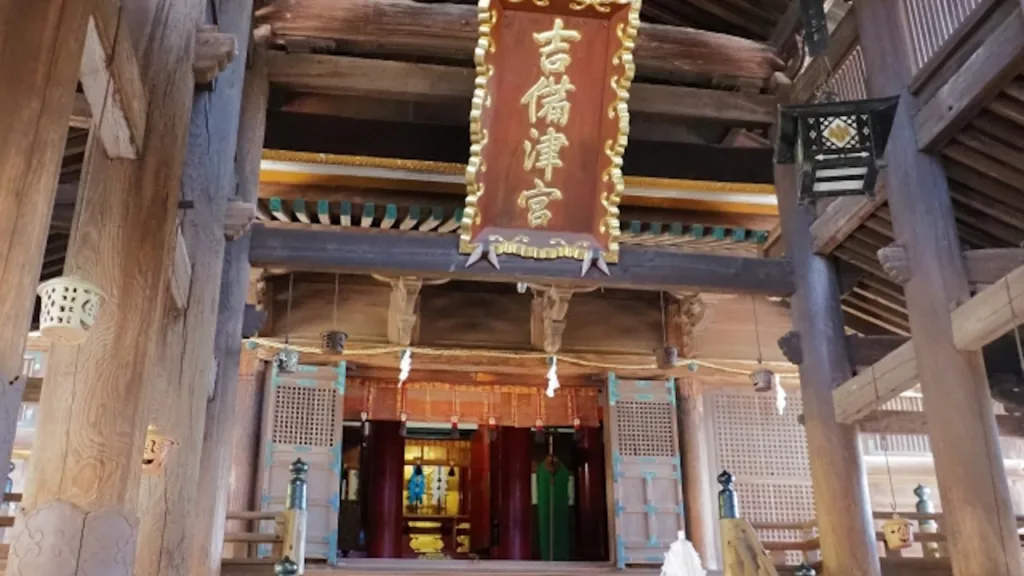
About 10 minutes away by car, Kibitsu Shrine honors Kibitsuhiko-no-Mikoto, the deity believed to have inspired the Momotaro folk tale. Its main hall and worship hall, built in the distinctive hiyoku-irimoya style, are designated National Treasures, and the roughly 400-meter covered corridor winding along the hillside is one of the most photographed sights in the region. Pair it with Saijo Inari for a day that covers both the history and the faith of the Kibi region in one trip.
Where to Stay Near Saijo Inari
Okayama Station makes the most practical base for visiting Saijo Inari — about 25 minutes away by car, or roughly 40 minutes combining train and taxi — and it keeps you well positioned for day trips to Kurashiki and the wider Kibiji region as well.
Hotel Granvia Okayama
Directly connected to JR Okayama Station via a second-floor walkway, this hotel means you can check in without ever stepping outside, even in the rain — a real convenience if your trip is built around the Shinkansen. The 19th-floor dining room serves a breakfast buffet built around Okayama’s local produce, with the city view thrown in. Checkout isn’t until noon, which gives you a bit more breathing room on your last morning.
ANA Crowne Plaza Okayama
Part of the IHG Hotels & Resorts global chain, this hotel sits a two-minute covered walk from JR Okayama Station’s west exit. All 220 rooms follow the chain’s dedicated sleep program, and the 20th-floor Japanese restaurant serves a breakfast buffet overlooking the city, including local touches like Okayama-produced eggs and the regional specialty ebimeshi (shrimp rice).
Daiwa Roynet Hotel Okayama-Ekimae
About a minute’s walk from JR Okayama Station’s Korakuen exit, connected via underground passage, this hotel is known among repeat guests for rooms that run larger and cleaner than the typical business hotel, with all the practical amenities covered. It sits close to the shopping and dining districts, so there’s plenty to do once you’re back from the temple. A solid pick if value for money is the priority.
Why Visit Saijo Inari With a Dedicated Tour Conductor
Saijo Inari isn’t the easiest place to reach without some local know-how. The station is a 40-minute walk from the grounds, taxis aren’t always waiting when you need one, and during New Year’s the whole area shifts into traffic restrictions and long queues with little warning. A dedicated tour conductor handles exactly this kind of logistics — building the itinerary around train and taxi timing, adjusting on the fly if a connection falls through, and keeping the day moving even when the plan needs to change at short notice.
That support matters even more once you’re on the grounds. A tour conductor can provide interpretation assistance so the nuances of a 1,250-year-old ritual like Ryoen-mairi don’t get lost, and if anything goes wrong mid-trip — a missed train, a lost item, a sudden change of plans — emergency rebooking and on-the-spot problem-solving are exactly what the role is built for. This isn’t a guided tour of the shrine itself; it’s someone managing the moving parts around your visit so you can focus on the experience, not the logistics. For travelers combining Saijo Inari with Kurashiki, Kibitsu Shrine, or the wider Kibiji region, that kind of itinerary management is often the difference between a smooth day and a stressful one.
If you’d like a dedicated tour conductor to handle the details of your Okayama itinerary, tours.e-stay.jp puts one at your side for the whole trip.
In Closing
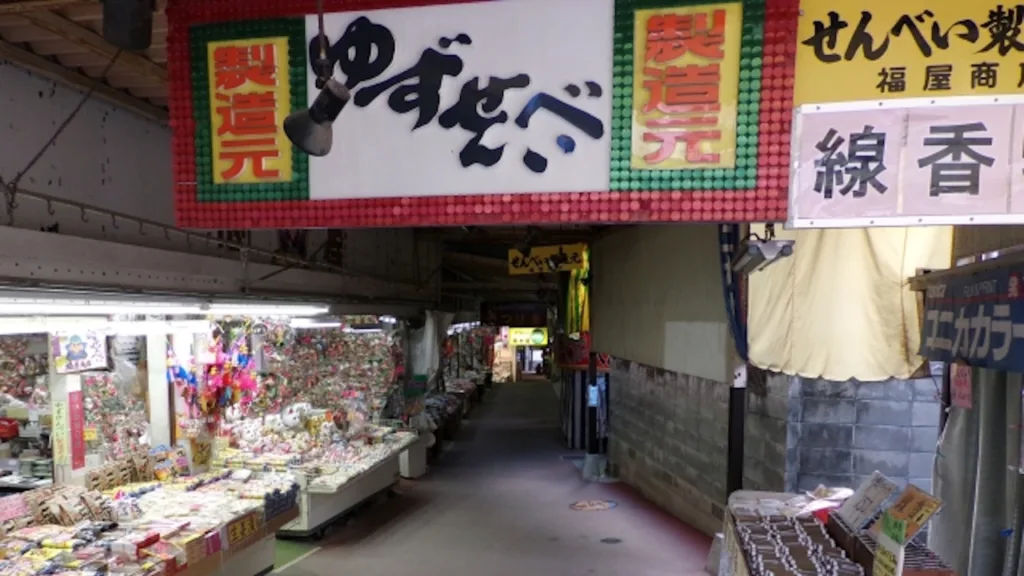
Saijo Inari is a rare place — a site with over 1,250 years of continuous worship, and one of the very few in Japan where a Buddhist temple and Shinto-style shrine architecture have coexisted since long before that was common practice. The chance to pray for both a severed bond and a new one, the sheer scale of the Great Torii, fortune slips still printed from Edo-period woodblocks, and the historical weight of the siege at Bicchu-Takamatsu Castle nearby make this more than a quick stop. Wander the approach street for a snack, then extend the day out to the castle ruins or Kibitsu Shrine, and you’ve got a full picture of the Kibi region’s history and faith in a single visit.
Basing yourself at Hotel Granvia Okayama, right at the station, keeps both Saijo Inari and a Kurashiki side trip within easy reach — and makes the whole itinerary far easier to plan around.