

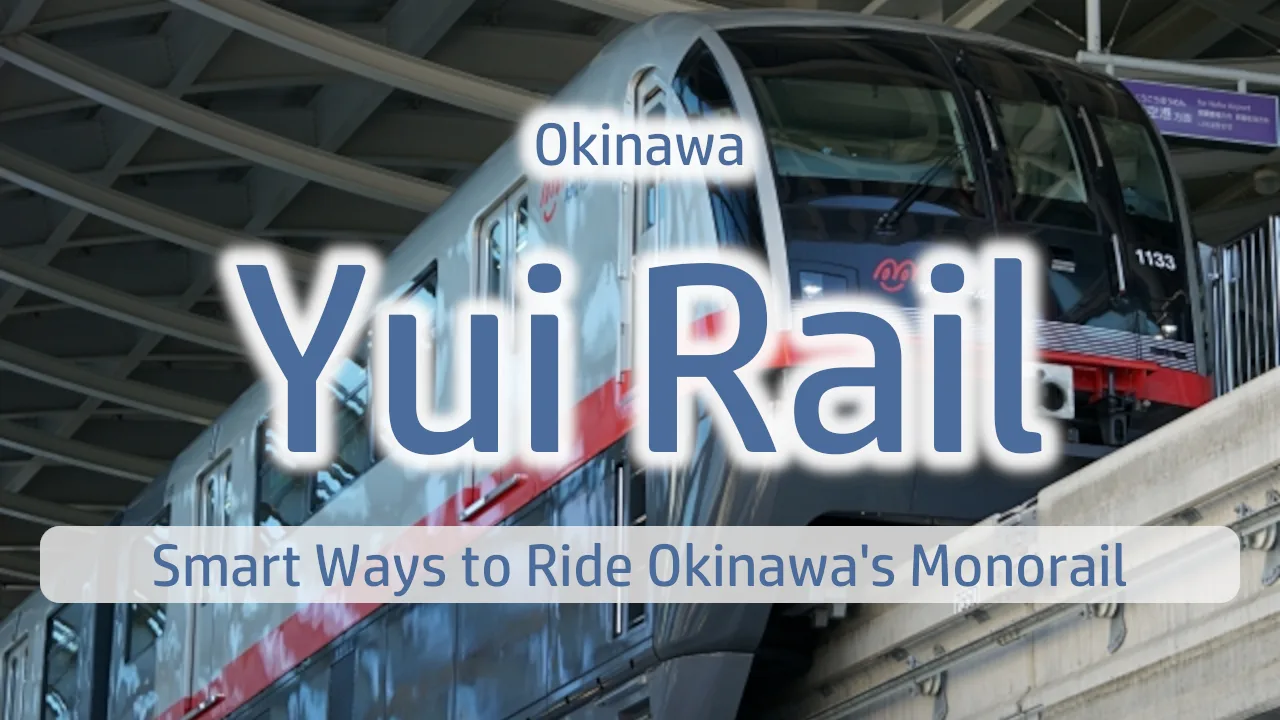
Travel insights from a licensed tour conductor. This time, we take a deep dive into the Yui Rail — Okinawa Monorail — the only railway on Okinawa’s main island. From the latest ticketing options to must-see sights along the line, everything you need to plan a smooth, traffic-free trip through Naha is right here.
Okinawa’s main island has no bullet trains or conventional rail lines outside the capital. When it comes to getting around Naha, most visitors choose between a rental car and the Yui Rail. But for anyone basing themselves in the city, the monorail is the sharper tool: it runs on elevated track, entirely above street traffic, and connects Naha Airport to the city’s top sightseeing spots in minutes.
| Item | Details |
|---|---|
| Line Name | Okinawa Urban Monorail Line (Yui Rail) |
| Route | Naha Airport Station – Tedako-Uranishi Station |
| Total Distance | Approx. 17.0 km |
| Total Stations | 19 stations |
| End-to-End Journey | Approx. 40 minutes |
| First Train | 5:20 AM from Tedako-Uranishi Station |
| Last Train | 11:30 PM from both Naha Airport and Tedako-Uranishi |
| Operator | Okinawa Urban Monorail Co., Ltd. (public-private partnership) |
| Official Website | https://www.yui-rail.co.jp/ |
Traffic in Naha: Why Your Choice of Transport Matters
Okinawa is deeply car-dependent by nature. On the main arterials — National Route 58 and the streets around Kokusai-dori — traffic can seize up badly during peak hours and throughout the tourist season, leaving taxis and buses crawling alongside everyone else.
Rental cars open up the whole island, but inside Naha they come with a cost: hunting for parking and sitting in jams that can swallow up the better part of an afternoon. The Yui Rail sidesteps all of that. Running on its own elevated guideway, it is immune to road congestion. From the airport to Kokusai-dori takes around 15 minutes; to Shuri, home of Shuri Castle, around 27. That kind of predictability is invaluable when you are trying to keep a sightseeing schedule on track.
One important caveat: the Yui Rail covers Naha city and part of Urasoe, but no further. Attractions outside the line — Churaumi Aquarium to the north, the WWII sites of the southern tip — still require a bus or car. The practical approach is to rely on the monorail within Naha and switch to buses or taxis for excursions beyond city limits.
Rails Lost to War, Rebuilt After 58 Years
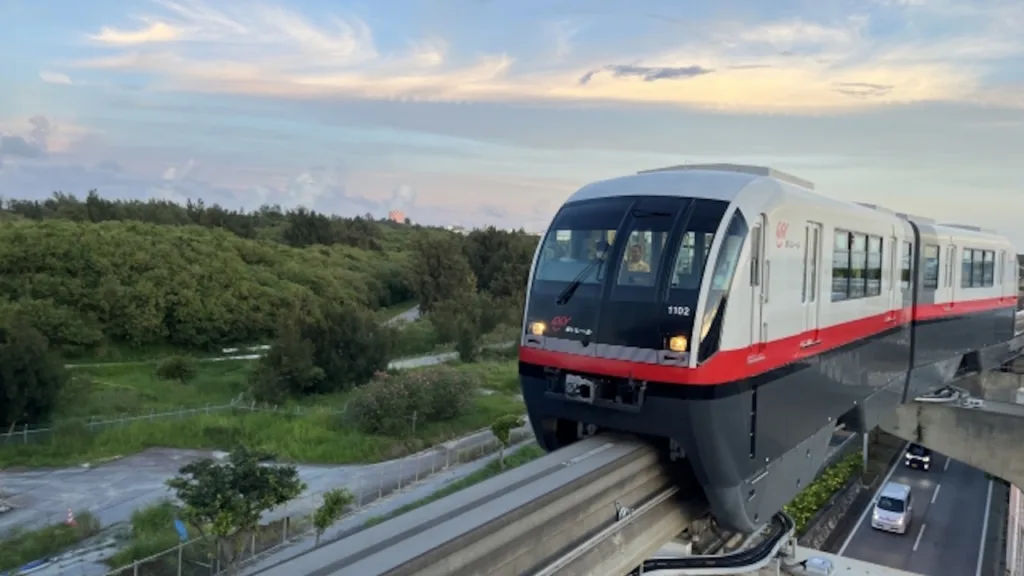
To appreciate what the Yui Rail represents, you need to step back into Okinawa’s modern history.
Before the Second World War, Okinawa was served by a network of narrow-gauge prefectural railways — the Kadena, Itoman, and Yonabarу lines among them — radiating out from Naha. The Battle of Okinawa in 1945 destroyed the entire system, and it was never rebuilt. After the reversion to Japanese sovereignty in 1972, the island remained entirely dependent on roads. As Naha’s population grew and car ownership rose, traffic congestion became a serious civic problem.
The idea of a rail solution dates to 1965, when the then-chairman of the Naha City Assembly, Kazuichi Takara, proposed a monorail after touring the newly opened Tokyo Monorail. The cost was prohibitive at the time, and the plan stalled.
The turning point came with reversion itself: the 1972 Urban Monorail Promotion Act opened a route to national funding, and planning resumed in earnest. Okinawa Urban Monorail Co., Ltd. was incorporated in 1982, construction broke ground in 1996, and on August 10, 2003, the 12.9 km stretch between Naha Airport and Shuri opened for service.
It had been 58 years since Okinawa last had a railway — 31 years since reversion. In the early days, the operator ran public-awareness campaigns explaining how to buy a ticket and pass through a fare gate, so unfamiliar was rail travel to local residents. Yet ridership climbed steadily. The roughly 32,000 daily passengers of 2003 had grown to more than 60,000 by fiscal 2024.
In October 2019, the line was extended from Shuri to Tedako-Uranishi, completing the current 19-station, 17 km route. The nickname “Yui” comes from the Okinawan dialect word yuimaru, meaning communal labour — an expression of the line’s role in connecting people and communities. The network also holds two geographical distinctions: Akamine Station is Japan’s southernmost railway station, and Naha Airport Station is the westernmost.
The old narrow-gauge trains — known affectionately as Kebiin — were small wooden-bodied affairs that linked Naha to towns across the island. Nothing survives in active service; only scattered remnants mark where the tracks once ran. Riding the air-conditioned Yui Rail today, it is worth pausing to consider just how far Okinawa’s public transport has come in eight decades.
Gliding Above the City: The Yui Rail as a Sightseeing Tool
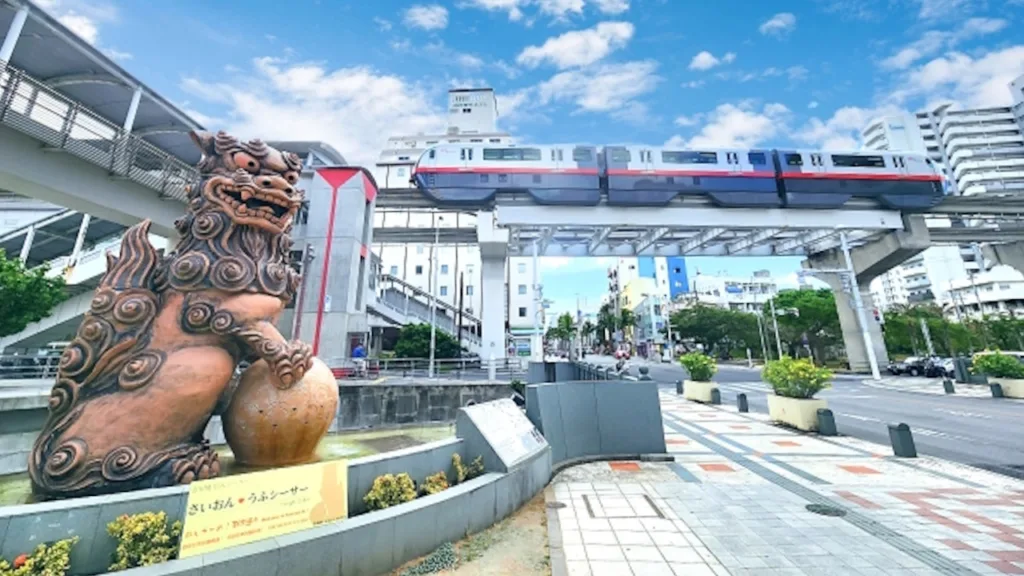
The monorail’s greatest practical strength is the way it strings together Naha’s main attractions on a single elevated line.
Leaving Naha Airport, the train sweeps over residential neighbourhoods and commercial strips, staying well above street level throughout. Kokusai-dori is served by two stations: Kencho-mae puts you at the western end of the strip in about two minutes on foot, while Makishi drops you at the middle. Omoromachi Station connects directly to T Galleria Okinawa by DFS, Japan’s only street-level duty-free shopping mall, where no passport is required. The Okinawa Prefectural Museum and Art Museum (Okimyu) is a ten-minute walk from the same station.
For Shuri Castle, alight at Shuri Station and allow around 15 minutes on foot to the Shureimon gate. The Gibo Station platform, officially designated a “View Spot Station,” sits at an elevation that opens up sweeping views of Naha’s rooftops and, on a clear day, the East China Sea and the Kerama Islands beyond.
The ride itself is part of the appeal. Skimming above the city at rooftop height, with glimpses of the sea between buildings, the Yui Rail offers a vantage point quite unlike anything found on mainland Japan’s rail network. Each station has its own approach chime drawn from an Okinawan folk song — Asatoya Yunta plays at Asato Station, for instance — turning a simple commute into a gentle introduction to Ryukyuan musical culture.
Three-Car Trains: A Railway in Expansion
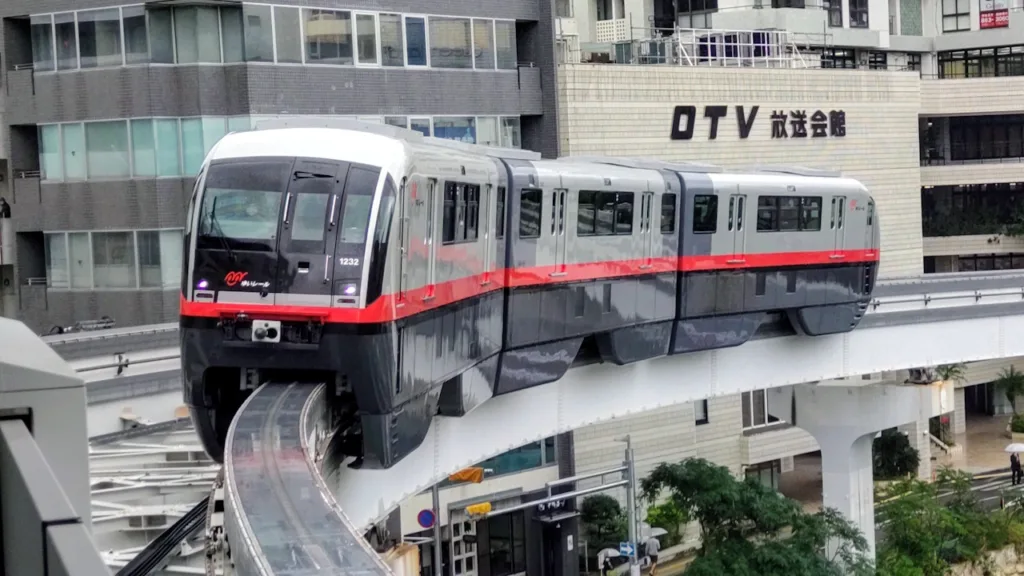
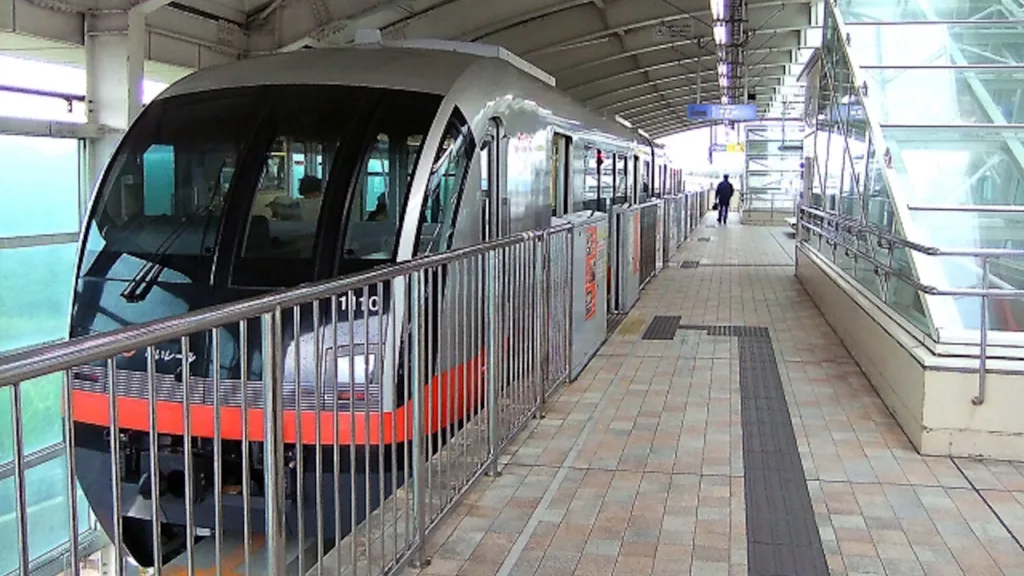
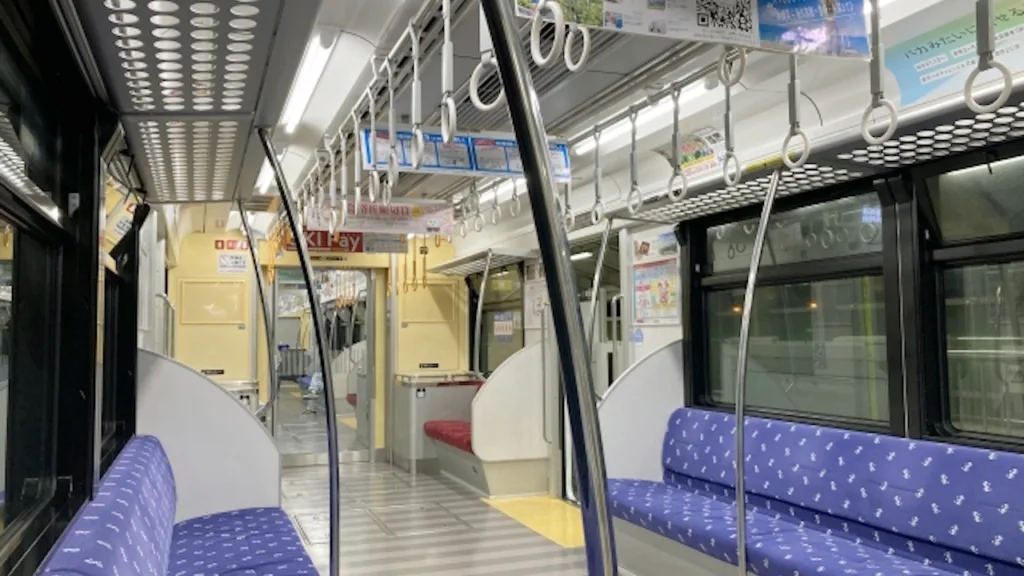
Passenger numbers have climbed fast enough to push the Yui Rail into a significant upgrade programme. The original two-car sets carry 165 passengers; the new three-car formations stretch the capacity to 251 and extend the train length to 42.4 metres — roughly one and a half times larger in both respects. The first three-car set entered service on the line’s 20th anniversary in August 2023, and a fifth formation was added in March 2026. The current fleet is deployed primarily during the busiest morning and evening peaks, with a medium-term plan to bring the total to nine three-car sets by fiscal 2029. The new carriages also include dedicated large-luggage bays and passenger information displays in four languages, a practical improvement for international visitors arriving with full-size suitcases.
One detail that sets the Yui Rail apart from conventional railways is its weight limit — a consequence of the technology it uses. Ordinary trains run on steel wheels and steel rails that can bear enormous loads. The Yui Rail, by contrast, is a straddle-beam monorail that travels on rubber tyres. Rubber offers better grip on steep gradients and tight curves, but it compresses under excessive load, which is why each train has a maximum allowable passenger weight. That limit came into sharp focus on the morning of April 17, 2026, when two three-car formations on the Naha Airport-bound service were stopped at platforms — one at Miebashi Station, the second at both Asato and Makishi stations — because passenger weight had exceeded the permitted threshold. The operator’s morning rush had coincided with an event drawing visitors toward Okunoyama Park, loading the trains beyond their limits. Drivers made in-car announcements asking passengers to disembark, the weight eased after Okunoyama Park Station, and both trains reached Naha Airport with a delay of five to seven minutes. There were no injuries. The incident illustrated, somewhat paradoxically, just how popular the line has become: fiscal 2025 ridership hit a record 24.09 million passengers, and the three-car sets introduced to ease crowding were already running full. Travellers who need to keep tight connections during peak commuting hours — roughly 7:00 to 9:00 AM on weekdays — are advised to build in a small buffer.
Free Pass: Unlimited Rides and Museum Discounts
For anyone making multiple stops in a day, the Yui Rail Free Pass offers unlimited rides across all 19 stations from the moment of purchase.
| Pass Type | Adult | Child | Valid From Purchase |
|---|---|---|---|
| 1-Day Free Pass | ¥1,000 | ¥500 | 24 hours |
| 2-Day Free Pass | ¥1,800 | ¥900 | 48 hours |
Beyond the rides, the pass doubles as an admission discount card at many of Naha’s leading cultural sites: Shuri Castle Park (paid zone), Tamaudun mausoleum, Shikinaen Garden, Fukushuen Chinese Garden, the Tsuboya Pottery Museum, and Okimyu, among others. A pass typically pays for itself after four separate journeys at the standard base fare.
Contactless Card Payment: Daily Cap of ¥800
Since March 28, 2025, all Yui Rail gates accept contactless card and smartphone payments via Visa, Mastercard, JCB, American Express, and compatible devices. Tapping in and out is all that is required. If cumulative fares on the same card exceed ¥800 in a single calendar day, any further rides that day are automatically free — effectively capping daily spending below the price of the 1-Day Free Pass, with no advance purchase needed.
Note that child fares and disability discounts do not apply to contactless payments, and the museum discount benefit of the Free Pass is not available through this method.
IC Cards: OKICA and Nationwide Suica Compatibility
The local IC card, OKICA, includes a “Neighbour Discount” that reduces the fare to a flat ¥200 for any single-station hop. Nationwide transit IC cards — Suica, PASMO, and others — are accepted at every Yui Rail station, so most visitors arriving from elsewhere in Japan can board without purchasing anything new.
Station-by-Station Guide: Attractions and Nearby Hotels
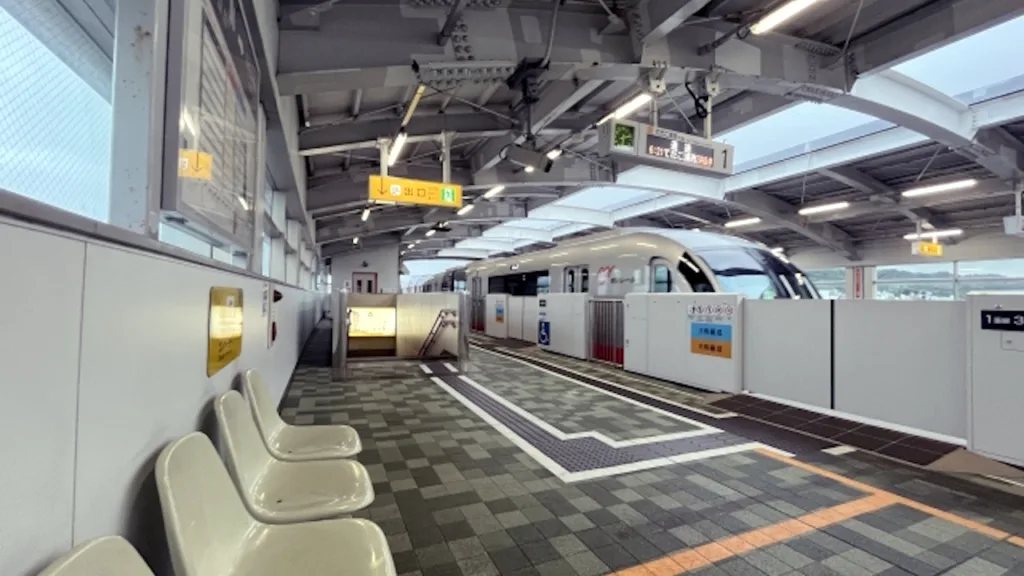
The 19 stations fall naturally into three geographic zones. The table below gives a quick overview; detailed notes on the main sightseeing areas follow.
| # | Station | Key Attractions & Facilities | Direct / Adjacent Hotels |
|---|---|---|---|
| 1 | Naha Airport | Naha Airport (domestic terminal direct access) | — |
| 2 | Akamine | Japan’s southernmost railway station | — |
| 3 | Oroku | Aeon Naha Shopping Center | — |
| 4 | Okunoyama Park | Okunoyama Park, Cellular Stadium Naha | — |
| 5 | Tsubogawa | Kokuba River walk, Okunoyama Park (5 min walk) | Mercure Okinawa Naha (1 min walk) |
| 6 | Asahibashi | Naha Bus Terminal (direct access) | Rihga Royal Gran Okinawa (direct), DoubleTree by Hilton Naha (1 min walk) |
| 7 | Kencho-mae | Kokusai-dori west entrance (2 min walk), Loveboat / Palette Kumoji, Fukushuen Garden (7 min walk) | The Royal Park Hotel Iconic Naha (2 min walk) |
| 8 | Miebashi | Kokusai-dori Mutsumibashi intersection (1 min walk), Ukishima-dori | — |
| 9 | Makishi | Kokusai-dori centre (3 min walk), Daiichi Makishi Public Market (5 min walk) | Hyatt Regency Naha Okinawa (8 min walk) |
| 10 | Asato | Tsuboya Yachimun Street (12 min walk), Sakae-machi Market (6 min walk) | — |
| 11 | Omoromachi | T Galleria Okinawa by DFS (direct), Okimyu Museum & Art Museum (10 min walk), San-A Naha Main Place | — |
| 12 | Furujima | Urasoe City Art Museum (10 min by taxi) | — |
| 13 | Shiritsu Byoin-mae | Scenic corridor (Gibo–Shiritsu Byoin-mae) | — |
| 14 | Gibo | “View Spot Station” — panoramas of East China Sea and Kerama Islands | — |
| 15 | Shuri | Shuri Castle Park (15 min walk), Tamaudun (15 min walk), Shuri Kinjo-cho Stone-Paved Road (20 min walk), Shikinaen Garden (12 min by taxi) | — |
| 16 | Ishimine | Residential neighbourhood | — |
| 17 | Keizuka | — | — |
| 18 | Urasoe-Maeda | Urasoe Castle Ruins (approx. 30 min walk) | — |
| 19 | Tedako-Uranishi | Northern Urasoe residential district | — |
Airport and Southern Zone (Naha Airport – Tsubogawa)
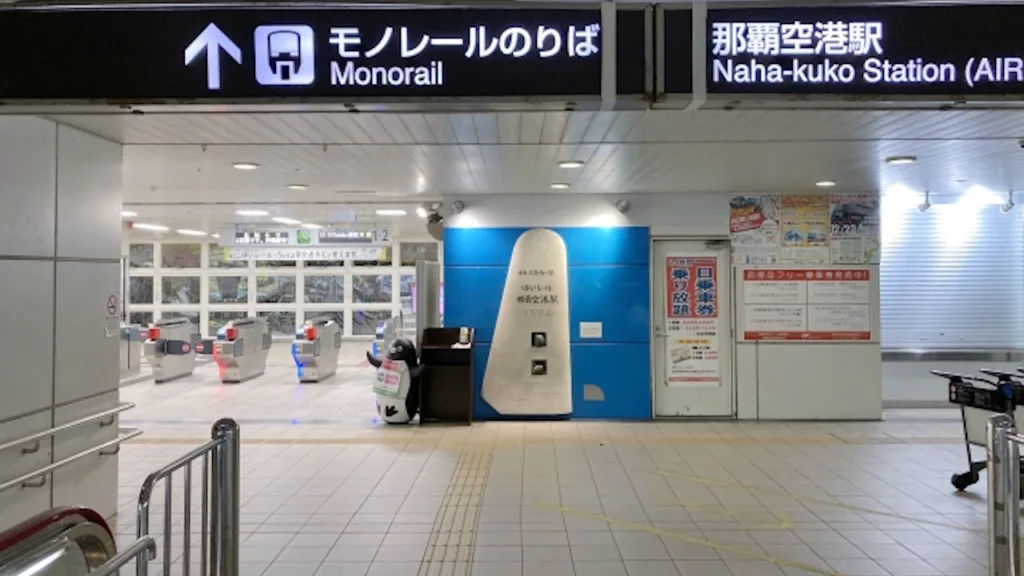
The journey begins at Naha Airport Station, connected to the domestic terminal by a covered walkway. Domestic arrivals land on the first floor; the Yui Rail platform sits at second-floor level, in line with the departure hall. After collecting luggage and exiting into the arrivals lobby, take the escalator or lift to the second floor and follow the monorail signs along the enclosed passageway. Moving walkways are provided throughout, making the transfer manageable even with large bags. The walkway is fully sheltered, so rain is never a concern.

Akamine, the next stop, holds the distinction of being Japan’s southernmost railway station — worth a quick photo for rail enthusiasts. The Okunoyama Park area draws local crowds for sporting events at its athletics stadium and baseball ground. At Tsubogawa Station, the internationally branded Mercure Okinawa Naha stands immediately opposite the exit — one minute on foot — putting the airport just nine monorail minutes away, which makes it a popular base for early arrivals and late departures.
Central Naha Zone (Asahibashi – Asato)
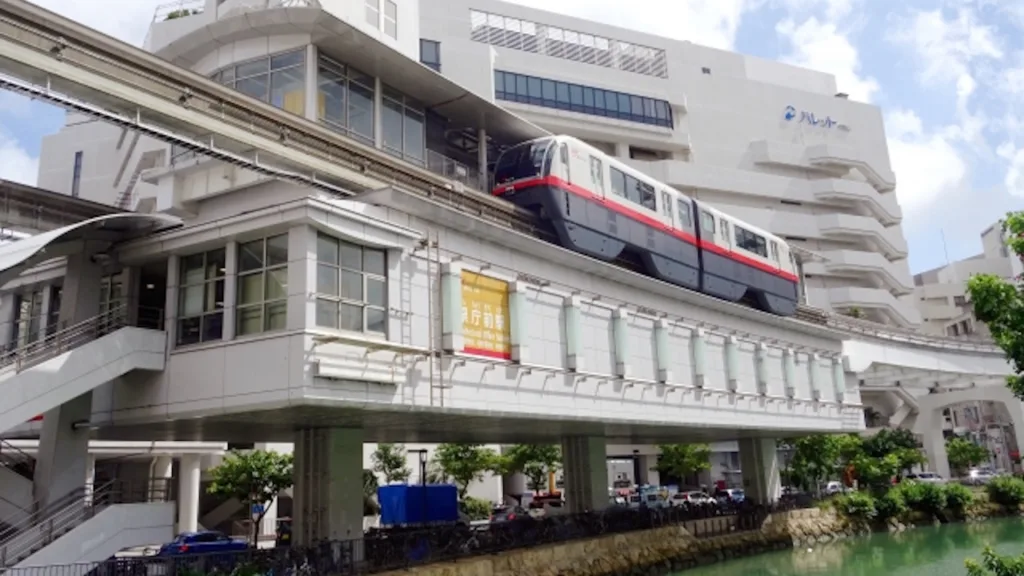
This is the zone where the Yui Rail delivers its most obvious value. Asahibashi Station opens directly into the main Naha Bus Terminal, the interchange point for long-distance bus routes serving destinations across the island.
Kokusai-dori (Kencho-mae / Makishi Stations)
Stretching for about 1.6 km through the heart of Naha, this street of restaurants, souvenir shops, and fashion stores was nicknamed the “Miracle Mile” for how quickly it sprang back to life after the war — a testament to Okinawan resilience. Kencho-mae Station leaves you at the western entrance in roughly two minutes; Makishi puts you at the centre of the action in three. The surrounding streets extend into the Daiichi Makishi Public Market and toward the Tsuboya pottery district, with far more to explore than a single afternoon allows.
Tsuboya Yachimun Street (Asato / Makishi Stations)
About 12 minutes on foot from Asato Station, this cobblestone lane threads through the old Tsuboya pottery quarter, where kilns and craft workshops have operated for centuries. The earthenware produced here — bold, sturdy, deeply rooted in Okinawan character — can be handled and purchased directly from the makers. The Tsuboya Pottery Museum is also on this street, and Free Pass holders receive a discount on admission.
New Town, Shuri, and Urasoe Zone (Omoromachi – Tedako-Uranishi)
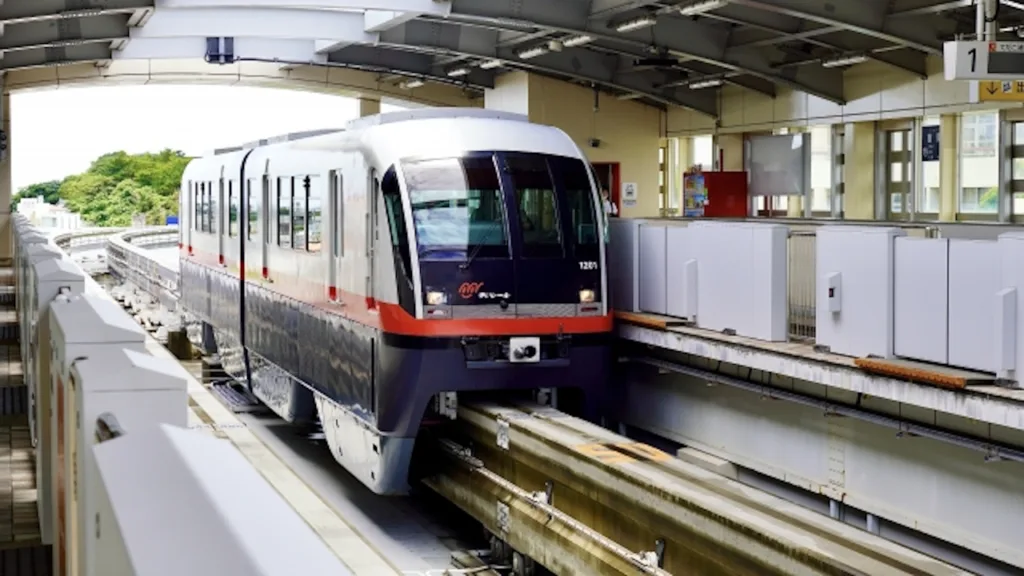
The upper section of the line moves from the redeveloped new town around Omoromachi through the ancient royal capital of Shuri and into the residential suburbs of Urasoe. Omoromachi was built on land returned after the postwar US military presence, and today it is Naha’s busiest commercial district. Shuri Station gives access to the densest concentration of Ryukyu Kingdom heritage on the entire line. The terminal, Tedako-Uranishi — whose name means “child of the sun” in Okinawan dialect — serves the growing northern neighbourhoods of Urasoe.
T Galleria Okinawa by DFS (Omoromachi Station)
Directly connected to the station, this is Japan’s only street-level duty-free shopping mall. No passport is required to shop. Around 150 international brands are represented, and the store is popular with both domestic and international visitors.
Okinawa Prefectural Museum and Art Museum — Okimyu (Omoromachi Station)
A ten-minute walk from Omoromachi, this combined institution houses a comprehensive natural history and cultural museum alongside a gallery dedicated to artists with ties to Okinawa. The Free Pass provides a discount on admission.
Gibo View Spot Station (Gibo Station)
At 95 metres above sea level, Gibo’s platform is the highest on the line and officially recognised by the operator as a “View Spot Station.” On a clear day, the panorama extends across Naha’s rooftops to the East China Sea, with the Kerama Islands visible in the distance.
Shuri Castle Park (Shuri Station)
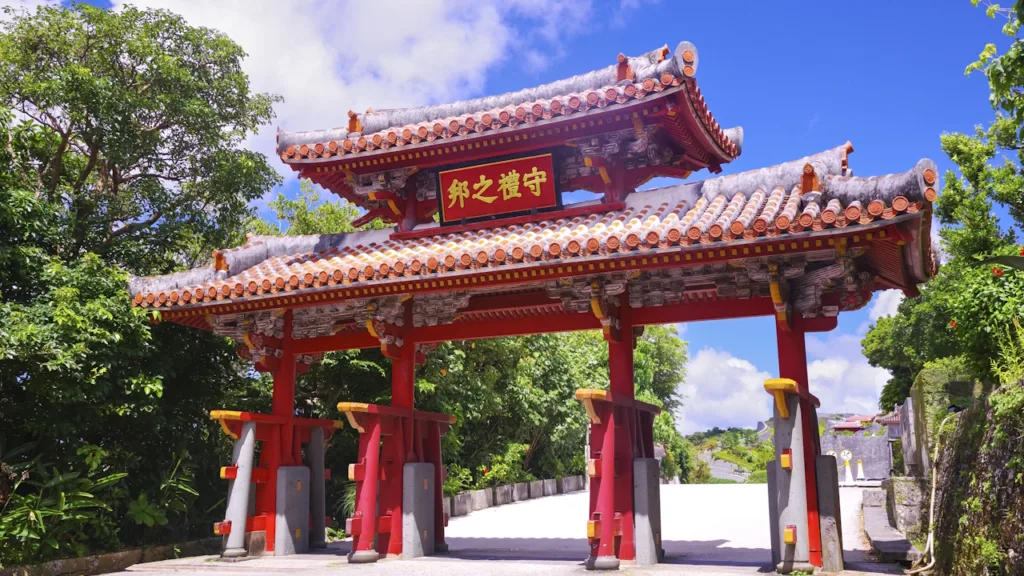
A UNESCO World Heritage Site and the centrepiece of Okinawan cultural heritage, Shuri Castle served as the seat of the Ryukyu Kingdom for roughly 450 years from the late 14th century. The main hall was lost to fire in 2019, but reconstruction is under way with completion targeted for fiscal 2026. Visitors can enter the paid zone to watch the restoration in progress — an experience that will be unavailable once the work is finished. Shuri Station is about 15 minutes on foot from the castle entrance.
Recommended Hotels Along the Yui Rail
Choosing a hotel within easy reach of a Yui Rail station puts Naha’s sightseeing network at your doorstep — no car, no parking fees, no second-guessing travel times.
Mercure Okinawa Naha (1 min walk from Tsubogawa Station)
Part of the Accor Group, the Mercure stands directly opposite Tsubogawa Station — one of the closest hotel-to-station relationships on the entire line. The interiors were conceived around the fusion of French and Okinawan aesthetics, and Simmons beds are standard throughout. Rooms facing the Kokuba River offer open-water views, and the in-house Bistro de la Mer serves creative French cuisine built around Okinawan produce. With Naha Airport just nine minutes away by rail, it is an equally convenient first night and last night option.
Rihga Royal Gran Okinawa (Direct access from Asahibashi Station)
Connected to Asahibashi Station without stepping outside, the Rihga Royal Gran is as close as Naha gets to a true transport-hub hotel. The Naha Bus Terminal is two minutes away on foot, making it straightforward to combine Yui Rail travel with bus excursions to southern and central Okinawa. The Riga Marché lobby shop is useful for stocking up before an early departure, and upper-floor rooms look out over a broad panorama of the city.
Hyatt Regency Naha Okinawa (8 min walk from Makishi Station)
Positioned three minutes on foot from Kokusai-dori and about eight from Makishi Station, the Hyatt Regency occupies one of the most central plots in the city. The 294 rooms draw on the colours and light of the Okinawan sea, and four restaurants and bars occupy the uppermost floors — including what is billed as the highest dining room in Naha. A rooftop pool is available exclusively to hotel guests.
Explore Okinawa with a Dedicated Tour Conductor
The Yui Rail makes Naha navigable, but Okinawa is far more than its capital. Shuri Castle and Kokusai-dori are natural starting points, yet the island holds a depth of culture, history, and landscape that most independent travellers only begin to scratch. That is where a dedicated tour conductor changes the experience entirely.
A tour conductor is not a tour guide. Their role is itinerary management: ensuring that transport connections run to schedule, handling last-minute disruptions — whether a delayed flight, a sudden change of plan, or an unexpected weight-overload stop on the Yui Rail — and providing the kind of coordination that turns a series of bookings into a seamless journey. If a problem arises at the airport, on the monorail platform, or at a hotel check-in desk, the conductor deals with it so that the group does not have to.
For visitors coming to Okinawa from overseas, the practical value of this support is hard to overstate. Transport in the islands is more layered than it appears on a map. Within Naha, the Yui Rail covers the city efficiently; beyond it, the right combination of bus routes, ferries, and taxis determines whether the outer islands, the northern forests, and the southern WWII memorial sites are accessible or simply aspirational. A conductor who knows the network eliminates the guesswork — and the hours lost to it.
There is also the language dimension. Signage on the Yui Rail is available in four languages, and the new three-car carriages carry multilingual displays, but spoken communication at smaller restaurants, local markets, and off-the-beaten-track sites remains predominantly Japanese. A tour conductor with language capability bridges that gap, opening doors to experiences that never appear in guidebooks and conversations that a translation app cannot replicate.
Beyond logistics, the presence of a conductor reshapes the rhythm of travel itself. Decisions about connections, queues, and contingency plans sit with someone else. The traveller is free to watch the East China Sea appear between Naha’s rooftops as the monorail climbs toward Gibo, to spend an extra half-hour at the Tsuboya pottery kilns without worrying about the next transfer, or to stand quietly in the grounds of Shuri Castle and absorb the weight of what is being rebuilt there — without one eye on the clock.
Our private tour conductor service is available for Okinawa itineraries of any length, from a focused few days in Naha to extended journeys that take in the Kerama Islands, the Yaeyamas, and further afield across Japan.
Travel Okinawa and Japan with a dedicated tour conductor

Planning Your Trip Around the Yui Rail
Stepping off a plane into Okinawa’s subtropical air, surrounded by the textures of Ryukyuan culture at every turn, is an experience that deserves to be savoured — not wasted on parking lots and traffic queues. The Yui Rail keeps the city moving predictably, connects the airport directly to the places most visitors want to reach, and offers flexible, modern ticketing options that suit a range of travel styles. Whether you ride independently or as part of a guided journey, the monorail is the thread that holds a Naha itinerary together.