


Travel insights from a tour conductor — today’s destination: Togoshi Hachiman Shrine, a quiet neighborhood shrine a short walk from Togoshi-Ginza Shopping Street in Shinagawa, Tokyo.
The shrine turns 500 in 2026. Its main hall dates to the end of the Edo period, a leafy approach runs between old trees, and visitors can sit on sofas in the courtyard. Monthly goshuin, the shrine’s temple-stamp-style calligraphy seals, give regulars a reason to come back. Locals also call it Togoshi Hachimangu, and its formal name is simply Hachiman Shrine.
Togoshi Hachiman Shrine at a Glance
Togoshi Hachiman Shrine enshrines Emperor Ojin, a deity associated with warding off bad luck and bringing good fortune. It sits in a residential neighborhood, and its grounds feel far greener than the streets around them.
| Item | Details |
|---|---|
| Name | Togoshi Hachiman Shrine (formal name: Hachiman Shrine) |
| Hours | Shrine office (goshuin and amulets): 9:00 to 16:00 |
| Closed | None as a rule |
| Address | 2-6-23 Togoshi, Shinagawa-ku, Tokyo 142-0041 |
| Access | 9 min on foot from Togoshi Station (Toei Asakusa Line); 8 min from Togoshi-koen Station (Tokyu Oimachi Line); 11 min from Togoshi-ginza Station (Tokyu Ikegami Line) |
Know the Office Hours and Handwriting Days Before You Go
The shrine’s one real constraint is timing. The shrine office takes goshuin requests from 9:00 to 16:00, so a late-afternoon arrival can mean no goshuin that day.
Goshuin are mostly handed out as pre-written paper sheets. Handwritten entries made directly in your own goshuin book happen only on Wednesdays and Sundays. On festival days, the handwriting is sometimes suspended and everything is issued as a paper sheet.
The shrine itself asks visitors to allow plenty of time. Since the courtyard has seating, arriving early and working back from the 16:00 cutoff keeps the visit relaxed.
How Togoshi Got Its Name, and How the Shrine Began
The story of this shrine is also the story of the Togoshi district. Here’s how it unfolds, from a poem to the main hall you see today.
A Poem Behind the Place Name
The origin of “Togoshi” is traditionally traced to an old poem about a small hermitage called Jojuan. Loosely rendered, it says that beyond Edo, at the hermitage above the clear spring, there’s never a day when wishes go ungranted. “Edo-goe,” meaning “beyond Edo,” is said to have softened over the years into “Togoe” and then “Togoshi.”
The hermitage stood near a pond called Yabushimizu, in an area once known as Ipponsugi. According to the shrine’s own history, pilgrims came from near and far.
A Divine Presence Rises From the Spring
The shrine’s account says that on the 15th day of the 8th month of 1526, an object of worship appeared in the waters of Yabushimizu. A traveling priest named Gyoyo Hoshi, who was staying at the hermitage, had dreamed of light shining from the pond. He searched the water and found an image of Hachiman, the deity of Emperor Ojin.
Gyoyo Hoshi enshrined it in the hermitage and invited a portion of the spirit of Iwashimizu Hachimangu, in Kyoto, to be worshiped alongside it. That’s how the shrine began, and 2026 marks the 500th anniversary.
Gyokeiji Temple and the First Shrine Hall
In 1592, Nenyo Shonin, the founding priest of neighboring Gyokeiji Temple, built a Hachiman shrine on the spot. He enshrined the sacred image together with Amida Buddha, the Buddhist form paired with Hachiman at the time. Until the Meiji-era separation of Shinto and Buddhism, Gyokeiji served as the shrine’s administering temple.
In 1688 the shrine moved to its present site, and two auxiliary shrines were built beside it. The administering priest then was Kakuyo Shonin of Gyokeiji.
The Hall You See Today
The current hall was rebuilt in the Ansei era, on the 15th day of the 8th month of 1855. It’s built of zelkova wood with a hip-and-gable roof, and the worship hall, offering hall and main hall are connected as one building.
The shrine also keeps the small cabinet that holds the sacred image. It was donated in 1770 by a retainer of the Kyogoku family of Marugame, in what’s now Kagawa Prefecture, and it survives today. Two cushions for the deity, donated by the same family line in 1785 and 1789, are still kept too.
A Shrine Courtyard Designed for Sitting Down
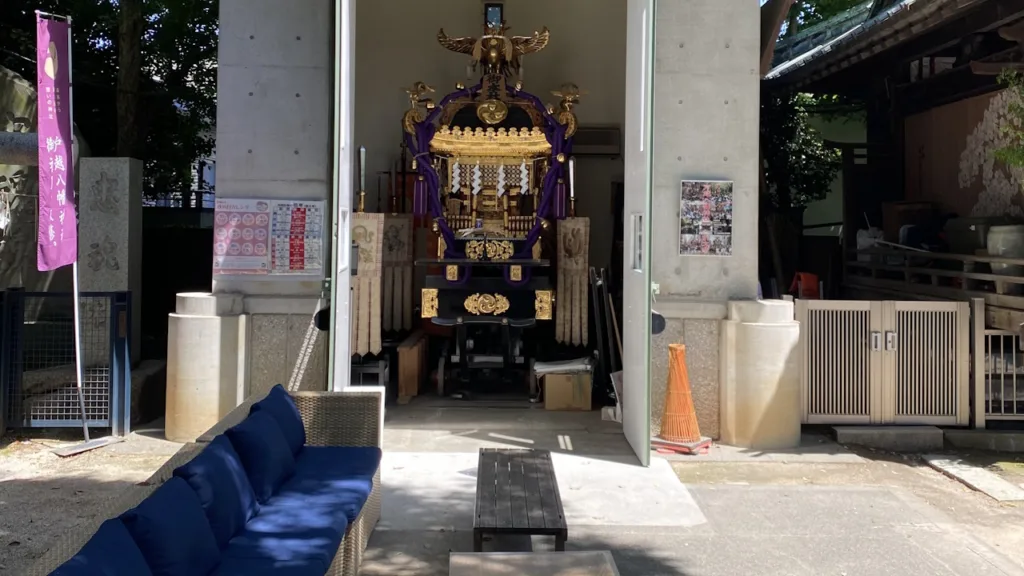
The shrine’s motto is a phrase about a restful shrine where light and shadow weave through the forest. It adds that walking the approach and offering a prayer lets the heart open up on its own. A lot of the shrine’s character comes from taking that idea literally.
The Tree-Lined Approach
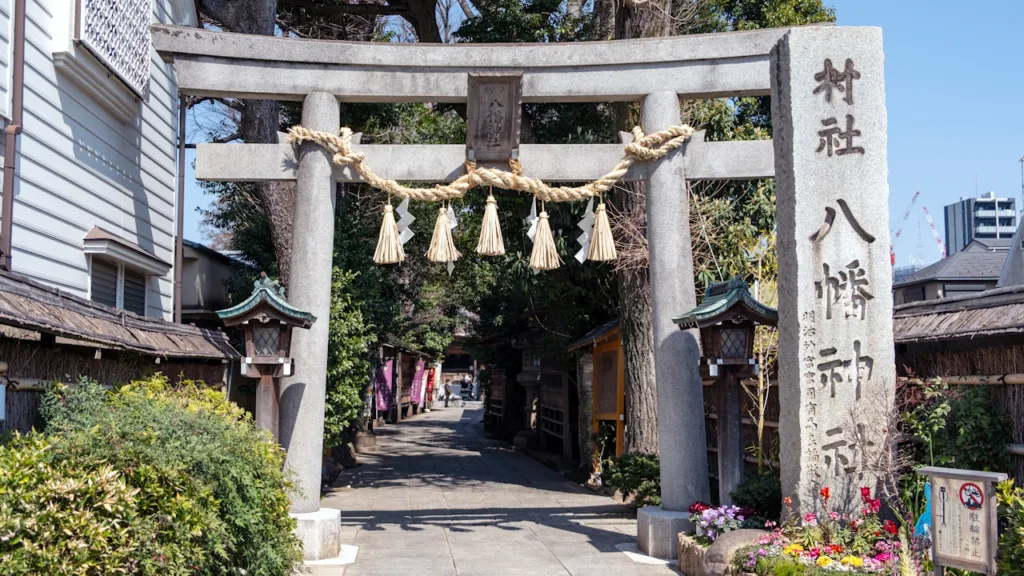
Past the torii gate, big trees crowd the narrow path on both sides, and the neighborhood outside seems to disappear. An Edo-period guidebook, the Edo Meisho Zue, already shows a long, tree-shaded approach here, and the layout hasn’t changed much since.
Sofas by the Path and in Front of the Kagura Hall
Past the purification fountain, in front of the kagura hall and along the side of the path, sofas and tables sit out in the open. Few shrines in Tokyo furnish their grounds like an open-air cafe, and first-time visitors often stop in surprise. From the seats you look straight at the main hall, and the dappled light under the trees makes it an easy place to linger after praying.
The seating exists mainly for people waiting on goshuin. Popular seals can take a while to prepare, so the shrine turned the wait into a pleasant pause.
Tea and Sweets for Visitors
People who receive goshuin are sometimes offered tea and sweets. In hot weather that means cold barley tea, and on some days coffee is served too. According to the shrine’s own explanation, this hospitality grows out of the idea of a restful shrine.
Magazines, Books and Toys
Around the sofas you’ll find magazines about goshuin and shrines, plus books and toys for children. There’s also a ring-toss corner, and it’s easy to picture parents chatting on the sofas while kids play at their feet. The courtyard feels open to the neighborhood, and plenty of people drop in with no particular errand.
The Deity: Emperor Ojin
Emperor Ojin is honored for warding off misfortune, but also as a patron of learning and of industry. Tradition credits him with promoting sericulture, silk weaving, shipbuilding and sewing, and the shrine’s history records those achievements.
Monthly Goshuin at Togoshi Hachiman Shrine
Togoshi Hachiman Shrine is known for the sheer variety of its goshuin. Each one carries a number on the shrine’s notice board, and what’s available depends on the day and the season.
Monthly Designs
The standard seal is number one, the monthly design. It changes twice a month, once for the 1st to the 14th and again for the 15th to the end of the month. Come in the first half and the second half of the same month, and you’ll get two different designs.
The Gold Seal on the First of the Month
A monthly ritual is held on the 1st of every month, and a gold goshuin goes with it. The date on the seal is always the 1st.
Seasonal Specials and the Kenponashi Seal
Special seals tied to seasons and festivals appear throughout the year. The shrine’s sacred Kenponashi tree has its own seal, and its artwork changes with the seasons.
Cats living on the grounds sometimes show up in the designs too, which suits the shrine’s gentle atmosphere.
Tokyu Flower Goshuin
The shrine also takes part in a flower-themed goshuin program along the Tokyu railway lines. To receive one, you need to show a participation card for that program.
Original Goshuin Books
The shrine has offered original goshuin books in several designs, from the main hall and a festival palanquin procession to cats and dogs. One large-format design carries the old Jojuan poem. Goshuin books are issued at the same office as the seals.
Birthday Goshuin
There’s also a goshuin issued only on the day of your birthday. Tell the staff at the office that it’s your birthday and show ID with your date of birth.
Special Charm Sets
On occasion the shrine pairs a special goshuin with a special charm. Past sets have let you choose between charms for good luck, health and wealth.
Buildings and Cultural Properties
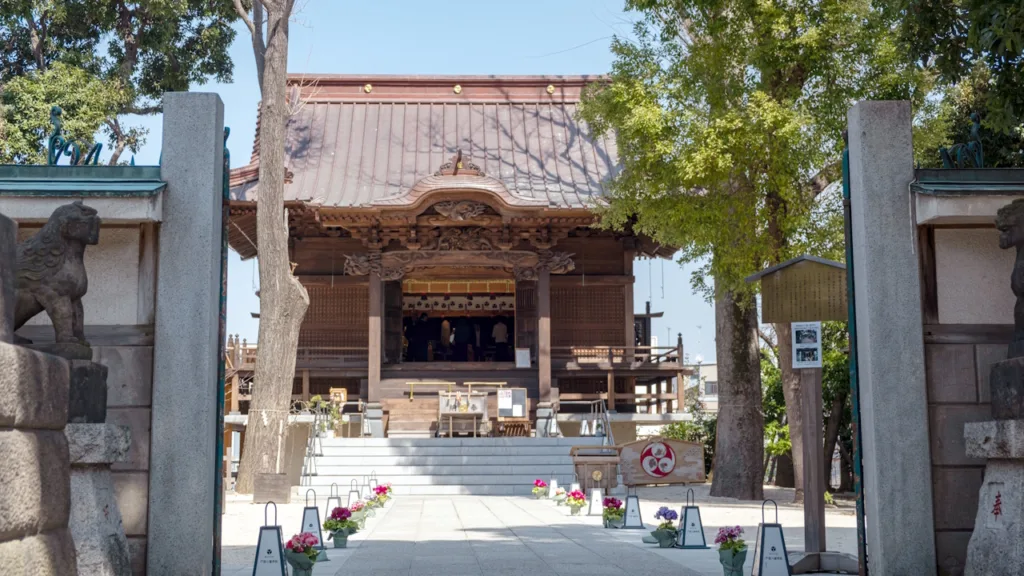
Buildings from different eras sit side by side in the grounds, along with stone relics that speak to local history. These are the highlights.
Worship Hall and Main Hall
Inside the worship hall, a carved dragon decorates the space. The main hall dates to 1855 and enshrines Emperor Ojin.
The Inari and Kasuga Shrines
In front of the worship hall stand an Inari shrine on the left and a Kasuga shrine on the right. Both were rebuilt in 1966. The Inari shrine honors Toyouke-hime and the Kasuga shrine honors Ame-no-Koyane. A festival for the Kasuga shrine takes place every March.
Kagura Hall and Purification Fountain
The kagura hall, where sacred dance is performed, was rebuilt in 1929. The purification fountain dates to 1965, and the shrine office was rebuilt in December 1991. The mix of eras gives the grounds the look of a shrine with a long memory.
The Sacred Kenponashi Tree
The shrine’s sacred tree is a Japanese raisin tree, or kenponashi. It’s a designated natural monument of Shinagawa Ward, and it’s said to be 250 to 300 years old. It stands out even among the other trees along the approach.
Stone Guardian Dogs and Votive Plaques
The pair of stone guardian dogs were donated in 1746. The worship hall also holds votive plaques that offer a glimpse of devotion in the Edo period.
Strength Stones
Six “sashiishi,” or strength-testing stones, remain in the grounds. Young men once lifted them to compete in feats of strength, and they’re a small folk record of daily life.
Festivals and Annual Events
Besides the monthly ritual on the 1st, the shrine holds seasonal festivals through the year.
Iris Festival
The Iris Festival takes place on May 5. Along with the autumn festival, it’s one of the occasions when the whole neighborhood joins in.
Summer Purification Rite
On June 28, the shrine holds a purification rite featuring a large ring of woven reeds that worshippers walk through. It’s a ceremony to clear away the impurities of the first half of the year and pray for good health in the second.
Autumn Grand Festival
The shrine’s main festival is held on the second Saturday and Sunday of September. It’s the biggest event of the year for the surrounding community.
Year-End Purification Rite
A year-end purification rite takes place on December 28. Together with the harvest-thanksgiving ceremony on November 23, it rounds out the shrine’s calendar.
Prayers and Ceremonies
Togoshi Hachiman Shrine accepts requests for Shinto weddings, prayers for safe childbirth, newborn blessings, the Shichi-Go-San children’s festival and groundbreaking rites. With its reputation for warding off misfortune, it’s a natural place to mark a life milestone.
Nearby Spots Around Togoshi Hachiman Shrine
The shrine sits close to Togoshi-Ginza Shopping Street and Togoshi Park, and strolling between them makes the area’s history click.
Togoshi-Ginza Shopping Street
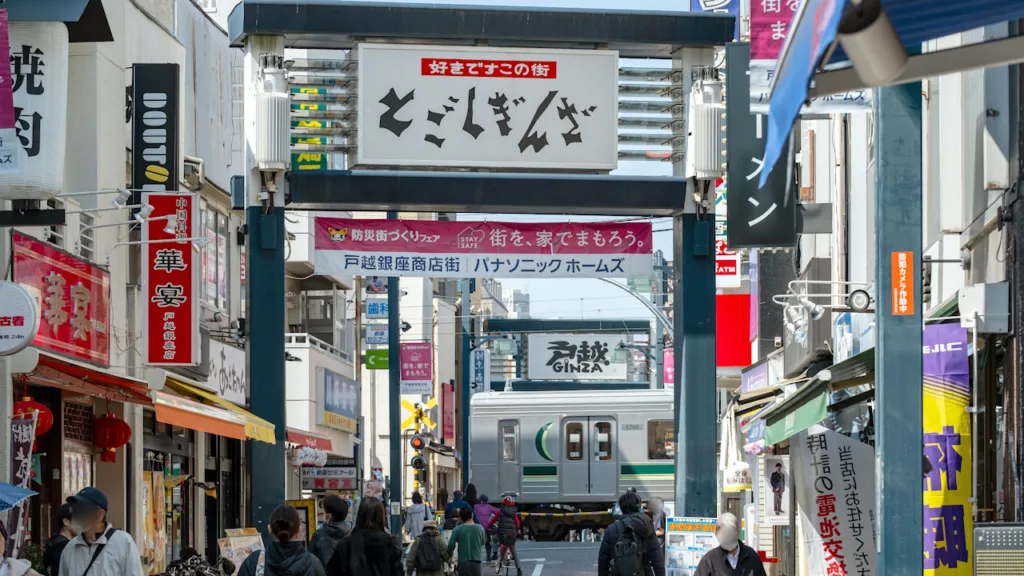
This shopping street runs about 1.3 kilometers and holds around 400 shops, making it one of the longest in Tokyo. Street-food snacking is part of the appeal. The name goes back to the Great Kanto Earthquake of 1923, when residents received bricks from the ruined Ginza district and laid them on a muddy road.
It’s often described as the original “Ginza” among Japan’s many shopping streets named after the famous Tokyo district, and its own croquette is among the local specialties. The street begins right outside Togoshi-ginza Station, so it’s a natural stop before or after a shrine visit.

Togoshi Park
This public park occupies part of a former garden of the Hosokawa family, who ruled the Kumamoto domain. Paths wind around a central pond, past a waterfall and an artificial hill, and rebuilt gates echo the old daimyo estate.
It opened as a park in 1935, and plum, cherry, rhododendron and ginkgo trees bring color through the seasons. It’s near Togoshi-koen Station, which makes it an easy stop on the way to the shrine.
Gyokeiji Temple
Right next to the shrine, Gyokeiji Temple shares its origins in the Jojuan hermitage. Its founding priest built the Hachiman shrine in 1592, and until the Meiji era it served as the shrine’s administering temple. It’s a good extra stop for anyone tracing the area’s history.
Ohara Fudoson and the Toyokawa Inari Branch Shrine
On the way from Togoshi-koen Station to the shrine, you pass Ohara Fudoson and a branch of Toyokawa Inari Tokyo Betsuin. The route follows a legend in which a white snake returned from the pond in what’s now Togoshi Park. Walking it end to end is a fine way to arrive at the shrine.
Where to Stay Near Togoshi Hachiman Shrine
Togoshi-Ginza has its own hotel, and Gotanda is one stop away on the Asakusa Line. Here are three places that make a handy base for the shrine.
APA Hotel Shinagawa Togoshi-Ekimae
This hotel is one minute on foot from Exit A2 or A3 of Togoshi Station, in the middle of Togoshi-Ginza Shopping Street. All 103 rooms are non-smoking, and the shrine is about nine minutes from the station on foot. For a shrine-focused trip, it’s the most convenient base of the three.
Mitsui Garden Hotel Gotanda
Gotanda Station is a three-minute walk away, and from there it’s one stop on the Asakusa Line to Togoshi Station. The hotel has a guest-only bath on the top floor, a welcome end to a day on foot. It suits travelers who want a quieter, more polished stay.
JR-East Hotel Mets Premier Gotanda
This hotel is one minute on foot from JR Gotanda Station, about six minutes by train from Shinagawa. It works well for trips that pair the shrine with sightseeing across central Tokyo.
Visiting Togoshi Hachiman Shrine With a Tour Conductor
A neighborhood shrine looks simple on a map, but the details decide how a day goes. Office hours run only until 16:00. Handwritten goshuin are limited to certain days. Three different train stations serve the area, each at a different walking distance. A tour conductor handles those moving parts so the group can concentrate on the visit.
A tour conductor manages the itinerary. That means keeping the day on schedule, making sure the group reaches the shrine office well before closing time, and handling transfers between the hotel, the stations and the shopping street. Luggage checks at each stop keep bags from going astray.
Language is another gap. A tour conductor provides interpretation assistance, helping visitors who don’t read Japanese communicate at the shrine office, at restaurants and at the hotel front desk. A conductor doesn’t lead a guided tour of the shrine.
When something goes wrong, the conductor steps in. If a train is suspended or a hotel booking falls through, emergency re-booking keeps the trip moving. Changes to the tour itself belong to the operator, and the conductor works within the plan.
The result is a trip that feels calm and efficient, with more time spent on the sofas in the courtyard and less on logistics. Services for international travelers are available at tours.e-stay.jp.
Conclusion: Five Centuries of Togoshi History in One Quiet Courtyard
Togoshi Hachiman Shrine carries the story of a place name that comes from an old poem, a legend of light rising from a spring, and a main hall that has stood since 1855. A kenponashi tree that’s 250 to 300 years old, goshuin that change twice a month, and sofas under the trees round out a visit.
Goshuin are written directly in your book on Wednesdays and Sundays, so plan the day around those and you can collect a handwritten seal. Add a stroll along Togoshi-Ginza and a walk through Togoshi Park, and you’ve filled half a day in Shinagawa.
Book a room at APA Hotel Shinagawa Togoshi-Ekimae, one minute from Togoshi Station, and head to the shrine on a Wednesday or Sunday morning. You’ll receive a handwritten goshuin in the shrine’s 500th year, then snack your way back down Togoshi-Ginza. For help planning it with a dedicated tour conductor, please see tours.e-stay.jp.