



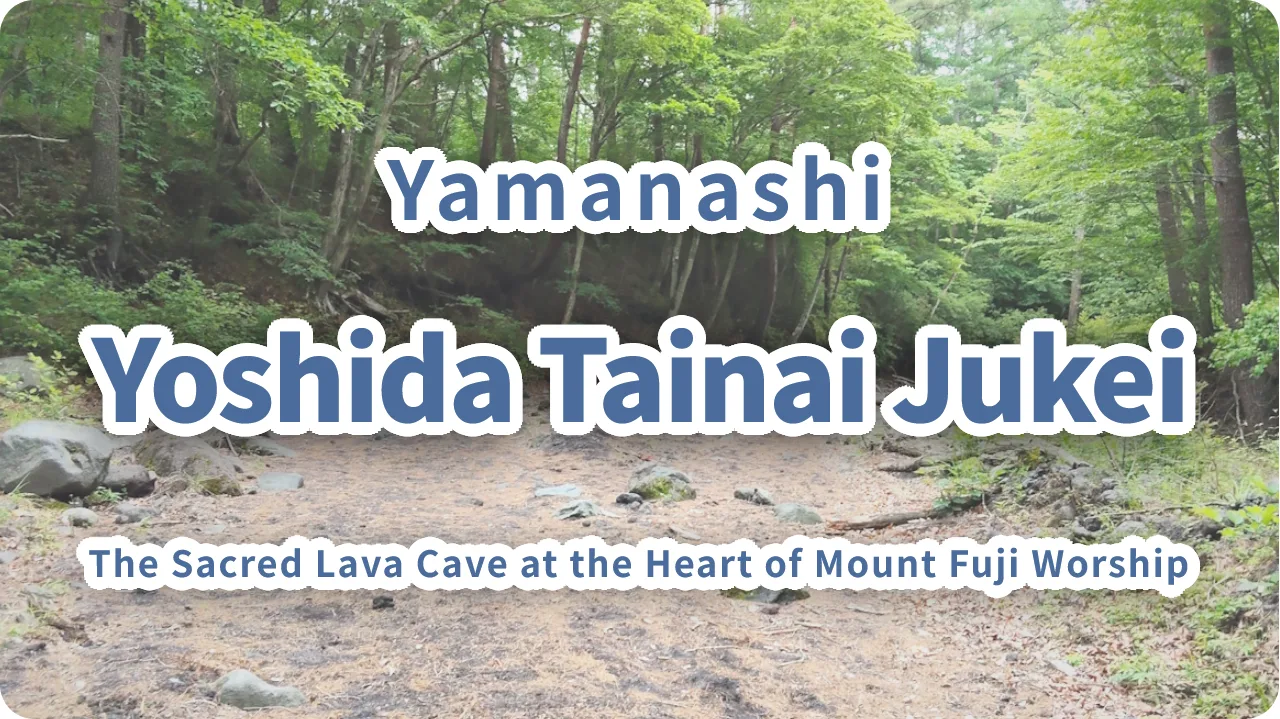
Travel insights from a tour conductor — today’s destination: Yoshida Tainai Jukei (吉田胎内樹型), a UNESCO World Heritage site hidden in the lava forests of Yamanashi Prefecture. This ancient lava tree mold was once the starting point of a pilgrimage ritual practiced for centuries by the devotees of Fuji-ko, the religious movement built around climbing Mount Fuji. It opens to the public just once a year — and understanding why makes the visit far more meaningful.
| Item | Details |
|---|---|
| Facility Name | Yoshida Tainai Jukei (吉田胎内樹型) |
| Interior Access | Once a year only: Yoshida Tainai Festival (Showa Day, April 29) |
| Regular Visits | Exterior viewable year-round; interior is locked outside the festival |
| Address | 5590 Kamiyoshida Kenmaruobi, Fujiyoshida, Yamanashi 403-0005 |
| Access | Approx. 30 min by car from Kawaguchiko IC (Chuo Expressway), then 30 min on foot |
| Dedicated Parking | None |
One Day a Year — and That’s It
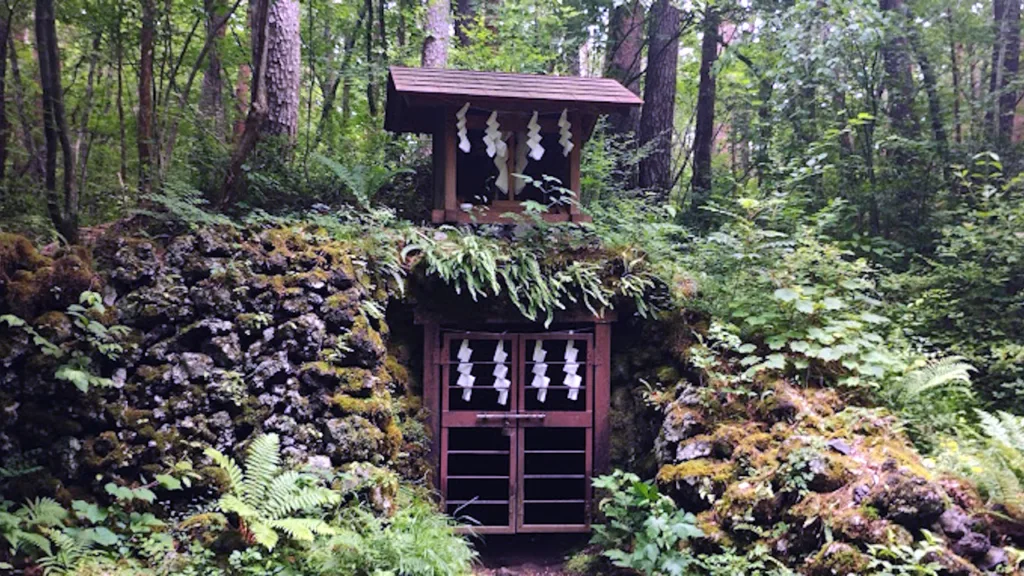
Before planning a visit, there’s one essential fact: the interior of Yoshida Tainai Jukei is locked year-round and accessible only on April 29 (Showa Day), when the annual Yoshida Tainai Festival takes place. Outside this date, visitors can walk the forest trail to view the entrance from the outside, but the cave itself remains closed.
Anyone wishing to visit outside the festival period can inquire through the Fujiyoshida City Board of Education Cultural Division (+81-555-24-2411). As a World Heritage component, preservation takes priority here — don’t expect the relaxed access policies of a typical tourist attraction.
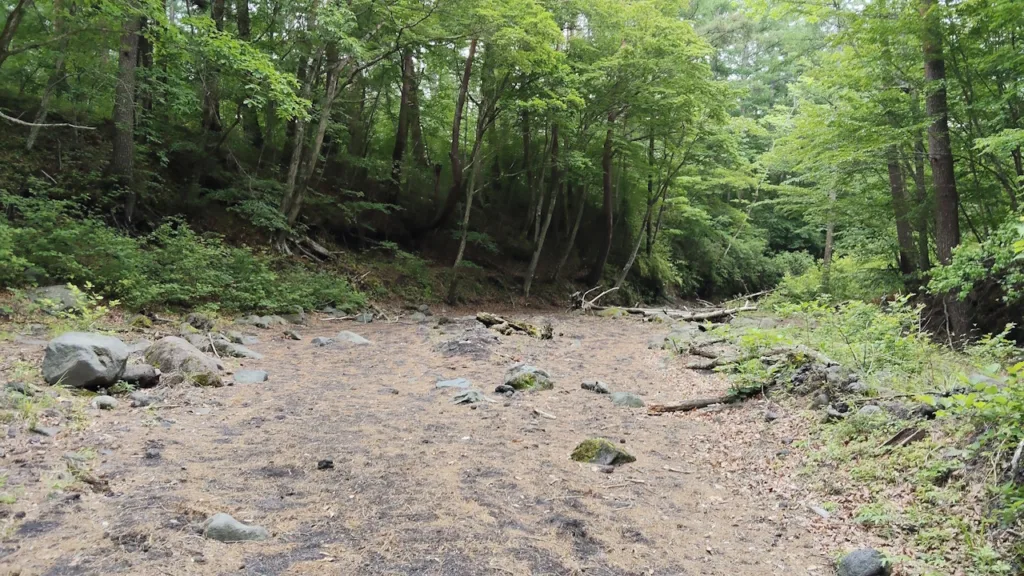
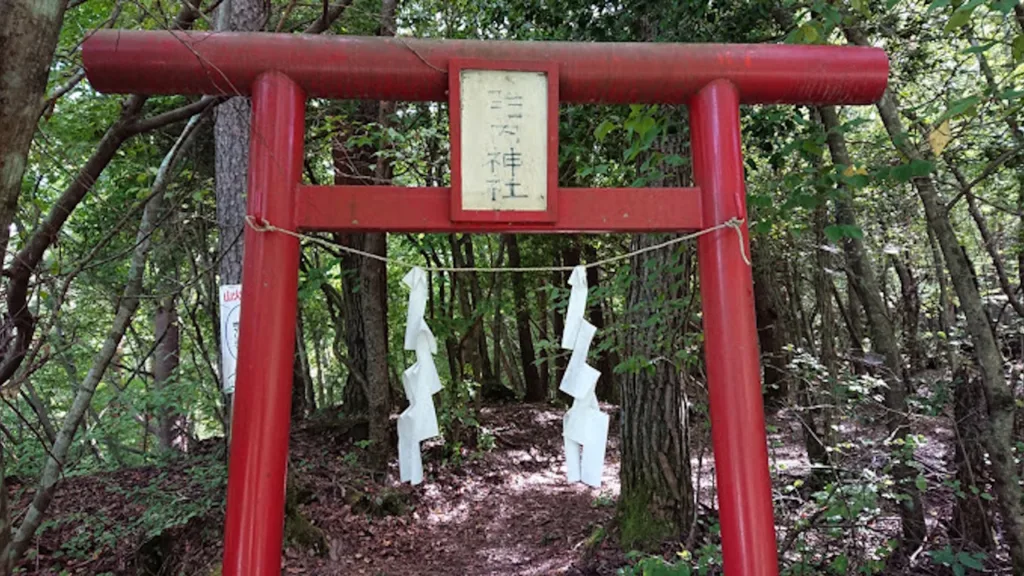
The site itself sits deep in a forest north of central Fujiyoshida. Look for a small red torii gate and a metal staircase along the prefectural road before the Subaru Line toll gate. From there, it’s around 400 metres through the trees to the cave entrance. Signage is sparse, so plan your navigation in advance.
What a Lava Tree Mold Actually Is
The lava flow that created Yoshida Tainai Jukei originated from a Mount Fuji eruption believed to have occurred in 937 CE. When molten lava engulfs living trees, it wraps around the trunk and solidifies. The wood inside eventually burns away or decomposes, leaving a hollow negative of the tree in the cooled rock. That hollow is what geologists call a lava tree mold — jukei (樹型) in Japanese.
Yoshida Tainai Jukei is actually a cluster of formations: one horizontal tunnel-type mold, three vertical shaft-type molds, and smaller cylindrical hollows. The tunnel interior features stalactite-like lava formations hanging from the ceiling, rib-like layers on the walls, and lava stalagmites rising from the floor. The charred impressions of the original tree bark are still faintly visible on the ceiling — a detail that tends to stop visitors cold.
The cave’s interior shape — elongated, irregular, with a narrowing passage — reminded Fuji-ko pilgrims of the human womb. That association gave it the name “o-tainai” (御胎内), meaning “sacred womb,” and transformed a geological curiosity into a place of prayer. As part of the broader Yoshida Tainai Jukei cluster, which encompasses more than 60 individual molds across the surrounding lava plain, the site has been designated a National Natural Monument. The wider lava field in which it sits, the Kenmaruobi lava flow, dates to the same 937 CE eruption.
How Fuji-ko Devotees Turned a Cave into a Pilgrimage Site
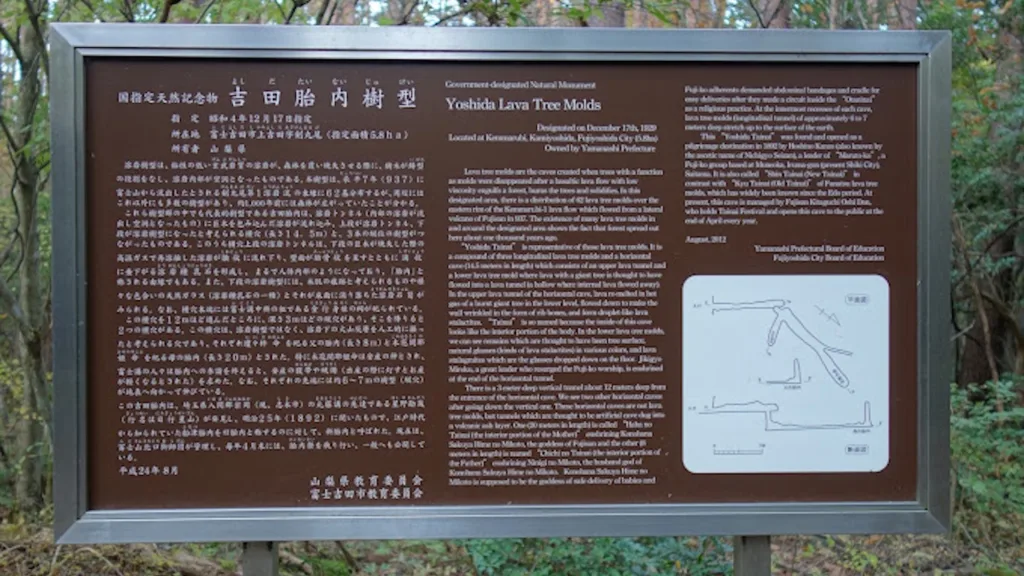
The site as visitors know it today was established in 1892 by Nisshoseisan (日行星山), the lay name Hoshino Kanzō — the eighth-generation guide of the Marufuji-kō fellowship from Kamimunaka in present-day Shiki City, Saitama Prefecture. A man of extraordinary devotion who had climbed Mount Fuji more than 80 times and completed the Ochūdō circuit (a trail encircling the volcano at mid-altitude) seven times, he discovered the cave and organized its development as a religious site together with fellow believers. Stone monuments erected by Nisshoseisan and the Munaka congregation still stand near the entrance today.
Before the Yoshida site was established, Fuji-ko pilgrims already had access to Funatsutainai Jukei — another lava tree mold discovered in 1673 and known as the “old tainai.” Yoshida became the “new tainai,” and the two sites formed a paired sacred landscape along the Yoshidaguchi climbing route, the traditional approach to the summit from the eastern side of the mountain.
The ritual practice of tainai-meguri — entering the cave and emerging from it — carried the symbolism of spiritual rebirth. Pilgrims would visit the cave the evening before their ascent, pass through its narrow interior, and return to their lodgings at the oshi (御師) houses in central Fujiyoshida, mentally prepared for the climb the following morning. The deity enshrined in the deepest part of the cave is Konohanasakuya-hime (木花咲耶姫命), the goddess of Mount Fuji. Her connection to birth and fertility made the cave a place for prayers related to safe childbirth as well.
A World Heritage Site That Still Feels Like a Pilgrimage Site
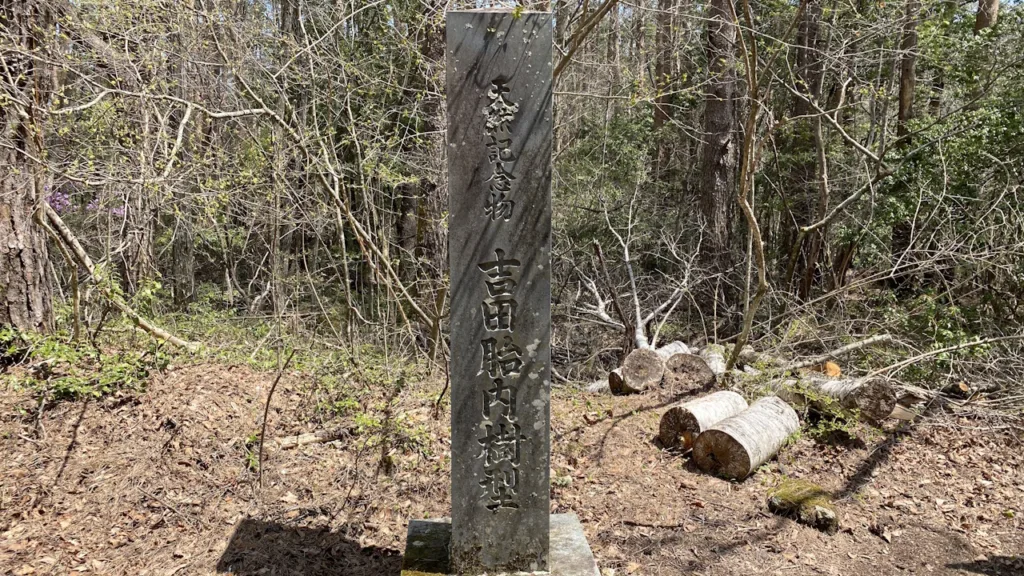
Yoshida Tainai Jukei was inscribed as one of the component properties of “Fujisan: Sacred Place and Source of Artistic Inspiration” in June 2013. The case for inscription rested not on geological novelty alone but on the site’s documented role as a functioning religious space — evidence that the Fuji-ko tradition shaped how ordinary people engaged with the landscape of Mount Fuji for centuries.
What sets this site apart from many World Heritage properties is that it hasn’t been developed into a visitor attraction. There’s no interpretive center, no gift shop, no guided audio tour. The annual Tainai Festival on April 29 continues as a genuine religious observance, giving thanks for the forces of nature and the gift of new life. On that day alone, the locked gate opens and visitors can enter the cave.
The paired reading of Yoshida Tainai Jukei and Funatsutainai Jukei — accessible within the Kawaguchiko Field Center — offers a more complete picture of how the tainai tradition developed within Fuji-ko. Together, they illustrate the way geographic features became inseparable from spiritual practice in this part of Japan.
Nearby Spots
Fuji Subaru Line 5th Station — Gateway to the Yoshida Climbing Route
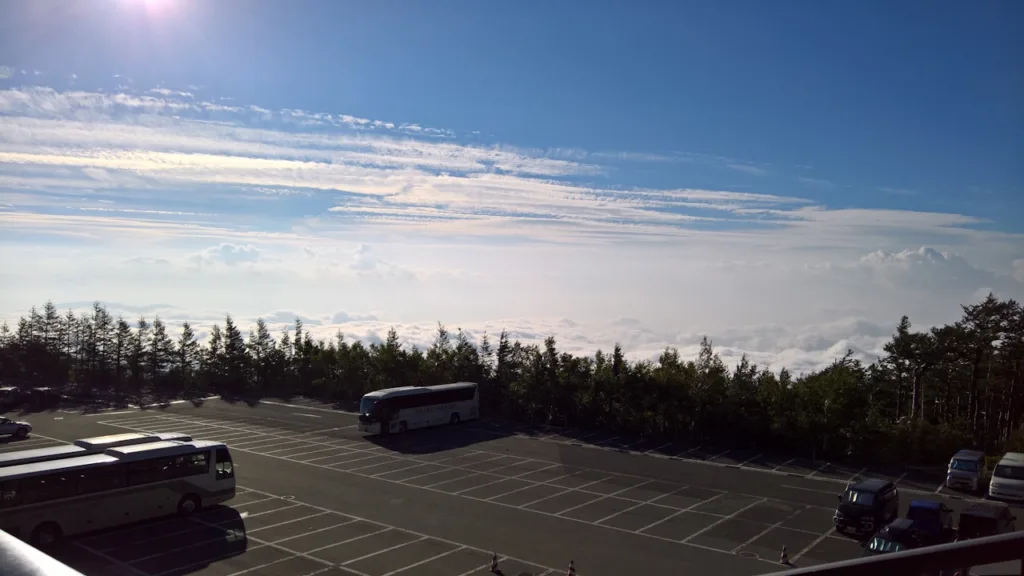
The Fuji Subaru Line 5th Station (富士スバルライン5合目) sits at roughly 2,300 metres on the northern flank of Mount Fuji and serves as the trailhead for the Yoshida Route (Yoshidaguchi climbing route) — the most heavily used of the four official ascent paths and the same trail that Fuji-ko pilgrims walked after completing their tainai-meguri ritual at the cave below. The toll road that leads there, the Fuji Subaru Line, runs approximately 40 minutes from the entrance near Kawaguchiko IC to the station. The 5th Station is itself a World Heritage component site, and the Komitake Shrine (小御嶽神社) sits within its grounds.
Non-climbers can drive or take a bus to the station for the views alone: on a clear day, the Fuji Five Lakes spread out below and a sea of clouds fills the valleys between them. Note that private vehicles are banned during the main climbing season — in 2026, from 18:00 on July 3 to 18:00 on September 10. During that period, visitors park at Fuji Hokuroku Parking Area near Fujiyoshida IC and ride the Fujikyu Bus shuttle to the station. Outside the season, scheduled buses run from Fujisan Station and Kawaguchiko Station.

Kitaguchi Hongu Fuji Sengen Shrine — Where the Yoshidaguchi Trail Begins
About 10 minutes by car from Yoshida Tainai Jukei, Kitaguchi Hongu Fuji Sengen Shrine (北口本宮冨士浅間神社) is both a World Heritage component property and the formal starting point of the Yoshidaguchi climbing route. The shrine’s great torii gate, made of wood, is among the largest of its kind in Japan. The grounds contain two sacred trees, the Fuji Taro Cedar (estimated at around 1,000 years old) and the Meoto Hinoki cypress, and 11 of its structures are designated Important Cultural Properties. Every August 26–27, the shrine hosts the Yoshida Fire Festival (Yoshida no Himatsuri), counted among Japan’s three most extraordinary festivals.
Nakanochaya — Rest Stop on the Ancient Climbing Route
A roughly 90-minute walk up the Yoshidaguchi route from the shrine, Nakanochaya is a historic waystation surrounded by what is said to be Yamanashi Prefecture’s largest grove of Fuji cherry trees (fujizakura). Around 20,000 trees bloom here in late April, overlapping with the Yoshida Tainai Festival season. Wild rhododendron stands designated as natural monuments are also scattered through the area. Walking a section of the old climbing route through this landscape gives a tangible sense of what the Fuji-ko pilgrimage felt like on the ground.
Funatsutainai Jukei — The “Old Tainai” Discovered in 1673
Located inside the Kawaguchiko Field Center, Funatsutainai Jukei is the earlier of the two paired sacred caves and the site that set the template for tainai-meguri practice. Discovered more than two centuries before the Yoshida site and known as the “old tainai,” it provides essential context for understanding how cave worship became embedded in the Fuji-ko tradition. Visiting both sites together gives a fuller account of how geological accident and religious imagination shaped each other along the slopes of Mount Fuji.
Where to Stay
Kaneyamaen — A Ryokan with Mount Fuji in Every Direction
Kaneyamaen is a large, highly rated traditional ryokan in Fujiyoshida, around 15 minutes by car from the Yoshida Tainai Jukei trailhead. It’s consistently ranked among Japan’s top 100 hotels and ryokan by industry surveys, and Booking.com guests rate it 9.3 out of 10. The property features an expansive Japanese garden, rooftop and private open-air hot spring baths with Mount Fuji views, an evening taiko drum performance, and a complimentary wine cellar for guests. Rooms with private outdoor baths facing the mountain are available. A free shuttle runs to and from Kawaguchiko Station.
Highland Resort Hotel & Spa — Next to Fujiyama Onsen, Adjacent to Fuji-Q Highland
Highland Resort Hotel & Spa sits directly beside Fuji-Q Highland and is connected to the Fujiyama Onsen bathhouse by an indoor walkway. Guests have complimentary early access to the adjacent amusement park — a significant draw for families. An expressway bus from Tokyo stops right in front of the hotel, making it one of the most transport-convenient bases in the Fujiyoshida area. Rooms are modern, several with direct Mount Fuji views, and the Western-Japanese breakfast buffet is well regarded. Booking.com guests rate the property 8.9 out of 10.
Fuji Lake Hotel — A Lakeside Classic Since 1932
Fuji Lake Hotel has occupied its position on the shore of Lake Kawaguchi since 1932, making it one of the oldest Western-style hotels in the Mount Fuji area. Natural hot spring baths — both indoor and outdoor — draw water from 1,500 metres below the surface, and upper-floor rooms offer simultaneous views of the lake and the mountain. The hotel runs a shuttle to Kawaguchiko Station and a hop-on hop-off sightseeing bus stops directly in front of the building, making it convenient for combining the Yoshida history sites with Lake Kawaguchi attractions. Booking.com guests rate it 9.0 out of 10.
Travelling with a Tour Conductor
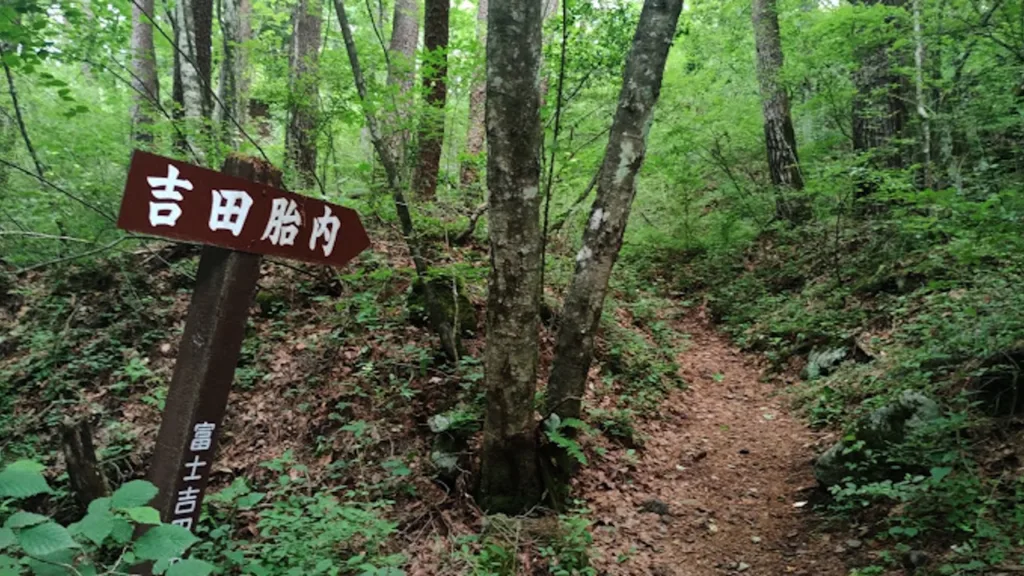
Visiting Yoshida Tainai Jukei presents a specific set of logistical challenges that a dedicated tour conductor is well placed to manage. The site opens its interior only once a year, access requires navigating a forest trail with minimal signage, and the surrounding area — while served by the Fujikyu Railway — demands either a car or carefully timed local connections for the trailhead approach.
A tour conductor’s role on a trip like this is itinerary execution: confirming timing around the April 29 festival, managing transport logistics between stations and the trailhead, handling luggage transfers between accommodations, and providing interpretation assistance at inquiry points or local facilities where English support is limited. Should disruption occur — a transport cancellation, weather-related access issue, or accommodation change — the tour conductor manages emergency re-booking directly, without requiring the traveller to navigate Japanese-language systems under pressure.
For English-speaking visitors combining World Heritage sites around Mount Fuji with rural forest walks and traditional ryokan stays, having a Japanese-fluent point of contact embedded in the journey removes significant friction. Details about the dedicated tour conductor service are at tours.e-stay.jp.
Planning a Visit
Yoshida Tainai Jukei rewards preparation. The interior opens once a year on April 29; outside that date, the forested approach and exterior of the cave are the extent of what’s accessible. There’s no dedicated parking, the trail signage is minimal, and the site itself has no on-site facilities. Those constraints aside, the site sits in a compact cluster of World Heritage properties — Kitaguchi Hongu Fuji Sengen Shrine, the Yoshidaguchi climbing route, and the paired Funatsutainai Jukei — that can be combined into a coherent itinerary around Mount Fuji’s northern face. Kaneyamaen, with its mountain-view hot spring baths and deep-rooted sense of place, makes a fitting base for the kind of trip this area calls for.